
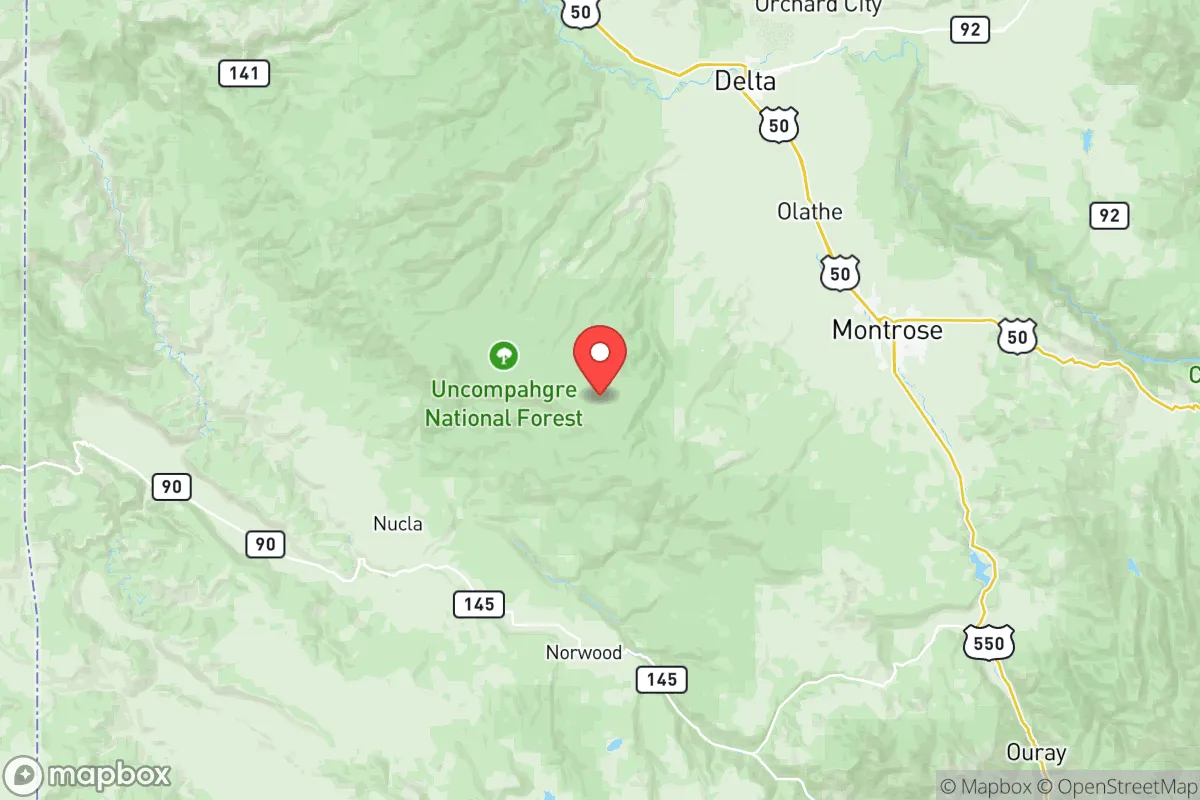
Photo: Wikipedia
Personal Sovereignty in Montrose County
Viable for self-reliance. Generally workable, though some barriers may limit total independence.
What does Personal Sovereignty tell us?
Personal Sovereignty measures your capacity for self-reliance and independence with minimal government friction. Higher scores mean fewer barriers between you and the way you want to live... but it assumes you have the space you need and good neighbors.
What does this tell us?
Personal Sovereignty measures your capacity for self-reliance and independence with minimal government friction. Higher scores mean fewer barriers between you and the way you want to live... but it assumes you have the space you need and good neighbors.
State Policy
Energy independence: Net exporter (110% of energy produced in-state)
Personal Liberty
Homesteading

Personal Liberty Analysis
Montrose County, Colorado, offers a notably high degree of personal sovereignty relative to the state's Front Range urban centers, with a regulatory environment that generally favors individual autonomy in land use, self-defense, and daily life. The county's political culture, anchored by towns like Montrose, Olathe, and Nucla, leans conservative, and local governance often pushes back against state-level mandates, particularly in areas of property rights and Second Amendment protections. For individuals and families prioritizing self-reliance and minimal government interference, Montrose County presents a compelling balance of rural freedom and access to essential services, though the specific experience varies significantly between the more populated Montrose city limits and the unincorporated expanses of the West End.
Tax burden and regulatory posture in Montrose County
Colorado's state income tax is a flat 4.4%, and the state sales tax is 2.9%, but Montrose County's overall tax burden is kept moderate by local control and a relatively light regulatory touch. The county's property tax rate is approximately 5.5% of the assessed value (which is based on a fraction of market value), and there is no county-level sales tax on groceries, though the city of Montrose adds a 3.5% city sales tax for a combined rate of around 7.9% within city limits. Outside incorporated towns, unincorporated areas of the county have no city sales tax, reducing the burden for rural residents. The county's approach to business regulation is notably permissive; there is no county-wide business licensing requirement for most home-based enterprises, and zoning in unincorporated areas is minimal compared to Front Range counties. However, the state's increasingly stringent environmental regulations, particularly around water rights and oil and gas development, do impose constraints, especially in the Paradox Valley area near Naturita and Nucla, where energy development has historically been a major economic driver. The county commission has actively opposed several state-level land-use bills, signaling a local posture that prioritizes property owner discretion over centralized planning.
Self-defense and gun law specifics in Montrose County
Montrose County is a strong Second Amendment area, with local law enforcement and elected officials publicly supportive of firearm ownership and carry rights. Colorado is a "shall-issue" state for concealed handgun permits, and Montrose County's sheriff's office processes permits efficiently, typically within the statutory 90-day window. The county has been designated a "Second Amendment Sanctuary" by resolution, meaning local officials have stated they will not use resources to enforce certain state-level firearm restrictions they deem unconstitutional, such as the 2013 magazine capacity limit of 15 rounds. Open carry is legal throughout the county without a permit, though the city of Montrose has ordinances prohibiting firearms in municipal buildings and parks. For self-defense in the home, there are no special restrictions beyond state law, which allows the use of deadly force in defense of oneself or others when facing imminent unlawful force. The towns of Olathe and Nucla have particularly strong gun-friendly cultures, with local shooting ranges and sporting goods stores that cater to hunters and sport shooters. It is important to note that Colorado's "red flag" law (Extreme Risk Protection Orders) does apply in Montrose County, and while local sheriffs have expressed opposition, the law is enforceable by state courts.
Self-reliance and homesteading viability in Montrose County
Homesteading and off-grid living are highly viable in Montrose County, particularly in the unincorporated areas and smaller towns like Nucla, Naturita, and Paradox. Minimum lot sizes in unincorporated areas are generally 1 acre for a single-family dwelling with a septic system, though many parcels in the West End are available in 5- to 40-acre increments, offering ample space for gardens, livestock, and solar arrays. The county's zoning code is relatively permissive: there are no county-wide restrictions on rainwater collection (though state water law applies), and off-grid solar and wind systems are allowed without special permitting, provided they meet basic electrical codes. Composting toilets and greywater systems are permitted under state regulations for rural properties without sewer access. The county's planning department is known for a practical, problem-solving approach rather than a rigid enforcement posture, particularly for agricultural and homesteading improvements. However, the city of Montrose has more restrictive building codes and requires permits for most structural changes, so those seeking maximum autonomy should look to the unincorporated county or the West End towns. Water rights are a critical consideration; many rural parcels do not include water rights, and drilling a well can cost $15,000–$30,000 depending on depth, so due diligence on water availability is essential before purchasing land for self-sufficient living.
Personal liberties in Montrose County
Parental rights in education are a prominent issue in Montrose County, with the local school board having adopted policies that emphasize parental notification and opt-out options for certain curriculum materials, reflecting the conservative values of the area. The county has a robust homeschooling community, and the Montrose School District offers a homeschool enrichment program that provides resources and support for families who educate at home. Medical autonomy is somewhat constrained by state law; Colorado has legalized recreational marijuana (which is available in dispensaries in Montrose and Olathe), but the county has opted out of allowing retail marijuana cultivation and sales in unincorporated areas. Vaccine mandates are not enforced at the county level, and the local health department takes a generally hands-off approach to individual medical choices, though state-level public health orders can override local discretion during emergencies. Free speech and property rights are strongly protected; the county has no sign ordinances in unincorporated areas that would restrict political or religious expression on private property, and the local government has a track record of defending property owners against what it views as overreach by state or federal agencies, particularly regarding land use and water rights. The county's approach to short-term rentals (like Airbnb) is also permissive, with no county-wide restrictions outside of the city of Montrose, which requires a license but does not cap the number of permits.
Overall, Montrose County ranks among the more sovereignty-friendly areas in Colorado, offering a level of personal autonomy that is increasingly rare in the state's growing urban corridors. Compared to Boulder or Denver counties, where land-use restrictions, firearm regulations, and tax burdens are significantly heavier, Montrose County provides a practical environment for individuals and families who value self-reliance, homesteading, and minimal government interference in daily life. The key trade-off is access to services: the further one moves toward the West End towns of Nucla and Naturita, the greater the autonomy but the fewer the amenities, while the city of Montrose offers more infrastructure at the cost of slightly more regulation. For the freedom-oriented relocator, the county's unincorporated areas and smaller towns represent the strongest expression of personal sovereignty in western Colorado.

* Values derived from national, state, county, city and local statistics and may differ in a specific area. Last updated: 2026-08-08T12:42:46.000Z
Narrative content on this page is AI-generated and may contain mistakes. Verify any details that matter before acting on them.
ReloMaps may earn a commission from affiliate links at no extra cost to you.

