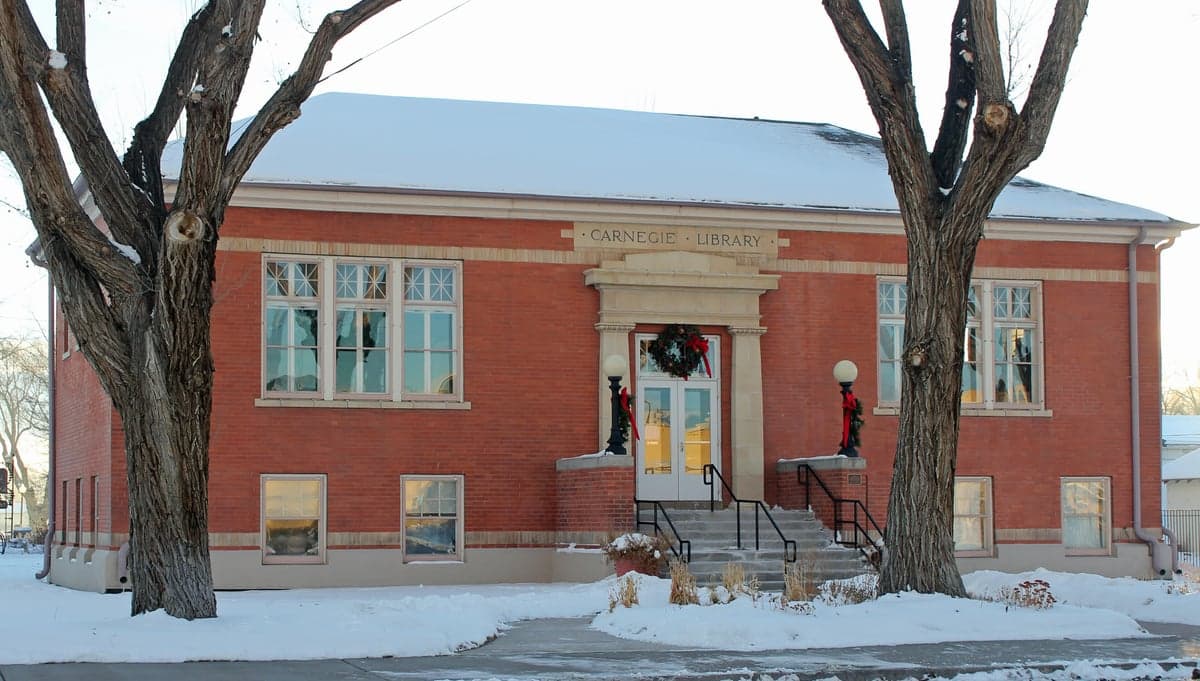
Photo: Wikipedia
Personal Sovereignty in Rio Grande County
Viable for self-reliance. Generally workable, though some barriers may limit total independence.
What does Personal Sovereignty tell us?
Personal Sovereignty measures your capacity for self-reliance and independence with minimal government friction. Higher scores mean fewer barriers between you and the way you want to live... but it assumes you have the space you need and good neighbors.
What does this tell us?
Personal Sovereignty measures your capacity for self-reliance and independence with minimal government friction. Higher scores mean fewer barriers between you and the way you want to live... but it assumes you have the space you need and good neighbors.
State Policy
Energy independence: Net exporter (110% of energy produced in-state)
Personal Liberty
Homesteading

Personal Liberty Analysis
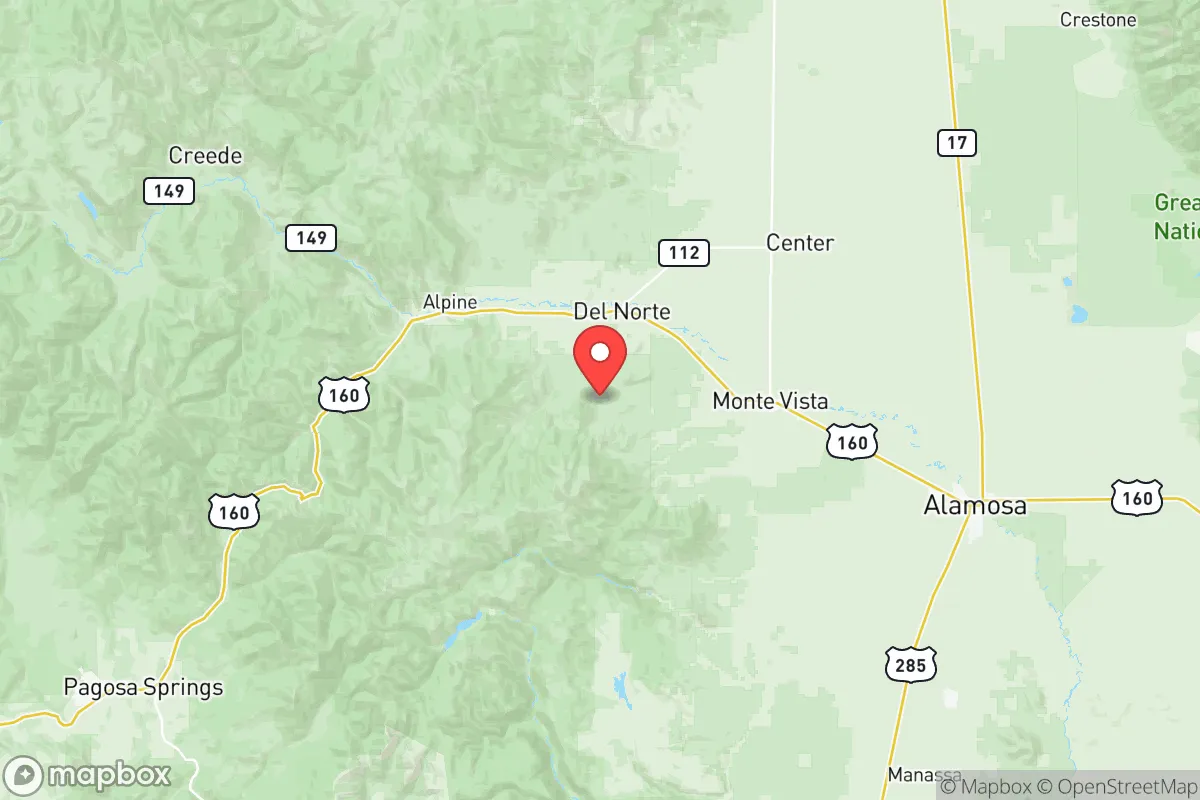
Rio Grande County sits in the heart of Colorado’s San Luis Valley, a region where personal sovereignty isn’t just a talking point—it’s the default operating system. Unlike the Front Range where state-level mandates often override local sentiment, this county’s rural culture and limited government footprint give residents a genuine degree of autonomy over their lives, property, and defense. The trade-off is clear: you get more freedom to live how you see fit, but you also get less of a safety net and fewer services. For anyone weighing relocation from a more regulated area, the gap between what the state dictates and what Rio Grande County actually enforces matters more than the laws on the books.
Tax burden and regulatory posture: What local control actually looks like
Colorado’s state income tax rate sits at a flat 4.55 percent in 2026, and statewide sales and use tax adds 2.9 percent—moderate compared to high-tax states. But the real story for Rio Grande County is property taxes that rank among the lowest in the state, with mill levies typically under 0.06 for residential land. That means owning land in places like Del Norte or Monte Vista costs a fraction of what you’d pay in Colorado’s Front Range suburbs. The county government operates on a lean budget with few planning or zoning staff. Unincorporated areas—especially the sprawling parcels between South Fork and the Rio Grande National Forest boundary—have essentially no county building inspections or use restrictions beyond basic septic and well rules. Monte Vista does enforce a modest set of zoning ordinances within town limits, but outside those boundaries you can build a workshop, park an RV, or store materials without jumping through hoops. The state’s new energy code and wildfire mitigation requirements apply on paper, but enforcement in rural Rio Grande County is rare unless a neighbor complains. For anyone looking to reduce their tax burden and avoid bureaucratic overreach, this corner of the San Luis Valley offers one of the most hands-off environments in Colorado.
Self-defense laws and gun-culture reality in a constitutional state
Colorado’s state constitution guarantees the right to keep and bear arms, but the legislature in Denver has added a patchwork of restrictions: universal background checks, a fifteen-round magazine limit, and a red-flag law that allows temporary firearm seizure. Those rules create friction on paper, but in Rio Grande County the local culture and sheriff’s office treat them with extreme skepticism. The Rio Grande County Sheriff’s Office openly states it will not enforce any gun law it deems unconstitutional—a stance shared by many rural Colorado sheriffs. Concealed carry permits are issued on a shall-issue basis, and the local sheriff’s application process takes less than thirty days. In practical terms, you’ll see firearms openly carried on private property and at public gatherings in Del Norte and South Fork without anyone raising an eyebrow. Monte Vista, the largest town, still has a strong hunting and sporting tradition. The red-flag law is rarely used here; no Ergencies have triggered high-profile seizures. For a prepper or self-defense-minded individual, the enforcement gap between Denver and Rio Grande County is where real freedom lives. You’re still technically bound by state magazine limits, but possession is seldom challenged in a county where the sheriff carries a sidearm to church.
Homesteading and off-grid living viability by town and terrain
The practical ability to live self-sufficiently varies sharply depending on where you plant stakes in Rio Grande County. Unincorporated tracts near the Rio Grande River—especially the corridor between Del Norte and South Fork—offer five-to-forty-acre parcels with minimal deed restrictions. Off-grid solar and wind systems are common, and the county does not mandate grid connection. Wells are standard in these areas; drilling depth runs two hundred to four hundred feet and water rights are typically included with the mineral rights. Septic systems require a permit but the county health department is straightforward and does not impose costly advanced treatment systems for standard lots. Center, on the eastern edge of the county, sits on prime agricultural soil where water rights are more tightly regulated—expect a more involved process for irrigation wells there. Monte Vista’s city limits impose utility hookup requirements, but the surrounding small-holdings area (often called “the Mesa”) allows rainwater catchment and seasonal off-grid living without harassment. South Fork, at the western gateway to the National Forest, attracts residents who live partly on public-land permits for firewood and grazing. The county zoning code leaves most unincorporated land as “agricultural/rural,” meaning a workshop, greenhouse, livestock shelter, and a modest home can all go up with a single permit. For anyone serious about homesteading, the real bottleneck isn’t local regulation—it’s the short growing season (frost-free days run early June to mid-September) and water availability in drier years. But in terms of government obstacles, Rio Grande County ranks as one of the most homestead-friendly jurisdictions in Colorado.
Personal liberties: Parental rights, medical choice, and property control
Parental rights have become a flashpoint in blue states, and Colorado is no exception. Denver mandates comprehensive sex education and has policies that affirm transgender students without parental notification. However, Rio Grande County schools—particularly the Del Norte and Monte Vista districts—operate with more deference to conservative families. School boards here have resisted state overreach on curriculum and health policies. Parents can opt their children out of any sex education with a simple written request, and opt-out rates exceed twenty percent in some local districts. Medical autonomy is a mixed bag: Colorado allows medical marijuana (with a state-issued card) and has legalized recreational use, which many conservatives dislike, but there is no vaccine passport system and COVID-era restrictions were never enforced here. Natural medicine access is growing under state law, but local practitioners in South Fork and Del Norte are limited. On property rights, Rio Grande County is a non‑attainment area for air quality in some pockets, but the county has not enacted strict burning or woodstove bans. The state’s new “right to repair” law for farm equipment is popular locally, and the county assessor’s office has a reputation for resisting aggressive tax valuation increases. Speech is protected in the most practical sense: local news outlets, public meetings, and Facebook groups are full of unfiltered opinion. County commissioners explicitly reject “hate speech” ordinances that have popped up in larger cities. For a conservative individual or family, the combination of weak local enforcement on state mandates and a board that reflects valley values gives Rio Grande County a noticeably higher liberty quotient than the Front Range.
When stacked against other rural counties in the West, Rio Grande County delivers a high degree of personal sovereignty without the extreme remoteness of, say, northern Nevada or southwestern Colorado’s “four corners” region. You have a functioning town infrastructure in Del Norte and Monte Vista, a supportive gun culture, low taxes, and a regulatory posture that leans heavily toward letting people manage their own affairs. The state-level restrictions are real, but the enforcement gap here is wide—and that’s the gap that matters most for your daily freedom. If you’re evaluating relocation with a prepper mindset, Rio Grande County should be on your short list, especially the unclassified land between South Fork and Del Norte where you can legally live the way you’ve always wanted.

* Values derived from national, state, county, city and local statistics and may differ in a specific area. Last updated: 2026-06-01T12:35:59.000Z
Narrative content on this page is AI-generated and may contain mistakes. Verify any details that matter before acting on them.
ReloMaps may earn a commission from affiliate links at no extra cost to you.

