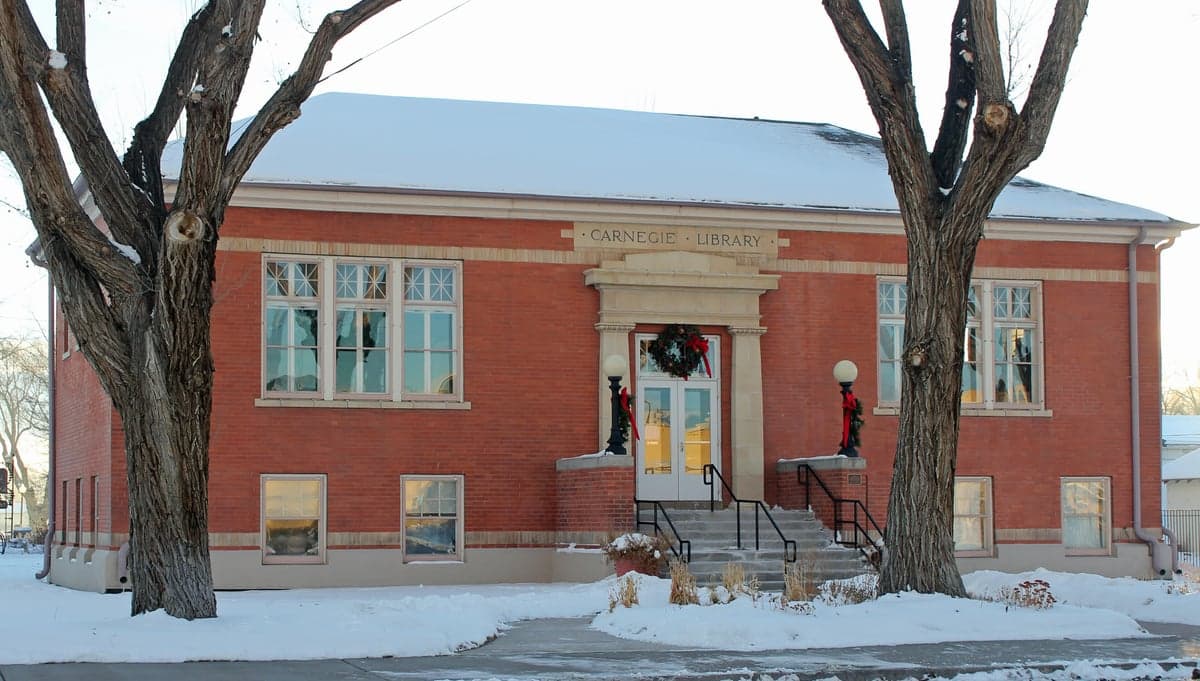
Photo: Wikipedia
Political ClimatePolitical Climate in Rio Grande County
Showing district-level results — no local-only data available.
Local Political AnalysisPolitical Analysis of Rio Grande County
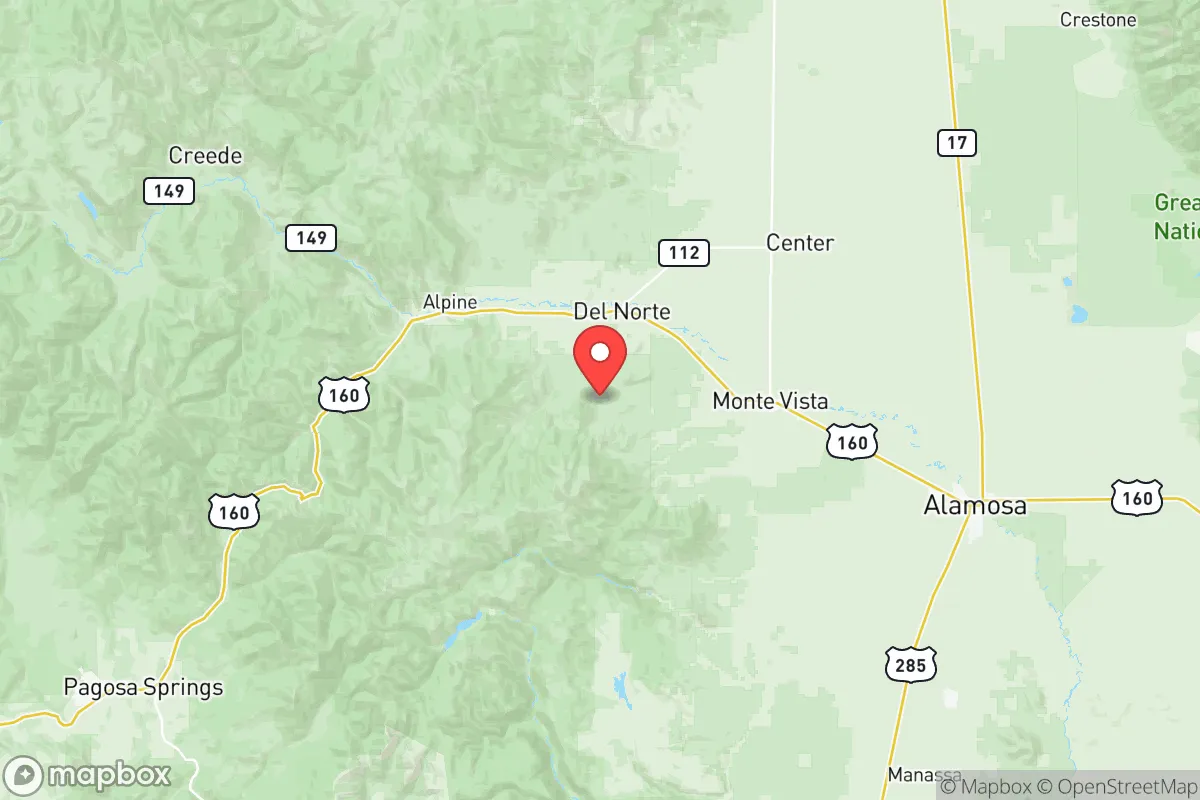
Rio Grande County, Colorado, has long been a reliably conservative stronghold, with a Cook Partisan Voting Index of R+5, but like many rural areas in the state, it’s feeling the pressure of shifting demographics and outside influence. The county has voted Republican in every presidential election since 2000, often by double-digit margins, but the margins have narrowed slightly as newcomers from the Front Range bring more progressive voting habits. The real story here is the internal divide: the county seat of Del Norte leans more moderate, with a noticeable blue streak in local precincts, while the town of Monte Vista and the rural areas around Center and Alamosa County’s border remain deeply red. South Fork, a small mountain community, tends to swing with libertarian-leaning independents who vote Republican but bristle at any government overreach.
How it compares to Colorado’s statewide shift
Colorado as a whole has a Cook PVI of D+6, meaning the state has swung hard left over the past two decades, driven by explosive growth in Denver, Boulder, and the I-25 corridor. Rio Grande County sits in the San Luis Valley, a region that feels culturally and politically closer to rural Utah or New Mexico than to the Front Range. While the state legislature in Denver has passed progressive gun laws, renewable energy mandates, and water regulations that directly impact valley farmers and ranchers, Rio Grande County’s local government has pushed back with resolutions opposing state overreach. The county’s Republican registration advantage is still solid—about 40% Republican to 30% Democrat, with the rest unaffiliated—but those unaffiliated voters are increasingly younger transplants who may tip precincts like Del Norte’s downtown toward the center-left in future elections.
What this means for residents
For folks living here, the most immediate concern is how state-level policies trickle down into daily life. The 2021 “red flag” law, which allows courts to temporarily seize firearms from individuals deemed a threat, was met with widespread resistance in Rio Grande County, with the sheriff publicly stating he would not enforce it. Similarly, the state’s push for 100% renewable energy by 2040 has created friction for the valley’s agricultural economy, which relies on affordable electricity for irrigation pumps and processing plants. Property taxes remain relatively low compared to the Front Range, but the state’s Gallagher Amendment repeal in 2020 means residential property taxes are slowly rising, which hits fixed-income retirees in places like Monte Vista and South Fork particularly hard. The county’s school board has also become a battleground, with conservative parents pushing back against curriculum changes and library book policies imported from Denver.
Culturally, Rio Grande County still feels like a place where personal freedom and self-reliance are the default values—neighbors help neighbors without asking for permission from the state. The annual Monte Vista Potato Festival and the Ski Hi Stampede rodeo in Monte Vista are community touchstones that reinforce a rural, Western identity. But the long-term trend is concerning: if the Front Range’s housing crisis pushes more remote workers into the San Luis Valley, the political balance could shift. For now, the county remains a pocket of conservative sanity in a state that’s increasingly hostile to traditional values, but the fight to keep it that way is getting harder every election cycle.

State Political ClimatePolitical Climate in Colorado
State Political AnalysisPolitical Environment in the State
Colorado’s political landscape has shifted dramatically over the past two decades, from a reliably purple swing state to a solidly blue one with a Cook PVI of D+6. The Democratic coalition today is powered almost entirely by the Front Range urban corridor, while the rest of the state – the Eastern Plains, the Western Slope, and the San Luis Valley – votes overwhelmingly Republican. That split has widened significantly since 2000, when Colorado was still considered a national bellwether; today, the rural-urban chasm is so deep that the state effectively operates as two separate political communities under one capitol dome.
Urban vs. rural divide
Denver, Boulder, and their inner-ring suburbs are the engine of the state’s blue lean. Boulder County is one of the most progressive jurisdictions in the nation, routinely passing carbon taxes, rent control expansions, and sanctuary ordinances. Denver itself votes roughly 75-80% Democratic in statewide elections, driven by a young, transplant-heavy population and a booming tech-and-service economy. The I-25 corridor south to Colorado Springs tells a more nuanced story: Douglas County (Castle Rock, Parker) was historically the GOP’s suburban anchor, but it has purpled noticeably since 2016, flipping to Biden in 2020 and electing Democrats to local offices in 2024. El Paso County (Colorado Springs) remains the state’s largest red county, but even there, the city itself is slowly becoming more competitive – the military and evangelical bases still hold, but younger transplants are nudging the county right-of-center rather than deep red. Further north, Larimar County (Fort Collins) and Weld County (Greeley) illustrate the split perfectly: Fort Collins is a blue-leaning college town with a growing tech sector, while Weld remains reliably red thanks to its agricultural and oil-and-gas base. On the Western Slope, Mesa County (Grand Junction) is the GOP’s stronghold, though it, too, has seen some erosion as remote workers from California settle in. In short, Colorado’s political map is a two-hour drive from deep blue to deep red, and the urban centers are growing far faster than the rural counties.
Policy environment
Colorado’s policy posture reflects its blue-run state government, but with a twist: the Taxpayer’s Bill of Rights (TABOR) still constrains revenue growth, requiring voter approval for any tax increase. That gives the state a superficially moderate fiscal reputation – income tax is a flat 4.4% after a 2020 reduction – but the workarounds have piled up. Fees, enterprise funds, and special districts have proliferated to sidestep TABOR limits. Regulatory posture is decidedly heavy, particularly on energy and housing: the state has adopted California-style electric vehicle mandates, a strict GHG reduction roadmap for 2030 and 2050, and a statewide land-use bill (SB 23-213) that overrides local zoning for transit-oriented development. Education policy is dominated by a strong teachers’ union and a school-funding formula that heavily favors metro districts; rural districts constantly complain of underfunding. Healthcare has expanded via a state-based exchange and a 2022 public-option law (HB 22-1132) designed to cap hospital prices – implementation remains messy. Election laws are among the most progressive in the nation: automatic mail-in ballots to every registered voter, same-day registration, and no voter ID requirement at the polls. If you value local control and low regulation, the state government is a constant source of friction, especially for rural counties that feel dictated to by Denver.
Trajectory & freedom
The trajectory is unmistakably toward expanded state power and reduced personal liberty on several fronts. The Red Flag law (HB 19-1177) passed in 2019 allows firearm seizure without a criminal conviction; a 2023 expansion added more reporting requirements and made it easier for law enforcement to initiate proceedings. Magazine capacity has been limited to 15 rounds since 2013, and a 2024 law raised the purchase age for all firearms to 21. Parental rights have frayed: a 2023 law (SB 23-178) tightened oversight on charter schools and expanded state authority over curriculum, while the state’s 2024 guidance on transgender procedures in schools effectively sidelines parental consent for certain health decisions. Property rights have taken hits through rent control preemption (a 2022 law cleared the way for local rent control after decades of prohibition) and the aforementioned land-use bill that strips local zoning autonomy. Medical autonomy was curtailed by a 2023 law requiring COVID-19 vaccine mandates for healthcare workers. On the tax side, while TABOR has held the line against income tax hikes, the cumulative effect is a state where government reach has expanded considerably since 2019, and where individual freedom in areas like firearms, medical choice, and parental authority has been meaningfully reduced.
Civil unrest & political movements
Colorado has seen its share of visible political flashpoints. The 2020 George Floyd protests in Denver turned into prolonged demonstrations that included property damage and confrontations with law enforcement, permanently shifting trust between residents and city government. The state’s sanctuary policies – including the 2019 law barring state law enforcement from cooperating with federal immigration holds (HB 19-1124) – have created ongoing friction between Denver and rural sheriffs, with some counties (like Weld) formally declaring themselves “non-sanctuary” jurisdictions. Secession rhetoric flares up periodically: the “State of Jefferson” movement has gathered minor support in the Western Slope, and Weld County considered leaving Colorado in 2013 over oil and gas regulations. Election integrity remains a hot-button issue, with Mesa County at the center of controversy after a 2021 security breach of voting equipment – the county clerk was later convicted. More quietly, homeless encampments along the South Platte River and under Denver overpasses have become a daily visual reminder of policy failures, and the urban-rural cultural divide is visible in everything from mask mandates to energy development. You will see bumper stickers reading “Keep Colorado Colorado” and “Don’t California My Colorado” in equal measure.
Projection
Over the next 5-10 years, Colorado will almost certainly become more Democratic, not less. The demographic tide is clear: in-migration from blue states continues to fuel growth along the Front Range, while rural counties lose population. The Hispanic vote, which is concentrated in the San Luis Valley and Pueblo, is trending leftward as well. Republican hope rests on mobilizing the remaining rural base and winning back some suburban ground in Douglas and Larimer counties, but that’s a long shot given current trends. What a new resident should expect: higher taxes at the local level as Denver and its suburbs look for new revenue streams, continued regulatory tightening on energy and construction, and an ever-widening cultural gap between the Capitol and the rest of the state. If you are considering a move, choose your county carefully – county and city government will matter far more than the state’s direction. Some of the fastest-growing red-leaning areas, like Weld County and parts of the Western Slope, still offer a degree of local self-governance that the metros have largely surrendered.
Bottom line for relocation: Colorado is a beautiful state with a climate and economy that are hard to beat, but its political direction is firmly left-of-center and shows no sign of reversal. For a conservative-moving family or individual, the practical takeaway is to look at exurban or rural counties – places like Castle Rock, Greeley, or Grand Junction – where local government still reflects traditional values and where you can avoid the worst of state overreach on firearms, education, and property rights. The state government in Denver will keep pushing left, but your day-to-day freedom will depend almost entirely on which zip code you choose.
* Values derived from national, state, county, city and local statistics and may differ in a specific area. Last updated: 2026-06-01T12:35:59.000Z
Narrative content on this page is AI-generated and may contain mistakes. Verify any details that matter before acting on them.
ReloMaps may earn a commission from affiliate links at no extra cost to you.

