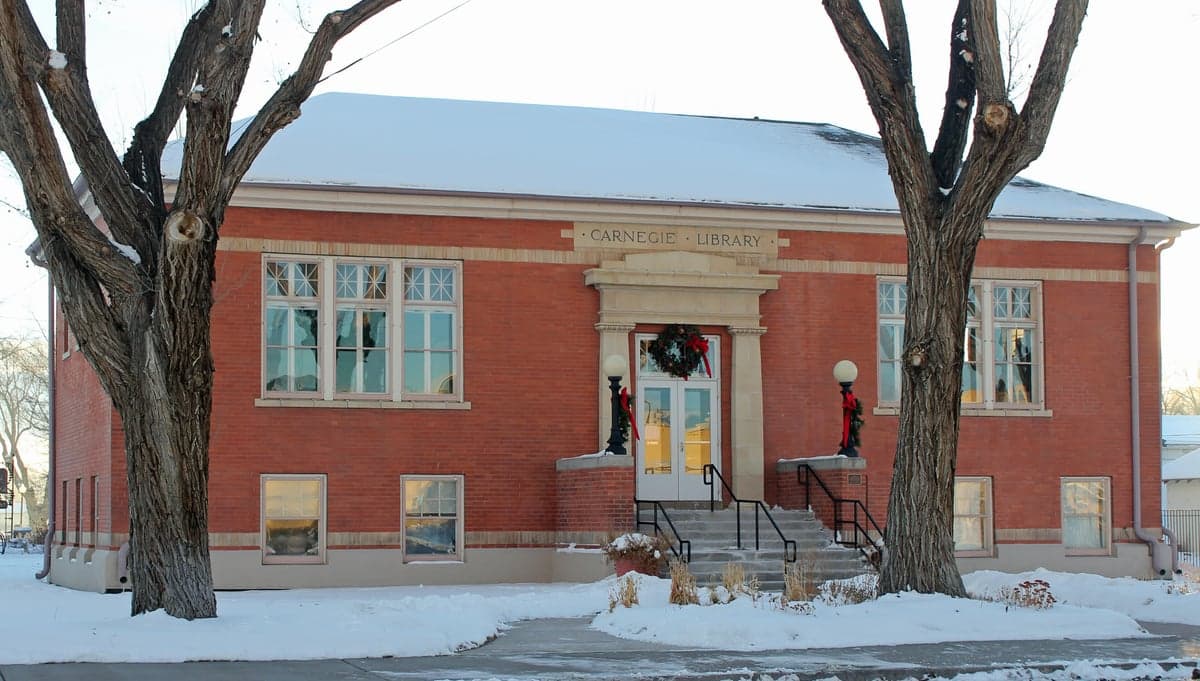
Photo: Wikipedia
Quality of Life in Rio Grande County
A livable area that tracks near national norms for affordability, walkability, and neighborhood health.
What does Quality of Life tell us?
Quality of Life measures an area by evaluating factors like cost of living, nearby amenities, country club access, airport proximity, socioeconomic signals and neighborhood character. For large states, this is a general average — quality of life can vary dramatically between metro areas, suburbs, and rural communities within the same state.
What does this tell us?
Quality of Life measures an area by evaluating factors like cost of living, nearby amenities, country club access, airport proximity, socioeconomic signals and neighborhood character. For large states, this is a general average — quality of life can vary dramatically between metro areas, suburbs, and rural communities within the same state.
Cost of Living
29% below national average
101%
The Real Cost of Living in Rio Grande County for 2026
| Tier | Individual | Family (4) |
|---|---|---|
| Survival | $12k | $23k |
| Comfortable | $42k | $62k |
| Luxury | $112k+ | $174k+ |
| Elite (Top 5%) | $138k+ | $214k+ |
Quality-of-Life Analysis
Rio Grande County stretches across the broad San Luis Valley floor and pinches up into the Rio Grande National Forest, giving residents an unusually wide spectrum of quality-of-life options within a single county. The county's overall cost-of-living index of 71 (100 = US average) and median home value of $215,400 mean even the pricier pockets remain affordable by national standards, while the average commute of just 21.1 minutes keeps daily life compact. The character shifts noticeably from the two main population centers—Del Norte and Monte Vista—to the smaller agricultural hamlets and mountain-side retreats, attracting a mix of outdoor enthusiasts, agricultural workers, remote professionals, and retirees seeking space and quiet.
Largest town(s) & population centers
Del Norte (county seat, pop. ~1,600) and Monte Vista (pop. ~4,400) are the county's anchors, each offering a distinct daily rhythm. Monte Vista is the economic hub, home to the region's hospital (Rio Grande Hospital), the main grocery and retail outlets, and Monte Vista High School. Its grid of tree-lined streets centers on a compact downtown with a mix of local restaurants, auto shops, and county services. Del Norte, smaller and quieter, leans into its historic downtown along the Rio Grande; the nearby Rio Grande National Forest office and the Del Norte Food Co-op give it a slightly more outdoorsy, community-oriented vibe. Both towns have public schools, a public library, and basic healthcare, but residents drive to Alamosa (20 minutes east) for big-box retail, the Adams State University campus, and specialist medical appointments. The median rent of $782 makes renting feasible even for lower-income households, and homes in these towns tend to be older single-family houses on quarter-acre lots.
Smaller towns & rural pockets
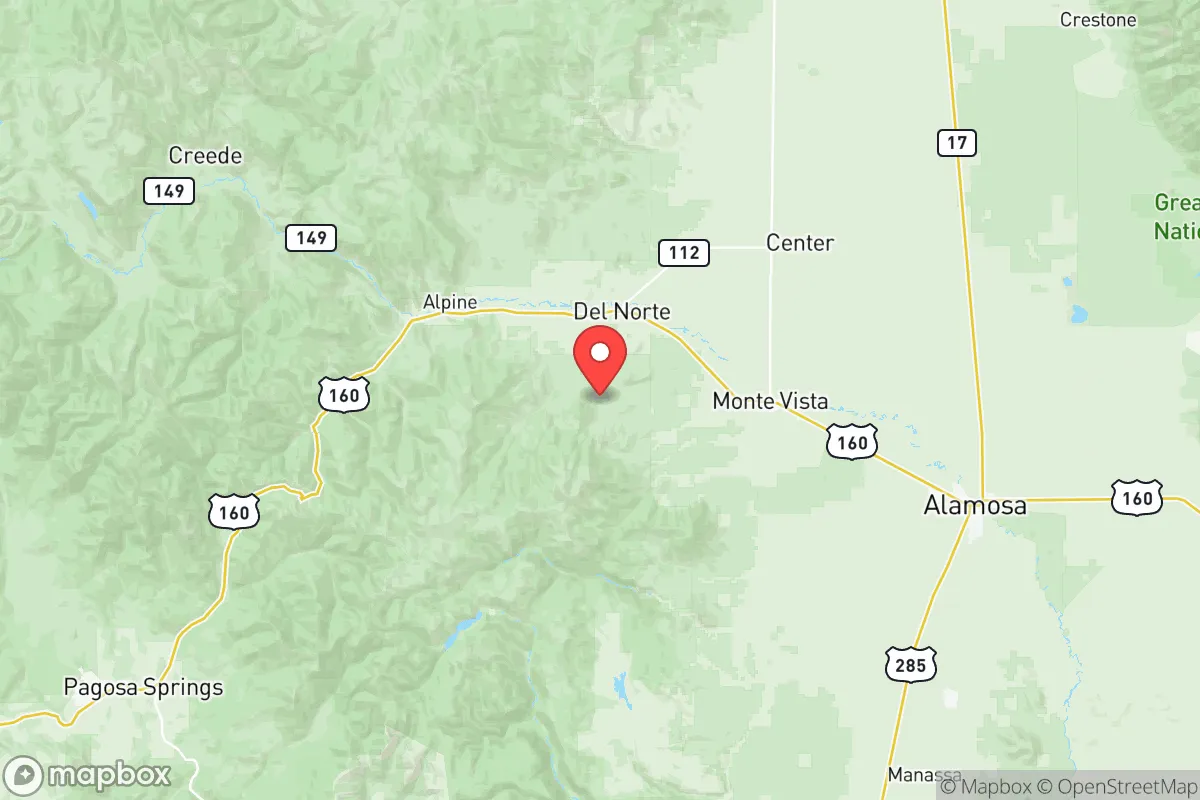
West of Del Norte, South Fork (pop. ~400) is a recreation gateway at the base of Wolf Creek Pass, with a small grocery, a handful of motels, and easy access to the Rio Grande's gold-medal trout water and the Continental Divide trailhead. East of Monte Vista, Center (pop. ~2,200, straddling Rio Grande and Saguache counties) is a working agricultural community dominated by potato and barley farms; daily life revolves around the co-op, the post office, and the school district. The unincorporated community of Homelake, between Monte Vista and Del Norte, is known for the Colorado State Veterans Center at Homelake and a few dozen homes amidst irrigated fields. Scattered rural subdivisions—such as those along County Roads 11 and 13 west of Del Norte—offer five-to-forty-acre parcels where residents live off well water and septic, with no municipal services but quiet and starry skies. These areas lack sidewalks, streetlights, and public transit; a personal vehicle is essential.
Cost & lifestyle range
The lifestyle spread is driven by location and housing stock. At the low-cost end, Monte Vista and Center have the most affordable older homes, with some fixer-upper houses available below $150,000. Rentals in these towns are tight but rarely exceed $850 for a two-bedroom. At the mid-range, Del Norte and the Homelake area offer somewhat newer manufactured homes and modest ranch houses, typically $180,000–$250,000. The higher end concentrates in South Fork and the mountain-fringe parcels west of Del Norte, where cabin-style homes with river or mountain views can reach $350,000–$450,000—still well below Colorado's statewide median. Utility costs are notable: propane or wood heat is common in rural homes, and electric bills can spike in winter. Property taxes remain low (Colorado's lowest county average), but internet access varies—South Fork and East Del Norte have fiber in some subdivisions, while many rural pockets still rely on fixed wireless or satellite. Amenities are sparse; there is no movie theater, no indoor shopping mall, and limited dining options beyond diners and taquerias. Residents trade urban convenience for immediate access to the Rio Grande, the San Juan Mountains, and Great Sand Dunes National Park, all within a 30-minute drive.
Rio Grande County suits people who value quiet, affordability, and the outdoors more than career density or cultural variety. Remote workers, retirees on fixed incomes, and families who don't mind a 20-minute drive to the nearest Walmart find the county's low cost of living and short commute a genuine advantage. Those who need daily walkable amenities, job diversity, or high-speed internet everywhere should look elsewhere—but for the right person, the range between a small-town Main Street and a mountain cabin property offers a real, grounded quality of life.

Crime in Rio Grande County
Crime rates similar to the national median for U.S. locations.
Violent CrimeViolent Crime Analysis
Property CrimeProperty Crime Analysis
Crime Analysis
Rio Grande County's violent crime rate of 426.6 per 100,000 residents exceeds both the Colorado state average and the national rate, while property crime (2,173.1 per 100,000) also runs higher than typical for rural Colorado. Most incidents concentrate in the county's largest town, Monte Vista, and along the Highway 160 corridor, whereas Del Norte, South Fork, and unincorporated farming communities report significantly lower numbers. The 12th Judicial District, which covers Rio Grande County along with Alamosa, Conejos, Costilla, Mineral, and Saguache counties, has not adopted the progressive prosecution policies seen in larger Colorado jurisdictions like Denver or Boulder — a fact that local residents credit for keeping repeat-offender crime in check. Should that approach shift, the county's already elevated rates could climb further.
Crime in context
Violent crime in Rio Grande County (426.6 per 100K) sits about 12% above the 2023 national benchmark and roughly 25% above the Colorado statewide figure of 341 per 100K. Property crime, at 2,173.1 per 100K, likewise runs higher than the national average (1,954 per 100K) and significantly above Colorado's state rate of 1,735 per 100K. These numbers place Rio Grande County among the higher-crime rural counties in the San Luis Valley, though they remain well below the rates of Colorado's Front Range urban centers such as Denver, Aurora, and Colorado Springs. Monte Vista accounts for a disproportionate share of both violent and property offenses, in part because it contains the county's retail core, the regional bus station, and several low-income housing complexes. By contrast, Del Norte, the county's second-largest town, records roughly half the violent crime rate of Monte Vista, and South Fork — a tourism-oriented gateway to the Rio Grande National Forest — sees the lowest crime figures in the county, with property crime limited largely to seasonal vehicle break-ins.
What residents experience
Daily safety in Rio Grande County varies sharply by location and time of day. In Monte Vista, residents regularly encounter panhandling, public intoxication, and occasional aggravated assaults near the downtown commercial strip and the Alamosa County line. Property crime — especially theft from vehicles and residential burglary — is the most commonly reported offense; many locals install security cameras and keep vehicles locked even in driveways. Del Norte offers a quieter atmosphere; the police department here emphasizes community-oriented patrols, and the town's compact layout means fewer isolated spots for opportunistic crime. South Fork and the surrounding mountain subdivisions experience low crime year-round, though the seasonal influx of summer rafters and winter skiers brings a spike in theft from unlocked cars. County Sheriff's deputies cover the vast rural areas, where response times can exceed 30 minutes. Because the 12th Judicial District's DA office has not embraced bail-reform experiments or de facto decriminalization of low-level offenses — common in Denver and Boulder — residents of Rio Grande County generally see arrested individuals face consistent consequences, a factor many survey respondents cite as a reason for feeling safer than the raw crime numbers might suggest.
Neighborhood-level variation is pronounced. Within Monte Vista, the blocks immediately east of the Rio Grande railway tracks and near the high school report the most calls for service, while the west-side residential areas north of Highway 160 remain relatively quiet. Del Norte's historic district and the newer subdivision east of town are considered safe; the area around the former lumber mill (now a light-industrial zone) sees occasional trespassing
* Values derived from national, state, county, city and local statistics and may differ in a specific area. Last updated: 2026-06-01T12:35:59.000Z
Narrative content on this page is AI-generated and may contain mistakes. Verify any details that matter before acting on them.
ReloMaps may earn a commission from affiliate links at no extra cost to you.

