Demographics of Colstrip, MT
Affluence Level in Colstrip, MT
A middle-class area roughly in line with national averages across income, home values, education, and employment.
People of Colstrip, MT
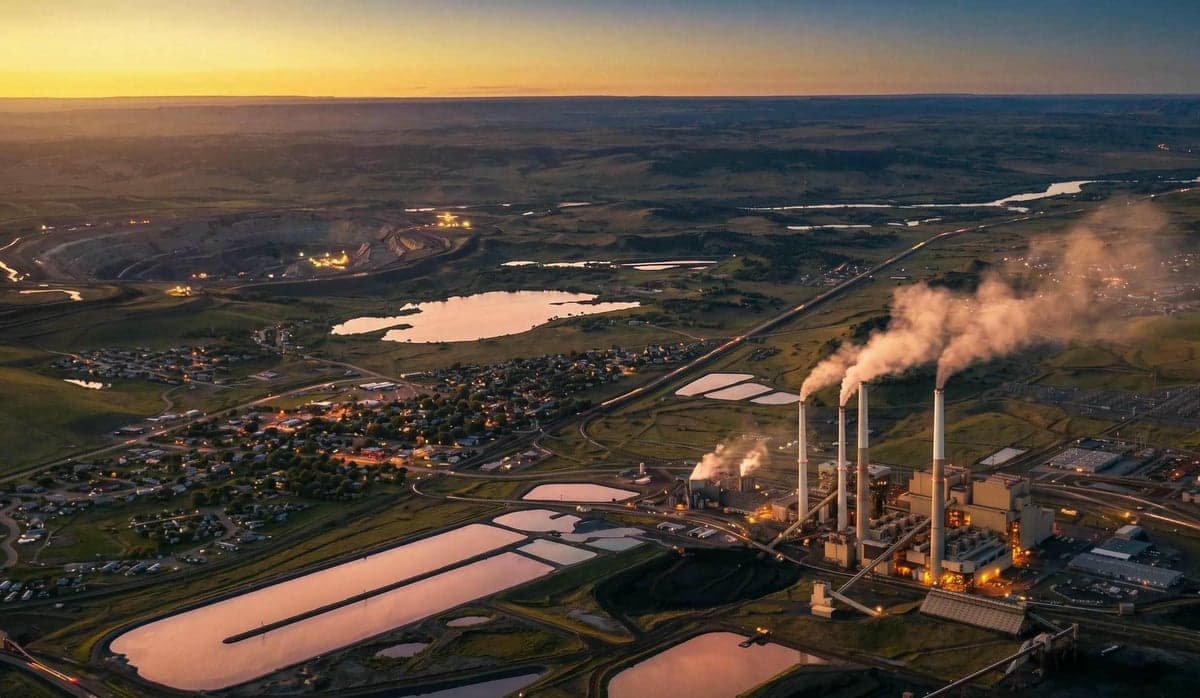
The people of Colstrip, Montana, today number roughly 2,156, forming a tight-knit, predominantly white community shaped by a single dominant industry: coal. The city’s character is defined by its working-class roots, with a median age around 38 and a notably low foreign-born population of just 0.9%. Distinctive markers include a strong sense of local identity tied to the Colstrip Power Plant, a relatively high homeownership rate, and a population density that reflects its rural eastern Montana setting.
How the city was settled and grew
Colstrip is a genuine post-1900 planned community, with no colonial or 19th-century settlement history. Its founding and growth are directly tied to coal mining. The Northern Pacific Railway established the town in 1924 to house miners extracting sub-bituminous coal for locomotive fuel. The original population was almost entirely white, drawn from other mining towns in Montana and the Upper Midwest, including many of Scandinavian and German descent. These early workers built the Original Townsite neighborhood, centered around Park Avenue and the original company store, where modest company-built homes still stand. A second wave arrived during World War II, when the mine expanded to supply the war effort, filling the West End area with new housing for miners and their families. By the 1950s, the population hovered around 1,200, almost exclusively white, with a small number of Native American workers from the nearby Northern Cheyenne Reservation commuting in but not settling in the town itself.
Modern era (post-1965)
The post-1965 era brought no significant immigration-driven demographic change to Colstrip. The city’s foreign-born population remains negligible at 0.9%, and its racial composition has shifted only modestly. The major domestic in-migration wave occurred in the 1970s and 1980s, when the construction of the Colstrip Power Plant (Units 1-4) created hundreds of high-paying jobs. This drew workers from across Montana and the broader Rocky Mountain region, many of whom settled in the Hillcrest neighborhood, a newer subdivision of ranch-style homes built on the town’s eastern edge. A smaller number of Hispanic workers, now 7.6% of the population, arrived during this period, primarily employed in construction and plant maintenance, and concentrated in the Southside area near the railroad tracks. The Black population remains at 0.0%, and there are no recorded East/Southeast Asian or Indian subcontinent residents. The college-educated share is 25.2%, reflecting the technical and engineering roles at the plant. The North Park neighborhood, developed in the 1990s, absorbed many of the plant’s managerial and engineering staff, creating a subtle socioeconomic divide from the older, blue-collar Original Townsite.
The future
The population of Colstrip is heading toward gradual decline and homogenization. The city peaked at roughly 2,400 residents in the 1990s and has since fallen to 2,156, driven by the uncertainty surrounding the coal plant’s future. As of 2026, Units 1 and 2 are slated for closure by 2027, with Units 3 and 4 facing potential retirement by 2030-2035. This has already triggered out-migration of younger families and skilled workers. The Hispanic share (7.6%) is plateauing, as new arrivals are not replacing those leaving. The white share (72.1%) is stable but aging. No immigrant communities are growing, and the city is not tribalizing into distinct ethnic enclaves—rather, it is becoming more uniformly white and older. The Hillcrest and North Park neighborhoods are seeing the most vacancies, while the Original Townsite retains a core of long-term retirees. Over the next 10-20 years, Colstrip will likely shrink to a population of 1,500-1,800, becoming a bedroom community for workers commuting to jobs in Miles City or Billings, with a demographic profile that is even more homogenous than today.
For someone moving in now, Colstrip is a place in transition—a stable, safe, and affordable community with a strong sense of identity, but one whose economic anchor is fading. The population is becoming older, whiter, and smaller, with limited opportunities for newcomers outside of the energy sector. It remains a viable choice for those seeking a low-cost, rural lifestyle in eastern Montana, but the long-term outlook requires careful consideration of the shrinking job base and aging infrastructure.

* Values derived from national, state, county, city and local statistics and may differ in a specific area. Last updated: 2026-04-30T06:18:26.000Z
Narrative content on this page is AI-generated and may contain mistakes. Verify any details that matter before acting on them.
ReloMaps may earn a commission from affiliate links at no extra cost to you.

