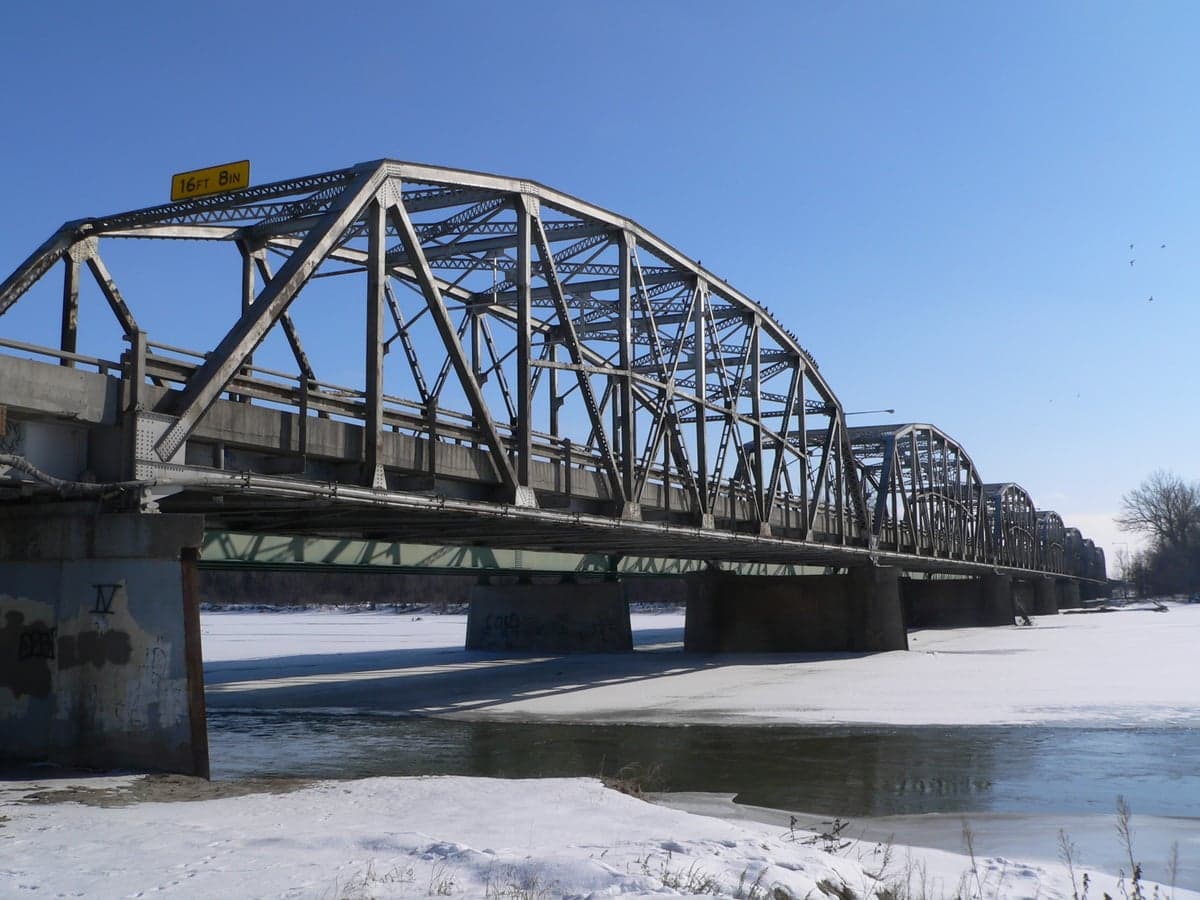
Photo: Wikipedia
Personal Sovereignty in Columbus, NE
Moderate friction. Expect trade-offs in some aspect of personal liberty and independence.
What does Personal Sovereignty tell us?
Personal Sovereignty measures your capacity for self-reliance and independence with minimal government friction. Higher scores mean fewer barriers between you and the way you want to live... but it assumes you have the space you need and good neighbors.
What does this tell us?
Personal Sovereignty measures your capacity for self-reliance and independence with minimal government friction. Higher scores mean fewer barriers between you and the way you want to live... but it assumes you have the space you need and good neighbors.
State Policy
Energy independence: Importer (35% of energy produced in-state)
Personal Liberty
Homesteading

Personal Liberty Analysis
Columbus, Nebraska offers a notably high degree of personal sovereignty compared to many other Midwestern towns of similar size, largely because Nebraska’s state-level legal framework leaves significant room for individual decision-making in daily life. The city itself operates with a relatively light administrative touch, and the surrounding Platte County culture strongly emphasizes self-reliance and neighborly non-interference. For a single individual or parent approaching relocation from a survivalist or prepper mindset, Columbus presents a strategic balance: you get the economic stability of a manufacturing hub without the heavy regulatory and cultural constraints found in larger cities like Omaha or Lincoln. The key question is whether the local and state posture on taxes, self-defense, property rights, and medical autonomy aligns with a long-term strategy of minimizing government overreach into your household.
Tax burden and regulatory posture: how Nebraska compares to surrounding states
Nebraska’s overall tax burden is moderate, but Columbus benefits from being in a county that has historically resisted aggressive property tax increases. The state’s income tax is a flat rate of 3.51% for 2026, which is competitive with Iowa’s 3.8% but higher than South Dakota’s zero-rate model. Property taxes in Platte County are around 1.5% of assessed value, which is on par with the state average but noticeably lower than in Douglas County (Omaha) or Lancaster County (Lincoln). For a prepper or conservative-leaning individual, the more critical factor is the regulatory environment: Nebraska does not have a state-level building code for most rural areas, and Columbus’s city code is relatively permissive regarding accessory structures, sheds, and workshops. Zoning in the city limits is standard for a town of 24,000, but the extraterritorial jurisdiction is small, meaning land just outside city limits is largely unregulated by municipal rules. This makes it feasible to buy a few acres on the outskirts and build or modify structures without layers of permitting delays. The state’s right-to-farm laws also protect agricultural activities from nuisance lawsuits, which is a practical advantage if you plan to keep livestock or operate a small homestead.
Self-defense and gun law specifics: what Columbus residents can legally do
Nebraska is a shall-issue state for concealed carry permits, and as of 2023, permitless (constitutional) carry is legal for residents 21 and older who can legally possess a firearm. Columbus has no additional city-level restrictions beyond state law, so you can carry openly or concealed without a permit anywhere that isn’t federally prohibited (schools, government buildings, etc.). The state preempts local firearm ordinances, meaning the city council cannot ban carry in parks, restaurants, or other public spaces. For a prepper mindset, this is a significant advantage: you can maintain a full defensive capability without worrying about a sudden city council vote stripping that right. Magazine capacity is not restricted, and there is no state-level registry for long guns or handguns. Stand-your-ground laws apply in Nebraska, with no duty to retreat in any place you are lawfully present. Castle doctrine protections extend to your vehicle and place of business. The only notable limitation is that private property owners can post signs prohibiting carry, but this is rare in Columbus outside of a few chain stores. For parents, this legal environment means you can teach firearm safety and storage at home without fear of state interference, and you can legally transfer firearms to your children for hunting or target shooting under supervision.
Self-reliance and homesteading viability: lot sizes, zoning, and off-grid feasibility
Columbus and its surrounding area offer strong viability for a self-reliant lifestyle, especially if you target land just outside the city limits. Inside the city, standard residential lots range from 6,000 to 10,000 square feet, and the zoning code allows for backyard chickens, small gardens, and even a single beehive without a special permit. However, if you want larger livestock, a substantial garden, or off-grid systems, the smart move is to look at properties in the unincorporated areas of Platte County, where lot sizes of 1 to 5 acres are common and reasonably priced (around $5,000–$10,000 per acre as of 2026). The county has no zoning for agricultural land, so you can build a pole barn, install solar panels, dig a well, and set up a septic system without needing a variance. Off-grid feasibility is high: Nebraska’s net metering policy allows you to connect solar to the grid and sell back excess, but you can also go fully off-grid with no legal penalty as long as you meet basic health department requirements for water and waste. Rainwater collection is unrestricted at the state level, and Columbus’s average annual rainfall of 28 inches is sufficient for supplemental irrigation. The main practical limitation is that natural gas is the dominant heating fuel, but wood-burning stoves are legal and common in rural areas. For a prepper, the ability to quietly build a self-sufficient homestead without bureaucratic hurdles is one of Columbus’s strongest selling points.
Personal liberties: parental rights, medical autonomy, speech, and property
Nebraska has a strong track record on parental rights, with state law explicitly affirming that parents have the fundamental right to direct the upbringing, education, and healthcare of their children. Columbus public schools follow state curriculum standards, but homeschooling is lightly regulated: you only need to file a simple notice and provide annual assessment results, with no required curriculum approval or home visits. Medical autonomy is more mixed: Nebraska does not have a state-level vaccine mandate for adults, but some employers in Columbus’s manufacturing sector may require certain immunizations. The state does not have a right-to-try law for experimental treatments, but it does allow direct primary care agreements, which let you bypass insurance for routine care. On speech and property, Nebraska is a right-to-work state, meaning you cannot be forced to join a union as a condition of employment. Property rights are strongly protected: eminent domain for private economic development is restricted, and the state has a robust private property protection act. For a conservative-leaning individual concerned about government overreach, the most reassuring factor is that Columbus’s local government is small and non-intrusive; the city council meets twice a month, and the police department focuses on traffic and nuisance complaints rather than proactive enforcement of lifestyle choices. There are no city ordinances regulating noise after 10 p.m. in residential areas, no bans on outdoor burning (with a simple permit), and no restrictions on the number of vehicles you can park on your own property.
Overall, Columbus, Nebraska ranks well above average for personal sovereignty among towns of its size in the Great Plains. The combination of constitutional carry, permissive rural zoning, low regulatory overhead on homesteading, and strong parental rights creates an environment where a survivalist or prepper can operate with minimal friction from local or state government. The main trade-offs are the state income tax (which is unavoidable if you work in Nebraska) and the lack of a major prepper community infrastructure like large-scale survival expos or dedicated retreat networks. But for a single individual or family looking to quietly build a self-reliant life without constant legal or cultural pushback, Columbus offers a solid foundation that is hard to beat in the current national climate.

* Values derived from national, state, county, city and local statistics and may differ in a specific area. Last updated: 2026-04-21T16:45:48.000Z
Narrative content on this page is AI-generated and may contain mistakes. Verify any details that matter before acting on them.
ReloMaps may earn a commission from affiliate links at no extra cost to you.

