 Popular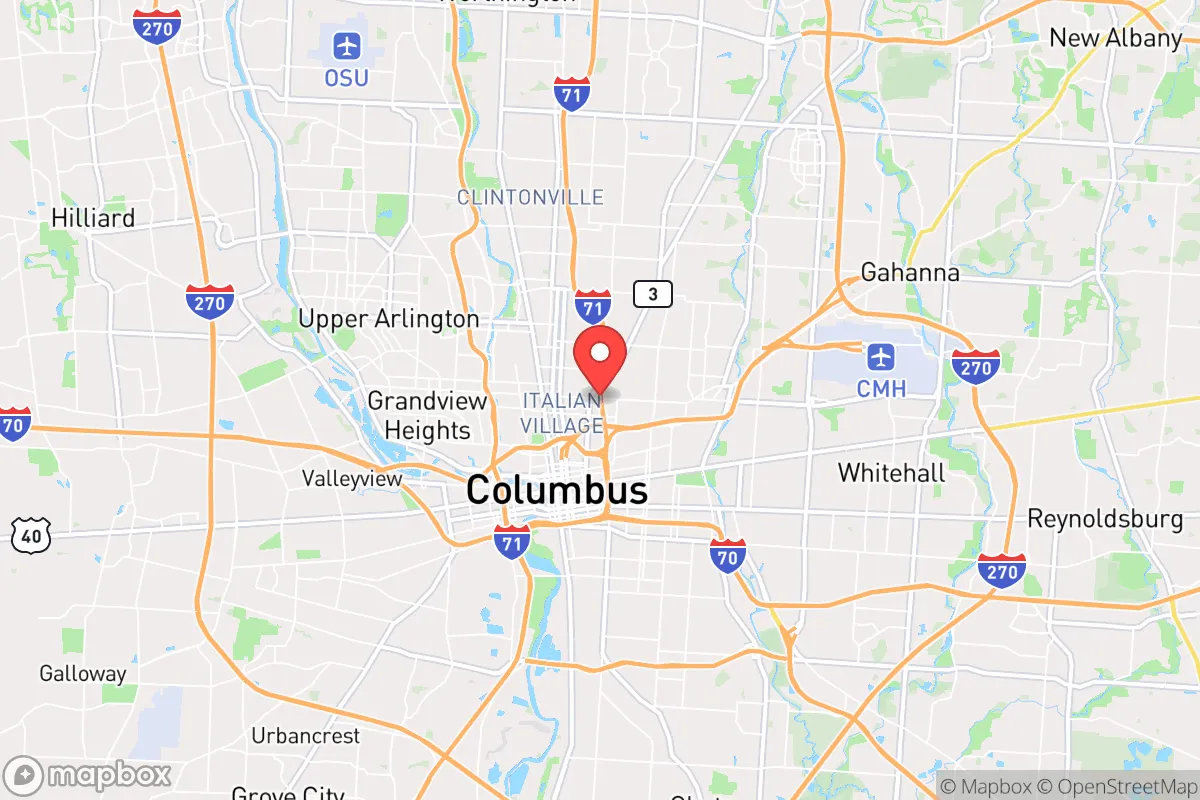
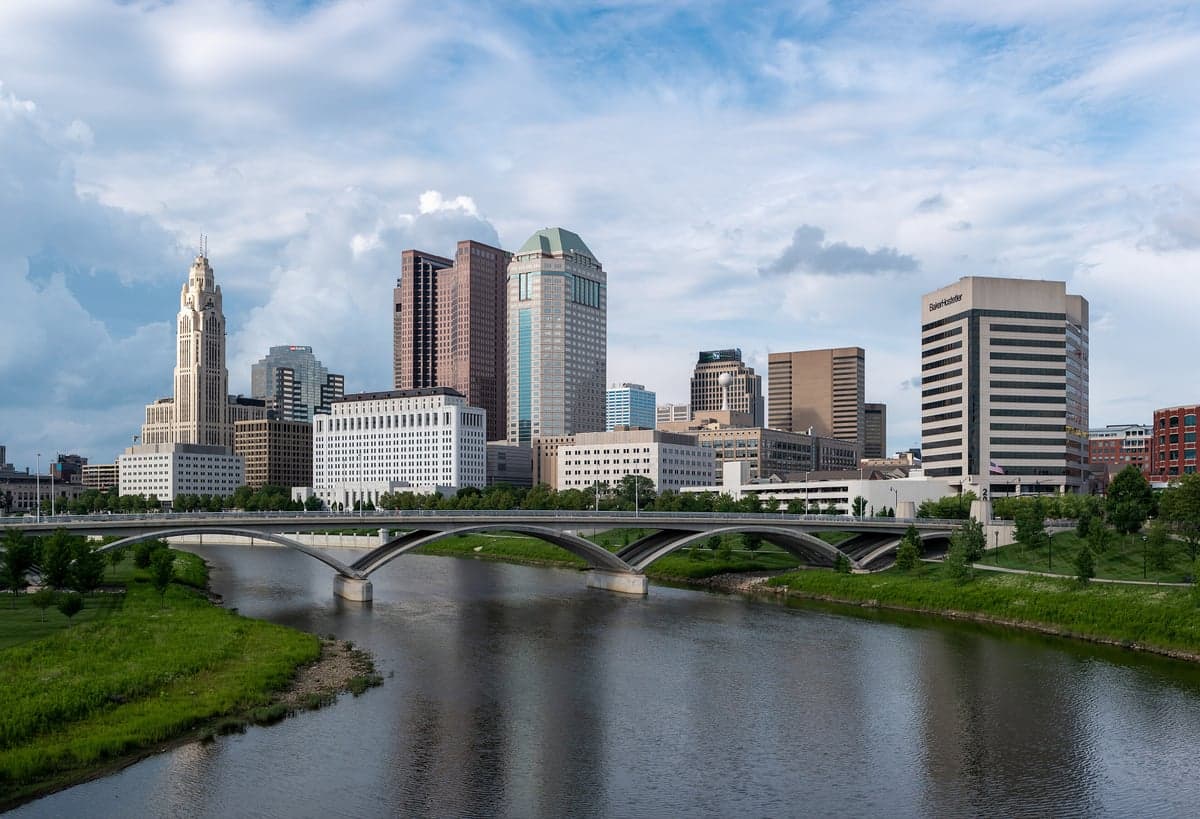
Photo: Wikipedia
Demographics of Columbus, OH
Affluence Level in Columbus, OH
A middle-class area roughly in line with national averages across income, home values, education, and employment.
People of Columbus, OH
Columbus, Ohio, is a city of 906,480 residents defined by its role as a state capital, a major university hub, and a Midwestern logistics and insurance center. Its population is notably diverse: 51.7% White, 28.8% Black, 7.9% Hispanic, 2.9% Indian (subcontinent), and 2.8% East/Southeast Asian, with 7.7% foreign-born and 38.2% holding a college degree. The city’s character is a blend of established working-class neighborhoods, a growing professional class tied to Ohio State University and tech investment, and distinct ethnic enclaves that have formed over successive migration waves.
How the city was settled and grew
Founded in 1812 as the state capital, Columbus was deliberately sited at the confluence of the Scioto and Olentangy rivers to serve as a political and transportation hub. Early settlers were primarily English, German, and Irish migrants drawn by land grants and canal construction. The National Road (U.S. Route 40) and later railroads solidified the city as a distribution center. By the late 19th century, German immigrants had built a strong presence in the German Village neighborhood, south of downtown, where their brick homes and breweries still define the area. A smaller wave of Italian immigrants settled in the Italian Village area (part of the Short North), while Jewish immigrants concentrated near the near east side, around what is now Bexley. The Great Migration (1910–1970) brought a massive influx of Black Americans from the rural South, who established a vibrant community in the King-Lincoln Bronzeville neighborhood, centered on Long Street. By 1950, Columbus was roughly 85% White and 12% Black, with the Black population largely confined to the near east side due to restrictive covenants and redlining.
Modern era (post-1965)
The 1965 Hart-Cellar Act reshaped Columbus’s demographics by opening immigration from Asia, Africa, and Latin America. The most significant post-1965 shift has been the growth of the Indian (subcontinent) population, now 2.9% of the city. This community, heavily tied to Ohio State University’s engineering and medical programs and to tech firms like JPMorgan Chase and Nationwide, has concentrated in the northwest suburbs such as Dublin and Westerville, as well as the University District near campus. East/Southeast Asian communities (2.8%)—primarily Chinese, Korean, and Vietnamese—have also settled in the northwest and in the Morse Road corridor, where Asian grocery stores and restaurants cluster. The Hispanic population (7.9%) is largely Mexican and Puerto Rican, with growing enclaves on the west side in Hilltop and the South Side. Meanwhile, the Black population (28.8%) has suburbanized significantly since the 1990s, moving east into Reynoldsburg and Whitehall, while the historic King-Lincoln Bronzeville area has seen some gentrification and displacement. The White population (51.7%) has become more concentrated in the outer-ring suburbs and in gentrifying urban neighborhoods like the Short North and Clintonville.
The future
Columbus is not homogenizing; rather, it is tribalizing into distinct, self-reinforcing enclaves. The Indian and East/Southeast Asian populations are growing rapidly, driven by high-skilled immigration and H-1B visa holders at Ohio State and tech employers, and are likely to reach 5-6% combined within a decade. The Hispanic population is growing steadily through both immigration and higher birth rates, particularly on the west and south sides. The Black population share has plateaued near 29%, as out-migration to the South (especially Georgia and North Carolina) offsets natural increase. The White population is aging and declining in the urban core but remains dominant in the outer suburbs. The foreign-born share (7.7%) is below the national average (13.7%) but rising, and the city is becoming more Asian and Hispanic, not less diverse. The next 10-20 years will likely see continued suburban expansion, with the northwest corridor (Dublin, Hilliard) becoming increasingly Asian and Indian, the east side remaining predominantly Black, and the west side becoming more Hispanic.
For someone moving to Columbus now, the city offers a stable, growing economy with a clear demographic trajectory: it is becoming more multiethnic, more educated, and more suburban. The political and cultural character is moderate—Ohio State and state government anchor a pragmatic, business-friendly environment—but the city is not a melting pot; it is a collection of distinct neighborhoods and suburbs where different groups maintain their own institutions and identities. New arrivals should expect to find a community that matches their background and priorities, whether that is a family-oriented Indian enclave in Dublin, a historically Black neighborhood in the east side, or a young professional corridor in the Short North.

* Values derived from national, state, county, city and local statistics and may differ in a specific area. Last updated: 2026-04-21T09:41:20.000Z
Narrative content on this page is AI-generated and may contain mistakes. Verify any details that matter before acting on them.
ReloMaps may earn a commission from affiliate links at no extra cost to you.

