 Popular
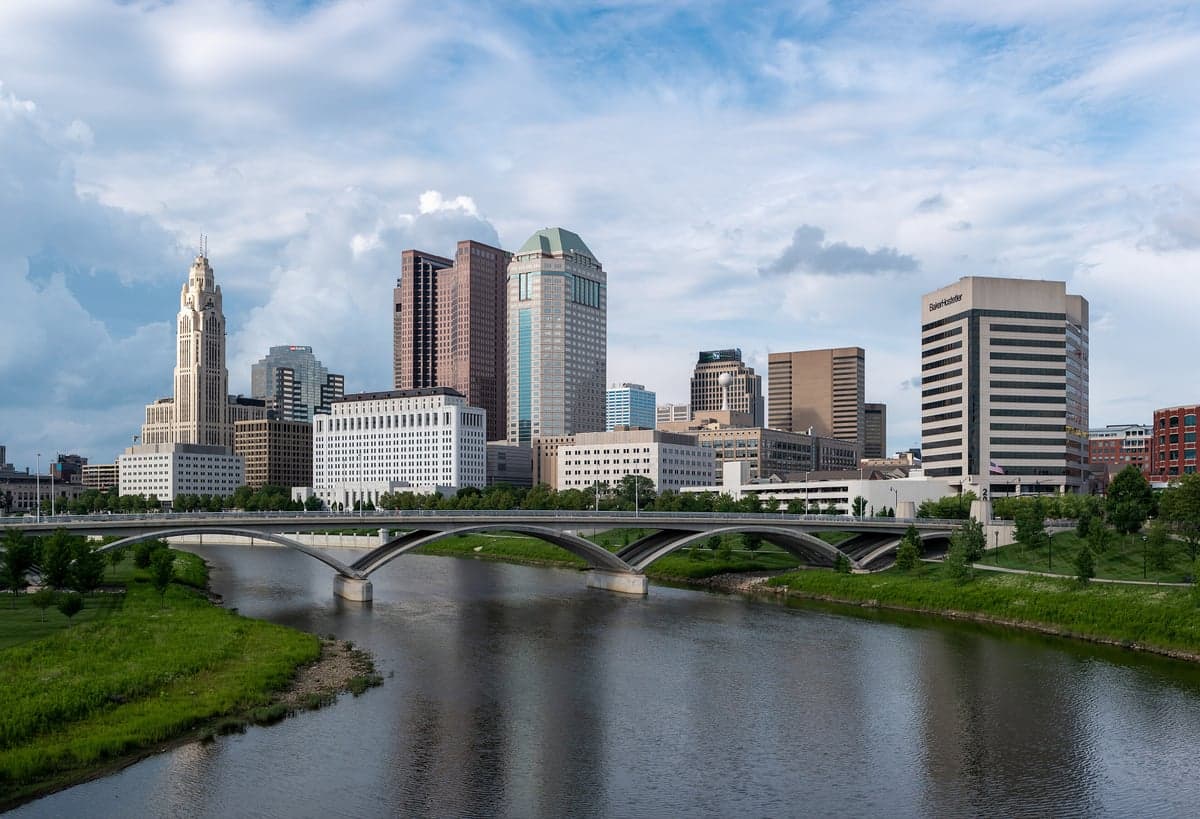
Photo: Wikipedia
Strategic Assessment of Columbus, OH
Multiple tactical vulnerabilities. Population density, target proximity, or disaster risk are likely compounding. A retreat property and exit planning is required.
What does the Strategic Assessment tell us?
Our Strategic Assessment grades tactical survivability of an area. Major population centers, military targets, fallout zones, natural disasters, and border exposure all drive risk — lower exposure means a more defensible position in a crisis.
This is heavily inspired by Joel Skousen's Strategic Relocation book. Highly recommended you checkout the book ($)What does this tell us?
Our Strategic Assessment grades tactical survivability of an area. Major population centers, military targets, fallout zones, natural disasters, and border exposure all drive risk — lower exposure means a more defensible position in a crisis.
This is heavily inspired by Joel Skousen's Strategic Relocation book. Highly recommended you checkout the book ($)Strategic Pillars

Key Distances
Regional Safe Places
Below is our recommended "safe zones" in Ohio and the surrounding area based on our strategic heuristics. For most people, it's unrealistic to live in a “safe zone” full-time due to work, family or other personal reasons. They tend to be more rural. However, many of these areas are perfect for second homes and retreat properties that double as a vacation home or even a short-term rental.

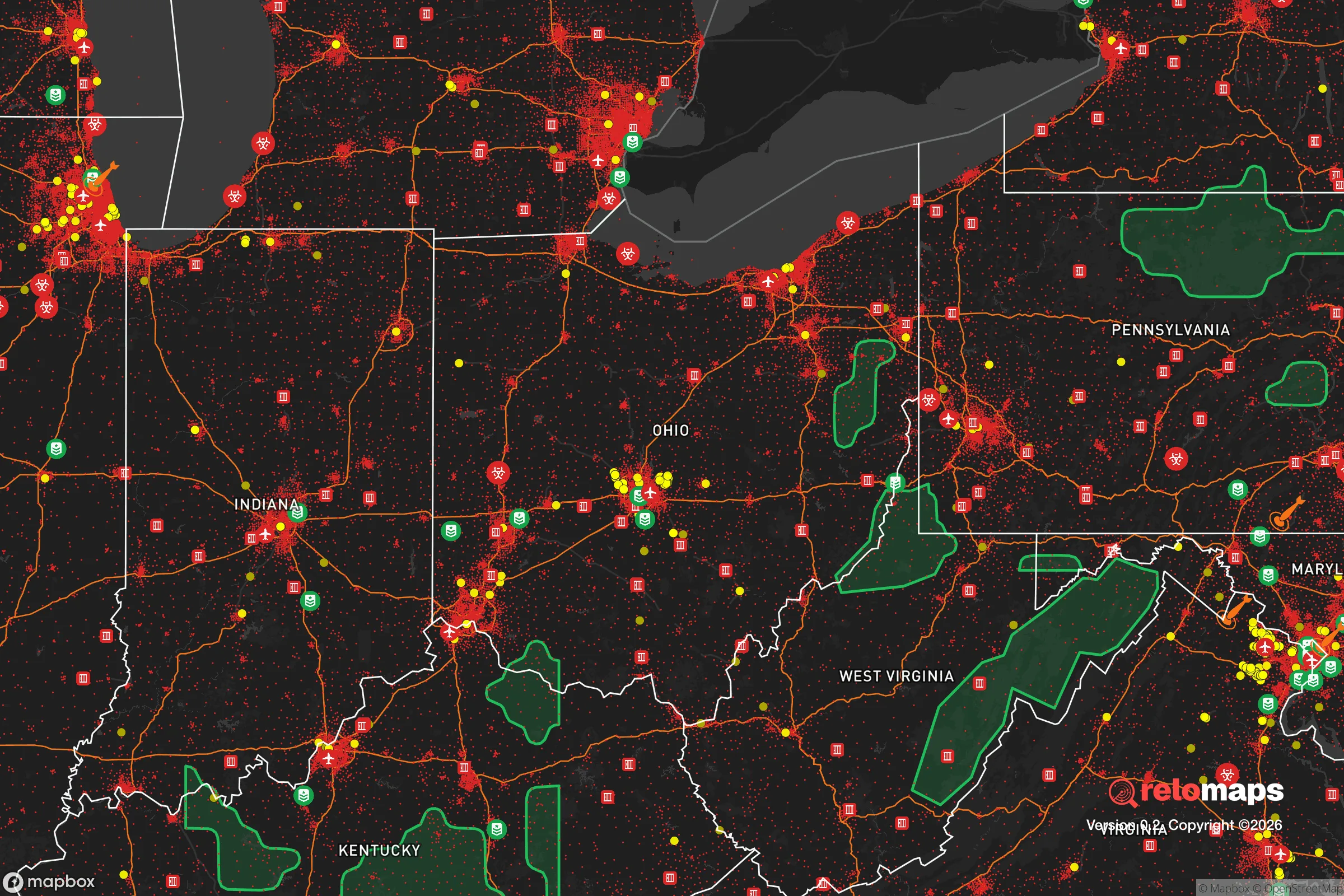


Important Note: For informational purposes only. This does not mean nothing bad ever happens in the green zones. Please use common sense. This is based on public data and modeled with AI. We tried to take a conservative approach but mistakes happen. We update this regularly as new information becomes available.
Solar Generator Recommendations
Backup power matters more here than in safer locations. We've picked three solar generators across budgets and capacity tiers — start with the budget unit if you only need a few essentials, or step up if you want to run a fridge and HVAC for days at a time.

Jackery Portable Power Station Explorer 300
Budget OptionPower on the Go: Weighing only 11 lbs, it's convenient to set up and store with book-sized foldable solar panels

BLUETTI Portable Power Station AC180
Designed for both indoor and outdoor scenarios, AC180 is highly capable as it has a robost capacity and continuous output power.

EF ECOFLOW DELTA Pro Ultra Power Station
Upgraded PickEcoFlow DELTA Pro Ultra is a whole-home energy system designed to grow with your family. Integrated with the Smart Home Panel 2, it scales to meet your evolving energy needs — keeping your home powered, intelligent, and secure through every stage of life.
We earn a commission, at no additional cost to you.
Strategic Assessment Analysis
Columbus, Ohio, sits in a precarious strategic position that demands serious consideration for anyone prioritizing long-term resilience and preparedness. While the city itself is a major population and logistics hub, its location in the heart of the Midwest offers both genuine advantages and significant vulnerabilities that a survival-minded relocator must weigh carefully. The area’s flat terrain, dense road networks, and proximity to critical infrastructure create a mixed picture: it is not a hardened retreat, but it is not a complete write-off either, provided you understand the risks and plan accordingly.
Geographic position and natural advantages for long-term stability
Columbus occupies a central position in Ohio, roughly equidistant from Cleveland, Cincinnati, and the state’s eastern and western borders. This interior location provides a degree of insulation from coastal threats—hurricanes, storm surges, and direct naval or airborne attacks are not realistic concerns here. The region sits atop the Scioto River and the Olentangy River, with the Ohio River about 90 miles to the south, offering reliable freshwater sources. The surrounding landscape is predominantly agricultural, with deep, fertile soils that support corn, soybeans, and wheat. For a prepper, this means local food production capacity is high, and the flat terrain makes gardening, livestock, and even small-scale farming feasible without heavy equipment. The climate is continental, with cold winters and hot summers, but it lacks the extreme drought or wildfire risks of the West or the hurricane threats of the Gulf Coast. The area’s natural advantages are modest but real: stable geology, no active fault lines, and a low risk of tornadoes compared to the Plains states, though severe thunderstorms and occasional tornadoes do occur. The biggest natural advantage is the sheer agricultural output of the surrounding counties—Delaware, Union, Madison, and Franklin—which collectively produce enough food to sustain a much larger population than currently lives there, at least in theory.
Risks, exposures, and proximity to fallout-relevant landmarks
The most glaring vulnerability for Columbus is its proximity to high-value, high-risk targets. The city itself is home to the Ohio Statehouse, the state government complex, and a major research university (Ohio State University) with a large student population and sensitive research facilities. More critically, Columbus sits within 70 miles of Wright-Patterson Air Force Base near Dayton, a major Air Force logistics and research center that would be a primary target in any conflict. The city is also within 100 miles of the Defense Supply Center Columbus (DSCC) and the Rickenbacker Air National Guard Base, both of which are logistics hubs for the military. In a scenario involving nuclear exchange or conventional strikes, these installations make the entire Columbus metro area a secondary or tertiary target zone. Additionally, the city’s dense highway network—I-70, I-71, and I-270—creates chokepoints that would become impassable during an evacuation or civil unrest. The population of over 900,000 in the city proper and nearly 2.2 million in the metro area means that any major event would trigger a massive, chaotic outflow of people. The flat terrain offers no natural defensible positions; there are no mountains, forests, or rivers that provide easy cover or chokepoints for a retreat. The Scioto River is navigable but not a significant barrier. For a survivalist, the biggest risk is not a direct hit but the cascading effects of a regional crisis: supply chain disruption, refugee flows from the city, and the collapse of local governance under pressure.
Practical resilience for a relocator: food, water, energy, and defensibility
For someone moving to the Columbus area with a prepper mindset, the practical resilience picture is mixed but workable with deliberate planning. Food security is the strongest asset: the surrounding farmland is some of the most productive in the country, and local farmers’ markets, CSAs, and bulk food suppliers are abundant. The Ohio State University Extension office offers extensive resources on gardening, food preservation, and livestock management. However, the city’s grocery supply chain is heavily dependent on just-in-time delivery from regional distribution centers, so a disruption could empty shelves within 48 hours. Water is a moderate concern: the Scioto and Olentangy rivers are reliable, but they are also polluted with agricultural runoff and urban contaminants. A well on a rural property outside the city is the best bet, but drilling depths vary—typically 100 to 300 feet in the glacial till. The city’s water treatment plants are vulnerable to power loss and cyberattacks, so a backup filtration system (Berkey or similar) is essential. Energy resilience is a weak point: the grid is aging and prone to outages during storms, and the region relies heavily on coal and natural gas, with some nuclear from the Davis-Besse plant near Toledo. Solar is viable but less efficient in Ohio’s cloudy winters; a generator with a fuel stockpile is a more practical hedge. Defensibility is the hardest challenge: the flat, open terrain offers no natural cover, and the dense suburban sprawl means neighbors are close. A rural property in a county like Knox, Licking, or Fairfield (30–60 minutes from downtown) provides more space, lower population density, and better access to farmland and water. Even then, the lack of natural barriers means you must rely on perimeter security, good relationships with neighbors, and a low profile. The best strategy is to avoid drawing attention—no visible prepper flags, no loud generators, no stockpiles that invite scrutiny. The area’s strong conservative culture in the outer counties (Delaware, Union, Madison) means you’ll find like-minded people, but it also means the local sheriff’s office is likely to be responsive and competent, which is a double-edged sword if you’re trying to stay off the radar.
Overall, Columbus offers a strategic middle ground for the survival-minded relocator. It is not a remote bunker location, nor is it a high-risk coastal city. The agricultural base, freshwater access, and relatively stable climate are genuine assets. But the proximity to military targets, the dense population, and the flat, indefensible terrain are serious liabilities. The best play here is to buy land in the outer ring counties—Delaware, Licking, or Fairfield—where you can establish a self-sufficient homestead while still having access to the city’s medical facilities and supply chains for the short term. You must accept that in a major crisis, Columbus itself will become a danger zone, and your plan should focus on staying out of the city and avoiding the highways. If you can do that, the region’s agricultural wealth and community resilience make it a viable option for weathering the storm. If you cannot, the risks likely outweigh the rewards.

* Values derived from national, state, county, city and local statistics and may differ in a specific area. Last updated: 2026-04-21T09:41:20.000Z
Narrative content on this page is AI-generated and may contain mistakes. Verify any details that matter before acting on them.
ReloMaps may earn a commission from affiliate links at no extra cost to you.

