 Popular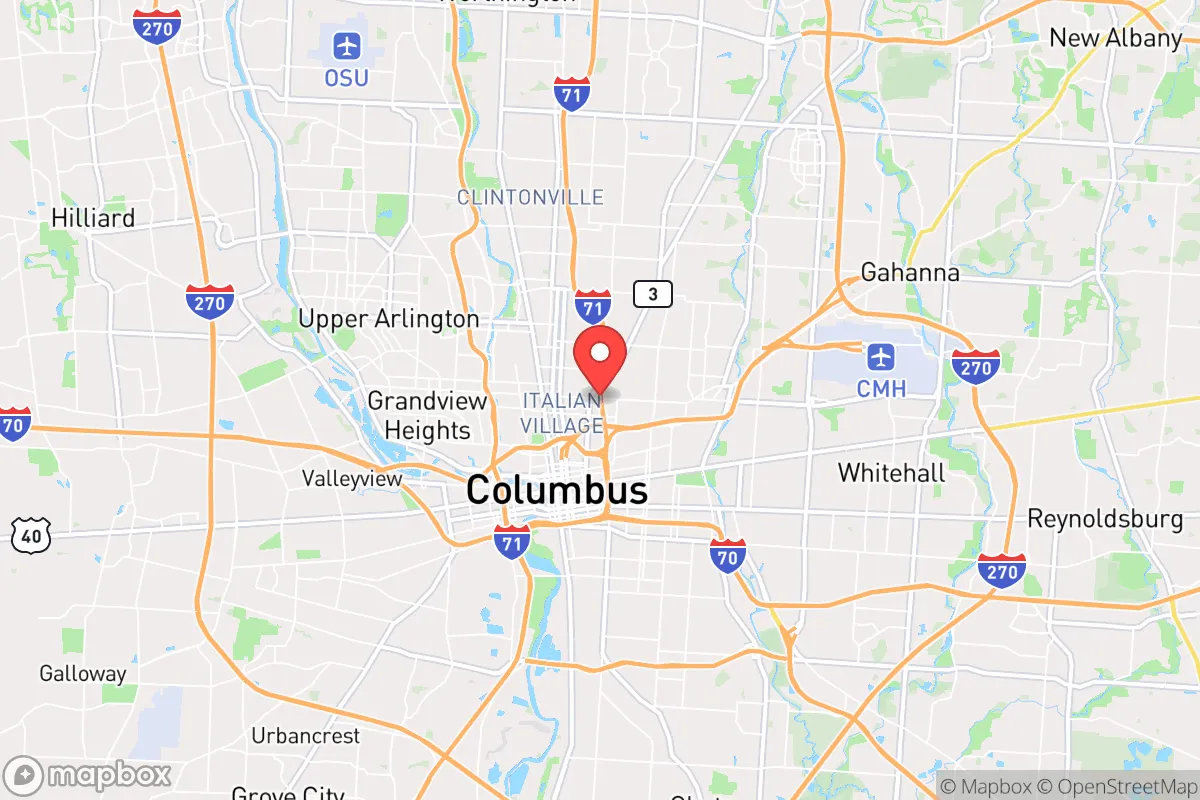
Photo: Wikipedia
Personal Sovereignty in Columbus, OH
Viable for self-reliance. Generally workable, though some barriers may limit total independence.
What does Personal Sovereignty tell us?
Personal Sovereignty measures your capacity for self-reliance and independence with minimal government friction. Higher scores mean fewer barriers between you and the way you want to live... but it assumes you have the space you need and good neighbors.
What does this tell us?
Personal Sovereignty measures your capacity for self-reliance and independence with minimal government friction. Higher scores mean fewer barriers between you and the way you want to live... but it assumes you have the space you need and good neighbors.
State Policy
Energy independence: Importer (40% of energy produced in-state)
Personal Liberty
Homesteading

Personal Liberty Analysis
Columbus, Ohio, presents a mixed picture for those prioritizing personal sovereignty, offering a state-level legal framework that generally respects gun rights and property autonomy, but a local governance structure that increasingly mirrors the regulatory density of the Great Lakes corridor. For the strategic-minded individual or family, the city sits at a crossroads: the state capitol provides a buffer against some of the most aggressive coastal policies, yet the city council and county health boards have shown a willingness to impose mandates and zoning restrictions that erode self-reliance. The key question for a prepper or survivalist is whether the state’s constitutional protections can outrun the city’s administrative creep.
Tax burden and regulatory posture: how Columbus compares to the state floor
Ohio’s tax climate is a relative bright spot for sovereignty-minded residents, but Columbus adds its own layers. The state income tax is a flat 3.5% as of 2026, with no tax on Social Security benefits and a modest 5.75% corporate income tax. However, Columbus imposes a 2.5% city income tax on residents and a 2.5% tax on non-residents who work within city limits—one of the highest municipal income tax rates in the Midwest. Property taxes in Franklin County average around 2.1% of assessed value, slightly above the state median, which can sting when you’re trying to hold land for long-term self-sufficiency. The regulatory posture is where the friction shows: Columbus has adopted stricter building codes than the state baseline, including energy efficiency mandates that can complicate off-grid construction. The city also maintains a stormwater utility fee based on impervious surface area, effectively taxing your driveway and roof. For a prepper, this means the tax burden is manageable if you live just outside the city limits in a township like Sharon or Orange, where the municipal income tax drops to zero and zoning is looser.
Self-defense and gun law specifics: what the state guarantees vs. what the city restricts
Ohio is a constitutional carry state as of 2022, meaning no permit is required to carry a concealed firearm for anyone 21 or older who can legally possess one. This is a solid foundation for personal sovereignty. Columbus, however, has attempted to carve out local restrictions. The city council passed an ordinance in 2023 banning the possession of firearms in city-owned buildings and parks, and there have been repeated efforts to enact a “safe storage” law requiring guns to be locked up when not in use—a measure that directly undermines a prepper’s ability to keep a defensive weapon accessible. State preemption law (Ohio Revised Code 9.68) explicitly prohibits local governments from regulating firearms, and the Buckeye Firearms Association has successfully sued Columbus over these overreaches, but the city continues to test the boundaries. Stand-your-ground laws apply statewide, with no duty to retreat in any place you are lawfully present. Magazine capacity and “assault weapon” bans are nonexistent at the state level, and Columbus has not successfully passed its own. For the survivalist, the legal landscape is favorable on paper, but the constant municipal pressure means you must stay informed and ready to push back against local ordinances that could criminalize standard defensive gear.
Self-reliance and homesteading viability: lot sizes, zoning, and off-grid feasibility
True self-reliance in Columbus proper is difficult due to dense zoning and small lot sizes. The typical residential lot within the city limits is under a quarter-acre, and zoning codes prohibit keeping livestock, including chickens, in most neighborhoods—a dealbreaker for anyone wanting to produce their own eggs or meat. The city also restricts rainwater collection systems over 100 gallons without a permit, and solar panel installations require approval from the historic preservation office in many districts. However, the picture changes dramatically once you move to the outer townships or unincorporated areas of Franklin County. In places like Madison Township or parts of Delaware County just north of Columbus, you can find lots of 1 to 5 acres for under $50,000, with agricultural zoning that allows chickens, goats, and even a single cow. Off-grid feasibility is limited by Ohio’s building codes, which require connection to the electrical grid for new construction in most subdivisions, but rural properties with existing wells and septic systems are available. The real sweet spot for a prepper is the corridor along US-23 north toward Marion, where land is cheap, zoning is minimal, and you can be in downtown Columbus in 40 minutes for work or supplies.
Personal liberties: parental rights, medical autonomy, speech, and property
Parental rights in Ohio are relatively strong compared to blue states. The state passed a Parents’ Bill of Rights in 2023, requiring schools to notify parents of any medical or mental health services offered to students and to obtain consent before administering surveys on sensitive topics. Columbus City Schools, however, has been a battleground, with the district resisting full implementation and continuing to offer confidential health services through school-based clinics. Medical autonomy took a hit during the pandemic, when Columbus was among the first cities in Ohio to impose mask mandates and vaccine requirements for city employees, and the health department retained emergency powers that could be reactivated. On speech, Ohio has no state-level “hate speech” law that criminalizes political expression, but Columbus has a “disorderly conduct” ordinance that has been used to arrest protesters on both sides of the political aisle. Property rights are generally respected, with no statewide rent control and a relatively straightforward eviction process for landlords, though Columbus passed a “just cause” eviction ordinance in 2024 that requires a specific legal reason to terminate a lease—a constraint on property owners that can complicate the ability to manage rental properties as a sovereign asset.
Overall, Columbus offers a workable environment for personal sovereignty if you are strategic about where you live and how you engage with local government. The state provides a solid floor on gun rights, taxes, and parental authority, but the city’s progressive council and health bureaucracy will test your patience and your wallet. For the survivalist or prepper, the smart play is to establish a residence in the outer townships or adjacent counties—Delaware, Licking, or Union—where you can enjoy the economic opportunities of the capital region without the regulatory drag. Compared to cities like Chicago or Portland, Columbus is a relative haven; compared to rural Texas or Idaho, it is a place where you must remain vigilant and politically active to preserve your freedoms. The sovereignty score here is a solid C+ with a path to a B- if you pick your zip code carefully and stay ready to defend your rights at the ballot box and in court.

* Values derived from national, state, county, city and local statistics and may differ in a specific area. Last updated: 2026-04-21T09:41:20.000Z
Narrative content on this page is AI-generated and may contain mistakes. Verify any details that matter before acting on them.
ReloMaps may earn a commission from affiliate links at no extra cost to you.

