
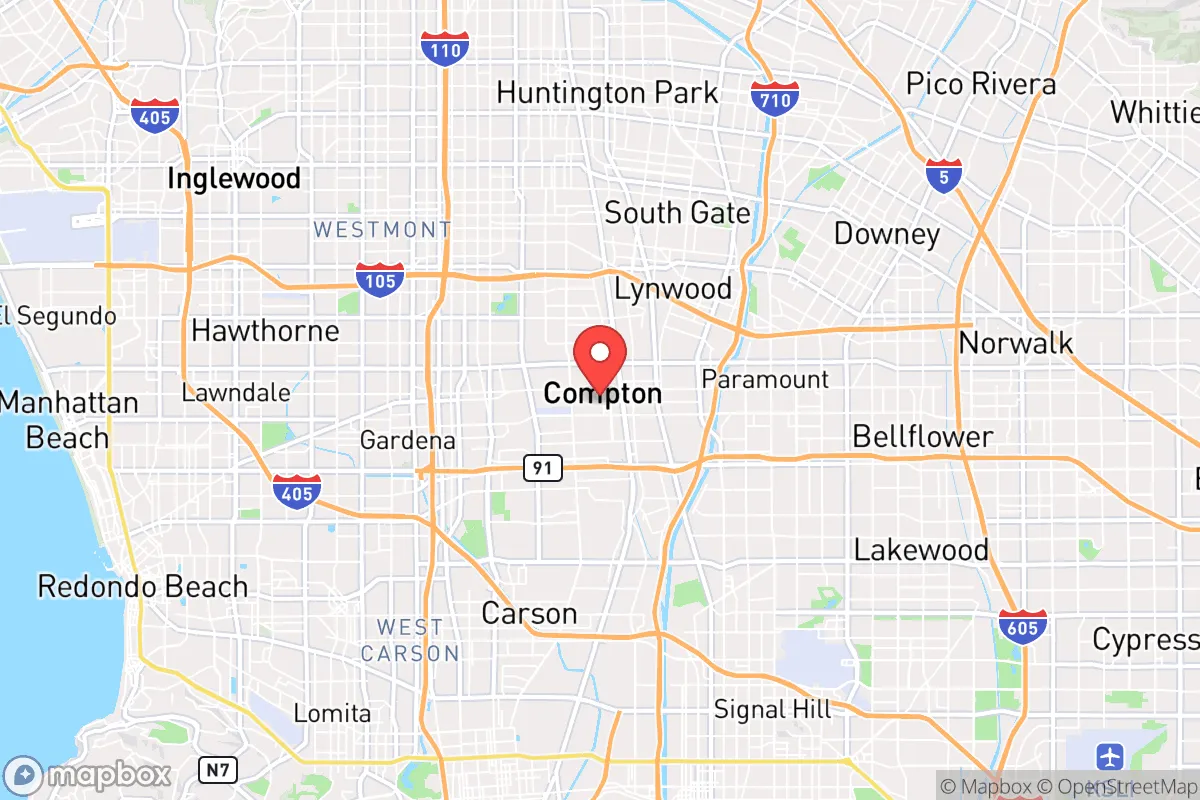
Photo: Wikipedia
Quality of Life in Compton, CA
Above-average quality of iife. The area offers a reasonable cost of living, decent mobility, and a mix of neighborhood amenities.
What does Quality of Life tell us?
Quality of Life blends cost of living, nearby amenities, socioeconomic signals, and neighborhood character. City-level scores represent the whole municipality; individual neighborhoods can differ.
What does this tell us?
Quality of Life blends cost of living, nearby amenities, socioeconomic signals, and neighborhood character. City-level scores represent the whole municipality; individual neighborhoods can differ.
Cost of Living
60% above national average
The Real Cost of Living in Compton, CA for 2026
| Tier | Individual | Family (4) |
|---|---|---|
| Survival | $26k | $48k |
| Comfortable | $72k | $106k |
| Luxury | $106k+ | $164k+ |
| Elite (Top 5%) | $125k+ | $193k+ |
70%
The Area Signal
A metric tracking the socioeconomic signals of the area.
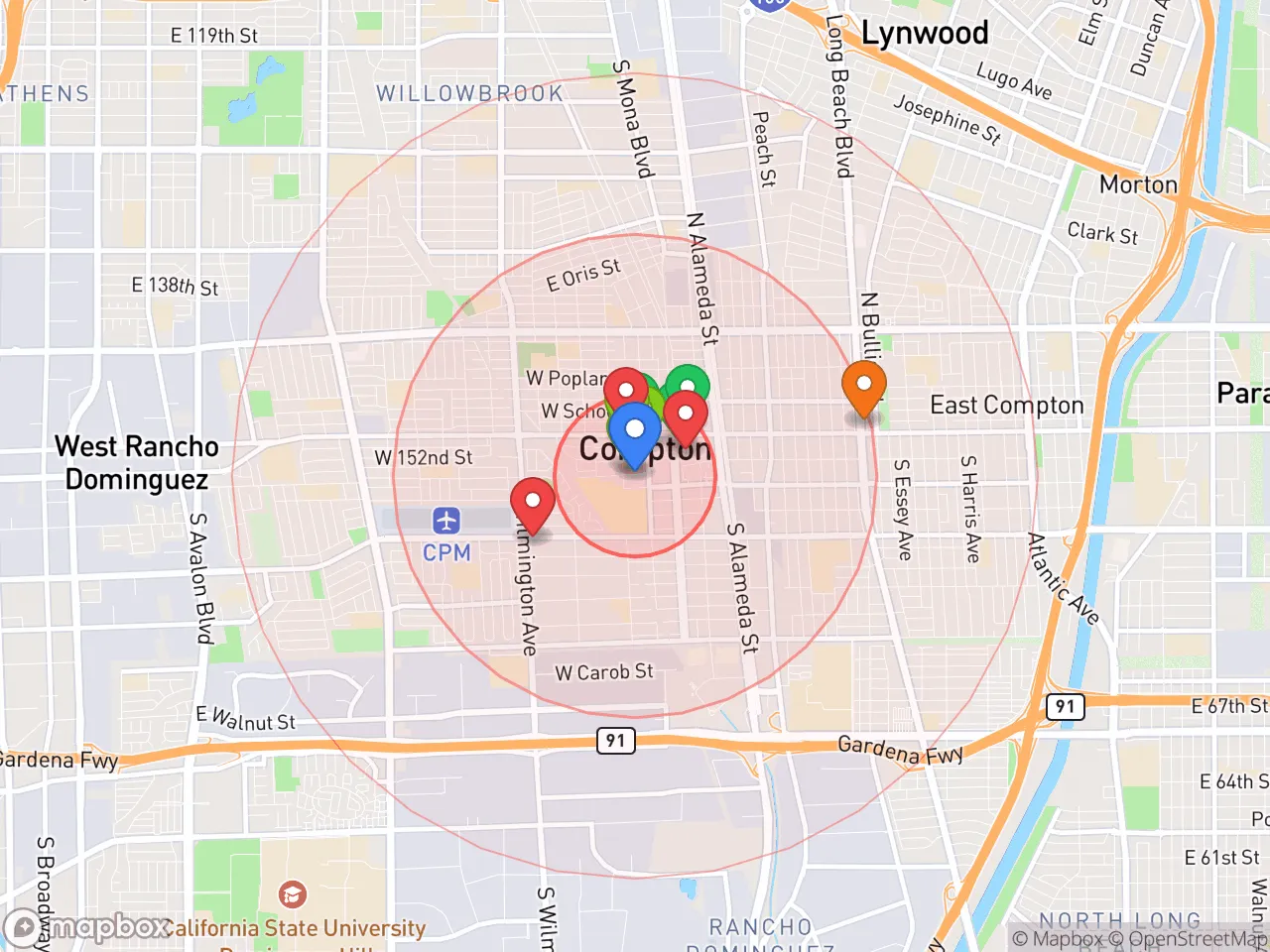
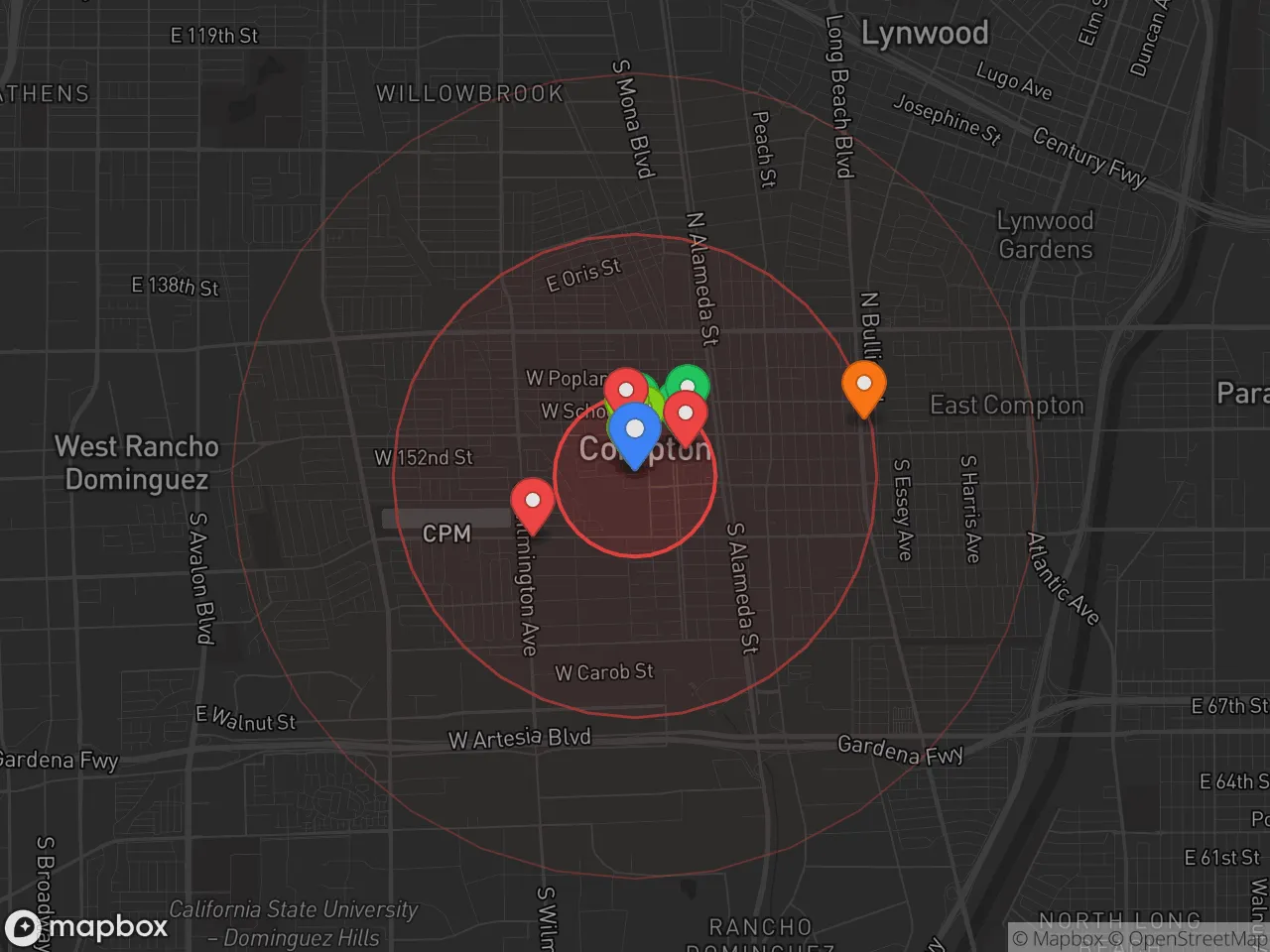
Hobbies
Explore the areaGroceries
0 within 10 miles
Gas
0 within 10 miles
Hospital
0 within 20 miles
Airport
LAX — Los Angeles International
Post Office
Critical Amenities
Quality-of-Life Analysis
Compton, California, presents a complex quality-of-life profile that defies simple affluence labels, serving instead as a densely populated, working-class hub in Los Angeles County with a median household income well below the state average. The city is predominantly home to Latino and Black families, many of whom have deep generational roots, alongside a growing number of first-time homebuyers and renters drawn by relatively lower housing costs compared to neighboring cities like Long Beach or downtown Los Angeles. With a cost of living index of 160 (60% above the U.S. average), Compton offers a more attainable entry point into the Southern California housing market, though residents contend with trade-offs in public services and infrastructure.
Cost of living, housing affordability, and how Compton compares to nearby cities
Compton’s cost of living index of 160 is significantly higher than the national baseline but remains below the extreme peaks of coastal Los Angeles neighborhoods, where indices often exceed 200. The median home value of $546,700 is roughly $200,000 less than the Los Angeles County median, making it one of the more affordable incorporated cities in the region for buyers. Median rent sits at $1,601, which is notably lower than the countywide median of approximately $2,200, though rental inventory is tight and competition is high. The average commute time of 30.1 minutes aligns closely with the LA metro average, reflecting the reality that most working residents travel outside city limits for employment, often to industrial, logistics, or service-sector jobs in Carson, Long Beach, or downtown LA. Property taxes, governed by California’s Proposition 13, are relatively predictable, but homeowners should budget for higher-than-average homeowners insurance due to wildfire and earthquake risks.
Local amenities, schools, and what daily life feels like for families
Daily life in Compton is shaped by a dense urban grid, with a mix of single-family homes, apartment complexes, and small commercial corridors. The city’s public school system, Compton Unified School District, has faced historic challenges but has shown measurable improvement in graduation rates and test scores over the past decade, with several elementary schools earning above-average ratings on GreatSchools. Parks such as Lueders Park and Compton Creek Natural Park provide green space for recreation, though residents often drive to nearby beaches or the San Gabriel Mountains for weekend outings. Grocery access is adequate, with major chains like Food 4 Less and Superior Grocers serving the area, but the city lacks the high-end retail and dining found in wealthier LA suburbs. Public safety remains a top concern; while property crime rates have declined since 2020, they still exceed national averages, and residents frequently cite police response times and street lighting as areas needing improvement. The city’s cultural identity is strong, anchored by the Compton Cowboys equestrian tradition and the legacy of hip-hop, which fosters a tight-knit community feel among long-term residents.
Compton is best suited for budget-conscious families and individuals who prioritize affordability and proximity to Los Angeles job centers over suburban amenities or low-crime rankings. First-time homebuyers willing to invest in a neighborhood with appreciating property values, and renters who can tolerate a longer commute for lower rent, will find the city a pragmatic choice. Those seeking top-tier public schools, extensive nightlife, or a low-stress daily environment may be better served by pricier alternatives like Torrance or Pasadena. For residents who value cultural heritage, community resilience, and a central location within the LA basin, Compton offers a grounded, if gritty, quality of life.

Crime in Compton, CA
Significantly higher crime rates than 85% of comparable U.S. locations.
Violent CrimeViolent Crime Analysis
Property CrimeProperty Crime Analysis
Crime Analysis
Compton, California, reports a violent crime rate of 1,245.4 incidents per 100,000 residents and a property crime rate of 2,609.6 per 100,000, placing it among the most dangerous communities in Los Angeles County. These figures represent a significantly higher risk of victimization compared to both state and national averages, a reality shaped in part by the broader criminal justice policies of Los Angeles County. The city’s safety profile is a critical factor for anyone considering relocation, as daily life involves navigating elevated risks of theft, assault, and robbery.
Crime in context
Compton’s violent crime rate is roughly 3.3 times higher than the national average of approximately 380 per 100,000, and its property crime rate exceeds the U.S. average of about 1,950 per 100,000. These numbers are consistent with other high-crime cities in Los Angeles County, a region where progressive district attorneys and judges have implemented policies such as reduced bail, sentence enhancements, and early release programs. Critics argue these measures, while intended to reduce incarceration, have directly contributed to higher recidivism and more criminals on the street, undermining public safety. The result for Compton residents is a heightened probability of encountering both violent offenders and property criminals who face minimal consequences for repeat offenses.
What residents experience
For those living in Compton, the statistical risk translates into tangible daily concerns. Property crime, including burglary, theft, and vehicle break-ins, is the most common threat, with a rate of 2,609.6 per 100,000 meaning roughly 1 in 38 residents experiences a property crime annually. Violent crime, while less frequent, is more severe: the 1,245.4 per 100,000 rate implies about 1 in 80 residents is a victim of robbery, aggravated assault, or worse each year. Residents report that carjackings and home invasions are not uncommon, and the presence of active street gangs in several neighborhoods compounds the risk. The Los Angeles County Sheriff’s Department, which patrols Compton, has struggled to maintain staffing levels, and response times can be slow in high-call-volume areas.
Neighborhood-level variation is significant within Compton. Areas east of the 710 Freeway, particularly near the border with Lynwood and Willowbrook, tend to have the highest concentrations of violent crime and gang activity. In contrast, the western neighborhoods closer to Gardena and the 405 Freeway, such as the area around Compton College, see somewhat lower crime rates, though still above national norms. Gated communities and newer housing developments in the northern part of the city offer a degree of separation from street-level crime, but no part of Compton is immune to the broader public safety challenges driven by the county’s lenient criminal justice approach. Prospective residents should research specific block-level crime maps and consider the trade-offs of living in a community where progressive policies have prioritized offender rehabilitation over public protection.
* Values derived from national, state, county, city and local statistics and may differ in a specific area. Last updated: 2026-08-13T19:15:11.000Z
Narrative content on this page is AI-generated and may contain mistakes. Verify any details that matter before acting on them.
ReloMaps may earn a commission from affiliate links at no extra cost to you.

