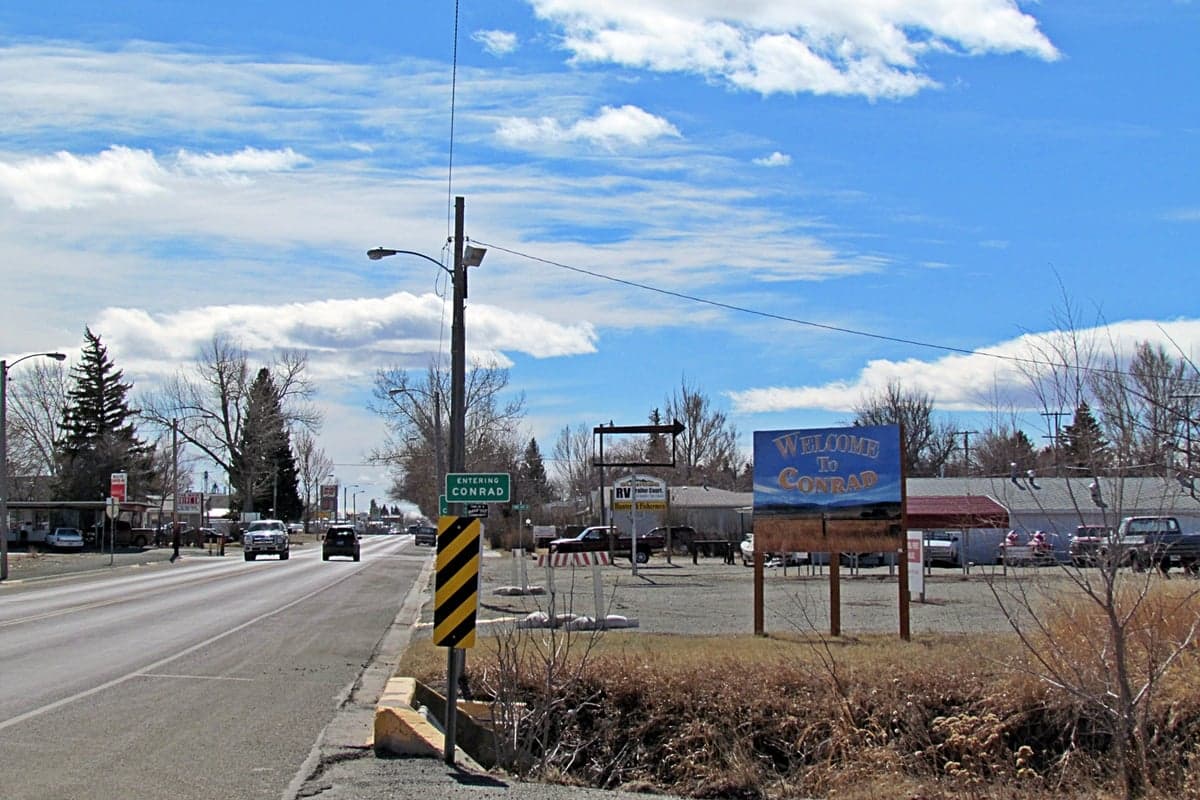
Photo: Wikipedia
Political ClimatePolitical Climate in Conrad, MT
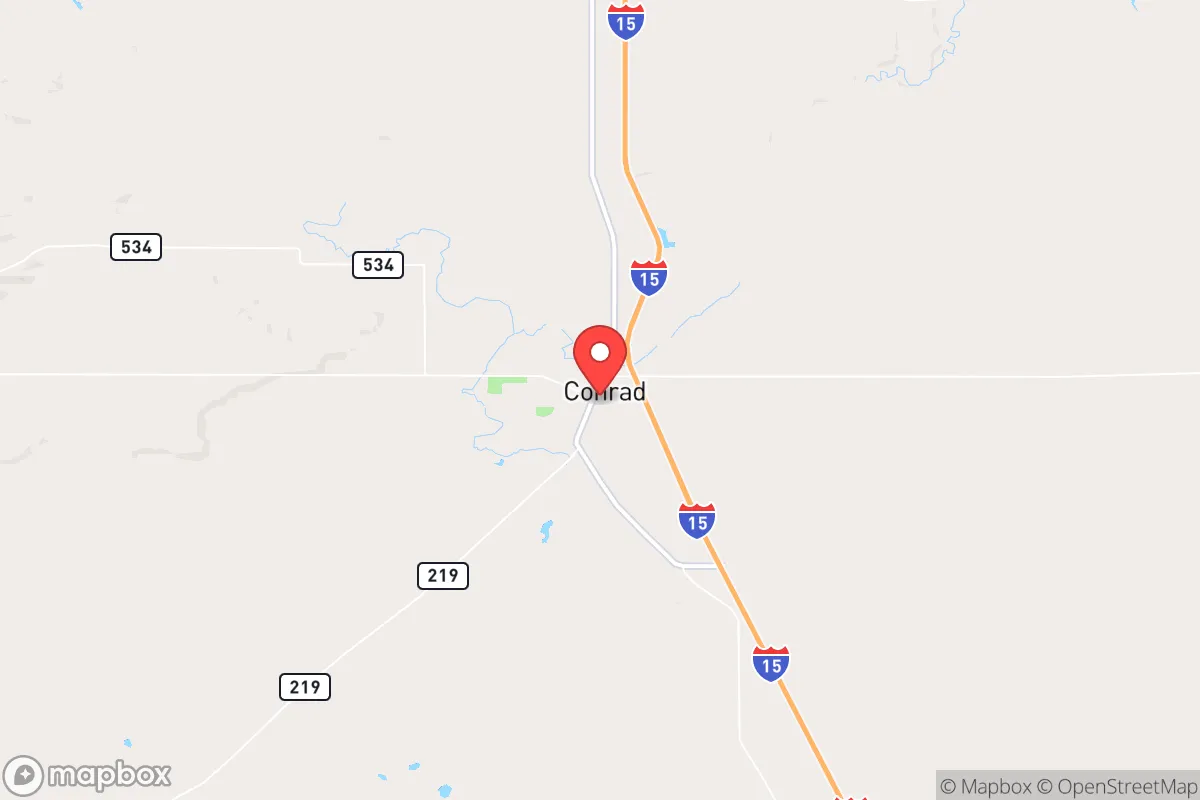
District shown is the primary district for this city’s centroid. Cities may span multiple districts.
Local Political AnalysisPolitical Analysis of Conrad, MT
Conrad, Montana, sits in the heart of Pondera County, and if you’ve spent any time here, you know this is about as solidly conservative as it gets. The Cook PVI of R+15 isn’t just a number—it’s a reflection of a community that values personal responsibility, limited government, and the freedom to live life without a bunch of bureaucratic red tape. We’ve voted reliably Republican for decades, and while the national winds shift, Conrad has stayed pretty steady. That said, you can feel a subtle change in the air, especially as folks from more progressive parts of the country move in for the wide-open spaces. It’s not a sea change, but it’s something to keep an eye on.
How it compares
If you drive an hour south to Great Falls, you’ll find a more mixed political scene—still conservative overall, but with a noticeable blue streak, especially in the city proper. Up here in Conrad, we’re a different animal. We’re closer to the Canadian border, and that isolation has kept us more insulated from the kind of rapid demographic shifts you see in places like Bozeman or Missoula. Those towns have gone from conservative strongholds to battlegrounds in just a few years, with property taxes skyrocketing and local governments getting cozy with progressive policies. Conrad? We’re still mostly ranchers, farmers, and folks who work in the oil and gas fields. Our county commission is solidly Republican, and you don’t see a lot of talk about defunding the police or imposing green energy mandates here. The contrast with places like Kalispell, which is getting hammered by out-of-state money and left-leaning transplants, is stark. We’re holding the line, but it takes work.
What this means for residents
For the people who live here, the political climate means a lot of things in practical terms. First, you’ve got more breathing room. There’s no city council trying to ban gas stoves or telling you what kind of truck you can drive. The local schools still teach the basics without a heavy dose of critical race theory or gender ideology—parents have a real say here. Property taxes are manageable compared to the rest of the state, and there’s no income tax in Montana, which is a big deal. But the concern is that as more people discover Conrad’s affordability and quiet lifestyle, we could see the same pressures that have turned other Montana towns into mini-Portlands. The push for “affordable housing” often comes with strings attached—zoning changes, density mandates, and more government control over private property. That’s the kind of overreach that makes a lot of us nervous. We’ve seen it happen in Whitefish, and we don’t want it here.
On the cultural side, Conrad is still a place where neighbors help neighbors without a government program. The local churches and volunteer fire departments are the backbone of the community, not some federal agency. There’s a strong sense of self-reliance, and that’s something worth protecting. The biggest threat I see isn’t from any one party—it’s from the creeping idea that government knows better than the people who’ve lived here for generations. If we can keep that at bay, Conrad will stay the kind of place where you can raise a family, run a business, and enjoy your freedoms without someone looking over your shoulder. But it’s going to take vigilance, because the winds of change are blowing, and they don’t always bring good things.

State Political ClimatePolitical Climate in Montana
State Political AnalysisPolitical Environment in the State
Montana has long been a reliably Republican state in presidential elections, voting for the GOP candidate in every contest since 1992 except one, but the political climate here is far more nuanced than a simple red-state label suggests. The dominant coalition is a mix of libertarian-leaning ranchers, conservative small-town residents, and a growing number of out-of-state transplants, creating a dynamic where the state’s overall lean is solidly right-of-center, but internal tensions are rising. Over the last 10-20 years, the trajectory has been a slow but steady shift toward more aggressive conservative governance, punctuated by a sharp rightward turn after 2020, though the influx of new residents from blue states is beginning to test that direction.
Urban vs. rural divide
The political map of Montana is a textbook study in the urban-rural split. The state’s largest city, Billings, anchors the conservative eastern plains and is a reliable Republican stronghold, though its growing population has introduced a small but vocal progressive minority. Missoula, home to the University of Montana, is the state’s most liberal enclave, consistently voting Democratic by wide margins and driving much of the progressive activism you’ll see in the state. Bozeman and Helena are the real battlegrounds: Bozeman has exploded with out-of-state transplants, many from California and Colorado, and while it still leans Republican, the margin has shrunk noticeably—Gallatin County went from +15 R in 2016 to just +4 R in 2020. Helena, the state capital, is a moderate-to-liberal island surrounded by conservative rural counties, with a government-worker base that keeps it blue-leaning. The rural counties—like Wibaux, Garfield, and Petroleum—vote 80-90% Republican, and their outsized legislative representation ensures that the state’s rural voice remains dominant, even as the urban centers grow.
Policy environment
Montana’s policy environment is a mixed bag for conservatives. On the plus side, there is no state sales tax, a major draw for those fleeing high-tax states, and property taxes are relatively low, though they’ve been creeping up as home values surge. The regulatory posture is generally business-friendly, with a right-to-work law and minimal zoning restrictions outside of a few cities. Education policy is a flashpoint: the state has a robust school choice movement, with a new Education Savings Account program passed in 2023 that lets parents use public funds for private or homeschool expenses—a big win for parental rights. Healthcare is more complicated; Montana expanded Medicaid under the Affordable Care Act in 2015, and while there’s been no serious repeal effort, the program is a perennial target for budget hawks. Election laws have tightened: the 2021 legislative session passed voter ID requirements and banned ballot harvesting, though mail-in voting remains popular and widespread. The state’s constitution includes a strong right-to-privacy clause that has been used to protect abortion access, but the 2024 legislature passed a 15-week abortion ban, which is currently tied up in court.
Trajectory & freedom
Montana is becoming more free in many respects, but the trend is uneven. The 2021 and 2023 legislative sessions were among the most conservative in state history. Governor Greg Gianforte signed a permitless carry law for firearms in 2021, making Montana a constitutional carry state, and the legislature passed a law prohibiting enforcement of federal gun laws that violate the Second Amendment—a direct challenge to federal overreach. Parental rights were strengthened with a 2023 law requiring schools to notify parents of any curriculum involving sexual content, and a ban on transgender athletes in K-12 sports was enacted. Medical autonomy took a hit, however, with the 2023 law banning nearly all abortions after 15 weeks, which many see as a government overreach into personal medical decisions. Property rights have been a mixed bag: the state has a strong tradition of private property rights, but the influx of out-of-state buyers has driven up land prices, and there’s growing talk of limiting foreign ownership of agricultural land. Taxation remains a bright spot—the state cut income taxes from 6.9% to 5.9% in 2023, with a path to a flat 4.9% rate by 2027—but local governments are increasingly using special assessments to fund services, which feels like a backdoor tax hike.
Civil unrest & political movements
Montana has seen relatively little civil unrest compared to other states, but the political movements are real and visible. The Yellowstone County area, around Billings, has a strong militia presence, though it’s mostly low-key and focused on constitutional rights. The left is most active in Missoula, where protests over racial justice and climate change have been frequent but small—usually a few hundred people. Immigration politics are less heated here than in border states, but there’s a growing concern about illegal immigration, with the legislature passing a 2023 law requiring law enforcement to cooperate with federal immigration authorities. Election integrity controversies flared after 2020, with a few counties conducting hand recounts, but no widespread fraud was found. The most visible flashpoint for a new resident would be the culture war battles over library books and school curricula, which have become regular features of local school board meetings in places like Kalispell and Bozeman. There’s also a growing secessionist sentiment in the eastern part of the state, where some ranchers talk about forming a “Greater Idaho” type movement, but it’s mostly rhetorical.
Projection
Over the next 5-10 years, Montana is likely to become more politically contested as demographic shifts accelerate. The in-migration from California, Washington, and Colorado is bringing a wave of voters who are culturally liberal but fiscally moderate, and they’re concentrated in Bozeman, Missoula, and the Flathead Valley around Whitefish. This will likely turn Gallatin County into a swing county within a decade, and could flip the state’s lone U.S. House seat to Democratic in a close election. However, the rural counties are not shrinking as fast as in other states, and the legislature’s Republican supermajority is likely to hold through at least 2030, thanks to gerrymandered districts and the rural tilt of the state Senate. The policy trajectory will probably continue rightward on guns, taxes, and parental rights, but could moderate on healthcare and abortion if the courts strike down the 15-week ban. A new resident moving in now should expect to find a state that is still deeply conservative in its bones, but with a growing progressive minority that will make statewide elections increasingly competitive. The practical takeaway: if you’re moving here for the freedom and low taxes, you’ll find plenty of both, but be prepared for the culture wars to intensify, especially in the growing urban corridors.
For a conservative-leaning individual or parent, Montana offers a strong foundation of personal liberty, low taxes, and a government that generally respects the Second Amendment and parental rights. The key is to choose your location carefully: stick to the rural counties or the conservative suburbs of Billings and Kalispell if you want to avoid the progressive drift, and be aware that the state’s political future is not set in stone. The freedom you’re seeking is still here, but it’s being contested every election cycle, and your vote will matter more here than in most states.
* Values derived from national, state, county, city and local statistics and may differ in a specific area. Last updated: 2026-04-19T09:59:41.000Z
Narrative content on this page is AI-generated and may contain mistakes. Verify any details that matter before acting on them.
ReloMaps may earn a commission from affiliate links at no extra cost to you.

