 Popular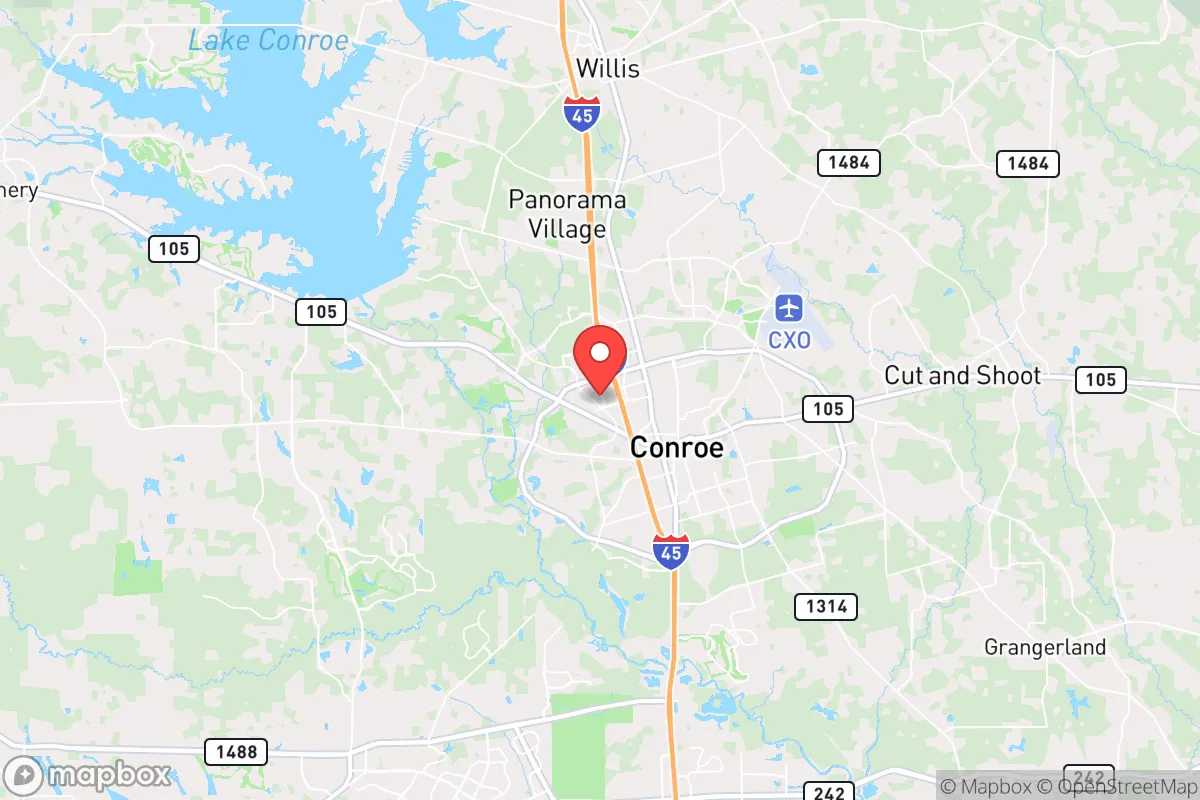
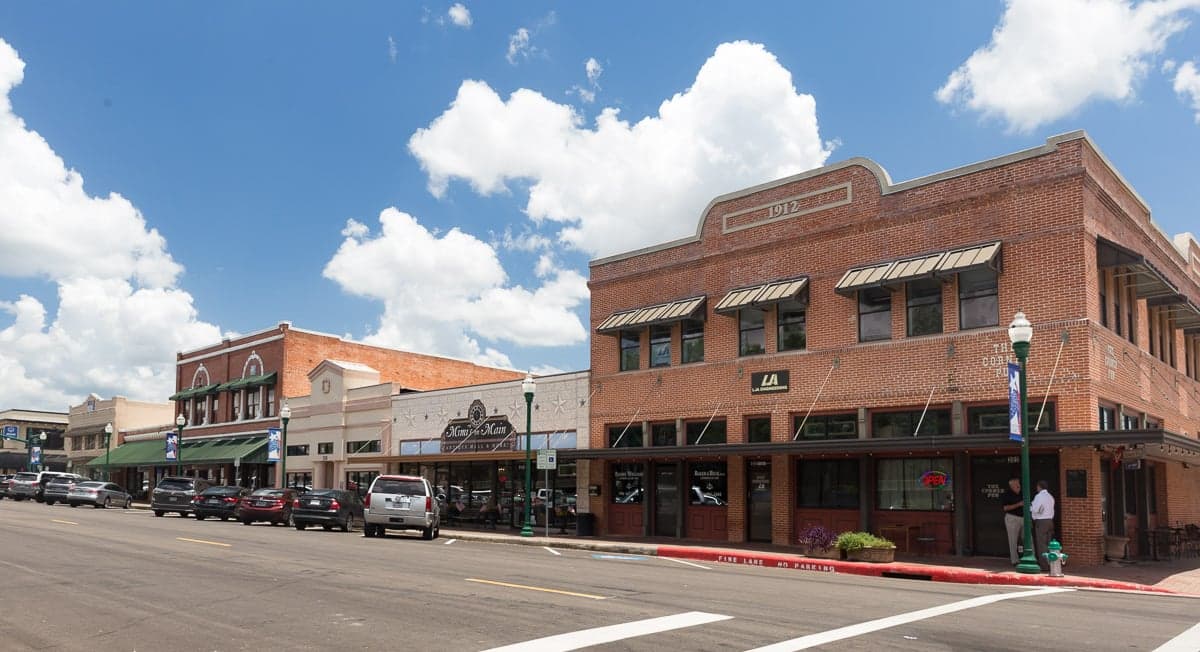
Photo: Wikipedia
Demographics of Conroe, TX
Affluence Level in Conroe, TX
A middle-class area roughly in line with national averages across income, home values, education, and employment.
People of Conroe, TX
Conroe, Texas, is a city of nearly 97,000 residents defined by its rapid suburban expansion and a demographic profile that is majority-white but increasingly Hispanic, with a notable Black minority and small but growing Asian and Indian communities. The city’s character blends historic Deep East Texas roots with the pressures of being a Houston exurb, creating a population that is politically conservative, family-oriented, and economically tied to both the energy sector and the Lake Conroe recreation economy. With a foreign-born share of 10.2% and a college attainment rate of 33.6%, Conroe is more diverse and slightly more educated than its rural neighbors, yet remains less cosmopolitan than the inner Houston suburbs.
How the city was settled and grew
Conroe’s original population was drawn by the timber and railroad industries in the late 19th century. Founded in 1881 as a stop on the Houston, East and West Texas Railway, the town was named after Conroe, a railroad official, and grew as a sawmill and logging center. The first permanent residents were Anglo-American loggers and farmers from the Deep South, who settled in what is now the Downtown Conroe Historic District and along the original rail corridor. A second wave arrived after the 1931 discovery of oil in the Conroe Oil Field, which brought a transient workforce of roughnecks and wildcatters—mostly white Southerners—who built modest homes in neighborhoods like River Plantation and the South Conroe area near the field. By 1950, the population was nearly entirely white and native-born, with a small Black community concentrated in the Longmire and West Conroe neighborhoods, descendants of sharecroppers and domestic workers who had followed the timber and oil booms.
Modern era (post-1965)
The post-1965 era transformed Conroe from a sleepy oil-and-timber town into a fast-growing Houston exurb. The Immigration and Nationality Act of 1965 had little immediate effect on Conroe’s demographics—the city remained overwhelmingly white through the 1980s—but domestic in-migration from the Rust Belt and California began accelerating after the 1970s oil crisis. The completion of the Lake Conroe dam in 1973 created a recreational magnet, drawing retirees and second-home buyers to neighborhoods like Walden on Lake Conroe and April Sound, which remain predominantly white and affluent. The 1990s and 2000s saw a surge of Hispanic migration, both from Mexico and from other Texas cities, as construction and service jobs expanded. Today, Hispanic residents make up 31.2% of the population and are concentrated in the South Conroe and FM 3083 corridor areas, where newer subdivisions and apartment complexes have absorbed the influx. The Black population, at 11.4%, has grown modestly through domestic migration from the Houston area and is most visible in the Longmire and West Conroe historic enclaves, though many Black families now live in newer subdivisions across the city. East/Southeast Asian residents (1.6%) and Indian-subcontinent residents (1.2%) are small but growing, drawn by professional jobs in healthcare and energy; they tend to settle in the Lake Conroe area and newer master-planned communities near I-45, such as Woodforest.
The future
Conroe’s population is heading toward greater ethnic diversity, but the city is not homogenizing—it is tribalizing into distinct enclaves. The white share, now 51.8%, is declining slowly as Hispanic growth continues, driven by both immigration and higher birth rates among Hispanic families. The Hispanic population is expected to approach 40% by 2035, with the South Conroe and FM 3083 corridor areas becoming increasingly Hispanic-majority. The Black population is stable, with growth likely to come from domestic migration rather than immigration, and will remain concentrated in the Longmire and West Conroe neighborhoods. East/Southeast Asian and Indian communities are growing from a small base, but they are not plateauing—they are being pulled by professional job growth in The Woodlands and Conroe’s medical district, and will likely double their shares over the next decade, settling in newer subdivisions like Woodforest and Harper’s Preserve. The foreign-born share (10.2%) is below the national average and is unlikely to spike, as Conroe lacks the dense ethnic networks of Houston proper. The city is becoming a patchwork of ethnically distinct neighborhoods rather than a melting pot, with most residents living in areas where their own group is the majority.
For a conservative-leaning mover, Conroe offers a growing, family-oriented environment where the population is diversifying but remains politically and culturally traditional. The city is not becoming a liberal enclave—Hispanic voters in Conroe lean more conservative than their national counterparts—and the white majority, though shrinking, still dominates local politics and institutions. The key trend to watch is the geographic sorting by ethnicity, which means that where you buy a home will strongly determine your neighbors’ background and the local school demographics. For those seeking a stable, growing community with a conservative tilt and a clear suburban identity, Conroe remains a solid choice, but the days of a homogenous white population are firmly in the past.

* Values derived from national, state, county, city and local statistics and may differ in a specific area. Last updated: 2026-05-16T22:24:02.000Z
Narrative content on this page is AI-generated and may contain mistakes. Verify any details that matter before acting on them.
ReloMaps may earn a commission from affiliate links at no extra cost to you.

