 Popular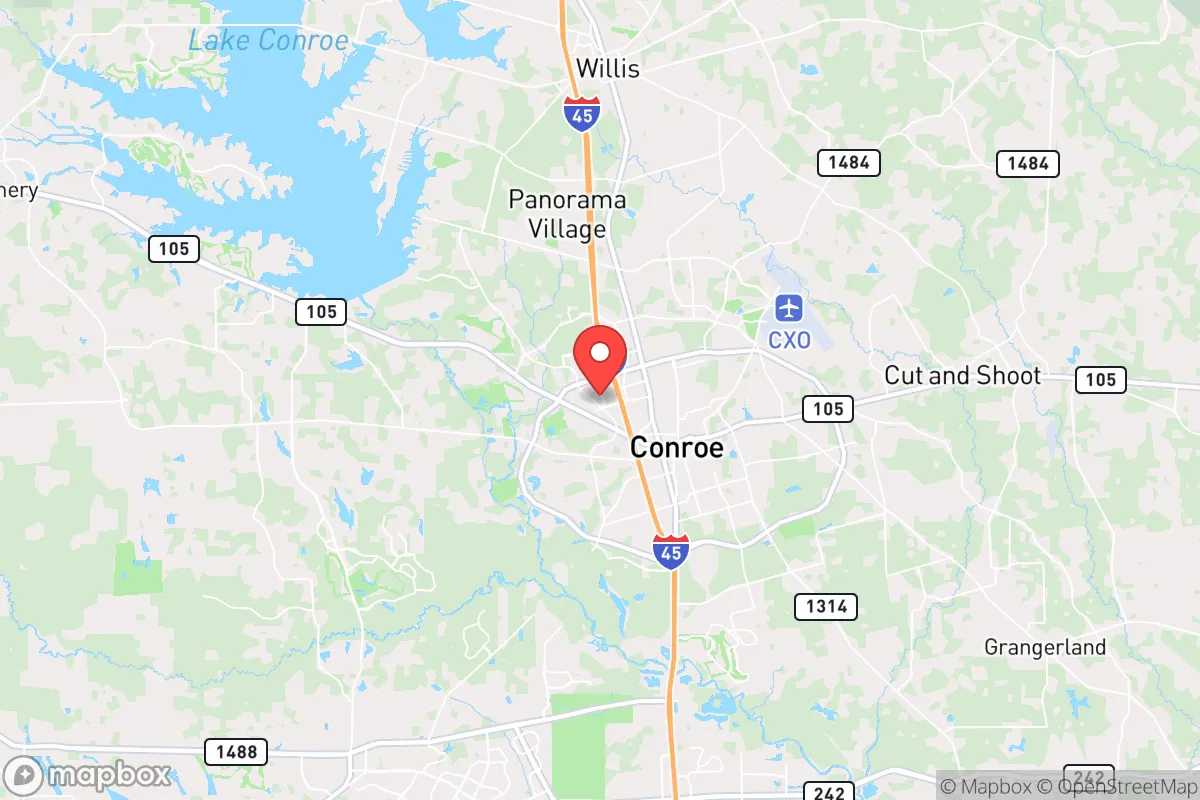
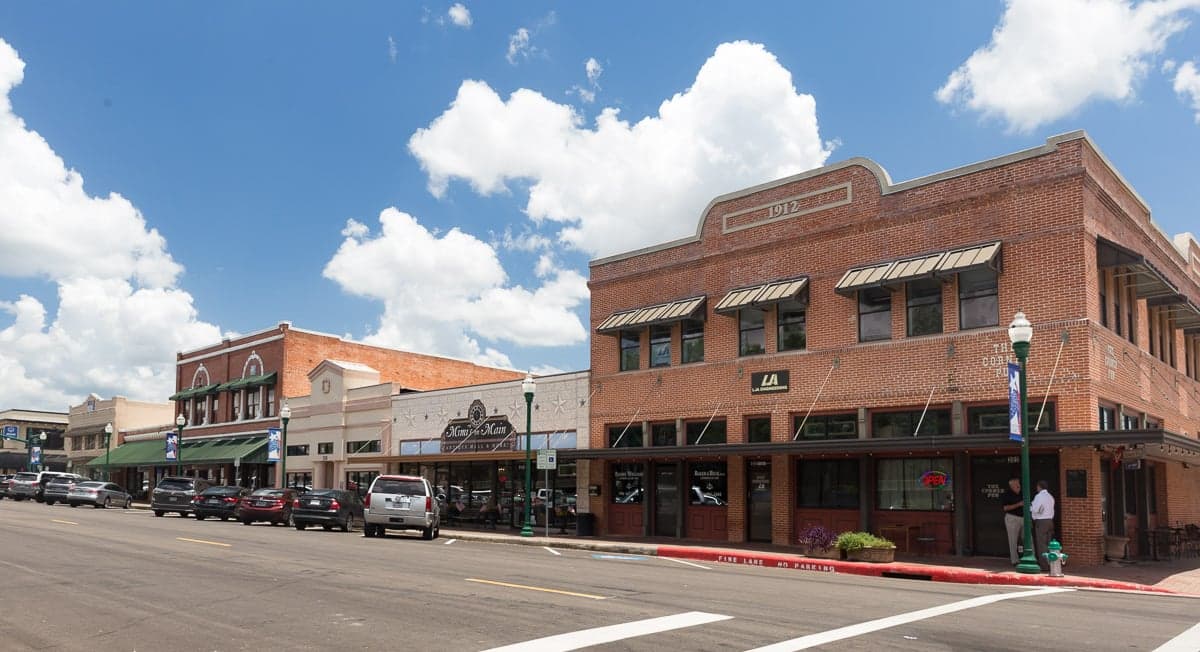
Photo: Wikipedia
Strategic Assessment of Conroe, TX
Multiple tactical vulnerabilities. Population density, target proximity, or disaster risk are likely compounding. A retreat property and exit planning is required.
What does the Strategic Assessment tell us?
Our Strategic Assessment grades tactical survivability of an area. Major population centers, military targets, fallout zones, natural disasters, and border exposure all drive risk — lower exposure means a more defensible position in a crisis.
This is heavily inspired by Joel Skousen's Strategic Relocation book. Highly recommended you checkout the book ($)What does this tell us?
Our Strategic Assessment grades tactical survivability of an area. Major population centers, military targets, fallout zones, natural disasters, and border exposure all drive risk — lower exposure means a more defensible position in a crisis.
This is heavily inspired by Joel Skousen's Strategic Relocation book. Highly recommended you checkout the book ($)Strategic Pillars

Key Distances
Regional Safe Places
Below is our recommended "safe zones" in Texas and the surrounding area based on our strategic heuristics. For most people, it's unrealistic to live in a “safe zone” full-time due to work, family or other personal reasons. They tend to be more rural. However, many of these areas are perfect for second homes and retreat properties that double as a vacation home or even a short-term rental.

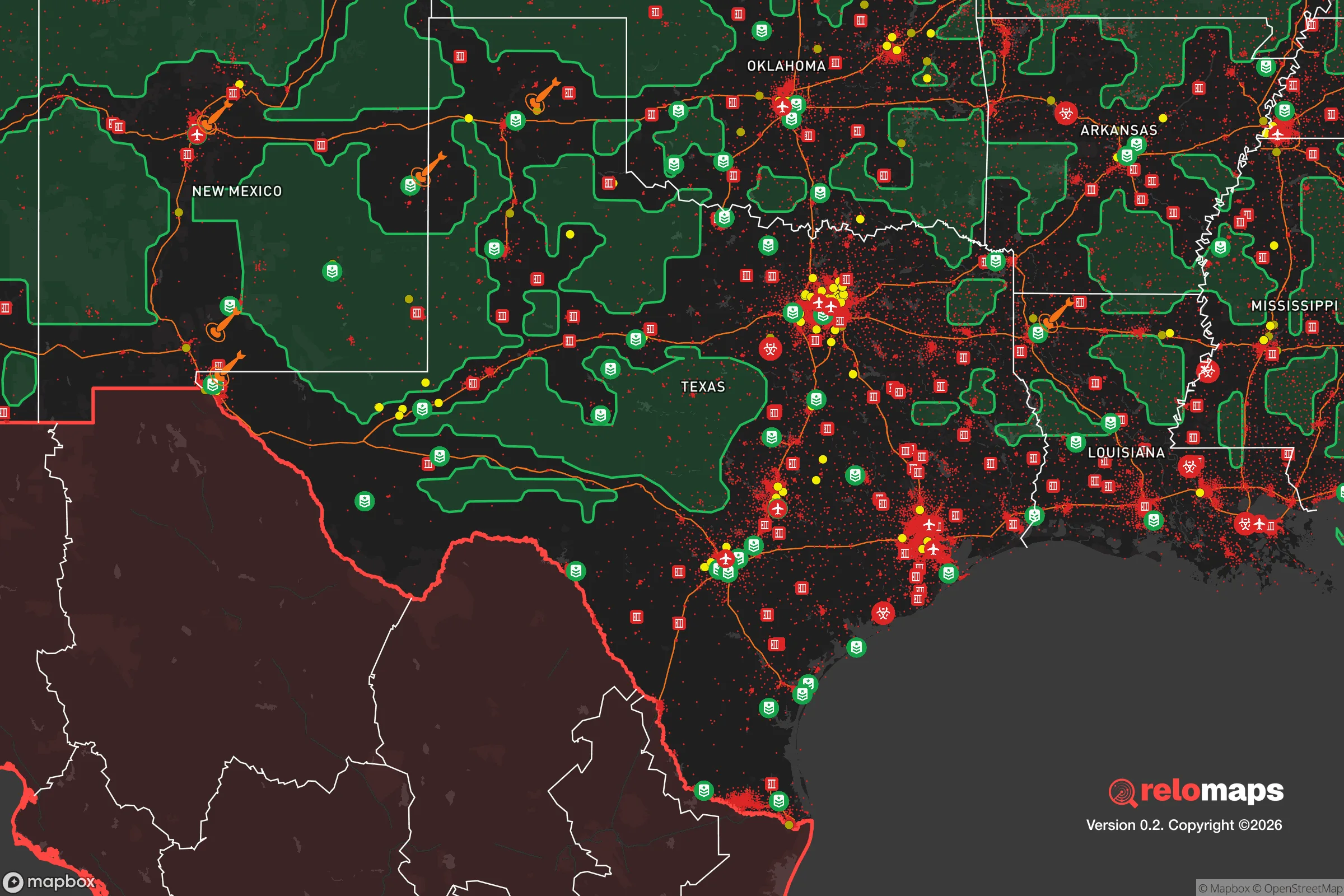


Important Note: For informational purposes only. This does not mean nothing bad ever happens in the green zones. Please use common sense. This is based on public data and modeled with AI. We tried to take a conservative approach but mistakes happen. We update this regularly as new information becomes available.
Solar Generator Recommendations
Backup power matters more here than in safer locations. We've picked three solar generators across budgets and capacity tiers — start with the budget unit if you only need a few essentials, or step up if you want to run a fridge and HVAC for days at a time.

Jackery Portable Power Station Explorer 300
Budget OptionPower on the Go: Weighing only 11 lbs, it's convenient to set up and store with book-sized foldable solar panels

BLUETTI Portable Power Station AC180
Designed for both indoor and outdoor scenarios, AC180 is highly capable as it has a robost capacity and continuous output power.

EF ECOFLOW DELTA Pro Ultra Power Station
Upgraded PickEcoFlow DELTA Pro Ultra is a whole-home energy system designed to grow with your family. Integrated with the Smart Home Panel 2, it scales to meet your evolving energy needs — keeping your home powered, intelligent, and secure through every stage of life.
We earn a commission, at no additional cost to you.
Strategic Assessment Analysis
Conroe, Texas, sits in a strategic pocket roughly 40 miles north of Houston, offering a blend of proximity to major infrastructure and a buffer from the most acute risks of a sprawling metroplex. For someone thinking in terms of resilience—civic unrest, supply chain disruptions, or natural disasters—this location provides a workable balance of access and separation. The city’s growth has been steady, not explosive, which means infrastructure has kept pace better than in boomtowns, and the local economy is diversified enough to absorb shocks without collapsing. Conroe isn’t a bunker, but it’s a place where a prepared individual or family can build a sustainable, defensible position without feeling isolated from necessary resources.
Geographic position and natural advantages for long-term stability
Conroe’s primary strategic asset is its position on the I-45 corridor, roughly halfway between Houston and Huntsville. This puts it within a 45-minute drive of Houston’s medical centers, airports, and industrial supply chains, while being far enough out to avoid the worst of urban unrest or a major disaster’s immediate fallout. The city sits on the edge of the Piney Woods region, which means dense forest cover, ample rainfall, and a climate that supports year-round food production. The average annual rainfall is around 50 inches, making water availability less of a concern than in drier parts of Texas. The Sam Houston National Forest lies just to the east, offering a massive natural buffer and potential foraging or hunting grounds. For a relocator, this means you’re not dependent on a single reservoir or aquifer—there’s surface water, groundwater, and a robust local watershed. The terrain is gently rolling, not mountainous, which makes it easier to build, garden, and move supplies, but still provides enough cover and elevation changes to break line of sight for anyone approaching.
Risks, exposures, and proximity to fallout-relevant landmarks
The most significant risk in Conroe is its proximity to Houston’s petrochemical complex. The Houston Ship Channel and the refineries in Baytown, Texas City, and Pasadena are roughly 50 miles south. A major industrial accident, terrorist attack, or wartime strike on those facilities could produce a toxic plume that, depending on wind direction, might reach Conroe within hours. The prevailing winds are from the south, so this is a real, not theoretical, concern. Additionally, Conroe is within 70 miles of the Johnson Space Center and multiple military installations, including Fort Cavazos (formerly Hood) about 120 miles west. While these are not direct targets, they increase the likelihood of military traffic, checkpoints, or secondary effects during a national emergency. The city itself has no major strategic targets—no dams, no nuclear plants, no major military bases—which is a net positive. Flooding is the most common natural threat; the San Jacinto River and Lake Conroe can rise quickly during hurricane events. Hurricane Harvey in 2017 caused significant flooding in parts of Conroe, particularly near the lake and creek bottoms. For a prepper, this means choosing higher ground south of the lake and avoiding low-lying subdivisions is non-negotiable. Tornadoes are possible but not frequent; the area is not in the heart of Tornado Alley.
Practical resilience for a relocator: food, water, energy, and defensibility
Conroe’s practical resilience is solid for a suburban environment. The water situation is favorable: Lake Conroe is a 21,000-acre reservoir that serves as the primary water source, and the city’s water treatment plant has backup generators. For a household, installing a rainwater catchment system is straightforward given the rainfall, and shallow wells are viable in many areas outside the city limits. The local soil is sandy loam, which drains well and is workable for gardening, though it requires amendment for heavy production. The growing season is long—typically March through November—allowing for two crop cycles per year. The energy grid is part of the ERCOT system, which has proven fragile during winter storms (see Winter Storm Uri in 2021). Conroe did not fare as badly as Austin or Dallas, but power outages are a recurring risk. Solar with battery backup is a wise investment, and natural gas generators are common. Defensibility is moderate: Conroe is a spread-out city with multiple entry points, but the forested areas and rural pockets to the east and north offer good retreat options. The local law enforcement presence is adequate, but during a breakdown, you’d be relying on neighbors and your own perimeter. The community is largely conservative and gun-friendly, which means a higher baseline of armed households—a deterrent in itself. There are multiple gun ranges and sporting goods stores within 20 minutes, and the local sheriff’s office has a visible, no-nonsense reputation. For food storage, Conroe has several big-box stores (Walmart, H-E-B, Sam’s Club) and a growing number of local farms and farmers’ markets. The proximity to the Gulf means seafood is accessible, and the forest provides game like deer and feral hogs. The biggest practical gap is medical: while Conroe has a regional hospital (HCA Houston Healthcare Conroe), a major trauma event would require evacuation to Houston. Stockpiling trauma supplies and having a telemedicine plan is prudent.
Overall, Conroe offers a strategic sweet spot for someone who wants to be prepared without going off-grid. It’s close enough to Houston to access jobs, supplies, and medical care, but far enough to avoid the worst of urban collapse scenarios. The natural resources—water, timber, rainfall, growing season—are better than 90% of Texas suburbs. The risks are real but manageable: industrial fallout from the south, flooding in low areas, and grid fragility. For a conservative-leaning individual or family looking to build a resilient lifestyle, Conroe checks most boxes. It’s not a survivalist paradise, but it’s a place where a prepared person can thrive, not just survive, through most disruptions. The key is to buy on high ground, invest in backup power and water, and build relationships with neighbors who share your mindset. In a world of increasing uncertainty, Conroe is a solid anchor point.

* Values derived from national, state, county, city and local statistics and may differ in a specific area. Last updated: 2026-05-16T22:24:02.000Z
Narrative content on this page is AI-generated and may contain mistakes. Verify any details that matter before acting on them.
ReloMaps may earn a commission from affiliate links at no extra cost to you.

