 Popular
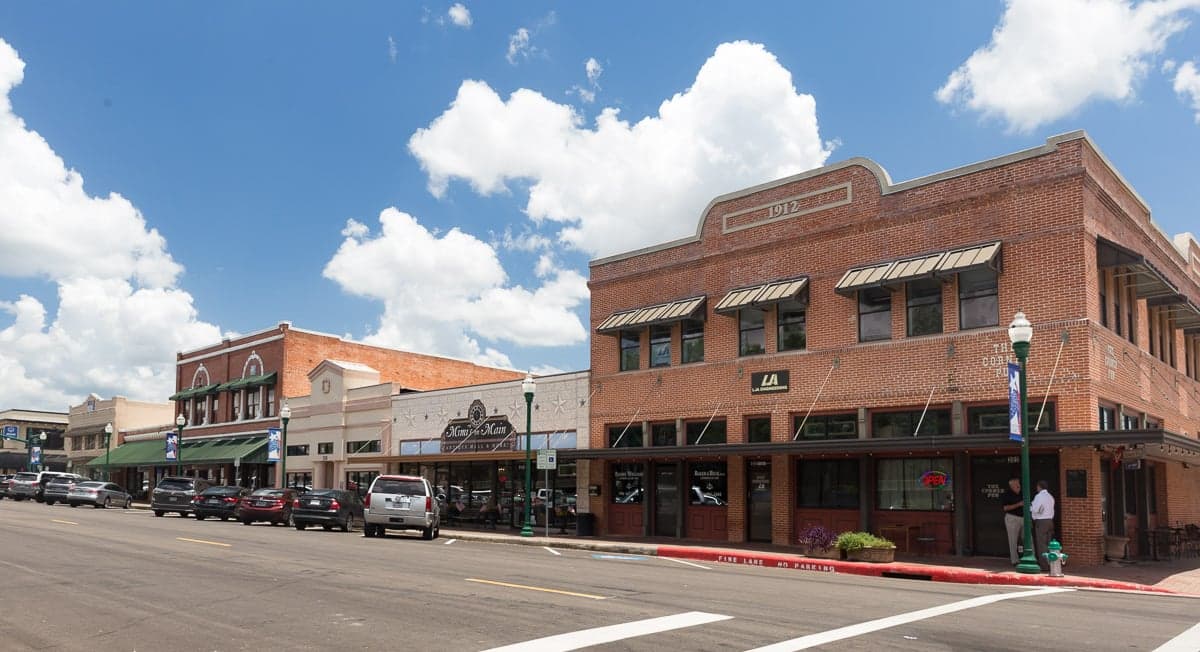
Photo: Wikipedia
Personal Sovereignty in Conroe, TX
Strong independent fundamentals that actively favor personal liberty and low regulation.
What does Personal Sovereignty tell us?
Personal Sovereignty measures your capacity for self-reliance and independence with minimal government friction. Higher scores mean fewer barriers between you and the way you want to live... but it assumes you have the space you need and good neighbors.
What does this tell us?
Personal Sovereignty measures your capacity for self-reliance and independence with minimal government friction. Higher scores mean fewer barriers between you and the way you want to live... but it assumes you have the space you need and good neighbors.
State Policy
Energy independence: Net exporter (220% of energy produced in-state)
Personal Liberty
Homesteading

Personal Liberty Analysis
For the individual or family prioritizing personal sovereignty, Conroe, Texas, offers a legal and cultural environment that stands in stark contrast to the restrictive jurisdictions found on the West Coast and in the Northeast. The city operates under the broad umbrella of Texas state law, which is deliberately structured to limit local government overreach, particularly in areas of taxation, property use, and self-defense. While no location is a complete sanctuary from federal overreach, Conroe’s combination of a low-tax regime, strong property rights, and a deep-rooted culture of self-reliance makes it a serious contender for those seeking to maximize personal autonomy in an increasingly uncertain national landscape.
Tax burden and regulatory posture: how Conroe limits government reach into your income and property
The most immediate expression of personal sovereignty in Conroe is its tax structure. Texas has no state income tax, meaning every dollar you earn stays in your pocket or your family’s budget, not funneled to Austin or Washington. For a single individual earning a median salary, this can mean thousands of dollars in annual savings compared to states like California or New York. The trade-off is a reliance on property taxes, which in Montgomery County are notable but not crushing—effective rates typically land around 1.8% to 2.2% of assessed value. However, the state’s homestead exemption for primary residences, plus a cap on annual appraisal increases for homeowners over 65 or disabled, provides a buffer against runaway assessments. On the regulatory front, Conroe and Montgomery County maintain a light touch. There are no county-level zoning laws in unincorporated areas, which is a massive advantage for anyone wanting to run a home-based business, store equipment, or build auxiliary structures without months of permitting delays. The city of Conroe itself has zoning, but it is far less restrictive than in Houston or Austin, and the city council has historically been pro-business and pro-property rights. For the prepper or survivalist, this means you can legally store supplies, maintain a workshop, and even keep livestock on larger lots without the fear of a code enforcement officer shutting you down for “non-conforming use.”
Self-defense and gun law specifics: what the Castle Doctrine and permitless carry mean for your safety
Conroe sits in the heart of Texas, where the Second Amendment is treated as a fundamental right, not a privilege. Since 2021, Texas has allowed permitless carry (constitutional carry) for anyone 21 or older who can legally possess a firearm. This means you can carry a handgun openly or concealed without a license, a background check at the point of sale, or a waiting period. For the survivalist, this eliminates a bureaucratic choke point that could be exploited during a crisis. The state’s Castle Doctrine is among the strongest in the nation: there is no duty to retreat in your home, vehicle, or workplace, and the law presumes you acted reasonably if an intruder unlawfully enters. This extends to your property, not just your dwelling. Montgomery County’s district attorney has a track record of supporting self-defense claims, and the local sheriff’s office is known for a pro-Second Amendment stance. For parents, this means you can legally train your children in firearm safety and marksmanship without fear of state interference, provided you follow safe storage laws. The only notable restriction is the prohibition of carrying in certain posted locations (bars, schools, government meetings), but these are clearly marked and easily avoided. Compared to states like Colorado or Washington, where magazine limits and red flag laws are tightening, Conroe offers a legal environment where your ability to defend yourself and your family is not subject to the whims of a distant legislature.
Self-reliance and homesteading viability: lot sizes, zoning, and off-grid feasibility in Conroe
For those serious about self-reliance, Conroe’s real estate landscape offers a range of options that are increasingly rare in suburban America. Within the city limits, standard residential lots are typically one-quarter to one-half acre, which is enough for a substantial garden, a chicken coop, and a small workshop. However, the real opportunity lies in the unincorporated areas of Montgomery County, just outside Conroe’s city limits. Here, you can find lots ranging from one to ten acres at prices that are still reasonable by national standards—often under $30,000 per acre for raw land. There is no county-wide zoning, so you can build a pole barn, install a rainwater catchment system, and even set up a small solar array without a special use permit. Off-grid feasibility is high: the area gets plenty of sun for solar, and well water is common on larger properties. The county does enforce basic building codes for habitable structures, but these are primarily safety-focused (electrical, septic) and not designed to prevent self-sufficient living. For the prepper, this means you can legally store a year’s worth of food, maintain a generator or solar backup, and keep livestock (chickens, goats, even a few head of cattle on larger acreage) without neighbors or the HOA calling the county. The only real limitation is that Montgomery County does require a permit for septic systems and wells, but these are straightforward to obtain and not prohibitively expensive. Compared to the strict off-grid bans in parts of Colorado or the Pacific Northwest, Conroe is a haven for those who want to build a resilient, self-sufficient homestead.
Personal liberties: parental rights, medical autonomy, speech, and property in Conroe
Texas has been at the forefront of protecting parental rights, and Conroe reflects that state-level priority. Parents have broad authority over their children’s education, medical decisions, and upbringing. The state does not mandate vaccine passports, and there is no statewide mask or lockdown mandate that can be enforced locally. During the COVID-19 pandemic, Montgomery County was one of the most resistant to government overreach, with local officials openly refusing to enforce state-level restrictions they deemed unconstitutional. Medical autonomy is also strong: Texas law prohibits any requirement for experimental medical procedures as a condition of employment or public accommodation, and the state has passed laws protecting healthcare workers who refuse to participate in procedures they find objectionable. On the speech front, Conroe is in a county that consistently votes conservative, and public discourse is generally free from the cancel culture pressures found in more progressive urban centers. Property rights are further protected by the Texas Property Code, which limits the ability of HOAs to impose arbitrary fines or restrictions, though HOAs do exist in some subdivisions. For the parent concerned about government overreach in education, Conroe ISD offers a robust school choice environment, including charter schools and a growing homeschool community. The state’s homeschooling laws are among the most permissive in the nation: no notification required, no curriculum approval, no standardized testing mandates. This means you can educate your children according to your own values and standards, free from state interference.
In the broader context of American personal sovereignty, Conroe ranks as a strong contender for those who prioritize autonomy over convenience. It lacks the extreme isolation of rural Alaska or the legal chaos of a place like rural Idaho, but it offers a practical balance: proximity to a major metro (Houston) for supplies and work, combined with a legal and cultural environment that actively resists government overreach. For the survivalist or prepper who wants to live free, raise a family with minimal state interference, and be prepared for whatever comes, Conroe provides a solid foundation that is hard to beat in the lower 48. The key is to buy land outside the city limits, avoid HOAs, and stay engaged with local politics to keep the regulatory climate favorable. If you do that, you’ll find one of the most sovereign-friendly environments in the country.

* Values derived from national, state, county, city and local statistics and may differ in a specific area. Last updated: 2026-05-16T22:24:02.000Z
Narrative content on this page is AI-generated and may contain mistakes. Verify any details that matter before acting on them.
ReloMaps may earn a commission from affiliate links at no extra cost to you.

