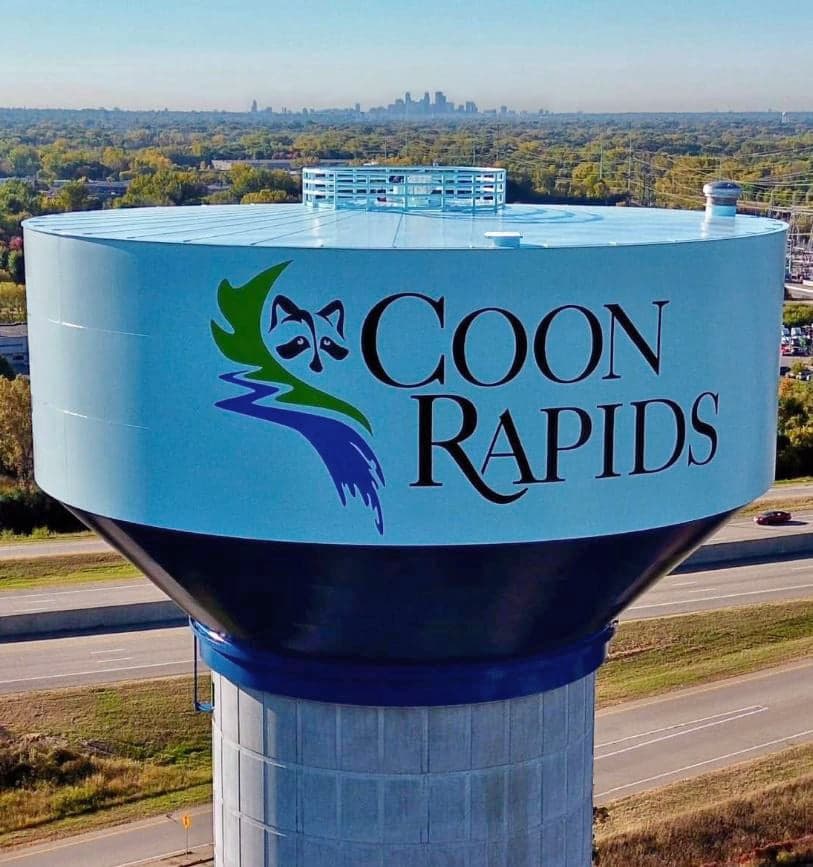
Photo: Wikipedia
Political ClimatePolitical Climate in Coon Rapids, MN
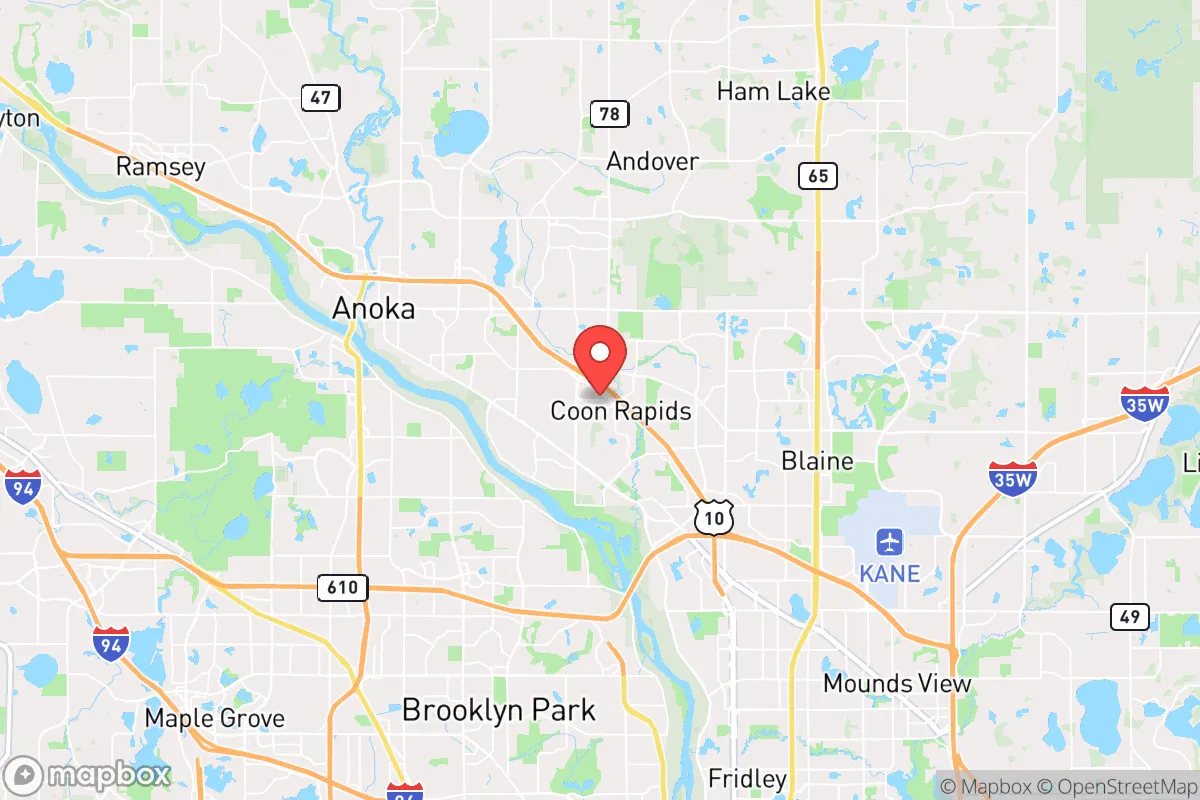
District shown is the primary district for this city’s centroid. Cities may span multiple districts.
Local Political AnalysisPolitical Analysis of Coon Rapids, MN
Coon Rapids has historically been a reliably blue area, with a Cook PVI of D+11, but if you've lived here as long as I have, you've watched that label start to feel a little less comfortable over the last decade. The city leans Democratic on paper, but the real story is how many folks—especially in the older neighborhoods and the more rural edges—are quietly fed up with the direction things are going. You'll still see plenty of yard signs for the usual candidates, but the conversations at the hardware store or the local diner have shifted. People are talking more about property taxes, school curriculum, and the feeling that the state government in St. Paul doesn't really listen to what we want.
How it compares
Drive ten minutes south to Anoka, and you'll find a place that's still pretty purple but trending redder, especially in the county commission races. Head west to Ramsey, and you're in a solidly conservative stronghold where the local paper runs more letters about Second Amendment rights than climate initiatives. Coon Rapids sits right in the middle of that shift. It's not as deep blue as Minneapolis or even Brooklyn Park to the south, but it's not as red as the exurbs. What you notice is that the city council and school board races here are getting tighter every cycle. The progressive push for things like sanctuary city policies or defunding the police has been met with real pushback from residents who remember when this was a quiet, safe, family-oriented suburb. The 2022 midterms saw a few local races flip, and that trend hasn't stopped.
What this means for residents
For someone like you, who values personal freedoms and doesn't want the government poking its nose into every aspect of life, the biggest concern is the creeping overreach. The state legislature has been pushing mandates on everything from energy codes to how your kids are taught about history. Coon Rapids itself hasn't gone full progressive—yet—but the pressure is there. You'll see it in the zoning fights over new apartment complexes that don't include enough parking, or in the school board meetings where parents are shouting about critical race theory and gender ideology being introduced in elementary classrooms. The good news is that the community is waking up. There's a growing network of local activists and neighborhood groups that are fighting to keep Coon Rapids from becoming another Brooklyn Park or Minneapolis. If you're thinking of moving here, just know that the political climate is a battleground, not a done deal.
Culturally, Coon Rapids still holds onto a lot of its blue-collar, midwestern roots. You'll find more pickup trucks than Teslas, and the local VFW and American Legion posts are still packed on Friday nights. But the policy battles are real. The city council recently debated a resolution on police oversight that split the community right down the middle. The progressive wing wanted civilian review boards with subpoena power; the more conservative residents argued it would hamstring officers and make the streets less safe. That kind of fight is going to keep happening. If you value your rights—your right to speak your mind, to keep and bear arms, to raise your kids without government interference—you'll find plenty of allies here. But you'll also need to stay engaged, because the other side is organized and well-funded. Coon Rapids isn't lost yet, but it's at a crossroads.

State Political ClimatePolitical Climate in Minnesota
State Political AnalysisPolitical Environment in the State
Minnesota has shifted from a classic purple battleground to a reliably blue state over the past two decades, with Democrats now holding all statewide offices and both legislative chambers. The state voted for Hillary Clinton by 1.5 points in 2016, Joe Biden by 7 points in 2020, and Kamala Harris by 4 points in 2024, but that top-ticket margin masks a deep and growing urban-rural chasm. For a conservative considering relocation, the key takeaway is that Minnesota’s political power is concentrated in the Twin Cities metro, while much of the rest of the state feels like a different country entirely.
Urban vs. rural divide
The political map of Minnesota is essentially a story of two states. The Twin Cities metro — Hennepin, Ramsey, and Dakota counties — delivers roughly 60% of the state’s vote and is overwhelmingly Democratic. Minneapolis and St. Paul are among the most progressive cities in the Midwest, with St. Paul electing a Democratic Socialist mayor and Minneapolis passing a $15 minimum wage and rent control. Meanwhile, greater Minnesota is deeply red. In 2024, Donald Trump won 80 of the state’s 87 counties, including traditional DFL strongholds like St. Louis County (Duluth) and Blue Earth County (Mankato). The suburban ring is where the real action is: Washington County, once a reliable red suburb, has trended blue, while Carver and Scott counties remain conservative strongholds. The Iron Range, historically a DFL bastion, has flipped hard to the right over cultural and mining issues, with St. Louis County voting for Trump in 2020 for the first time since 1972. If you’re looking for a conservative-friendly area, think Rochester, St. Cloud, or the exurbs of Lakeville and Prior Lake.
Policy environment
Minnesota’s policy environment has become aggressively progressive under the DFL trifecta that took power in 2023. The state now has a progressive income tax with a top rate of 9.85% on income over $200,000 (single filers), one of the highest in the nation. Property taxes are moderate but vary wildly by county — expect to pay around 1.1% of home value in Wright County versus 1.4% in Hennepin. The 2023 session passed a slew of new laws: a paid family and medical leave program funded by a 0.7% payroll tax, a 75-cent per $20 gas tax increase indexed to inflation, and a ban on non-compete agreements. Education policy is a flashpoint: Minnesota has open enrollment and charter schools, but the state also passed a law requiring schools to provide “gender-inclusive” policies and materials, which has sparked parental rights battles. Election laws are among the most accessible in the country — same-day voter registration, no-excuse absentee voting, and automatic voter registration at DMVs. For a conservative, the regulatory posture is concerning: the state has a strict environmental review process that has stalled mining and pipeline projects, and the Minnesota Pollution Control Agency has broad authority to impose carbon reduction mandates.
Trajectory & freedom
Over the past three years, Minnesota has become measurably less free by traditional conservative metrics. The 2023 “Clean Energy” bill mandates 100% carbon-free electricity by 2040, effectively banning new natural gas plants. Gun rights took a hit with the passage of universal background checks and a “red flag” law (Extreme Risk Protection Order) that allows courts to temporarily seize firearms from individuals deemed a threat. On the medical autonomy front, the state codified abortion rights into law via the Protect Reproductive Options Act, removing nearly all restrictions. Parental rights suffered a blow with the “Trans Refuge” law, which shields gender-affirming care for minors from out-of-state legal challenges and allows the state to intervene if parents object to a child’s gender transition. Property rights are under pressure from a new “climate adaptation” zoning law that allows local governments to impose density mandates and restrict single-family zoning. On the plus side, Minnesota has no right-to-work law, but it also has no state-level occupational licensing reform — a mixed bag for economic freedom. The trajectory is clear: the DFL is using its trifecta to lock in progressive policies that will be hard to reverse, even if Republicans win back the legislature in 2026.
Civil unrest & political movements
Minnesota has been a national flashpoint for civil unrest since the murder of George Floyd in 2020. The Minneapolis Uprising resulted in over $500 million in property damage, the burning of a police precinct, and a sustained period of autonomous zone activity. The aftermath saw a wave of defund-the-police activism that led to the Minneapolis City Council attempting to dismantle the police department (ultimately blocked by voters in a 2021 ballot measure). On the right, the “Back the Blue” movement is strong in the suburbs and exurbs, with groups like the Minnesota Police and Peace Officers Association holding regular rallies. Immigration politics are heated: Minnesota is a sanctuary state under the 2023 “Driver’s Licenses for All” law, which allows undocumented immigrants to obtain driver’s licenses. The state also has a “sanctuary” policy that limits local law enforcement cooperation with ICE. Election integrity remains a sore point: the 2020 election saw a massive surge in mail-in voting, and while no widespread fraud was found, the state’s same-day registration system has been criticized for lacking robust verification. The 2024 election saw organized poll watcher groups from both sides, but no major incidents. A new resident would notice the political polarization in everyday life — yard signs, bumper stickers, and even local grocery store bulletin boards are heavily politicized.
Projection
Over the next 5-10 years, Minnesota is likely to become even more Democratic at the state level, driven by continued urbanization and in-migration of younger, more progressive voters to the Twin Cities. The rural exodus is accelerating — counties like Marshall and Pennington in the northwest are losing population, while the metro grows. The DFL’s 2023 legislative session was a once-in-a-generation policy blitz, and they are unlikely to lose full control before 2030 due to gerrymandered legislative maps and the concentration of Democratic voters. However, the state’s high cost of living and tax burden may start to drive out middle-class families, especially those with children, to lower-tax states like South Dakota or Iowa. The 2026 gubernatorial race will be a bellwether: if a Republican can win back the governor’s mansion, it could slow the progressive agenda, but the legislature is likely to remain closely divided. For a conservative moving in now, expect to live in a state where your vote for president is essentially irrelevant, but your local vote in the suburbs or exurbs can still make a difference in school board and county commission races.
For a conservative individual or family, Minnesota offers a high quality of life in its conservative-leaning pockets — think Rochester’s strong economy, St. Cloud’s affordable housing, or the Lakeville school system — but you’ll be swimming against a strong progressive current at the state level. The tax burden is real, the regulatory environment is tightening, and your cultural values will be at odds with the state government. If you’re willing to fight for your local school board and pay higher taxes for better services, it can work. But if you’re looking for a state that respects your gun rights, your parental authority, and your wallet, you might want to look at Iowa or South Dakota instead.
* Values derived from national, state, county, city and local statistics and may differ in a specific area. Last updated: 2026-04-30T06:51:14.000Z
Narrative content on this page is AI-generated and may contain mistakes. Verify any details that matter before acting on them.
ReloMaps may earn a commission from affiliate links at no extra cost to you.

