 Popular
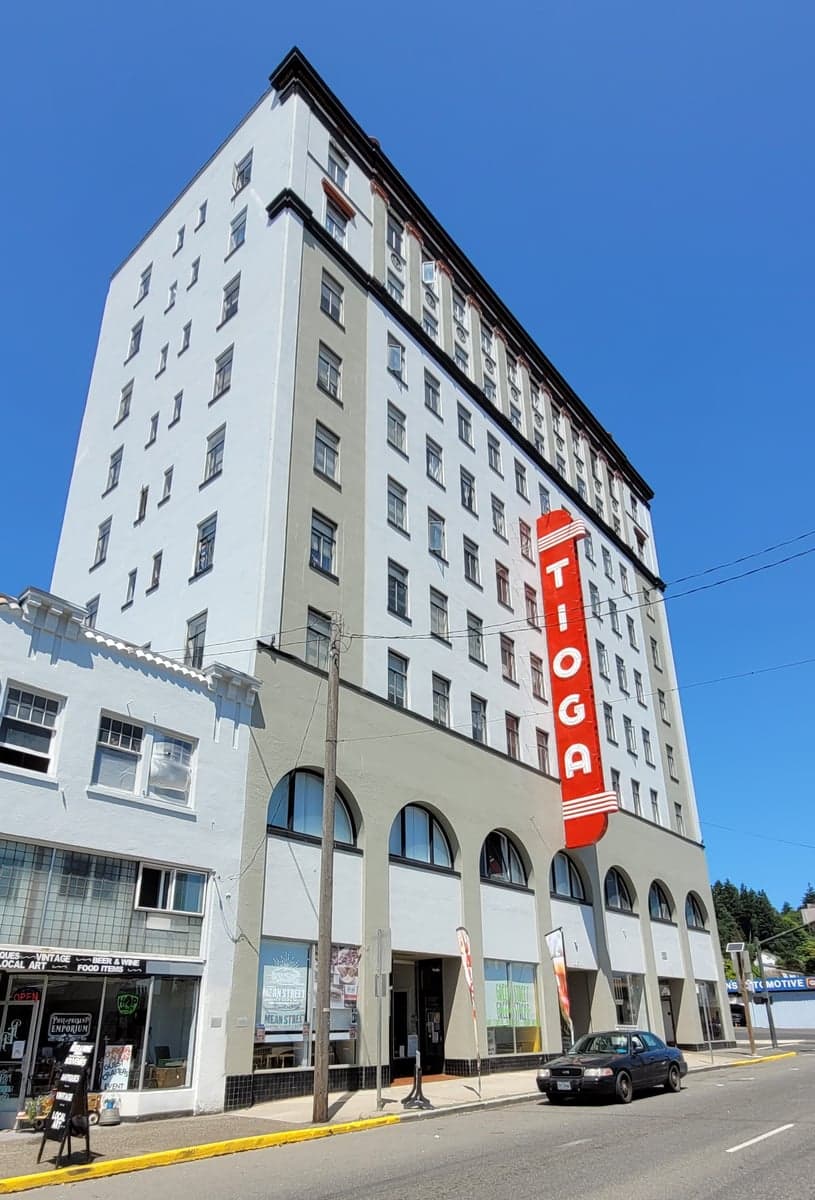
Photo: Wikipedia
Demographics of Coos Bay, OR
Affluence Level in Coos Bay, OR
A below-average socioeconomic profile. Incomes, home values, and educational attainment trail the U.S., with higher poverty and unemployment.
People of Coos Bay, OR
The people of Coos Bay, Oregon, today number 15,867, forming a predominantly white (82.6%) and older population with a modest Hispanic minority (8.7%) and very small East/Southeast Asian (1.5%) and Black (0.6%) communities. The city’s character is shaped by its working-class timber and fishing heritage, a low college attainment rate (21.4%), and a foreign-born share (2.8%) that is roughly one-third the national average. Distinctive identity markers include a strong sense of local independence, a reliance on natural resource industries, and a demographic profile that has changed little by the immigration waves that reshaped larger West Coast cities.
How the city was settled and grew
Coos Bay’s population history begins with the indigenous Coos, Lower Umpqua, and Siuslaw peoples, who lived along the bay for millennia before European contact. The first permanent white settlers arrived in the 1850s, drawn by coal deposits and the region’s vast old-growth timber. The city was formally platted in 1874 grew slowly until the Coos Bay Railroad reached the waterfront in 1916, unlocking the timber economy. The original working-class neighborhoods—Empire (the historic townsite on the bay’s south shore) and Eastside (across the Isthmus Slough)—were built by Scandinavian, Finnish, and Irish loggers and millworkers who arrived in the early 1900s. A second wave came during the post-World War II housing boom, when the Weyerhaeuser and Georgia-Pacific mills expanded, drawing white migrants from the rural Midwest and the Dust Bowl states. These families settled in the Mingus Park area and the Englewood neighborhood, where modest postwar bungalows and ranch homes still dominate. By 1960, Coos Bay was a nearly all-white company town, with timber employing over 40% of the workforce.
Modern era (post-1965)
The 1965 Hart-Cellar Act had minimal impact on Coos Bay’s demographics. Unlike Portland or Eugene, the city attracted almost no post-1965 immigration from Asia or Latin America. The East/Southeast Asian population (1.5%) is largely composed of a small, aging cohort of Japanese American families who arrived before World War II and a handful of Filipino healthcare workers who came in the 1990s. They are concentrated in the Downtown district and near the Bay Area Hospital. The Hispanic population (8.7%) grew slowly from the 1980s onward, driven by Mexican and Central American laborers working in the remaining mills, fish processing plants, and the region’s growing dairy and cannabis industries. Most Hispanic families live in the South Coos area, near the waterfront industrial zone, and in the Bunker Hill unincorporated area just east of city limits. The Black population (0.6%) has remained negligible, with no distinct neighborhood concentration. The Indian subcontinent population is statistically zero. Domestic in-migration since 2000 has been dominated by retirees and remote workers from California and the Willamette Valley, drawn by low housing costs; they have settled disproportionately in the Barview and Sunset Bay areas, where newer subdivisions and waterfront homes have been built.
The future
Coos Bay’s population is slowly aging and shrinking, with a median age rising past 45 as young adults leave for college and urban jobs. The Hispanic share is the only growth segment, projected to reach 12-14% by 2040 through natural increase and continued labor migration, but the city is not tribalizing into distinct ethnic enclaves—Hispanic families are dispersing across the South Coos and Bunker Hill areas, not in a single barrio. The East/Southeast Asian and Black communities are plateauing or declining as older residents pass away and few new arrivals replace them. The white population is no significant Indian subcontinent population to track. The dominant trend is homogenization: the city is becoming whiter and older relative to Oregon as a whole, with outmigration of the young and in-migration of white retirees. The planned Jordan Cove LNG terminal, if built, could bring a temporary construction workforce but is unlikely to change the long-term demographic trajectory.
For someone moving in now, Coos Bay is a stable, culturally homogeneous small city where the population is not diversifying rapidly. The community remains rooted in its timber and fishing traditions, with a low cost of living and a pace of life that appeals to those seeking to escape metropolitan growth. New arrivals will find a population that is welcoming but insular, and a demographic future that looks much like its past.

* Values derived from national, state, county, city and local statistics and may differ in a specific area. Last updated: 2026-05-18T00:01:06.000Z
Narrative content on this page is AI-generated and may contain mistakes. Verify any details that matter before acting on them.
ReloMaps may earn a commission from affiliate links at no extra cost to you.

