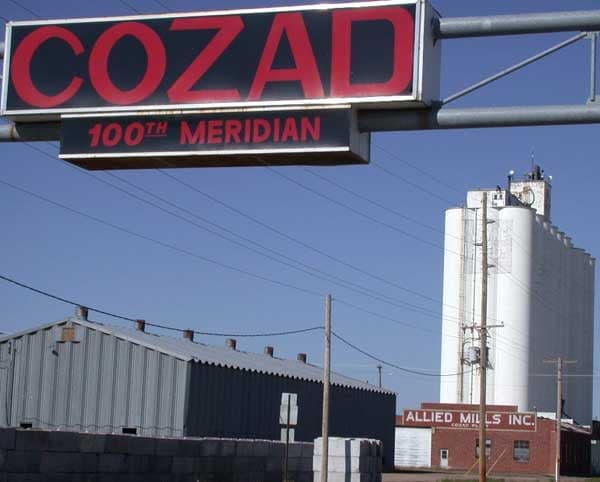
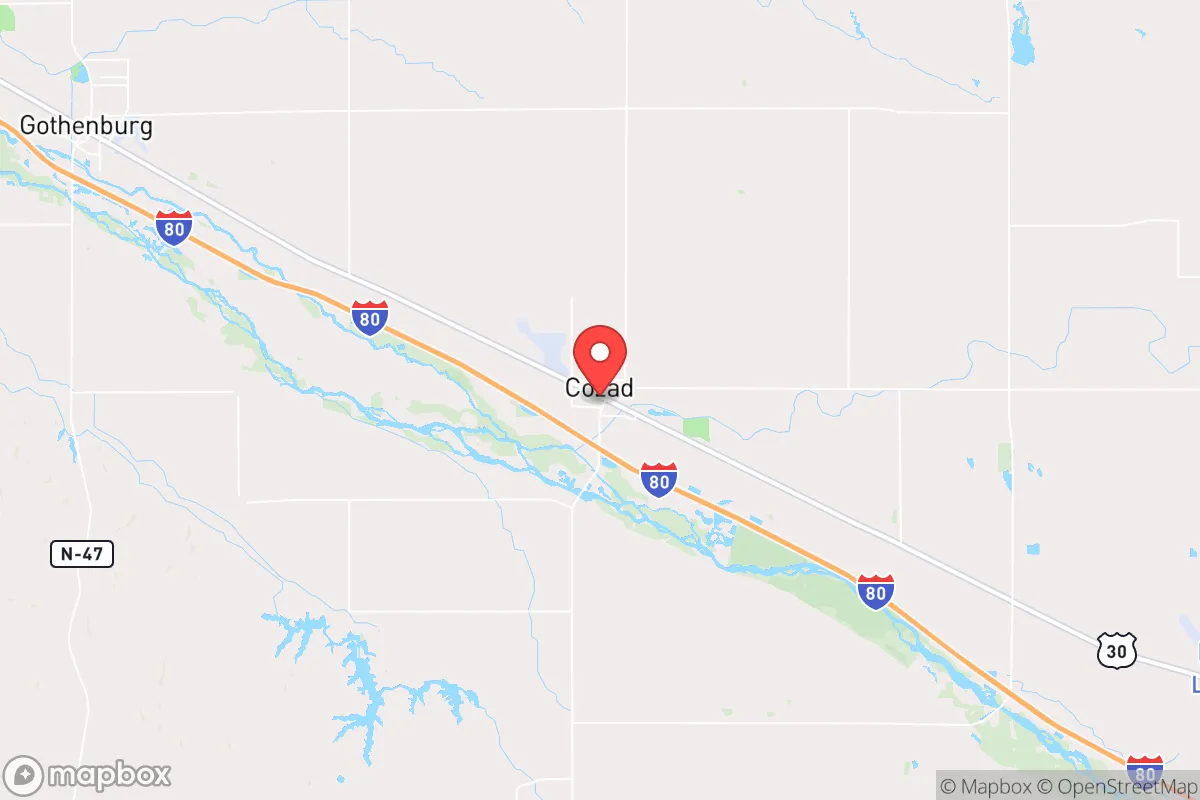
Photo: Wikipedia
Demographics of Cozad, NE
Affluence Level in Cozad, NE
A middle-class area roughly in line with national averages across income, home values, education, and employment.
People of Cozad, NE
The people of Cozad, Nebraska, today number 3,944, forming a predominantly white (84.9%) community with a notable Hispanic minority (10.8%) and small Black (2.1%) and East/Southeast Asian (0.8%) populations. The city’s character remains rooted in its agricultural and railroad heritage, with a low foreign-born share of just 0.8% and a college attainment rate of 14.8%, reflecting a working-class, family-oriented demographic. Cozad is a place where generational ties to the land and local industry run deep, and where new arrivals are still a relative rarity.
How the city was settled and grew
Cozad was founded in 1873 as a railroad town on the Union Pacific line, named after its founder, John J. Cozad. The original settlers were predominantly Anglo-American homesteaders drawn by the promise of cheap land under the Homestead Act and the economic opportunity of the transcontinental railroad. The town’s first neighborhood, Old Town Cozad (centered around the original depot on A Street), housed the railroad workers, merchants, and farmers who built the early economy. By the 1880s, a second wave of German and Czech immigrants arrived, settling in what became known as South Cozad, an area south of the tracks where they established small farms and businesses. The early 20th century saw the rise of the North Side district, developed as the town expanded beyond the railroad corridor, with larger lots for middle-class families employed by the burgeoning agricultural processing plants. The population peaked at around 4,500 in the 1950s, driven by the post-war boom in irrigated farming and the expansion of the Cozad State Bank and local grain elevators.
Modern era (post-1965)
After the 1965 Hart-Cellar Act, Cozad saw minimal immigration, unlike larger Nebraska cities. The foreign-born population remained below 1% through the 1990s. The most significant demographic shift came from domestic in-migration of Hispanic workers, primarily of Mexican descent, drawn by jobs in the region’s meatpacking and agricultural processing industries. These families concentrated in the West Cozad neighborhood, near the industrial park and the U.S. 30 corridor, where affordable housing stock and proximity to employers like the Cozad Feedlot and local packing plants created a distinct enclave. The white population, meanwhile, has gradually aged and declined, with younger families often moving to larger cities like Kearney or Lincoln for employment. The East Cozad district, originally a 1950s subdivision, has seen a slight uptick in Black and East/Southeast Asian residents, though numbers remain small. The overall population has been relatively stable, hovering between 3,800 and 4,000 since 2000, with the Hispanic share rising from about 5% in 2000 to 10.8% today.
The future
Cozad’s population is likely to continue its slow homogenization along ethnic lines, with the white majority aging in place and the Hispanic community growing through higher birth rates and continued domestic migration from other rural Nebraska towns. The foreign-born share is unlikely to rise significantly given the lack of refugee resettlement or large-scale immigration programs. The Downtown Cozad area, once the commercial heart, is seeing a modest revival with new small businesses, but the city’s overall population is projected to remain flat or decline slightly over the next decade, as young adults continue to leave for urban job markets. The Hispanic community is gradually assimilating, with second-generation families moving into South Cozad and North Side neighborhoods, blurring some of the older ethnic boundaries. However, the city remains overwhelmingly white and culturally conservative, with little pressure for rapid diversification.
For someone moving to Cozad now, the city offers a stable, low-cost, and safe environment with a strong sense of community, but little ethnic or cultural diversity. The population is aging and slowly shrinking, and new arrivals will likely find themselves in a place where social networks are built around church, school, and local sports, rather than ethnic or immigrant institutions. The city is becoming more Hispanic, but at a pace that preserves its essential character as a working-class Plains town.

* Values derived from national, state, county, city and local statistics and may differ in a specific area. Last updated: 2026-05-03T20:29:15.000Z
Narrative content on this page is AI-generated and may contain mistakes. Verify any details that matter before acting on them.
ReloMaps may earn a commission from affiliate links at no extra cost to you.

