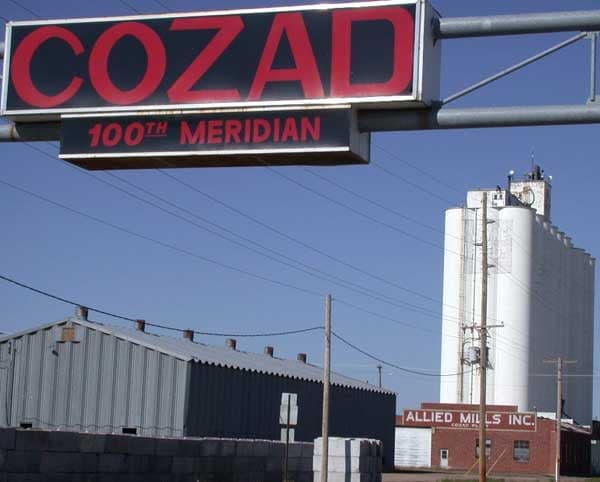
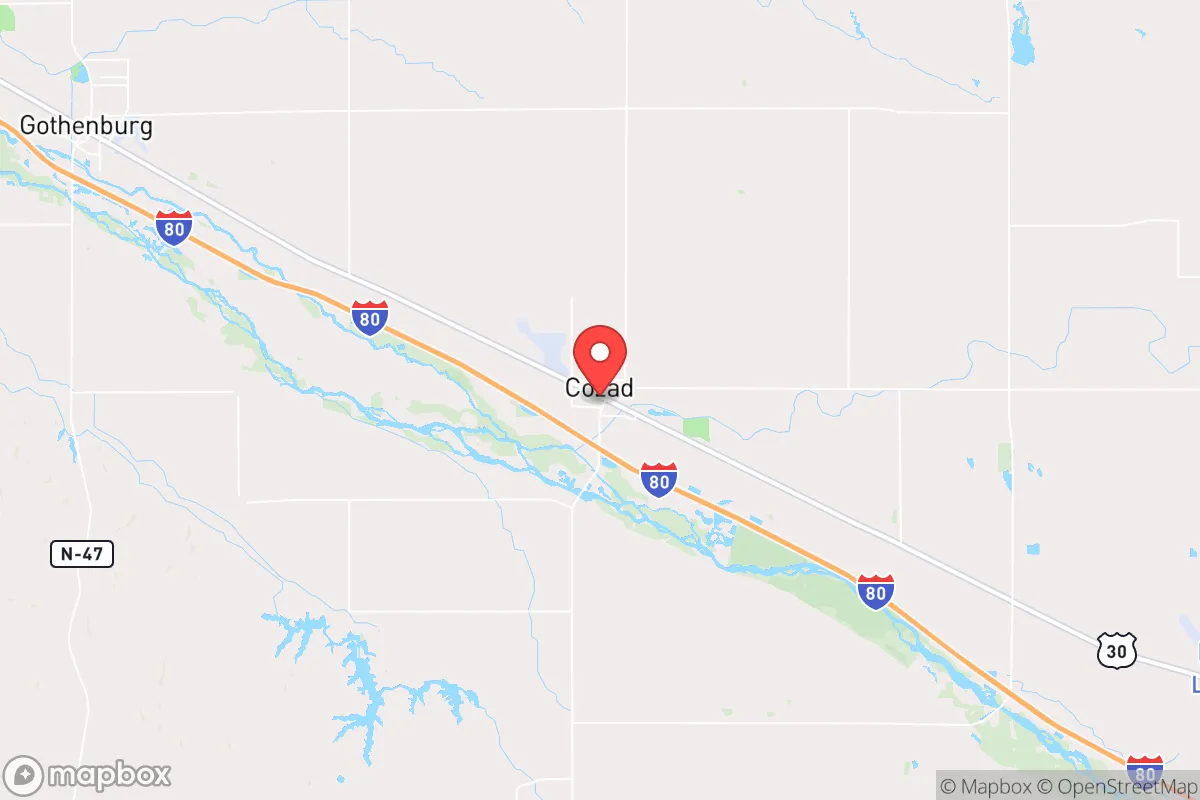
Photo: Wikipedia
Political ClimatePolitical Climate in Cozad, NE
District shown is the primary district for this city’s centroid. Cities may span multiple districts.
Local Political AnalysisPolitical Analysis of Cozad, NE
Cozad, Nebraska, sits deep in the heart of the state’s conservative stronghold, and the numbers back up what you’d feel walking down the main drag. With a Cook PVI of R+27, this town is about as reliably Republican as they come in the Cornhusker State, and it’s been that way for as long as anyone can remember. The political trajectory here isn’t shifting leftward—if anything, the local sentiment has hardened against the progressive drift you see in places like Lincoln or Omaha, and folks here are proud of that.
How it compares
Drive thirty miles east to Kearney, and you’ll find a slightly more moderate vibe, thanks to the university influence and a growing number of transplants. But Cozad? It’s a different animal. Neighboring towns like Gothenburg and Lexington lean conservative too, but Cozad’s R+27 rating puts it in a class with the most solidly red rural precincts in the state. Where Lexington has seen a slow creep of progressive ideas through its growing immigrant community, Cozad has held the line, with local elections rarely contested by anyone outside the GOP. The contrast is stark: in Lincoln, you’ve got city council debates over sanctuary policies and bike lanes; here, the big political fights are about keeping property taxes low and making sure the county sheriff has the resources to do his job without interference from the state.
What this means for residents
For the people who live here, the political climate means a government that mostly stays out of your business. You won’t see mask mandates, vaccine passports, or heavy-handed zoning rules in Cozad—the local leadership takes a hands-off approach to personal freedoms, and that’s exactly how residents like it. The school board isn’t pushing critical race theory or gender ideology; they’re focused on reading, math, and keeping the football program strong. Property taxes are a constant gripe, but they’re still lower than in the blue-leaning counties out west. The biggest concern I hear from old-timers is that the state legislature in Lincoln keeps trying to chip away at local control—things like state-level gun laws or education mandates that don’t fit a town like this. So far, Cozad’s representatives have fought that off, but you can feel the tension building as the urban areas grow louder.
There’s a quiet worry, too, that the next generation might not hold the line. Some of the younger folks move to Omaha for jobs and come back with different ideas about things like renewable energy mandates or diversity initiatives. But for now, the culture here is still rooted in self-reliance, church on Sunday, and neighbor helping neighbor without a government form to fill out. If you’re looking for a place where your Second Amendment rights aren’t debated and your kids aren’t taught to question the flag, Cozad is about as safe a bet as you’ll find in Nebraska. Just keep an eye on the statehouse—that’s where the real fight for this town’s way of life is playing out.

State Political ClimatePolitical Climate in Nebraska
State Political AnalysisPolitical Environment in the State
Nebraska has long been a reliably conservative state, but it’s not the monolith outsiders often assume. The state’s overall partisan lean is solidly Republican, with a Cook Partisan Voting Index of R+13, but the real story is the growing divide between its two major population centers and the vast rural expanse. Over the past 10-20 years, the state has shifted rightward in rural areas while the urban core of Omaha and Lincoln has become more competitive, creating a political landscape that is both stable and quietly fracturing.
Urban vs. rural divide
The political map of Nebraska is essentially a tale of two worlds. The eastern third of the state, anchored by Omaha (Douglas County) and Lincoln (Lancaster County), is where the Democratic vote is concentrated. Douglas County has trended blue over the last decade, voting for Joe Biden in 2020 and consistently electing Democrats to local offices. Lincoln, home to the University of Nebraska, is a classic college-town liberal enclave, though it still has a significant moderate Republican presence. In contrast, the rest of the state is deeply red. Grand Island, Kearney, and Norfolk are reliably conservative, with rural counties like Banner County and Arthur County routinely delivering 80%+ margins for Republican candidates. The 2022 gubernatorial race highlighted this split: Republican Jim Pillen won by 20 points statewide, but lost Douglas and Lancaster counties. The rural-urban divide is not just about party ID—it’s about culture. In small towns like Valentine or Scottsbluff, the political conversation centers on agriculture, property rights, and local control, while Omaha’s suburbs like Elkhorn and Papillion are more focused on school board politics and tax rates.
Policy environment
Nebraska’s policy environment is generally friendly to conservative priorities, but with some notable wrinkles. The state has no income tax on Social Security benefits and a flat individual income tax rate that was recently cut from 6.84% to 5.84%, with a path to 3.99% by 2027. Property taxes remain a top complaint—they are high relative to the region, especially in rural areas where agricultural land valuations have soared. The state legislature, officially nonpartisan but practically Republican-dominated, passed LB 753 in 2023, creating a school choice program that provides tax credits for private school scholarships. This was a major win for parental rights advocates. On healthcare, Nebraska expanded Medicaid under the Affordable Care Act via a 2018 ballot initiative, a rare progressive victory that has stuck. Election laws are moderately restrictive: voter ID is now required (passed in 2023 as LB 514), and same-day registration is not allowed. The state also uniquely awards its Electoral College votes by congressional district, meaning the 2nd District (Omaha) can swing blue in presidential elections, as it did in 2020 and 2024.
Trajectory & freedom
Nebraska is moving in a mixed direction on personal freedom, but the overall trend is toward more liberty in key areas. The biggest recent win for conservatives was the passage of LB 77 in 2023, which eliminated the requirement for a permit to carry a concealed handgun. Constitutional carry is now the law, and gun rights are broadly respected. On parental rights, LB 574 (the “Let Them Grow Act”) banned gender-affirming surgeries and hormone therapies for minors, a major flashpoint that drew national attention and legal challenges. The law is currently tied up in court, but it signals the legislature’s willingness to act on cultural issues. On the other hand, the state has not passed any broad school choice expansion beyond the tax credit program, and property tax relief remains elusive. The Nebraska Civic Engagement Table and other left-leaning groups have been active in Omaha and Lincoln, pushing for higher minimum wages and expanded voting access, but these efforts have largely stalled at the state level. The trajectory is toward more conservative governance, but the urban centers are pushing back hard.
Civil unrest & political movements
Nebraska is not known for widespread civil unrest, but there have been notable flashpoints. The 2020 George Floyd protests in Omaha turned violent, with looting and fires in the Old Market district, leading to a heavy National Guard presence. This event galvanized both the progressive activist community and the conservative backlash. The Omaha Police Department has since faced ongoing scrutiny from groups like Black Lives Matter Omaha, but the city council has not defunded the police. On the right, the Nebraska Republican Party has seen a factional split between establishment conservatives and more populist, Trump-aligned activists. The 2022 primary for governor saw a crowded field, with the eventual winner, Jim Pillen, backed by the outgoing governor Pete Ricketts. Immigration politics are less heated than in border states, but South Sioux City and Grand Island have seen tensions over meatpacking plant labor. There is no sanctuary city policy anywhere in the state. Election integrity has been a minor issue, with some activists pushing for hand-counting of ballots, but the legislature has not gone that far. Overall, the political temperature is lower than in states like Oregon or Texas, but the cultural battles are real and visible in school board meetings and city council chambers.
Projection
Looking ahead 5-10 years, Nebraska is likely to remain a red state, but the margins will tighten. The key demographic shift is the growth of Omaha’s suburbs—places like Gretna and Bennington are booming with young families, many of whom are fiscally conservative but socially moderate. If these voters continue to trend left on cultural issues, the 2nd Congressional District could become permanently blue, and the statewide Republican majority could shrink. Meanwhile, rural counties are losing population, which reduces their electoral weight. The state’s in-migration is modest, but it’s coming from places like California and Colorado, which could bring more progressive attitudes to Lincoln and Omaha. The legislature will likely continue to pass conservative bills on guns, education, and abortion (Nebraska banned abortion at 12 weeks in 2023 via LB 626), but the fight over property taxes and school funding will intensify. A new resident moving in now should expect a state that is politically stable but not static—the culture wars are here to stay, and the urban-rural divide will only deepen.
For a conservative-leaning individual or family, Nebraska offers a solid foundation: low income taxes, strong gun rights, and a legislature that generally respects local control. The practical takeaway is that you’ll find your values reflected in state law, but you’ll need to be engaged locally, especially if you live in or near Omaha or Lincoln, where the political climate is more contested. The state is not a libertarian paradise—property taxes are a burden, and the government is not shy about regulating certain behaviors—but it is a place where conservative principles still carry the day. If you’re looking for a state that is reliably red but not culturally isolated, Nebraska is a strong bet. Just keep an eye on the suburbs; that’s where the future is being decided.
* Values derived from national, state, county, city and local statistics and may differ in a specific area. Last updated: 2026-05-03T20:29:15.000Z
Narrative content on this page is AI-generated and may contain mistakes. Verify any details that matter before acting on them.
ReloMaps may earn a commission from affiliate links at no extra cost to you.

