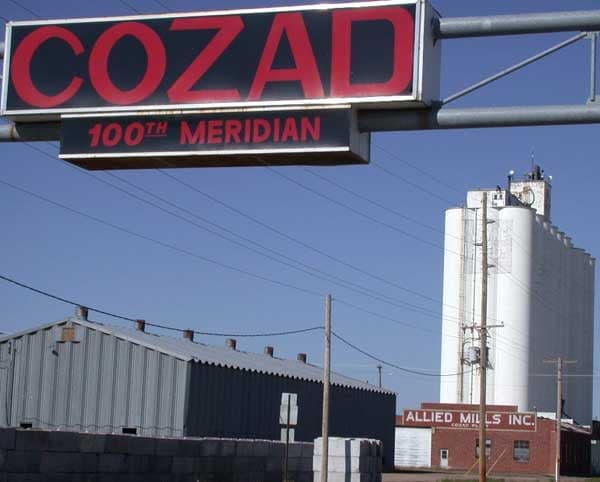
Photo: Wikipedia
Strategic Assessment of Cozad, NE
Strong survivability profile. Good buffer from population centers, with manageable environmental and tactical risks.
What does the Strategic Assessment tell us?
Our Strategic Assessment grades tactical survivability of an area. Major population centers, military targets, fallout zones, natural disasters, and border exposure all drive risk — lower exposure means a more defensible position in a crisis.
This is heavily inspired by Joel Skousen's Strategic Relocation book. Highly recommended you checkout the book ($)What does this tell us?
Our Strategic Assessment grades tactical survivability of an area. Major population centers, military targets, fallout zones, natural disasters, and border exposure all drive risk — lower exposure means a more defensible position in a crisis.
This is heavily inspired by Joel Skousen's Strategic Relocation book. Highly recommended you checkout the book ($)Strategic Pillars

Key Distances
Regional Safe Places
Below is our recommended "safe zones" in Nebraska and the surrounding area based on our strategic heuristics. For most people, it's unrealistic to live in a “safe zone” full-time due to work, family or other personal reasons. They tend to be more rural. However, many of these areas are perfect for second homes and retreat properties that double as a vacation home or even a short-term rental.
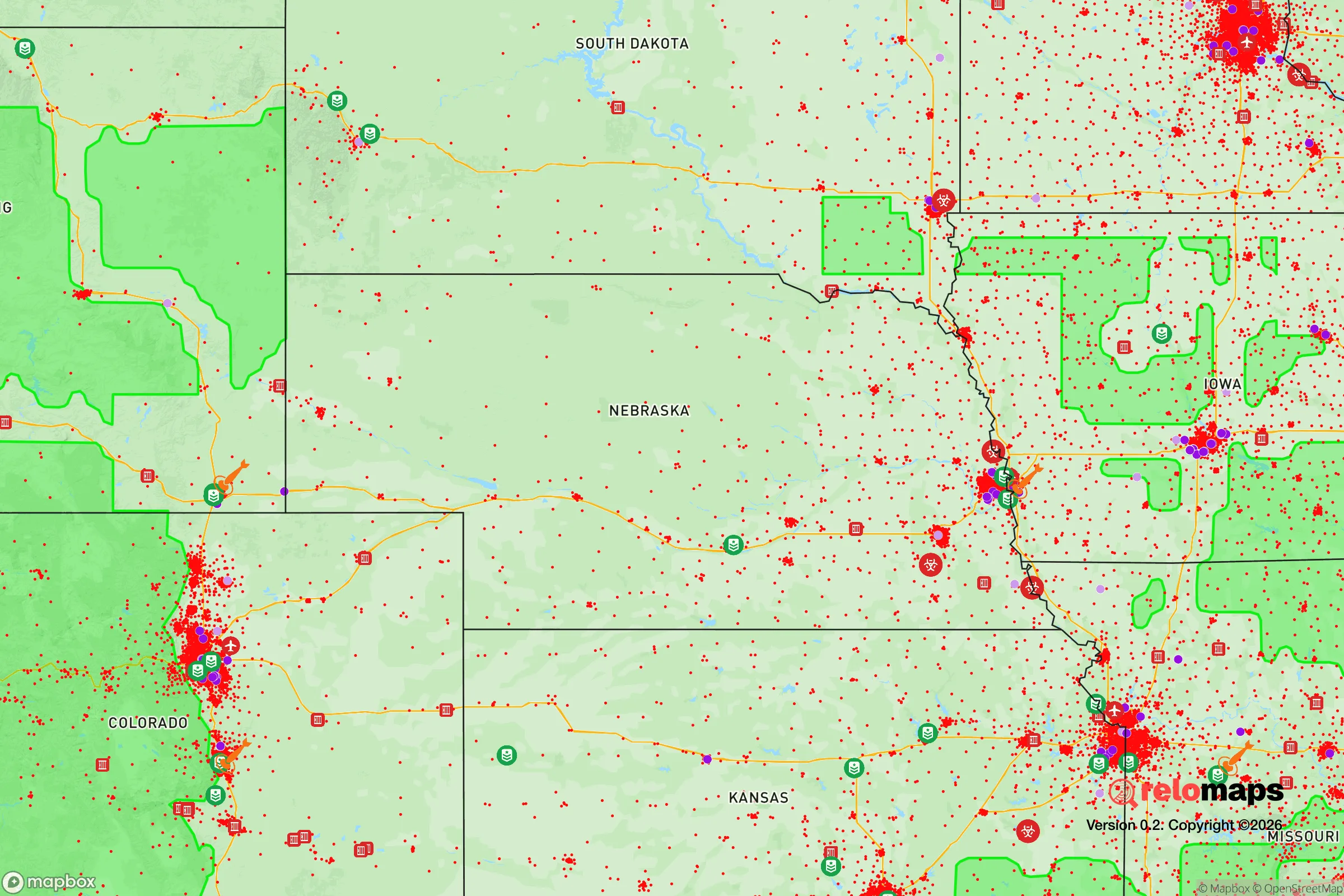
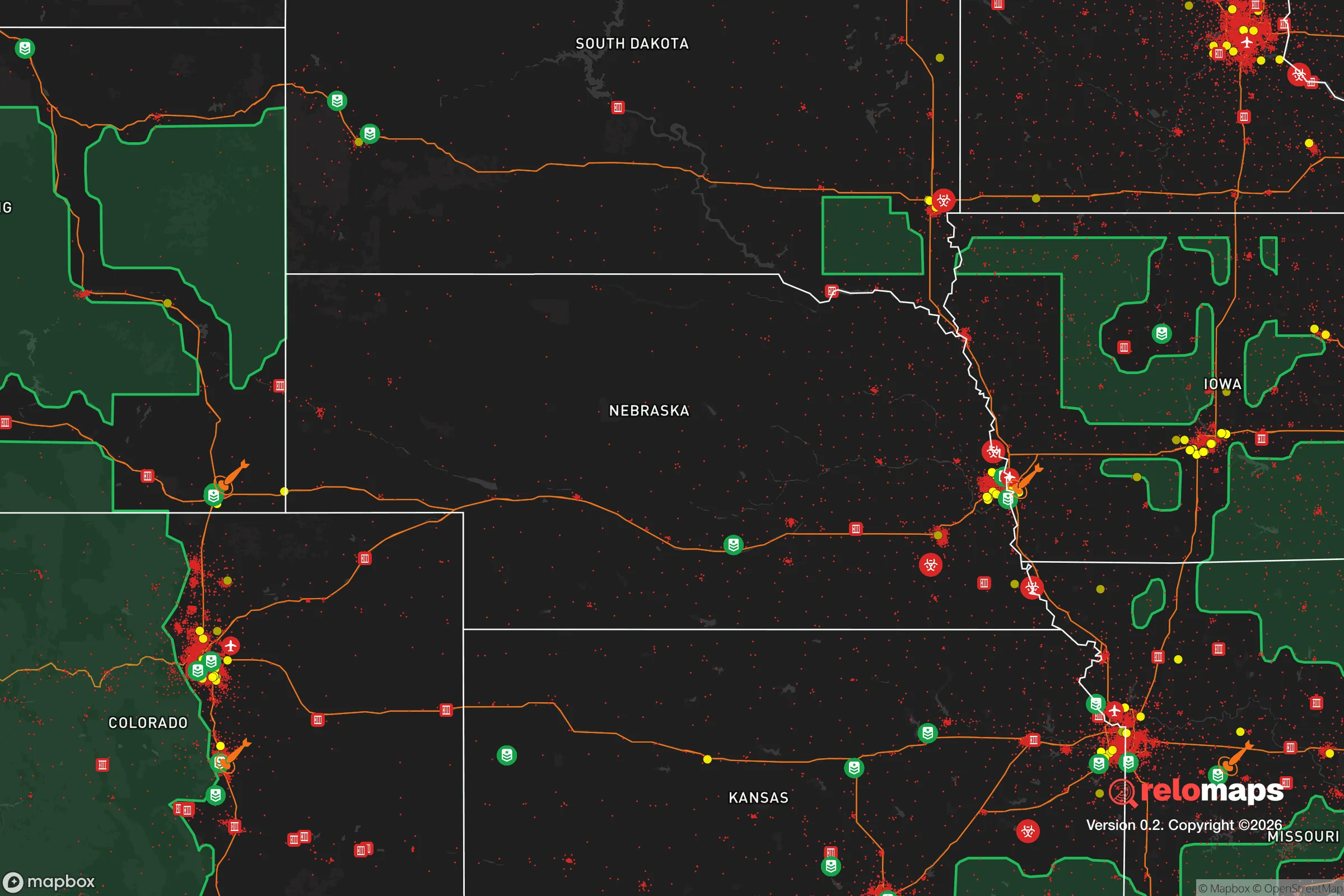


Important Note: For informational purposes only. This does not mean nothing bad ever happens in the green zones. Please use common sense. This is based on public data and modeled with AI. We tried to take a conservative approach but mistakes happen. We update this regularly as new information becomes available.
Solar Generator Recommendations
Backup power matters more here than in safer locations. We've picked three solar generators across budgets and capacity tiers — start with the budget unit if you only need a few essentials, or step up if you want to run a fridge and HVAC for days at a time.

Jackery Portable Power Station Explorer 300
Budget OptionPower on the Go: Weighing only 11 lbs, it's convenient to set up and store with book-sized foldable solar panels

BLUETTI Portable Power Station AC180
Designed for both indoor and outdoor scenarios, AC180 is highly capable as it has a robost capacity and continuous output power.

EF ECOFLOW DELTA Pro Ultra Power Station
Upgraded PickEcoFlow DELTA Pro Ultra is a whole-home energy system designed to grow with your family. Integrated with the Smart Home Panel 2, it scales to meet your evolving energy needs — keeping your home powered, intelligent, and secure through every stage of life.
We earn a commission, at no additional cost to you.
Strategic Assessment Analysis
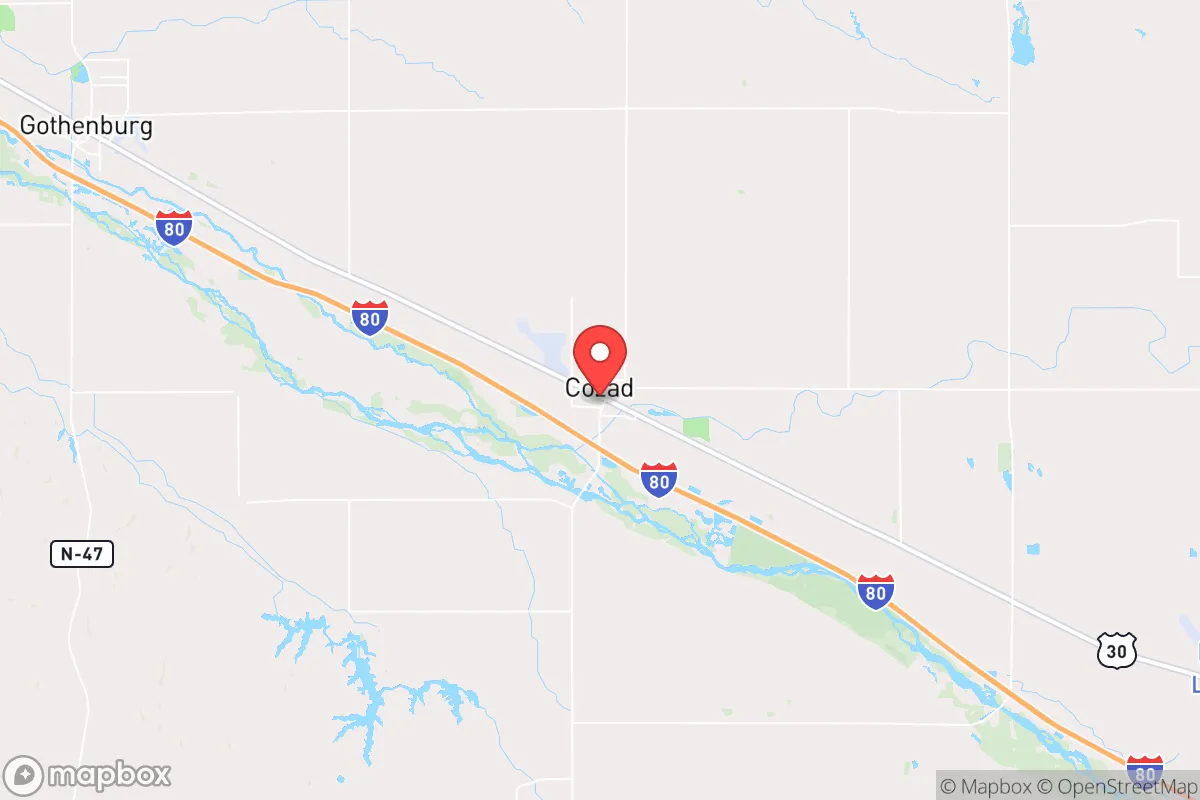
Cozad, Nebraska, sits in a part of the country that most people have already written off as flyover country—and that’s precisely its strategic value. Located along the I-80 corridor in Dawson County, this town of roughly 3,900 people offers a combination of geographic isolation, agricultural self-sufficiency, and low population density that makes it a serious contender for anyone thinking about long-term resilience. The nearest major population centers—Lincoln and Omaha—are over 150 miles east, while Denver is about 250 miles west, meaning Cozad is far enough from any likely target zone to avoid the immediate fallout of a major event, yet close enough to a major interstate to allow for resupply or evacuation if needed. For a conservative-leaning relocator concerned with civic unrest, mass casualty events, or systemic collapse, Cozad represents a quiet, defensible position in the American heartland where the land still works and the people still know how to use their hands.
Geographic position and natural advantages for long-term survival
Cozad’s location is its strongest card. The town sits on the edge of the Nebraska Sandhills to the north and the Platte River valley to the south, giving it access to two very different ecosystems. The Platte River, less than 10 miles south, provides a reliable surface water source—critical if municipal systems fail. The Ogallala Aquifer, one of the largest freshwater aquifers in the world, lies beneath much of this region, meaning groundwater is abundant for those who can drill a well. The surrounding terrain is flat to gently rolling, which is a double-edged sword: it offers excellent visibility for security but limited natural cover. However, the agricultural landscape—corn, soybeans, and alfalfa fields stretching for miles—means that food production is the local economy, not a hobby. The growing season runs roughly April through October, and the area’s soil is among the most productive in the nation. For a relocator, this means you’re not just buying a house; you’re buying into a food-producing region where neighbors still trade labor and goods. The climate is semi-arid, with about 20 inches of annual precipitation, so water management is a real concern, but the Platte River and Ogallala Aquifer make it manageable for those who plan ahead.
Risks, exposures, and proximity to fallout-relevant landmarks
The biggest risk in Cozad is not a direct strike or a major disaster—it’s the secondary effects of a collapse elsewhere. The town is 50 miles from the Kearney Regional Airport, which could become a FEMA staging area or a refugee funnel in a crisis. The I-80 corridor, while a lifeline for resupply, is also a highway for desperate people fleeing the coasts. In a mass evacuation scenario, Cozad could see a surge of transient traffic, and the town’s small police force (about 8 officers) would be overwhelmed quickly. There are no major military bases, nuclear power plants, or chemical facilities within 100 miles, which is a net positive—no obvious target value. The closest significant infrastructure is the Nebraska Public Power District’s Sheldon Station coal plant near Hallam, about 80 miles east, but that’s not a high-value target in most scenarios. The real exposure is economic: Cozad’s economy is tied to agriculture and a few manufacturing plants (like the Becton Dickinson medical supply facility), so a prolonged national crisis would hit local employment hard. Tornadoes are a genuine seasonal threat—Dawson County averages 5-6 tornado warnings per year—so any property needs a basement or storm shelter. For a prepper, the lack of nearby military or government infrastructure is a feature, not a bug, but the I-80 corridor is a vulnerability that requires a plan for perimeter security and community coordination.
Practical resilience for a relocator: food, water, energy, and defensibility
For a single individual or family looking to set up a resilient homestead, Cozad offers a practical foundation. Water is the first concern: the municipal supply comes from groundwater wells, and the city’s water treatment plant is modern, but in a grid-down scenario, a private well is essential. Drilling a well in this area costs $5,000-$10,000, and the water quality is generally good, though some areas have high mineral content. Rainwater catchment is viable given the 20-inch annual rainfall, but storage is key. Food is where Cozad shines: the local farmers’ market operates June through October, and the surrounding county has dozens of small farms selling beef, pork, eggs, and produce directly. The Cozad Livestock Auction handles cattle weekly, so meat can be sourced locally. Gardening is straightforward with the right soil amendments—raised beds work well. Energy is a mixed bag: the grid is reliable but aging, and natural gas is the primary heating fuel. Solar is viable—the area gets about 220 sunny days per year—but net metering policies in Nebraska are less favorable than in some states, so off-grid solar with battery storage is the better long-term play. Defensibility is the weak point: the flat terrain means any approach is visible, but there are no natural chokepoints. A rural property with a long driveway, a good fence, and a clear line of sight to the road is the best bet. The local gun culture is strong—Nebraska is a constitutional carry state, and Dawson County has a high rate of firearm ownership—so you won’t be the only one armed. Community is the real force multiplier: Cozad has active churches, a volunteer fire department, and a strong 4-H program, all of which are networks that can be leveraged for mutual aid. The key is to arrive with skills, not just supplies—know how to fix a tractor, can vegetables, or treat a wound, and you’ll be welcomed.
The overall strategic picture for Cozad is one of quiet viability. It’s not a prepper fantasyland with bunkers and paramilitary groups—it’s a real working town where people still know how to do things for themselves. The risks are manageable: the I-80 corridor is a double-edged sword, the tornado season is real, and the local economy is narrow. But the advantages—abundant water, productive soil, low crime, and a population that values self-reliance—make it a solid choice for someone who wants to be prepared without being isolated. For a conservative relocator who sees the writing on the wall and wants a place where you can grow your own food, keep a firearm, and know your neighbors, Cozad is worth a serious look. It’s not flashy, and it won’t impress anyone on social media, but it will keep you fed, warm, and safe when the world outside gets ugly.

* Values derived from national, state, county, city and local statistics and may differ in a specific area. Last updated: 2026-05-03T20:29:15.000Z
Narrative content on this page is AI-generated and may contain mistakes. Verify any details that matter before acting on them.
ReloMaps may earn a commission from affiliate links at no extra cost to you.

