Photo: Wikipedia
Personal Sovereignty in Cozad, NE
Moderate friction. Expect trade-offs in some aspect of personal liberty and independence.
What does Personal Sovereignty tell us?
Personal Sovereignty measures your capacity for self-reliance and independence with minimal government friction. Higher scores mean fewer barriers between you and the way you want to live... but it assumes you have the space you need and good neighbors.
What does this tell us?
Personal Sovereignty measures your capacity for self-reliance and independence with minimal government friction. Higher scores mean fewer barriers between you and the way you want to live... but it assumes you have the space you need and good neighbors.
State Policy
Energy independence: Importer (35% of energy produced in-state)
Personal Liberty
Homesteading

Personal Liberty Analysis
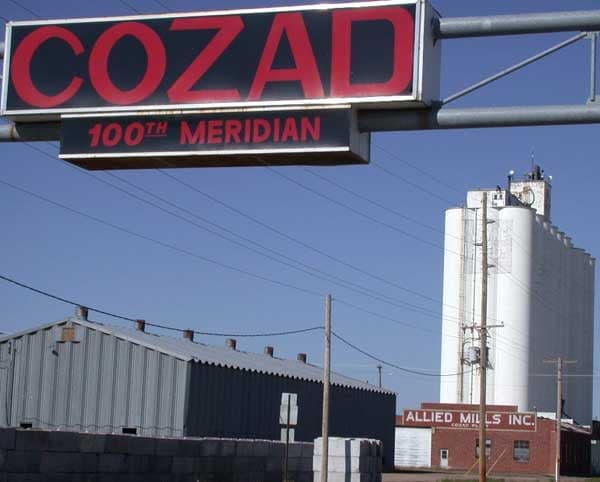
Cozad, Nebraska, offers a personal sovereignty environment that stands in stark contrast to the coastal and urban jurisdictions where government overreach has become the norm. Located in Dawson County along the Platte River, this community of roughly 4,000 people operates under a local governance structure that largely leaves residents alone—a critical factor for those seeking to minimize state intrusion into daily life. The state-level legal framework in Nebraska provides a baseline of protections for gun rights, property use, and parental authority, but the real value for sovereignty-minded individuals lies in Cozad’s low population density, limited zoning enforcement, and a cultural expectation that people handle their own affairs without bureaucratic interference.
Tax burden and regulatory posture in Cozad compared to neighboring states
Nebraska’s tax structure is a mixed bag for those prioritizing financial autonomy. The state levies a progressive income tax with rates from 2.46% to 6.64% (as of 2025), which is moderate compared to high-tax states like California or New York but higher than neighboring Wyoming or South Dakota. Property taxes in Dawson County run about 1.5% of assessed value—noticeably above the national average—driven largely by school district levies. However, Cozad’s regulatory posture is where the sovereignty advantage appears. The city maintains a minimal business licensing framework, no local income tax, and a zoning code that is far less restrictive than in Lincoln or Omaha. For a survivalist or prepper, this means fewer hurdles for home-based enterprises, vehicle storage, or keeping livestock on residential lots. The state’s right-to-farm laws also shield agricultural activities from nuisance lawsuits, a practical benefit for anyone wanting to raise food without neighbor complaints. Compared to Colorado’s increasingly aggressive environmental regulations or Kansas’s property tax volatility, Cozad offers a stable, low-interference environment for those willing to accept the property tax burden.
Self-defense rights and Nebraska gun laws relevant to Cozad residents
Nebraska is a shall-issue state for concealed carry permits, meaning the county sheriff must issue a permit if the applicant meets basic criteria—no subjective discretion that can be weaponized against gun owners. As of 2023, Nebraska also adopted permitless (constitutional) carry for residents 21 and older, a significant win for personal sovereignty. Cozad residents can carry a concealed firearm without a permit, though a permit is still useful for reciprocity when traveling. The state preempts local gun ordinances, so Cozad city council cannot impose its own magazine bans or waiting periods—a critical protection against local government overreach. Stand-your-ground laws are in effect, with no duty to retreat in any place where a person has a legal right to be. For preppers, this legal framework means defensive firearm use in a home invasion or rural encounter is unlikely to result in prosecution, provided the use of force was reasonable. The nearest gun ranges are in Lexington (15 miles west) and Kearney (40 miles east), and private land shooting is common with landowner permission. No state-level red flag law exists as of 2026, though federal legislative threats remain a concern. For those prioritizing the right to keep and bear arms without bureaucratic hurdles, Cozad’s legal environment is solid—not as permissive as Texas or Alaska, but far better than the West Coast or Northeast.
Self-reliance and homesteading viability: lot sizes, zoning, and off-grid feasibility
Cozad’s residential zoning allows for significant self-reliance without the legal battles common in suburban HOAs. Standard residential lots in town range from 7,000 to 12,000 square feet, with many properties including detached garages, workshops, and garden space. The city code permits backyard chickens, beekeeping, and small livestock (goats, rabbits) on lots over 10,000 square feet with a simple permit—no public hearings or neighbor sign-offs required. For those seeking true off-grid capability, the rural areas immediately outside Cozad city limits (within Dawson County) have no zoning restrictions on rainwater collection, solar panel installation, or composting toilets. The county requires a septic system permit for new construction, but graywater systems for irrigation are generally allowed. Well water is accessible in most rural parcels, with depths averaging 50-100 feet and good quality. The biggest constraint for off-grid living is the climate: winter temperatures regularly drop below 0°F, requiring substantial heating fuel storage. Natural gas is available in town, but rural properties rely on propane or wood. Solar is viable but requires battery storage for winter months when daylight is limited. For a prepper, the sweet spot is a 2-5 acre parcel just outside Cozad’s city limits—enough land for a large garden, small orchard, and livestock, while still being close to town for supplies and medical care. The local government’s hands-off approach to land use makes this one of the more feasible locations in the Great Plains for genuine self-reliance without constant regulatory harassment.
Personal liberties: parental rights, medical autonomy, speech, and property protections
Nebraska has a strong track record on parental rights, with state law affirming parents’ authority to direct their children’s education, healthcare, and religious upbringing. Cozad Public Schools (serving about 600 students K-12) operates without the ideological curriculum mandates seen in larger districts—no critical race theory or gender ideology programs have been implemented, and the school board has resisted state-level pressure to adopt controversial health standards. Homeschooling is straightforward: parents file a simple notification with the state and provide annual standardized test results or a portfolio review. No teacher certification or curriculum approval is required. Medical autonomy is more limited; Nebraska has not passed broad medical freedom legislation like Idaho or Montana, but it also lacks the aggressive vaccine mandates seen in blue states. The state’s emergency powers law was reformed in 2021 to limit the governor’s ability to shut down businesses or mandate medical procedures without legislative approval—a direct response to COVID-era overreach. Free speech protections are standard under the First Amendment, and Cozad’s small-town culture means public expression of conservative or survivalist views is socially accepted, not punished. Property rights are protected by Nebraska’s strong eminent domain laws, which require just compensation and public use—no Kelo-style takings for private development. For those concerned about federal overreach, Dawson County has passed a Second Amendment Sanctuary resolution, signaling local law enforcement’s unwillingness to enforce unconstitutional federal gun laws. These protections, while not absolute, create a legal environment where personal sovereignty is respected rather than eroded.
Overall, Cozad ranks as a strong choice for those prioritizing personal sovereignty in the current national climate. The combination of permitless carry, minimal zoning, parental rights in education, and a community that values self-reliance places it ahead of most Midwestern towns of similar size. The primary trade-offs are the property tax burden (which funds a school system that remains traditional) and the harsh winter climate that demands serious preparation. Compared to rural areas in Colorado, Oregon, or Washington—where state governments are actively restricting gun rights, land use, and medical freedom—Cozad offers a refuge where government overreach is still the exception, not the rule. For a single individual or family looking to build a life with maximum personal autonomy and minimum state interference, this Nebraska town deserves serious consideration as a strategic relocation destination.

* Values derived from national, state, county, city and local statistics and may differ in a specific area. Last updated: 2026-05-03T20:29:15.000Z
Narrative content on this page is AI-generated and may contain mistakes. Verify any details that matter before acting on them.
ReloMaps may earn a commission from affiliate links at no extra cost to you.

