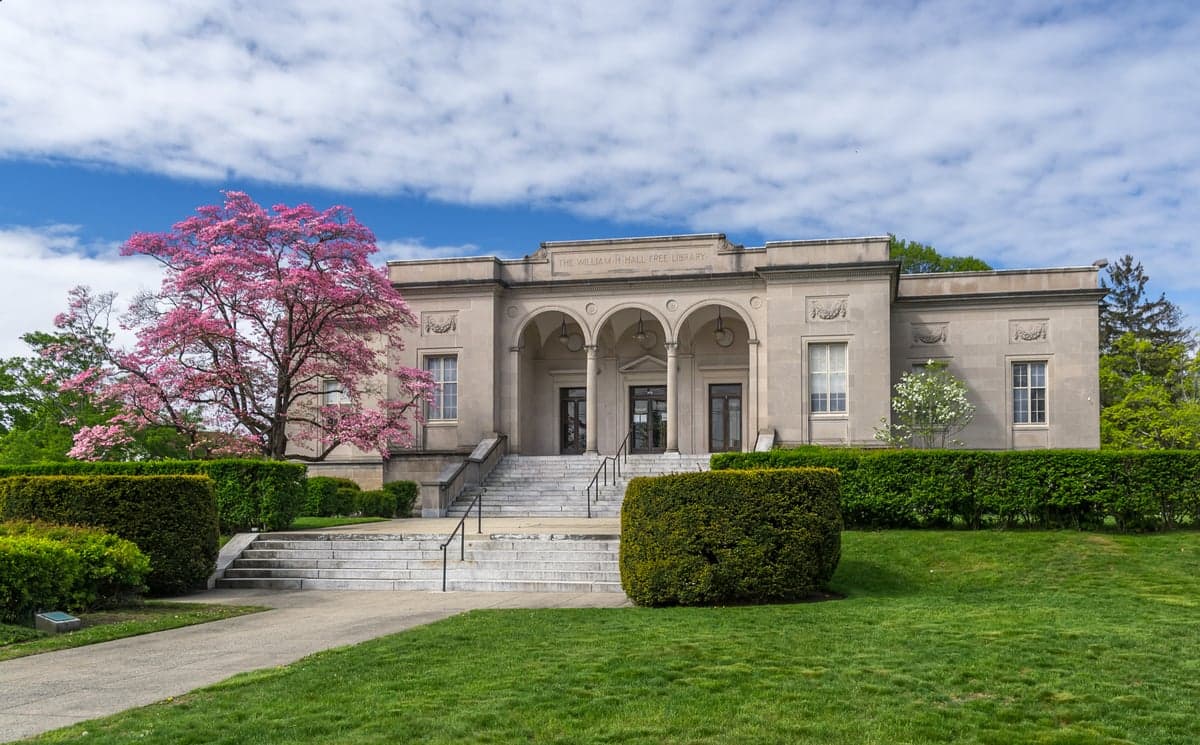
Photo: Wikipedia
Political ClimatePolitical Climate in Cranston, RI
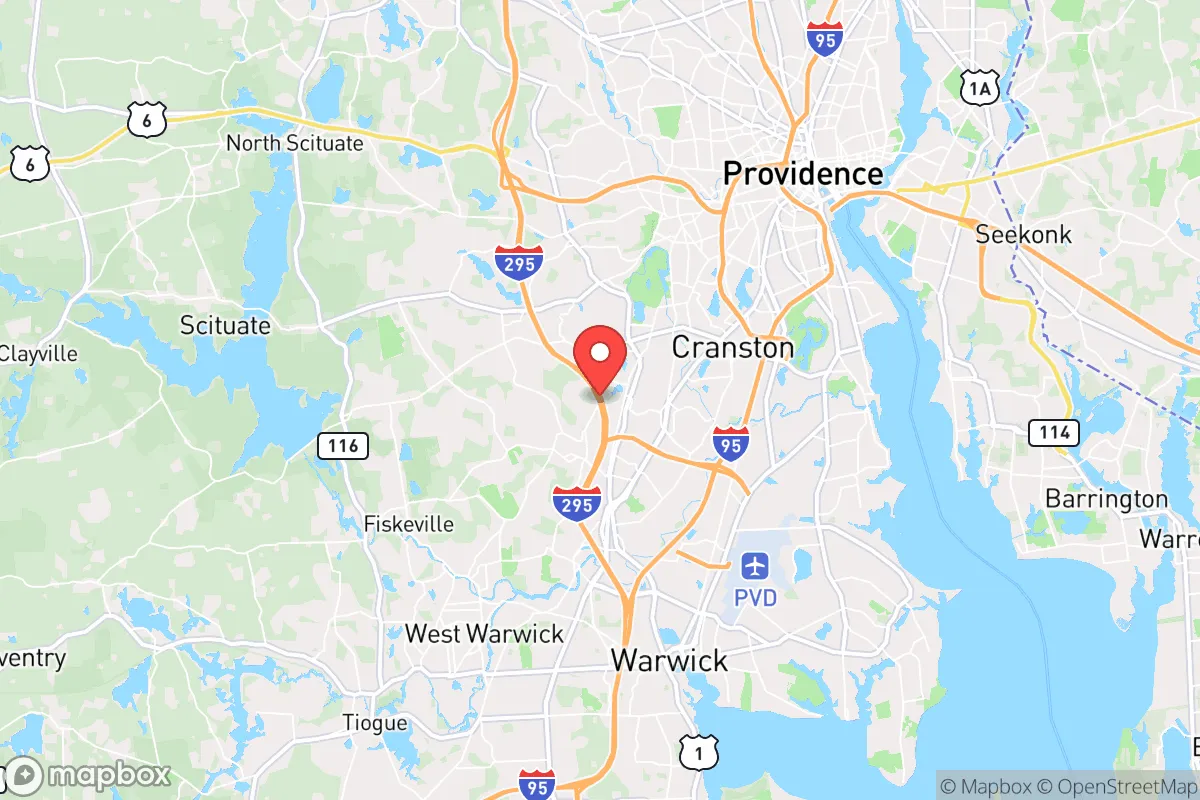
District shown is the primary district for this city’s centroid. Cities may span multiple districts.
Local Political AnalysisPolitical Analysis of Cranston, RI
Cranston, Rhode Island, has a Cook PVI of D+4, which tells you it leans Democrat, but honestly, it’s not the hard-left stronghold you might expect from a city just outside Providence. For a long time, this place was a working-class, Italian-American, and Irish-American town where folks kept to themselves, went to church, and didn’t appreciate the government poking its nose into their business. Over the last decade or so, though, you’ve seen a slow creep of progressive policies—higher taxes, more zoning restrictions, and a school board that’s started pushing social agendas that make a lot of us raise an eyebrow. The trajectory isn’t a sharp left turn, but it’s a steady drift, and if you’re someone who values personal freedoms and low-key governance, it’s worth keeping an eye on.
How it compares
Drive ten minutes west to Scituate or Foster, and you’re in deep red territory—those towns vote Republican by wide margins, and they’ve fought tooth and nail to keep their rural character and local control. Head east into Providence, and you’re in a D+30 zone where the city council doesn’t bat an eye at raising taxes or mandating new fees. Cranston sits in this weird middle ground: it’s not as conservative as the western suburbs, but it’s not as progressive as the capital. In the 2024 election, Cranston’s results were closer than the PVI suggests—the Republican candidate for governor actually carried a few precincts in the western part of the city. The contrast is stark when you look at school board meetings: in Cranston, you’ve got parents fighting over curriculum transparency, while in Providence, those debates are already settled in favor of the administration. It’s a battleground, but the progressive side has the institutional advantage because of state-level pressure from Providence.
What this means for residents
If you’re a homeowner or a small business owner, the biggest red flag is the property tax trend. Cranston’s mill rate has crept up faster than inflation, and the city council has floated new bond measures for things like “equity initiatives” that sound nice but mean higher bills for you. There’s also a growing push for density zoning—allowing apartment complexes in single-family neighborhoods—which a lot of us see as government overreach into how we use our own land. On the plus side, the police department is still well-funded and responsive, and the city hasn’t gone full “defund” like some places. But the school system is where the culture war hits home: the district has adopted social-emotional learning programs that some parents feel cross the line into ideological instruction. For now, you can still opt your kid out of certain lessons, but that right feels fragile. The long-term concern is that Cranston’s moderate Democrats are getting replaced by younger, more progressive candidates who see government as a tool for social engineering, not just basic services.
Culturally, Cranston still has a strong sense of community—the annual Oakland Beach Seafood Festival and the Knights of Columbus events draw big crowds, and people still wave to their neighbors. But there’s a growing divide between the old guard and the newcomers. The city council recently passed a plastic bag ban and a straw ban, which felt like a solution in search of a problem to a lot of us. Policy-wise, the biggest distinction is that Cranston has resisted the sanctuary city label that Providence and Central Falls have embraced, though state law limits how much local cops can cooperate with ICE. If you’re looking for a place where you can still have a say in your local government without the state breathing down your neck, Cranston is a decent bet—but you’ll need to stay involved in local elections to keep the progressive tide from washing away the freedoms that made this town a good place to raise a family.

State Political ClimatePolitical Climate in Rhode Island
State Political AnalysisPolitical Environment in the State
Rhode Island has long been a Democratic stronghold, but don’t let the small size fool you—there’s a real political fight beneath the surface. The state leans about 15-20 points left of the national average in presidential elections, with Providence and its inner suburbs driving the blue wave, while the rural western and southern reaches push back. Over the last 20 years, the Ocean State has shifted steadily leftward on social issues and government expansion, but a stubborn libertarian streak and a growing conservative foothold in places like Coventry and East Greenwich keep things from being a total lockstep.
Urban vs. rural divide
The political map of Rhode Island is a tale of two worlds. Providence, the capital and largest city, is the engine of the state’s progressive tilt—home to Brown University, a dense immigrant population, and a city council that’s pushed rent control, sanctuary policies, and defunding police rhetoric. Newport and Bristol lean left too, driven by tourism and a coastal elite that votes like Massachusetts. But drive 20 minutes west to Coventry or Foster, and you’ll find Trump flags, gun shops, and a fierce independence. South Kingstown and Narragansett are purple battlegrounds, with the University of Rhode Island pulling young lefties while the beach towns hold a quiet conservative base. The rural west—Burrillville, Glocester, Scituate—votes red by 20-30 points, but they’re outnumbered by the Providence metro’s 60% of the state’s population. That’s the math: the city and its suburbs control the legislature, and the countryside can’t overcome it.
Policy environment
Rhode Island’s policy climate is a mixed bag that leans heavily toward government intervention. The state has one of the highest combined state and local tax burdens in the nation—property taxes in Providence can hit 2.5%, and the state income tax tops out at 5.99% on everything over about $155,000. Sales tax is 7%, and there’s a car tax that’s being phased out but still stings. The regulatory posture is thick: permitting for a new business can take months, and the state’s energy policies are aggressively green, with mandates pushing electric vehicles and solar panels on new homes. Education is a sore spot—Providence public schools are chronically underfunded and underperforming, while wealthy suburbs like Barrington and East Greenwich have top-tier systems. Healthcare is dominated by a single insurer (Blue Cross & Blue Shield of Rhode Island), and the state expanded Medicaid under Obamacare. Election laws are blue-leaning: no voter ID requirement, same-day registration, and mail-in voting expanded permanently after COVID. It’s a state where the government is deeply involved in daily life, and that’s a red flag for anyone who values personal autonomy.
Trajectory & freedom
Over the last decade, Rhode Island has become less free in measurable ways. The 2022 “Rhode Island Reproductive Privacy Act” codified abortion access without limits, overriding any local restrictions. Gun rights have been squeezed: the 2023 “Safe Schools and Firearm Safety Act” banned open carry and raised the purchase age to 21, and a 2024 “assault weapons” ban passed despite heavy rural opposition. Parental rights took a hit with the 2023 “Equity in Education” law, which mandates LGBTQ+ inclusive curricula and allows students to change their gender markers without parental consent—a flashpoint for many families. Property rights are under pressure from a 2024 “tenant bill of rights” that limits rent increases and evictions, effectively giving the state control over private contracts. On the plus side, the car tax phase-out is real, and the state has resisted a statewide income tax hike since 2010. But the trend is clear: personal liberty is contracting, especially on guns, education, and medical autonomy.
Civil unrest & political movements
Rhode Island has seen its share of political heat. In 2020, Providence saw weeks of BLM protests, including a firebombing of a police substation and clashes with counter-protesters. The state’s sanctuary policy—enacted in 2017 and expanded in 2023—means local police don’t cooperate with ICE, and Central Falls and Pawtucket have become de facto safe havens for undocumented immigrants. On the right, the Rhode Island Second Amendment Coalition is active, organizing rallies at the State House and suing over the gun bans. Election integrity has been a low-boil issue: the 2020 mail-in ballot surge led to a Republican-led audit that found no widespread fraud, but distrust lingers. A notable flashpoint was the 2022 “Cranston school board” fight, where parents protested critical race theory and gender ideology in classrooms, leading to a recall election that ousted two progressive board members. It’s a state where the left holds institutional power, but the right is organized and vocal—especially in the suburbs and rural towns.
Projection
Looking 5-10 years out, Rhode Island is likely to get bluer and more regulated. The Providence metro is growing, fueled by remote workers from Boston and New York who bring progressive voting habits. The rural west is shrinking as young people leave for lower-cost states like Texas or Florida. The legislature is firmly Democratic, with a supermajority in both chambers, and the governor’s office has been blue since 2011. Expect more gun control, more tenant protections, more green mandates, and more state control over education. The wild card is the state’s fiscal health: Rhode Island has a pension crisis and a shrinking workforce, which could force tax hikes or service cuts. For a conservative-leaning newcomer, the next decade will feel like living in a smaller, more expensive version of Massachusetts—with less economic opportunity and more government telling you how to live.
For a new resident, the bottom line is this: Rhode Island offers beautiful coastlines, historic towns, and a tight-knit community feel, but it comes with a heavy price tag on your wallet and your freedoms. If you’re a parent, you’ll need to budget for private school or move to a high-tax suburb like Barrington or East Greenwich to get decent public education. If you’re a single individual, the social scene is concentrated in Providence and Newport, both deeply progressive. The state is not hostile to conservatives—you’ll find your people in Coventry or Foster—but the political winds are blowing against you. Come for the ocean, but know you’re swimming against the current.
* Values derived from national, state, county, city and local statistics and may differ in a specific area. Last updated: 2026-04-21T07:16:37.000Z
Narrative content on this page is AI-generated and may contain mistakes. Verify any details that matter before acting on them.
ReloMaps may earn a commission from affiliate links at no extra cost to you.

