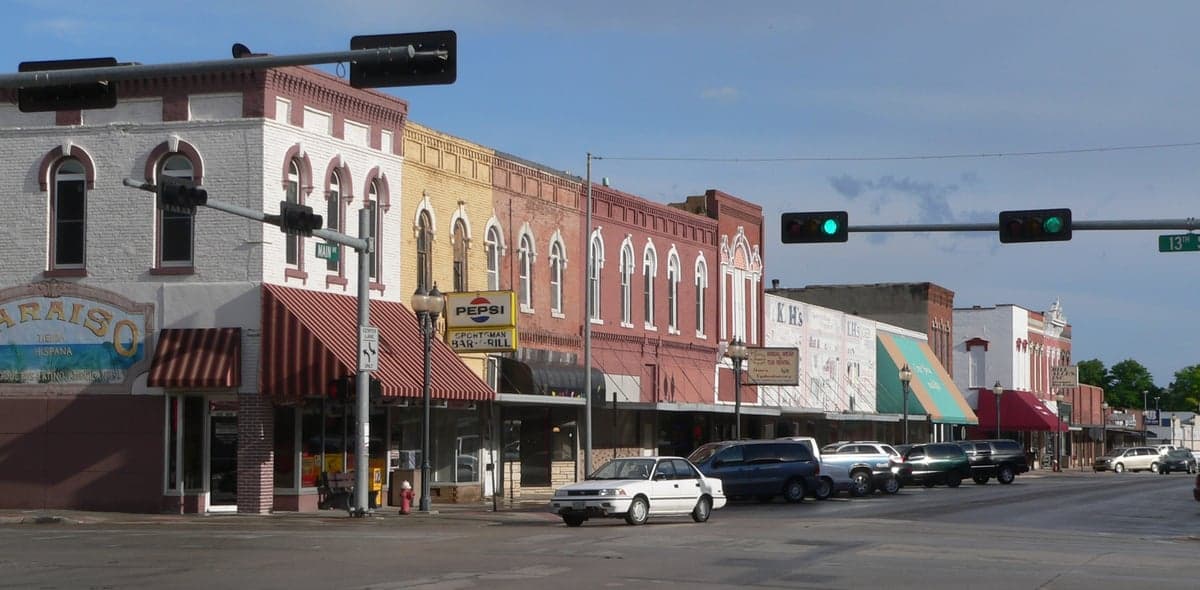
Photo: Wikipedia
Political ClimatePolitical Climate in Crete, NE
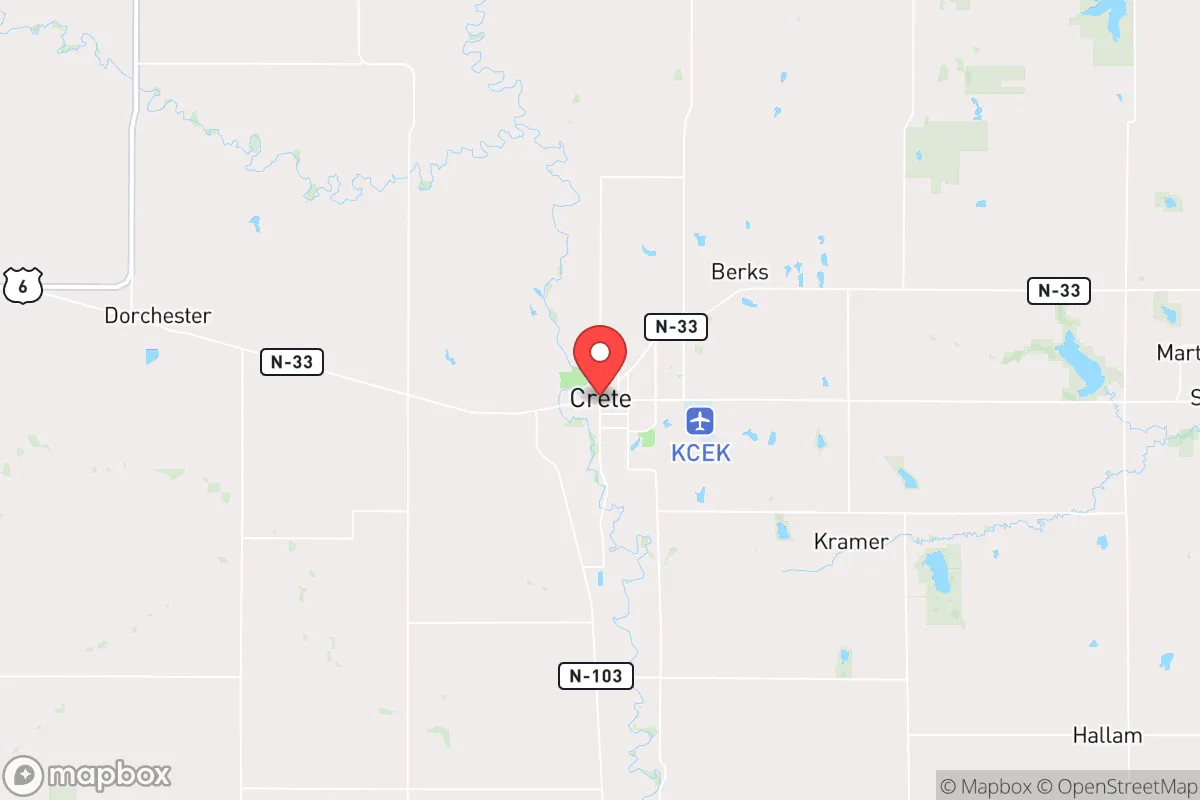
District shown is the primary district for this city’s centroid. Cities may span multiple districts.
Local Political AnalysisPolitical Analysis of Crete, NE
Crete, Nebraska, sits in a deeply conservative pocket of the state, with a Cook PVI of R+27 that puts it among the most reliably Republican areas in the region. That number isn't just a statistic—it reflects a community where traditional values and limited government have been the default for generations. But like a lot of small towns in the Midwest, you can feel the ground shifting under your feet, and not always in a way that sits well with folks who remember when local control meant something.
How it compares
Drive 20 minutes north to Lincoln, and you're in a different world—a blue island where progressive policies on taxes, zoning, and even school curriculum are the norm. Crete, by contrast, has held the line, but the pressure is real. Surrounding towns like Seward and Wahoo lean conservative too, but they haven't seen the same demographic churn Crete has. The meatpacking plants and agricultural jobs have drawn a more diverse population over the last decade, and with that comes a slow but noticeable shift in local elections. School board races, which used to be sleepy affairs, are now contested over things like critical race theory and parental rights. The R+27 rating masks a growing tension: the old guard is still in charge, but the margins are tighter than they were in 2016.
What this means for residents
For a long-time resident, the biggest concern is government overreach creeping in through the back door. It's not that Crete has gone woke overnight—far from it. But you see it in the little things: a county health department that got a little too comfortable with mask mandates during COVID, a school administration that started pushing DEI training without much public input, and property tax hikes that feel like a punishment for owning land. The state legislature in Lincoln has been a mixed bag—some good bills on school choice and Second Amendment protections, but also a creeping tendency to preempt local ordinances in ways that tie the hands of conservative communities. The real worry is that as Lincoln's influence grows, Crete's ability to govern itself will shrink. People here value their freedom to live without a bureaucrat telling them how to run their business or raise their kids.
Culturally, Crete still feels like a place where neighbors look out for each other, but the policy battles are heating up. The push for a more "inclusive" approach to everything from library books to public events has some residents on edge. There's a quiet but determined effort to keep the town's character intact—church potlucks, 4-H fairs, and a general distrust of anything that smells like a federal mandate. The long-term outlook depends on whether the conservative base can stay engaged and organized. If they do, Crete will remain a solid red outpost. If they get complacent, the progressive wave that's already swallowed Lincoln will start lapping at their doorstep. For now, it's a good place to raise a family if you value common sense and personal responsibility—but you'd better keep an eye on the school board meetings.

State Political ClimatePolitical Climate in Nebraska
State Political AnalysisPolitical Environment in the State
Nebraska has long been a reliably conservative state, but it’s a more nuanced place than its “red state” label suggests. The state’s overall partisan lean is solidly Republican, with Donald Trump winning the state by 19 points in 2024, but that number masks a deep urban-rural split and a growing libertarian streak. Over the last 10-20 years, the dominant coalition has been a mix of rural traditionalists, small-government advocates, and a surprisingly active independent streak, though the Omaha metro area has been steadily drifting left, creating a political tug-of-war that’s worth watching for anyone considering a move here.
Urban vs. rural divide
The political map of Nebraska is a textbook case of the urban-rural divide. The state’s two major population centers—Omaha (Douglas County) and Lincoln (Lancaster County)—are the blue dots in a sea of red. Omaha’s 2nd Congressional District, which includes most of Douglas County and suburban Sarpy County, has flipped between parties in recent presidential cycles, voting for Joe Biden in 2020 and then narrowly for Trump in 2024, making it a perennial swing district. Lincoln, home to the University of Nebraska, is reliably Democratic in state and local races, driven by a younger, more educated population. In contrast, the rest of the state is deeply conservative. Grand Island (Hall County) and Kearney (Buffalo County) are solid Republican strongholds, while the Panhandle—places like Scottsbluff and Chadron—votes overwhelmingly red, often by margins of 70% or more. The rural counties along the Platte River and the Sandhills are some of the most Republican in the nation, with many precincts seeing 80-90% GOP votes. This divide means that while the state legislature is firmly conservative, the Omaha metro area often acts as a brake on the most aggressive conservative policies, especially on social issues.
Policy environment
Nebraska’s policy environment is broadly friendly to conservative priorities, but with some notable wrinkles. The state has no income tax on Social Security benefits and a flat state income tax rate of 5.84%, which is being phased down to 5.5% by 2027 under LB 754, a 2023 tax cut bill. Property taxes are a perennial complaint, though, with rates among the highest in the region, driven by school funding and a reliance on local levies. The regulatory posture is generally light, with no state-level minimum wage above the federal $7.25 (though a 2022 ballot initiative raised it to $15 by 2026, a rare progressive win). Education policy is a flashpoint: Nebraska has a robust school choice movement, with the passage of LB 753 in 2023 creating a tax-credit scholarship program for private school tuition, though it faces legal challenges. The state also passed a “Parents’ Bill of Rights” (LB 1084) in 2024, requiring schools to notify parents of curriculum changes and allowing them to opt their kids out of certain materials. On healthcare, Nebraska expanded Medicaid under the Affordable Care Act in 2020 via a ballot initiative, but the state has resisted further expansion of government-run programs. Election laws are moderately conservative: voter ID is required (passed in 2023 via LB 514), and the state has no-excuse absentee voting, but early voting periods are shorter than in many blue states. Overall, the policy environment leans toward limited government, but the property tax burden and the Medicaid expansion are reminders that Nebraska isn’t a pure libertarian paradise.
Trajectory & freedom
On the freedom front, Nebraska has been a mixed bag over the last five years, with some clear wins for personal liberty and some concerning encroachments. The biggest win for gun rights was the passage of LB 77 in 2023, which eliminated the requirement for a permit to carry a concealed firearm, making Nebraska a constitutional carry state. This was a major victory for Second Amendment advocates. On parental rights, LB 1084 (2024) gave parents more say in their children’s education, including the ability to review instructional materials and opt out of lessons they find objectionable. However, the state also passed LB 574 in 2023, which banned gender-affirming care for minors and restricted abortion to 12 weeks, a move that conservatives generally support but which libertarians might see as government overreach into medical decisions. The biggest red flag for personal freedom is the state’s property tax system, which remains high and is a constant source of frustration. There’s also been a push for more transparency in government, with LB 83 (2023) expanding open records laws. Overall, Nebraska is trending toward more freedom on guns and parental rights, but the tax burden and some social regulations keep it from being a top-tier freedom state.
Civil unrest & political movements
Nebraska has seen relatively little civil unrest compared to coastal states, but there have been notable flashpoints. The 2020 George Floyd protests in Omaha turned violent, with looting and fires in the Old Market district, leading to a heavy police response and a lasting divide between activists and law enforcement. Since then, organized activist movements have been more subdued, though the left-leaning group Nebraskans for Peace remains active on immigration and criminal justice reform. On the right, the Nebraska Republican Party has seen a factional split between establishment conservatives and more populist, Trump-aligned activists, with the latter gaining ground in rural counties. Immigration politics are a hot-button issue, especially in meatpacking towns like Grand Island and Lexington, where a large Hispanic workforce has led to tensions over sanctuary policies. In 2023, the state legislature passed LB 535, which prohibits sanctuary city policies and requires local law enforcement to cooperate with federal immigration authorities. There’s been no serious secession or nullification rhetoric, but the state’s unique unicameral legislature—the only one in the nation—often leads to quirky political dynamics, with filibusters and coalition-building that can frustrate both sides. Election integrity controversies have been minimal, though the 2020 election saw some local GOP activists question mail-in voting procedures, leading to the voter ID law. A new resident would notice that political signs and bumper stickers are common, but actual street-level conflict is rare outside of Omaha.
Projection
Looking ahead 5-10 years, Nebraska’s political trajectory is likely to be one of slow, steady conservatism with a growing libertarian edge, but with the Omaha metro area becoming a more significant counterweight. Demographic shifts are key: the state’s population is aging and slowly growing, with most growth concentrated in the Omaha-Lincoln corridor. In-migration from blue states like California and Colorado is happening, but it’s mostly to the suburbs of Omaha—places like Elkhorn and Papillion—where newcomers tend to be moderate Republicans or independents, not hard-left progressives. The rural areas will continue to shrink and become even more conservative, while the Panhandle and central Nebraska will remain deeply red. The biggest wildcard is the state’s tax structure: if property taxes aren’t reformed, there could be a backlash that fuels a more populist, anti-establishment movement. On social issues, expect more battles over school choice and parental rights, with the state likely to remain a leader in that area. The 2024 election results suggest the state is not trending blue, but the Omaha swing district will keep it competitive at the margins. For someone moving in now, expect a state that will remain conservative on fiscal and gun issues, but with a growing tension between rural traditionalists and suburban moderates.
For a new resident, the bottom line is that Nebraska offers a solidly conservative environment with low crime, good schools in the suburbs, and a government that generally respects gun rights and parental authority. The property tax burden is the main practical headache, and the Omaha metro area will have more progressive influences than the rest of the state. If you’re looking for a place where your values are the norm and the pace of change is slow, Nebraska is a strong bet—just keep an eye on the property tax debate and the Omaha city council elections.
* Values derived from national, state, county, city and local statistics and may differ in a specific area. Last updated: 2026-05-03T20:28:58.000Z
Narrative content on this page is AI-generated and may contain mistakes. Verify any details that matter before acting on them.
ReloMaps may earn a commission from affiliate links at no extra cost to you.

