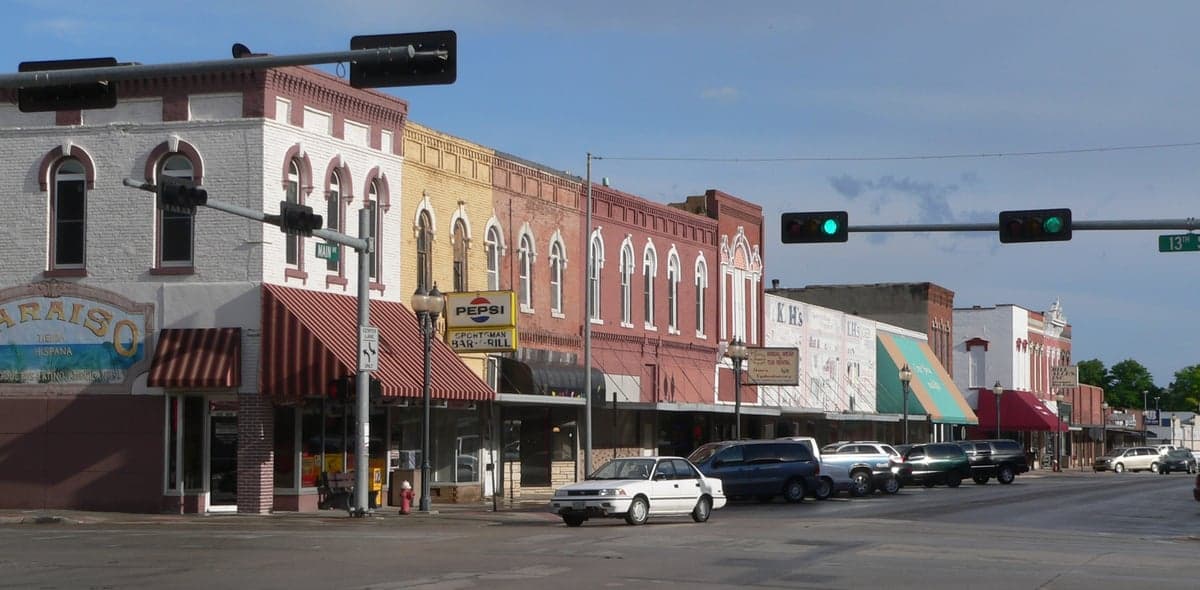
Photo: Wikipedia
Strategic Assessment of Crete, NE
Workable tactical position. Some exposure to population density or targets, but generally defensible in a crisis.
What does the Strategic Assessment tell us?
Our Strategic Assessment grades tactical survivability of an area. Major population centers, military targets, fallout zones, natural disasters, and border exposure all drive risk — lower exposure means a more defensible position in a crisis.
This is heavily inspired by Joel Skousen's Strategic Relocation book. Highly recommended you checkout the book ($)What does this tell us?
Our Strategic Assessment grades tactical survivability of an area. Major population centers, military targets, fallout zones, natural disasters, and border exposure all drive risk — lower exposure means a more defensible position in a crisis.
This is heavily inspired by Joel Skousen's Strategic Relocation book. Highly recommended you checkout the book ($)Strategic Pillars

Key Distances
Regional Safe Places
Below is our recommended "safe zones" in Nebraska and the surrounding area based on our strategic heuristics. For most people, it's unrealistic to live in a “safe zone” full-time due to work, family or other personal reasons. They tend to be more rural. However, many of these areas are perfect for second homes and retreat properties that double as a vacation home or even a short-term rental.
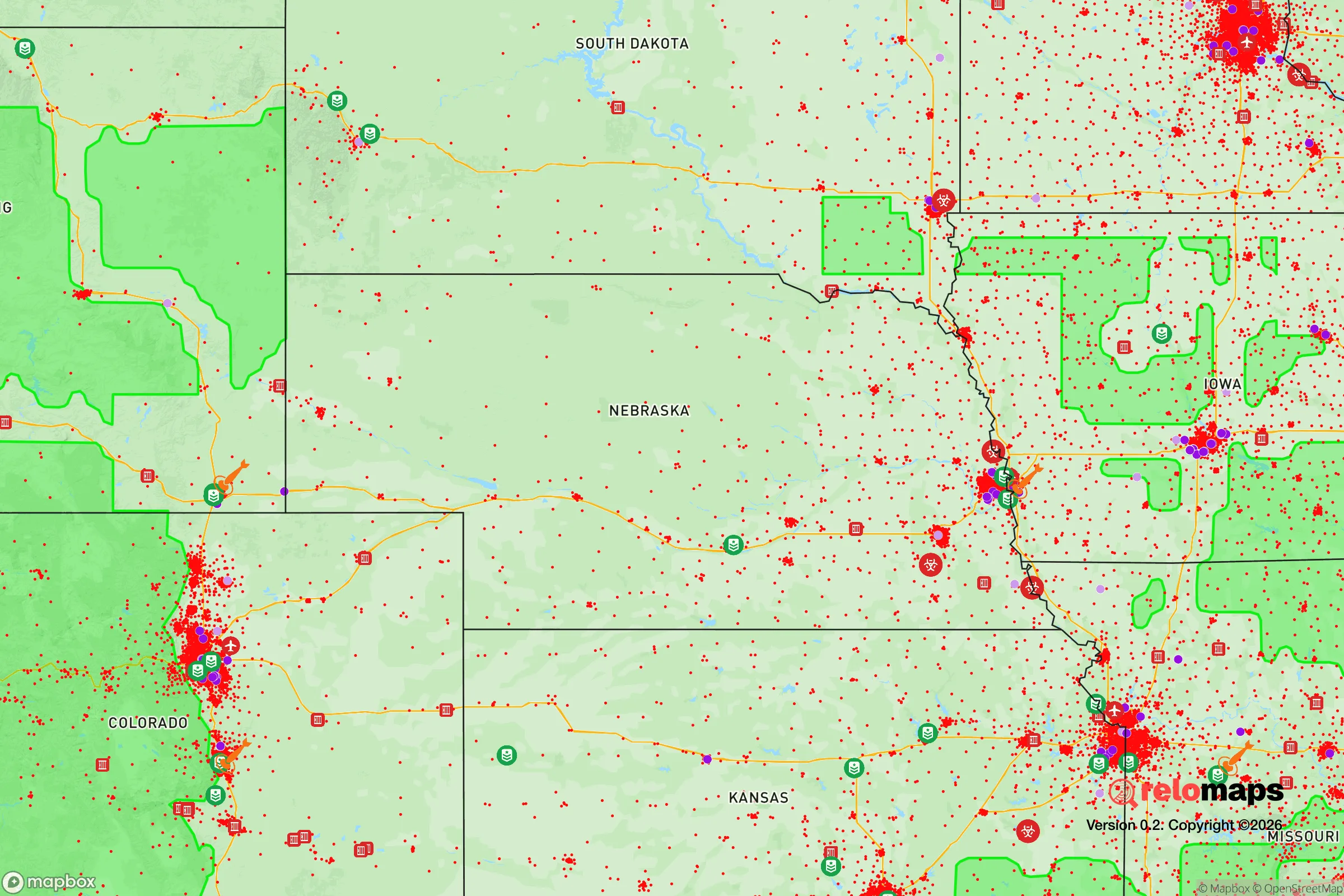
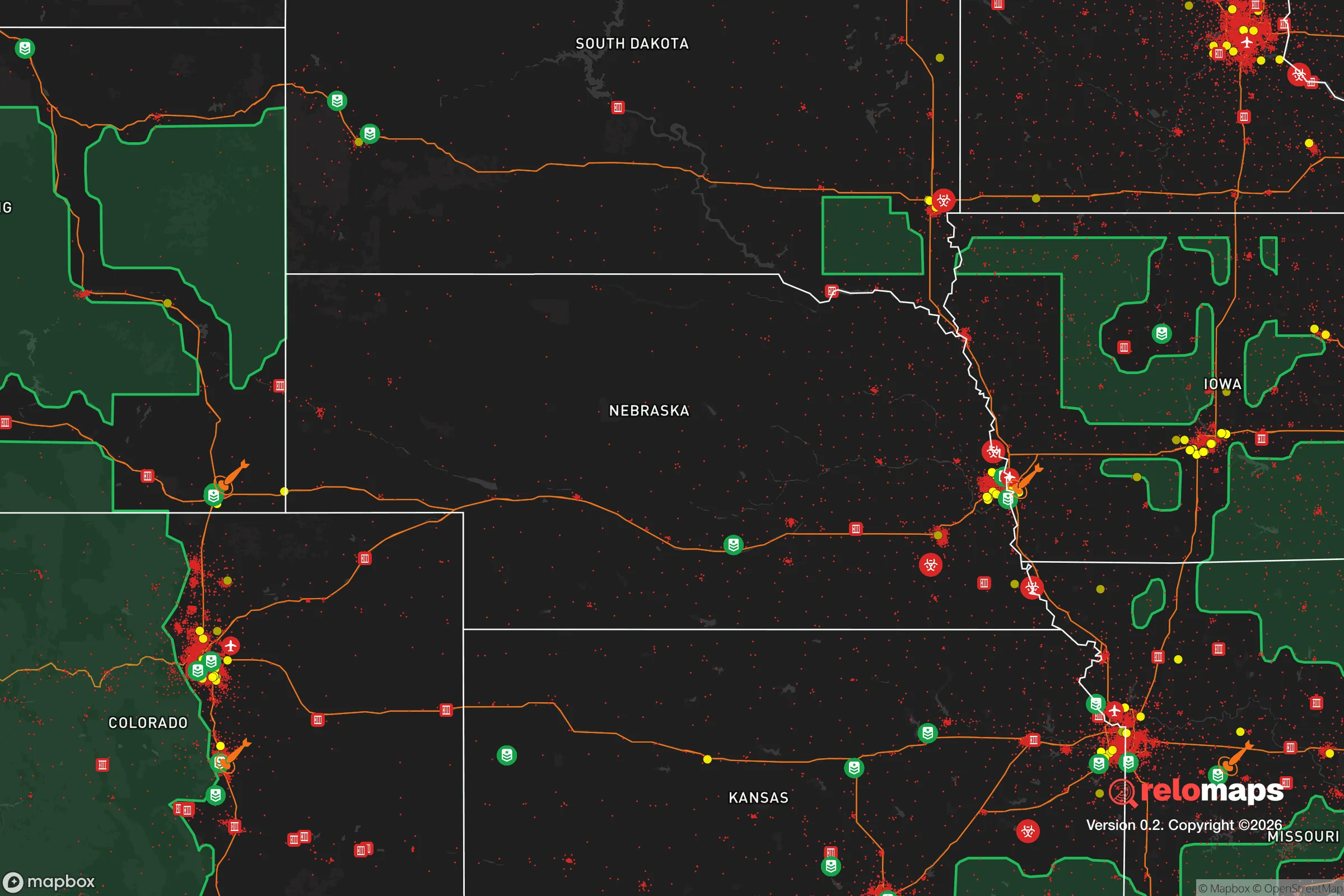


Important Note: For informational purposes only. This does not mean nothing bad ever happens in the green zones. Please use common sense. This is based on public data and modeled with AI. We tried to take a conservative approach but mistakes happen. We update this regularly as new information becomes available.
Solar Generator Recommendations
Backup power matters more here than in safer locations. We've picked three solar generators across budgets and capacity tiers — start with the budget unit if you only need a few essentials, or step up if you want to run a fridge and HVAC for days at a time.

Jackery Portable Power Station Explorer 300
Budget OptionPower on the Go: Weighing only 11 lbs, it's convenient to set up and store with book-sized foldable solar panels

BLUETTI Portable Power Station AC180
Designed for both indoor and outdoor scenarios, AC180 is highly capable as it has a robost capacity and continuous output power.

EF ECOFLOW DELTA Pro Ultra Power Station
Upgraded PickEcoFlow DELTA Pro Ultra is a whole-home energy system designed to grow with your family. Integrated with the Smart Home Panel 2, it scales to meet your evolving energy needs — keeping your home powered, intelligent, and secure through every stage of life.
We earn a commission, at no additional cost to you.
Strategic Assessment Analysis
Crete, Nebraska, sits in a sweet spot that few relocators with a survivalist mindset fully appreciate: close enough to Lincoln for supply runs and medical access, yet far enough from the urban core to dodge the worst of a collapse scenario. With a population hovering around 70, this Saline County village offers a low-profile existence on the eastern edge of the Great Plains, where the land is flat, the wind is constant, and the nearest interstate—I-80—runs 20 miles north. For someone serious about strategic relocation, Crete’s real value isn’t in its amenities; it’s in the buffer it provides from the chaos that tends to concentrate in larger cities, while still keeping you within striking distance of resources that matter when the grid flickers.
Geographic position and natural advantages for long-term security
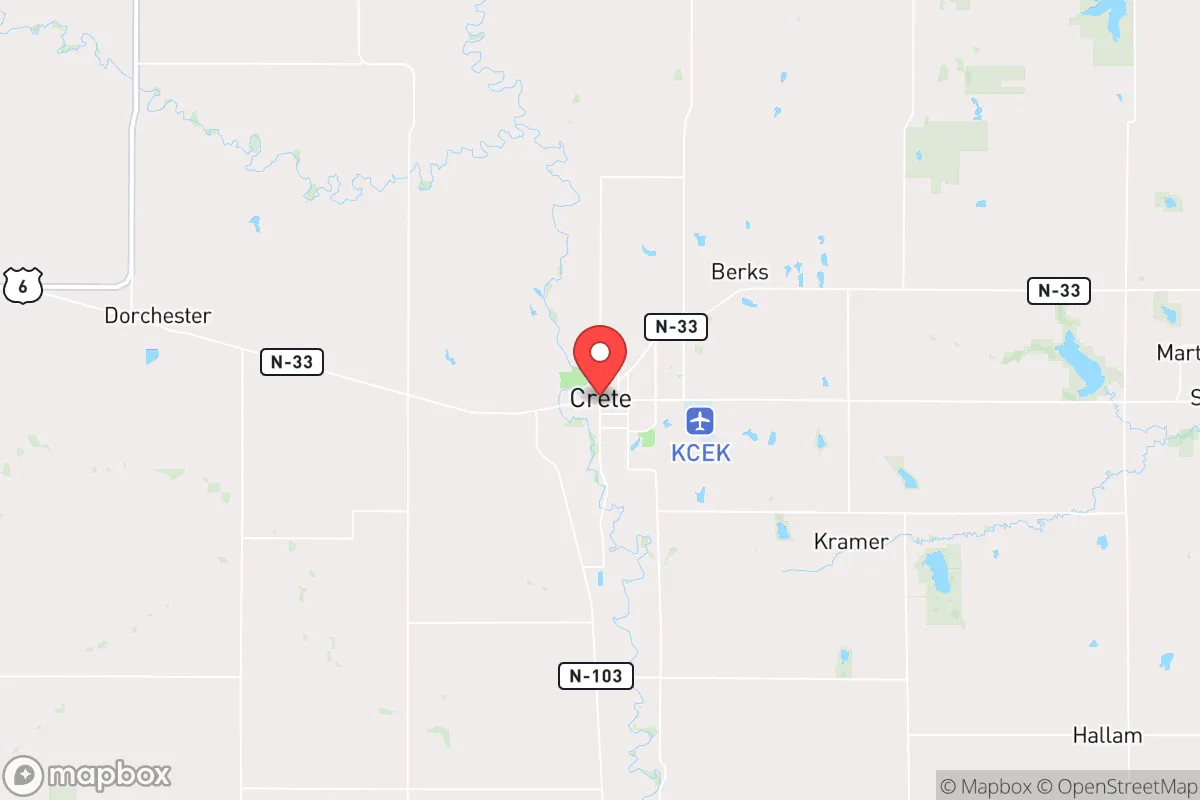
Crete’s location at the intersection of Nebraska Highway 33 and Highway 103 puts it roughly 25 miles southwest of Lincoln and 85 miles west of Omaha. That’s a critical distance: far enough that a riot, power outage, or disease outbreak in the capital won’t wash over your doorstep in the first 48 hours, but close enough that you can still get to a Level II trauma center or a major hardware store if you plan ahead. The surrounding terrain is agricultural flatland—corn and soybeans as far as the eye can see—which means open sightlines for anyone watching for trouble, and a natural food supply if you know how to work it. The Big Blue River runs just east of town, providing a surface water source that, with proper filtration, could sustain a household through a prolonged grid-down event. The area’s low population density—Saline County averages about 15 people per square mile—means fewer neighbors to compete with for resources when things get tight, and fewer eyes on your operations if you’re stockpiling or building out a homestead.
Risks, exposures, and proximity to fallout-relevant landmarks
No location is perfect, and Crete has its share of vulnerabilities that a strategic relocator needs to weigh. The most obvious risk is its proximity to Lincoln—specifically, the University of Nebraska-Lincoln campus and the state government complex. In a scenario involving civil unrest, mass casualty events, or a coordinated attack, those are high-value targets that could draw secondary effects like refugee flows, roadblocks, or military checkpoints spilling south along Highway 33. The same goes for Omaha’s Offutt Air Force Base, home to U.S. Strategic Command (STRATCOM). If a nuclear exchange or major terrorist strike hits that facility, fallout patterns could drift southeast depending on wind direction—Crete sits roughly 80 miles southwest of Offutt, which puts it outside the immediate blast zone but within a plausible contamination plume if prevailing winds shift. On the plus side, there are no major chemical plants, nuclear reactors, or military depots within a 50-mile radius. The closest significant industrial hazard is the Lincoln Airport area, which handles cargo and general aviation but nothing that would make a catastrophic target list. Tornadoes are the primary natural threat—Saline County averages 5-6 tornado warnings per year, and the flat terrain offers zero natural shelter. A reinforced basement or storm shelter isn’t optional here; it’s a requirement for anyone serious about long-term survival.
Practical resilience for a relocator: food, water, energy, and defensibility
For someone looking to build a self-sufficient operation, Crete offers a workable baseline but requires deliberate investment. The local water table is high—most wells in the area hit good-quality groundwater at 30-50 feet—so drilling a private well is feasible and affordable, typically running $3,000-$6,000 for a residential setup. That’s a critical advantage over many suburban or exurban locations where water rights are contested or municipal supply is the only option. The Big Blue River provides a backup surface source, but you’ll need a solid filtration system—think Berkey or a DIY sand filter—since agricultural runoff (pesticides, fertilizers) is a real concern during spring rains. Food resilience is strong if you’re willing to work: the surrounding farmland is some of the most productive in the state, and local farmers’ markets in nearby Wilber and Seward offer direct access to grains, eggs, and meat without relying on grocery supply chains. For energy, the area gets an average of 220 sunny days per year, making solar panels a viable primary or backup power source. Wind is even more reliable—average speeds of 12-15 mph year-round—so a small wind turbine could supplement solar during overcast stretches. Defensibility is mixed. Crete itself is a classic Plains town with a grid street layout, which means clear sightlines but limited natural chokepoints. The railroad tracks that run through town (BNSF Railway’s main line) could serve as a barrier or an avenue of approach depending on the threat. For a single individual or a family, the best play is to secure a property on the outskirts—preferably with a gravel driveway, a good well, and a view of the only access road. The local sheriff’s office in Wilber (Saline County seat) is about 10 miles away, so response times in a crisis will be measured in tens of minutes, not hours, but that’s still a long time if things go sideways.
The overall strategic picture for Crete is one of calculated trade-offs. It’s not a remote mountain redoubt—you’re still within a 30-minute drive of a city of 300,000, and that brings both opportunity and risk. For the conservative-leaning relocator who wants to stay connected to civilization while maintaining a credible fallback position, Crete offers a solid middle ground. The land is cheap (average acreage prices in Saline County run $4,000-$6,000 per acre as of 2025), the water is accessible, and the community is small enough that you can build relationships with like-minded neighbors without drawing unwanted attention. The downsides—tornado risk, proximity to Lincoln’s potential chaos, and the flat terrain that offers no natural cover—are manageable with proper planning. If you’re looking for a place to hunker down and ride out the next decade of instability, Crete won’t make headlines, and that’s exactly the point. It’s a quiet, defensible patch of ground where a prepared individual or family can live cheap, stay low, and wait out the storm.

* Values derived from national, state, county, city and local statistics and may differ in a specific area. Last updated: 2026-05-03T20:28:58.000Z
Narrative content on this page is AI-generated and may contain mistakes. Verify any details that matter before acting on them.
ReloMaps may earn a commission from affiliate links at no extra cost to you.

