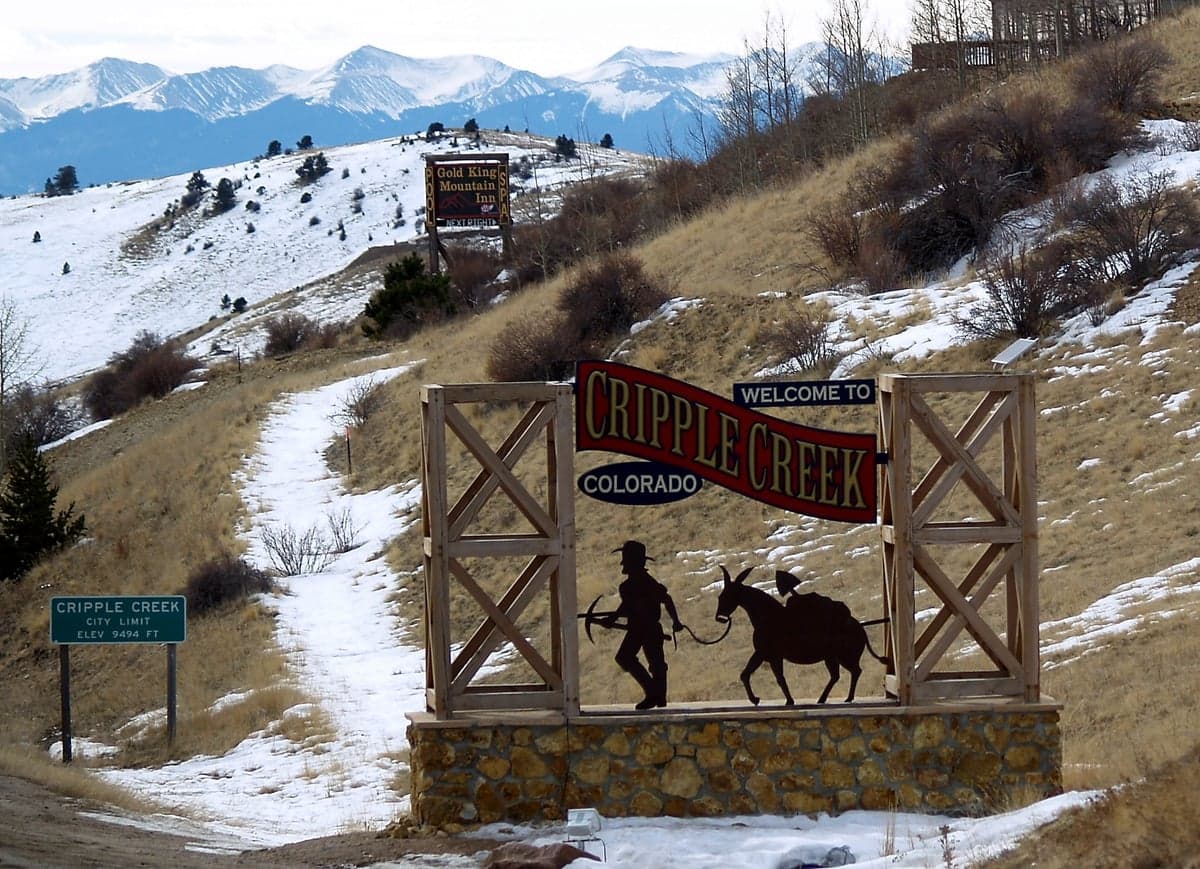
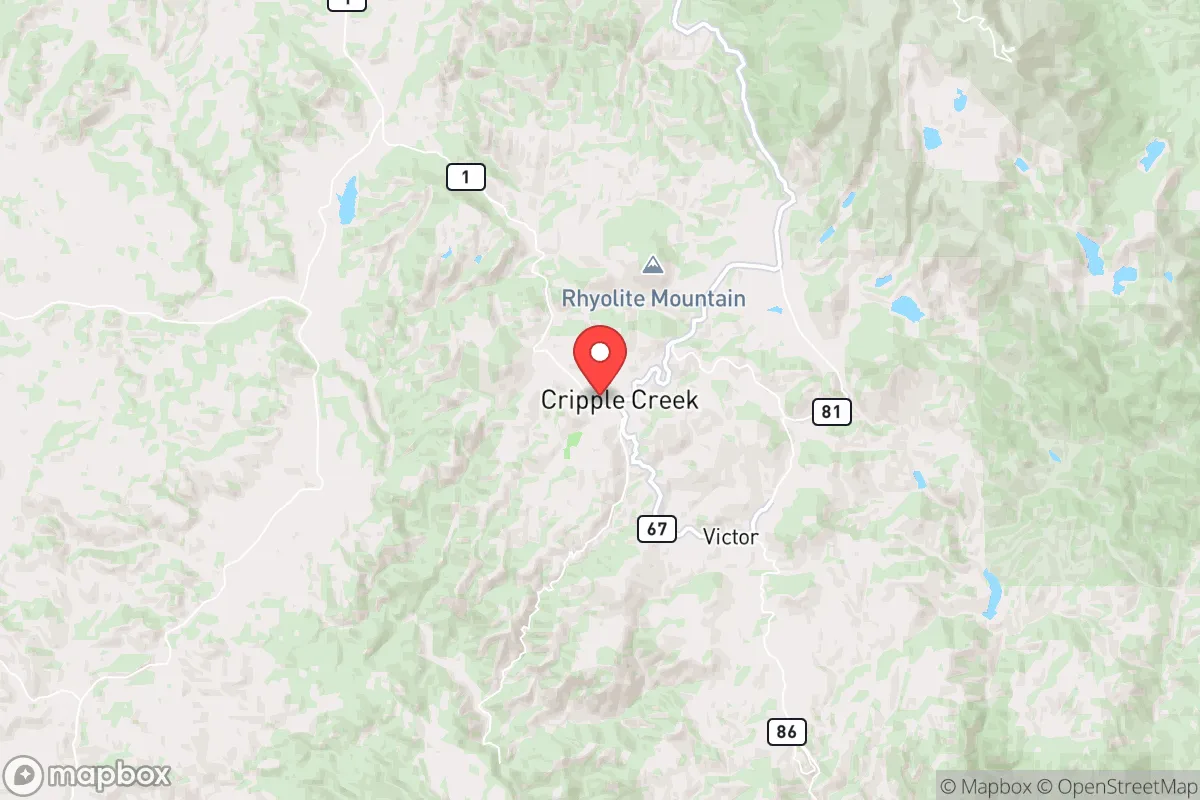

Photo: Wikipedia
Demographics of Cripple Creek, CO
Affluence Level in Cripple Creek, CO
A below-average socioeconomic profile. Incomes, home values, and educational attainment trail the U.S., with higher poverty and unemployment.
People of Cripple Creek, CO
The 822 residents of Cripple Creek, Colorado, form a small, predominantly white, and notably older population shaped by the town’s boom-and-bust mining past and its modern identity as a limited-stakes gambling hub. With a median age likely well above the national average and a college attainment rate of just 17.5%, the community is characterized by a working-class, rural Western sensibility, heavily reliant on the casino and tourism industries. The population is 81.0% white and 12.2% Hispanic, with a 3.4% Black share, and a foreign-born population of 0.0%, reflecting a deeply native-born, insular demographic profile. This is a town where the legacy of gold seekers and hard-rock miners still defines the local character, even as the economy has shifted from extraction to entertainment.
How the city was settled and grew
Cripple Creek’s population history is defined by a single explosive event: the 1890 discovery of gold at Poverty Gulch. The town was founded almost overnight as a rough-and-tumble mining camp, drawing a wave of fortune seekers from across the United States and a smaller number from Europe, particularly Cornish miners, Irish laborers, and German immigrants. The original population clustered in the Poverty Gulch area, where the first claims were staked, and quickly spread into the Bennett Avenue corridor, which became the commercial and social spine of the new town. By 1900, the district had over 25,000 residents, making it one of Colorado’s largest cities. The population was overwhelmingly white, with a small but notable Black community working as laborers and domestics, and a Hispanic presence tied to railroad and ranching work in the surrounding county. The Goldfield neighborhood, just south of the main town, became a working-class enclave for miners and their families, while the Victor Avenue area housed many of the mine managers and business owners. The decline of gold mining after World War I triggered a steep population drop, and by 1950 the town had fewer than 1,000 residents, a figure that held steady for decades.
Modern era (post-1965)
The modern demographic story of Cripple Creek begins with the 1991 legalization of limited-stakes gambling, which reversed decades of population stagnation. The new casino industry drew a fresh wave of in-migrants, primarily white workers from rural Colorado and the broader Mountain West, who filled jobs in the new gaming halls and supporting businesses. The Bennett Avenue historic district was revitalized as the casino core, while the Goldfield neighborhood saw a mix of new housing and renovated historic homes for casino employees. The Hispanic share of the population, now 12.2%, grew modestly during this period, largely through domestic migration from southern Colorado and New Mexico, with families settling in the Poverty Gulch periphery and the Highway 67 corridor leading into town. The Black population, at 3.4%, remains small and is concentrated in the Victor Avenue area, reflecting a legacy of service-industry employment. The foreign-born population of 0.0% underscores that virtually all growth has been domestic, with no significant immigration from Asia, the Indian subcontinent, or the Middle East. The college-educated share of 17.5% is low, consistent with a workforce dominated by casino operations, hospitality, and retail rather than professional or tech sectors.
The future
The population trajectory for Cripple Creek points toward continued slow decline or stagnation, with a gradual homogenization of the already overwhelmingly white and native-born demographic. The town’s reliance on a single industry—gambling tourism—makes it vulnerable to economic shifts, and younger residents often leave for larger cities with more diverse job markets. The Hispanic share may grow slightly through natural increase and continued domestic migration from the Southwest, but the Black and Asian shares are likely to remain minimal given the lack of economic pull for those groups. The Goldfield and Poverty Gulch neighborhoods will likely retain their working-class character, while the Bennett Avenue district will continue to be dominated by casino-related commerce. Over the next 10-20 years, the population will likely age further, with a shrinking tax base and increasing pressure on local services. No significant new immigrant communities are expected to form, and the town will remain a culturally homogeneous, rural enclave shaped by its mining heritage and gambling economy.
For a conservative-leaning individual or family considering a move, Cripple Creek offers a quiet, low-density, and culturally stable environment with a strong sense of local history. The trade-offs are clear: limited economic opportunity outside the casino sector, a small and aging population, and minimal racial or ethnic diversity. This is a place for those who value isolation, a slow pace, and a direct connection to Colorado’s frontier past, rather than for those seeking career growth or a multicultural community.

* Values derived from national, state, county, city and local statistics and may differ in a specific area. Last updated: 2026-04-29T01:05:29.000Z
Narrative content on this page is AI-generated and may contain mistakes. Verify any details that matter before acting on them.
ReloMaps may earn a commission from affiliate links at no extra cost to you.

