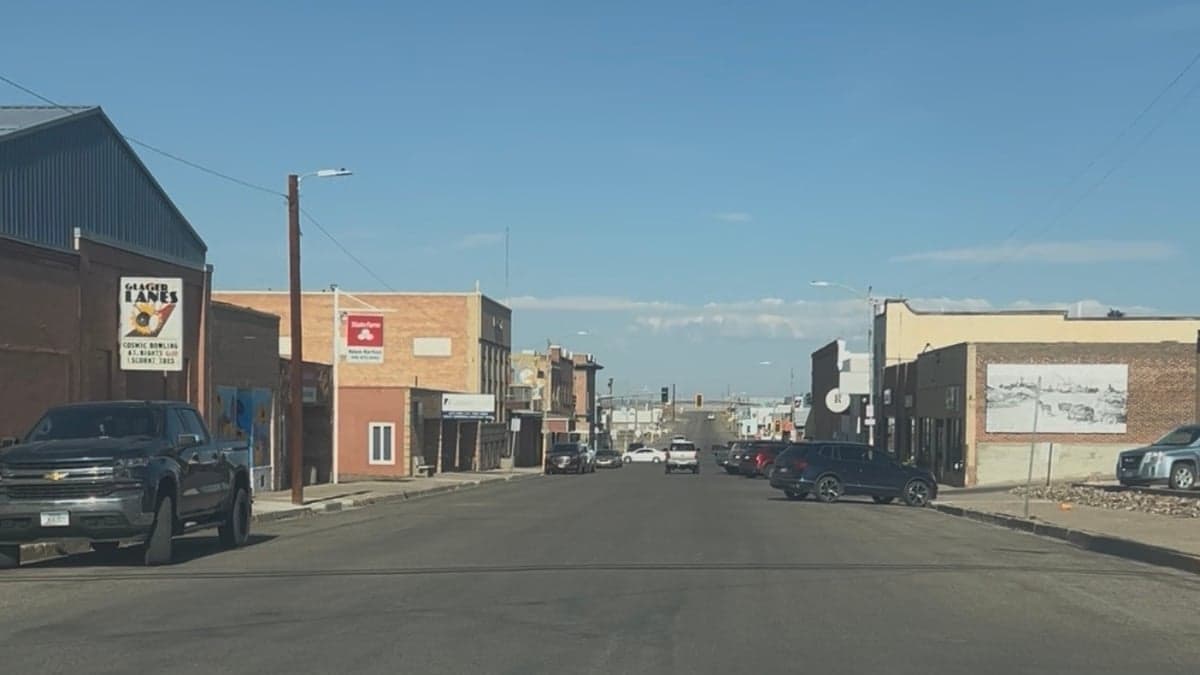
Photo: Wikipedia
Political ClimatePolitical Climate in Cut Bank, MT
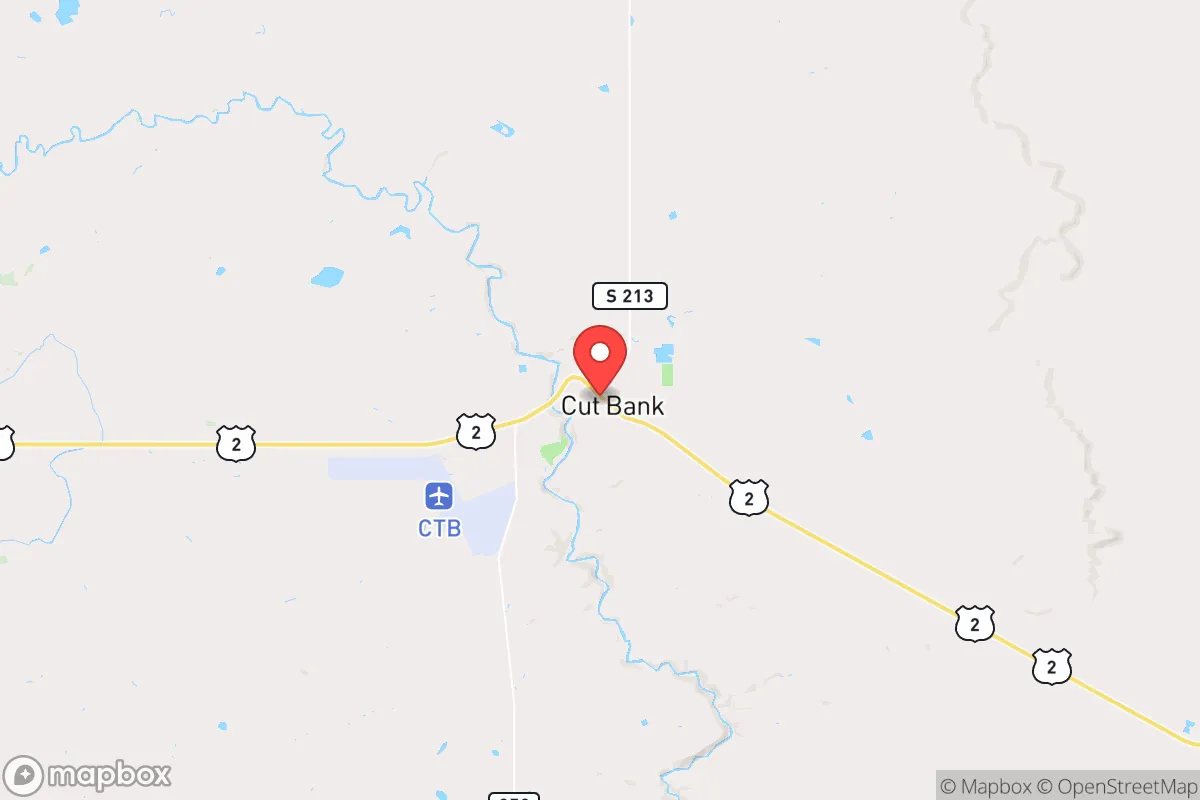
District shown is the primary district for this city’s centroid. Cities may span multiple districts.
Local Political AnalysisPolitical Analysis of Cut Bank, MT
Cut Bank, Montana, sits in a deeply conservative pocket of the state, and honestly, it’s been that way for as long as anyone can remember. The Cook PVI of R+5 might sound moderate on paper, but out here, that number feels low—Glacier County as a whole leans Republican, and Cut Bank itself is the kind of place where folks wave flags, not just on holidays but every day. The political trajectory here hasn’t shifted much in the last decade, and that’s a relief to most of us. We’ve watched other small towns in Montana—like Whitefish or Bozeman—get pulled toward progressive policies, but Cut Bank has held steady, with local elections consistently favoring candidates who prioritize local control, gun rights, and keeping government out of our backyards.
How it compares
If you drive an hour south to Great Falls, you’ll find a more mixed political scene—still red, but with a noticeable blue streak in the city limits, especially among younger transplants. Head west to Kalispell, and you’re in a similar conservative stronghold, but it’s getting crowded with out-of-staters who bring their coastal voting habits with them. Cut Bank, by contrast, feels like a time capsule of old-school Montana values. The nearest town that really contrasts is Browning, just 30 miles east on the Blackfeet Reservation, where tribal politics and a different set of priorities create a much more liberal voting bloc. That’s not a knock—it’s just a reminder that even within the same county, you can see how different communities interpret freedom and government differently. Out here, we tend to see Browning’s approach as more collectivist, which rubs a lot of us the wrong way when it comes to personal property rights and individual responsibility.
What this means for residents
For the folks living here, the political climate means you can pretty much live your life without a lot of bureaucratic hassle. Zoning is minimal, taxes are low, and the county sheriff isn’t interested in enforcing state-level mandates that don’t make sense for our rural reality. During the COVID years, Cut Bank was one of those places where businesses stayed open and schools let parents decide—no heavy-handed lockdowns, no mask mandates that lasted longer than a week. That’s the kind of common-sense approach that keeps people here. The downside? If you’re hoping for big government-funded projects or rapid infrastructure upgrades, you’ll be disappointed. The trade-off for personal freedom is that you’re expected to handle your own problems, from snow removal to healthcare access. Most of us see that as a fair deal.
Culturally, Cut Bank still holds onto distinctions that are fading elsewhere. The annual North American Indian Days celebration is a big deal, and it’s one of the few times you’ll see the whole community—red and blue, tribal and non-tribal—come together without political tension. But the real policy distinction is how the town handles land use and energy. Oil and gas development is a lifeline here, and there’s a strong resistance to any federal overreach on drilling or grazing permits. The long-term concern is that as Montana’s population grows, outsiders will try to impose urban-style regulations on a place that’s never needed them. If that happens, you’ll see a lot of us packing up and moving further north. For now, though, Cut Bank remains a place where the government stays small, and the people stay free.

State Political ClimatePolitical Climate in Montana
State Political AnalysisPolitical Environment in the State
Montana has long been a reliably Republican state in presidential elections, voting for the GOP candidate in every contest since 1992, but its political climate is far more nuanced than a simple red-state label suggests. The state’s dominant coalition is a mix of libertarian-leaning ranchers, conservative small-business owners, and a growing number of out-of-state transplants, creating a dynamic where the rural-urban divide is the central political fault line. Over the past 10-20 years, the trajectory has been a slow but steady shift rightward in most of the state, driven by in-migration from blue states, even as a few population centers have become more progressive.
Urban vs. rural divide
The political map of Montana is a textbook case of the urban-rural split. The state’s largest city, Billings, in Yellowstone County, is a solid Republican stronghold that anchors the eastern part of the state with a business-friendly, pro-energy economy. Missoula, home to the University of Montana, is the state’s most liberal city, consistently electing Democrats to the state legislature and pushing progressive policies on environmental regulation and social issues. Bozeman and Gallatin County are the most interesting battleground—once a conservative ranching community, the influx of wealthy out-of-state transplants has turned it into a purple area that still leans Republican but has seen a noticeable uptick in progressive activism, especially around land use and growth management. Helena, the state capital, is a moderate blue island surrounded by deep-red rural counties, while Great Falls and Butte remain reliably conservative, with strong union ties that sometimes split the ticket on economic issues. The rural counties—like Wheatland, Petroleum, and Garfield—routinely deliver 80%+ margins for Republicans, making them the engine of the state’s overall conservative lean.
Policy environment
Montana’s policy environment is one of the most freedom-friendly in the nation, but it’s not without its tensions. The state has no sales tax, a flat income tax rate of 5.9% (recently cut from 6.75%), and relatively low property taxes compared to the coasts. The regulatory posture is generally light, especially for agriculture, energy, and small business, though environmental permitting can be a headache in areas near national parks. On education, Montana has a robust school choice movement, with a new education savings account (ESA) program passed in 2023 that allows parents to use state funds for private or homeschool expenses—a major win for parental rights. Healthcare policy is mixed: the state expanded Medicaid under the Affordable Care Act, which remains controversial among conservatives, but there are no state-level mandates for vaccine passports or COVID-19 restrictions. Election laws are solid, with voter ID requirements in place and no widespread mail-in ballot expansion, though the state did implement automatic voter registration in 2021, which some conservatives view as a step toward federal-style electioneering.
Trajectory & freedom
Montana is arguably becoming more free in several key areas, which is a big reason why conservatives are flocking here. The 2021 passage of Constitutional Carry (HB 102) eliminated the need for a permit to carry a concealed firearm, a major expansion of Second Amendment rights. The 2023 Parental Rights in Education Act (HB 361) requires schools to notify parents of any curriculum involving sexual orientation or gender identity, and it prohibits instruction on those topics in K-3 classrooms—a direct response to the overreach seen in other states. Property rights were strengthened with the 2021 Private Property Protection Act (SB 265), which limits the ability of local governments to impose restrictive land-use regulations without compensating landowners. On the flip side, the state has seen a concerning expansion of government power in the form of Montana’s Medicaid expansion, which was renewed in 2023 with a work requirement waiver from the feds—a compromise that still keeps the program alive. The biggest freedom concern is the growing influence of federal land management, as the federal government owns about 30% of the state, creating constant friction over grazing, mining, and timber rights.
Civil unrest & political movements
Montana is not a hotbed of street-level civil unrest, but there are organized movements on both sides that a new resident would notice. The Yellowstone County Republican Party is one of the most active in the nation, regularly hosting candidate forums and grassroots training. On the left, Montana Women Vote and Forward Montana are well-funded activist groups that push progressive policies on climate and social justice, and they’ve been increasingly visible in Bozeman and Missoula. Immigration politics are relatively quiet, as Montana has a very small foreign-born population, but there have been flashpoints over sanctuary city proposals in Missoula, which were defeated in 2022 after public outcry. Election integrity has been a major issue since 2020, with the state legislature passing SB 169 in 2021 to ban ballot harvesting and require signature verification on all absentee ballots. There’s a strong nullification movement in the state, with several counties passing resolutions asserting local control over federal land management, and the Montana Land Sovereignty Act has been introduced multiple times to challenge federal ownership. The most visible flashpoint is the ongoing battle over grizzly bear management in the Greater Yellowstone Ecosystem, where federal agencies have clashed with state officials and ranchers over delisting and hunting rights.
Projection
Over the next 5-10 years, Montana is likely to become more conservative in the rural areas and more polarized in the growing cities. The in-migration from California, Washington, and Oregon is accelerating, with Gallatin County growing at over 3% annually. Many of these newcomers are fiscally conservative but socially moderate, which could shift the GOP primary dynamics toward a more libertarian, less socially conservative platform. The state’s housing crisis in Bozeman and Missoula is already driving political backlash, with local governments imposing growth caps and impact fees that could alienate the very people moving in. The energy transition will be a defining issue: Montana has massive coal reserves and wind potential, and the push to phase out coal-fired power plants will face fierce resistance from rural communities that depend on mining jobs. Expect more fights over federal land transfer, as the state’s congressional delegation continues to push for local control. The parental rights movement will likely expand, with more school choice options and curriculum transparency laws on the horizon. For a new resident, the next decade will feel like a tug-of-war between the state’s libertarian roots and the progressive influence of new arrivals, but the overall trajectory remains firmly in the conservative camp.
Bottom line for a new resident: If you’re moving to Montana for freedom, you’re making a good bet—the state’s political culture is still one of the most individualistic in the country. But don’t expect a uniform experience. Choose your location carefully: Billings or Great Falls will give you a reliably conservative community with low taxes and strong gun rights, while Bozeman and Missoula are increasingly progressive and expensive. The key is to get involved early—join your local Republican central committee, attend school board meetings, and support the state-level fights against federal overreach. Montana rewards those who show up and push back against the creeping influence of government control.
* Values derived from national, state, county, city and local statistics and may differ in a specific area. Last updated: 2026-04-29T21:59:09.000Z
Narrative content on this page is AI-generated and may contain mistakes. Verify any details that matter before acting on them.
ReloMaps may earn a commission from affiliate links at no extra cost to you.

