Photo: Wikipedia
Demographics of Dagsboro, DE
Affluence Level in Dagsboro, DE
A middle-class area roughly in line with national averages across income, home values, education, and employment.
People of Dagsboro, DE
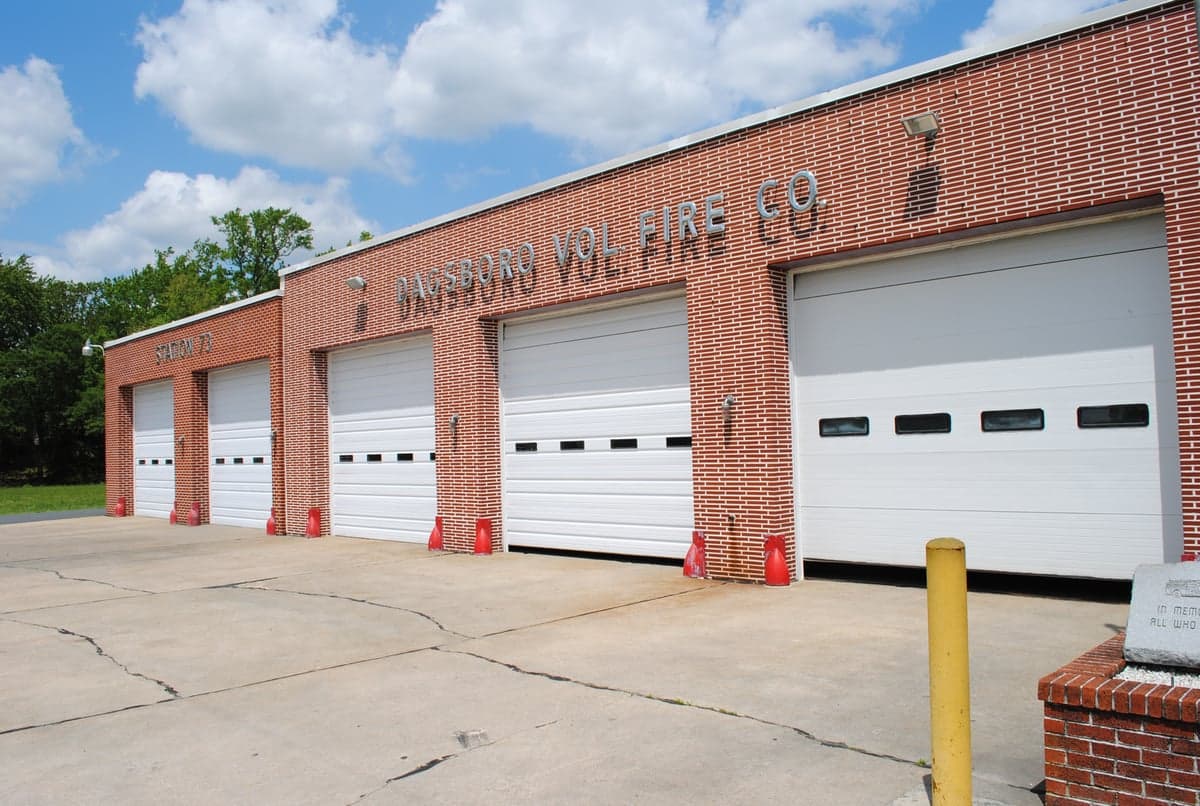
Dagsboro, Delaware, is a small, tight-knit town of roughly 1,350 residents, characterized by a predominantly White population (72.4%) with notable Black (7.7%) and Hispanic (8.4%) communities. The town’s identity is rooted in its agricultural and industrial past, with a low college attainment rate (11.0%) and a very small foreign-born population (2.8%), reflecting a stable, long-standing local populace. Dagsboro offers a quiet, rural lifestyle with a strong sense of community, distinct from the faster-paced coastal towns nearby.
How the city was settled and grew
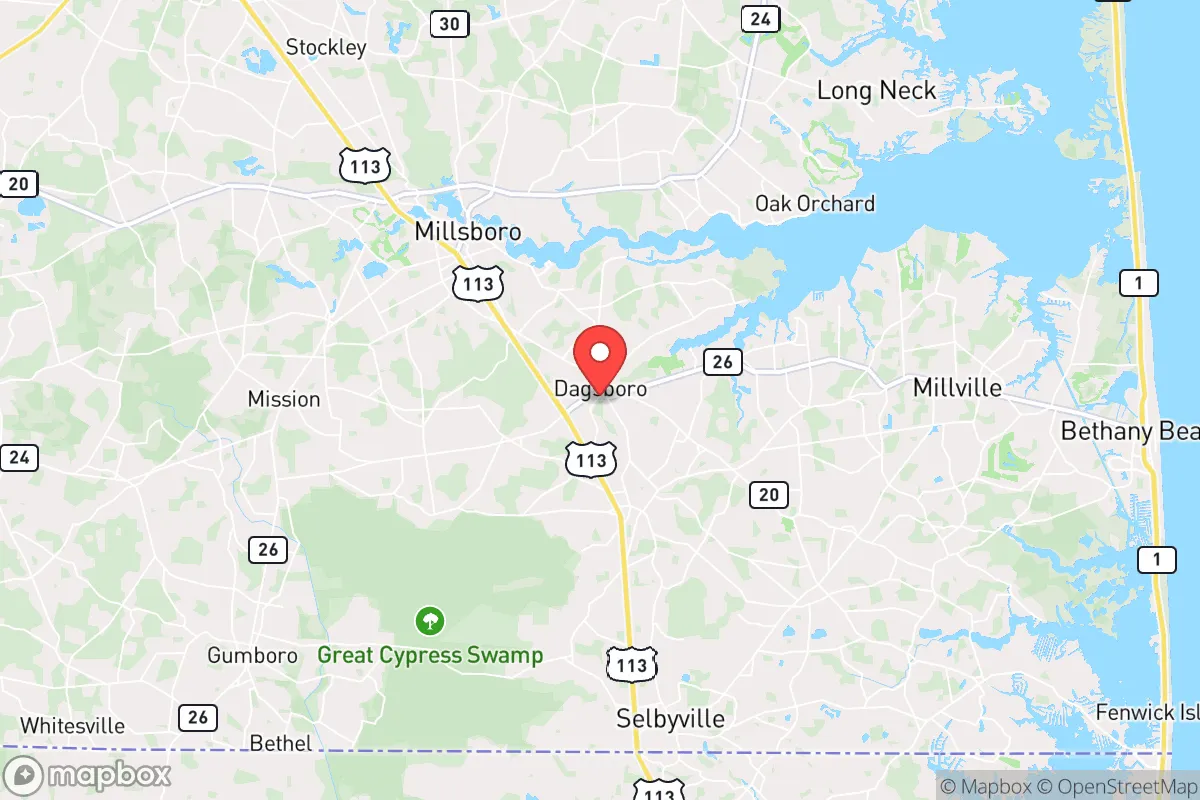
Dagsboro’s early settlement was driven by its location along the headwaters of the Indian River, which provided access to the Atlantic coast for trade. The town was originally known as "Blackfoot" and was later renamed Dagsboro in honor of a local landowner. The first major wave of settlers were English and Scottish farmers who arrived in the late 18th and early 19th centuries, drawn by fertile land and the promise of self-sufficiency. These families established the Historic District around the central crossroads, where many original homes and the Dagsboro Presbyterian Church still stand. By the mid-19th century, the construction of the railroad spurred a second wave, bringing Irish and German laborers who settled in the Railroad Avenue area, working on the line and in the new grain and lumber mills. The town’s economy remained rooted in agriculture and small-scale manufacturing through the mid-20th century, with the population growing slowly but steadily, largely from natural increase rather than new immigration.
Modern era (post-1965)
Following the 1965 Immigration and Nationality Act, Dagsboro did not experience the large-scale immigration seen in many urban areas. Instead, the modern era has been defined by domestic in-migration, particularly from the Mid-Atlantic region. The development of the Dagsboro Village subdivision in the 1980s and 1990s attracted families seeking affordable housing and a slower pace of life, many of whom were White and Black residents moving from nearby Sussex County towns. The Hispanic population, now at 8.4%, began to grow in the 2000s, with many families settling in the Clayton Street area, drawn by work in the region’s poultry and agricultural industries. The Black community, at 7.7%, has deep roots in the town, with many families living in the Church Street neighborhood, historically a center for African American life and worship. The East/Southeast Asian population remains very small at 0.4%, and there is no recorded Indian subcontinent population. The town’s low college education rate (11.0%) reflects a workforce oriented toward trades, agriculture, and service jobs, with many residents commuting to larger employers in Georgetown or Millsboro.
The future
Dagsboro’s population is projected to grow modestly, driven by continued domestic in-migration from more expensive coastal areas like Rehoboth Beach and Bethany Beach. The town is likely to remain predominantly White, with the Hispanic and Black communities maintaining their current shares. Newer subdivisions, such as Piney Grove and Indian River Estates, are attracting a mix of retirees and young families, but the overall demographic character is expected to stay stable. The foreign-born population is unlikely to increase significantly, as Dagsboro lacks the industrial or service-sector magnets that draw large immigrant populations. The town is not homogenizing into a single identity but rather maintaining distinct neighborhoods—the historic core, the newer subdivisions, and the older working-class areas—each with its own character. Over the next 10–20 years, Dagsboro will likely remain a quiet, family-oriented community with a strong sense of local history and a population that values stability over rapid change.
For someone moving in now, Dagsboro offers a low-key, affordable alternative to Delaware’s beach towns, with a population that is stable, predominantly native-born, and rooted in local traditions. The town is becoming a place where long-time residents and new arrivals from nearby areas coexist, with a future that looks much like its present: small, slow-growing, and community-focused.

* Values derived from national, state, county, city and local statistics and may differ in a specific area. Last updated: 2026-04-22T07:05:58.000Z
Narrative content on this page is AI-generated and may contain mistakes. Verify any details that matter before acting on them.
ReloMaps may earn a commission from affiliate links at no extra cost to you.

