Photo: Wikipedia
Quality of Life in Dallas, OR
Above-average quality of iife. The area offers a reasonable cost of living, decent mobility, and a mix of neighborhood amenities.
What does Quality of Life tell us?
Quality of Life blends cost of living, nearby amenities, socioeconomic signals, and neighborhood character. City-level scores represent the whole municipality; individual neighborhoods can differ.
What does this tell us?
Quality of Life blends cost of living, nearby amenities, socioeconomic signals, and neighborhood character. City-level scores represent the whole municipality; individual neighborhoods can differ.
Cost of Living
12% above national average
The Real Cost of Living in Dallas, OR for 2026
| Tier | Individual | Family (4) |
|---|---|---|
| Survival | $19k | $36k |
| Comfortable | $69k | $102k |
| Luxury | $119k+ | $184k+ |
| Elite (Top 5%) | $159k+ | $247k+ |
65%
The Area Signal
A metric tracking the socioeconomic signals of the area.
Hobbies
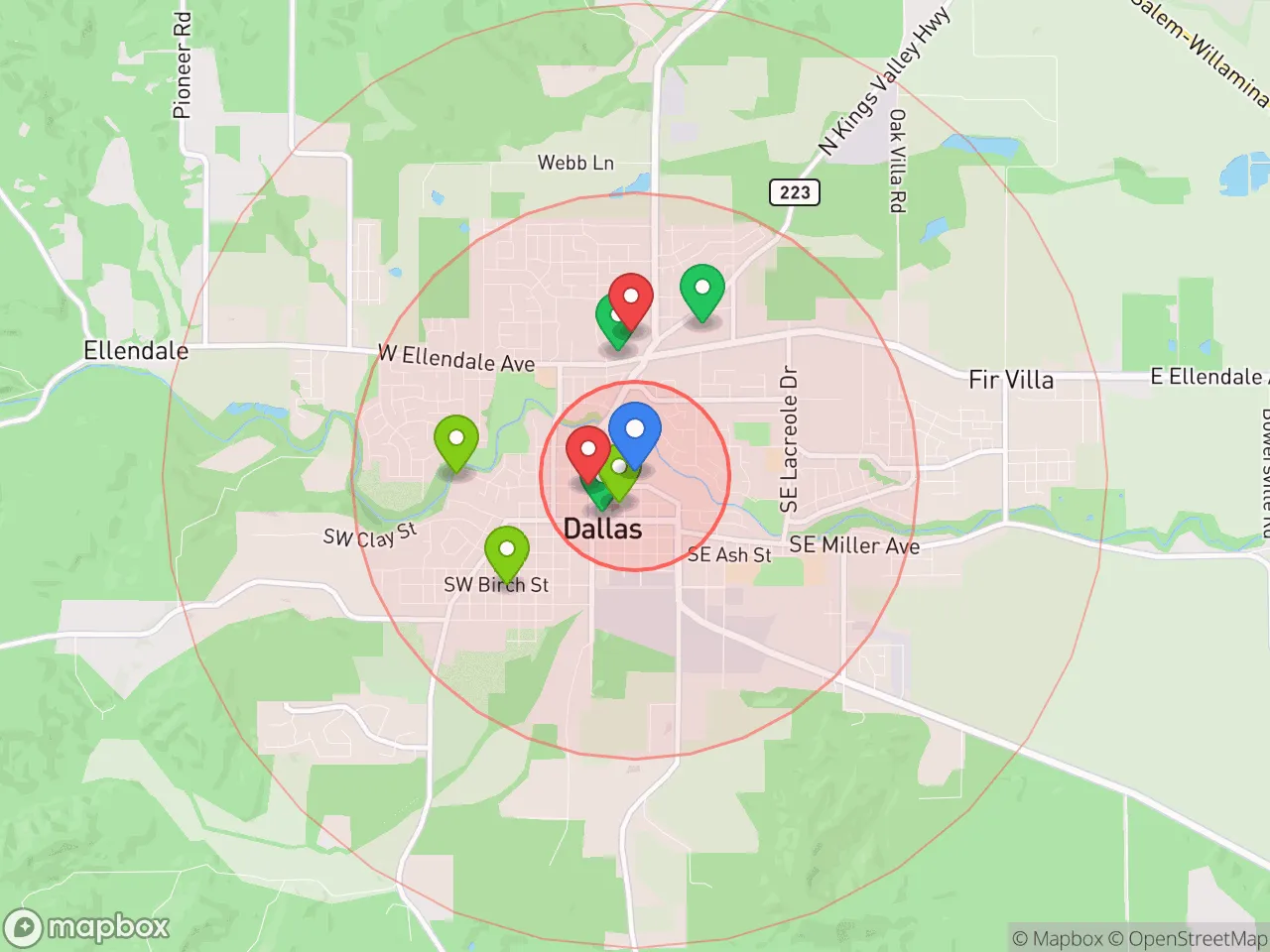
Explore the areaGroceries
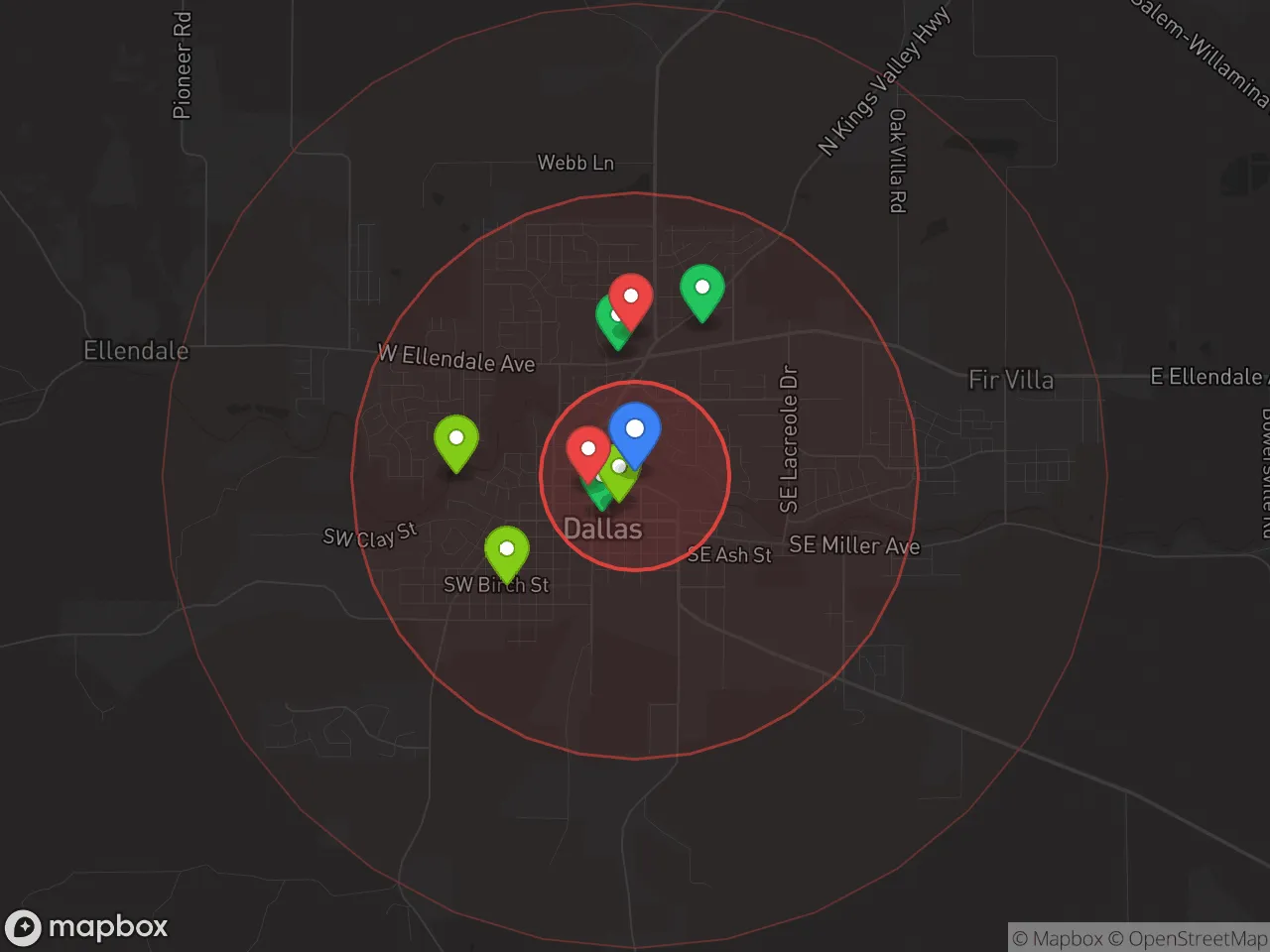
3 within 10 miles
Gas
9 within 10 miles
Hospital
3 within 20 miles
Airport
PDX — Portland International
Post Office
USPS — Dallas, OR
Critical Amenities
Quality-of-Life Analysis
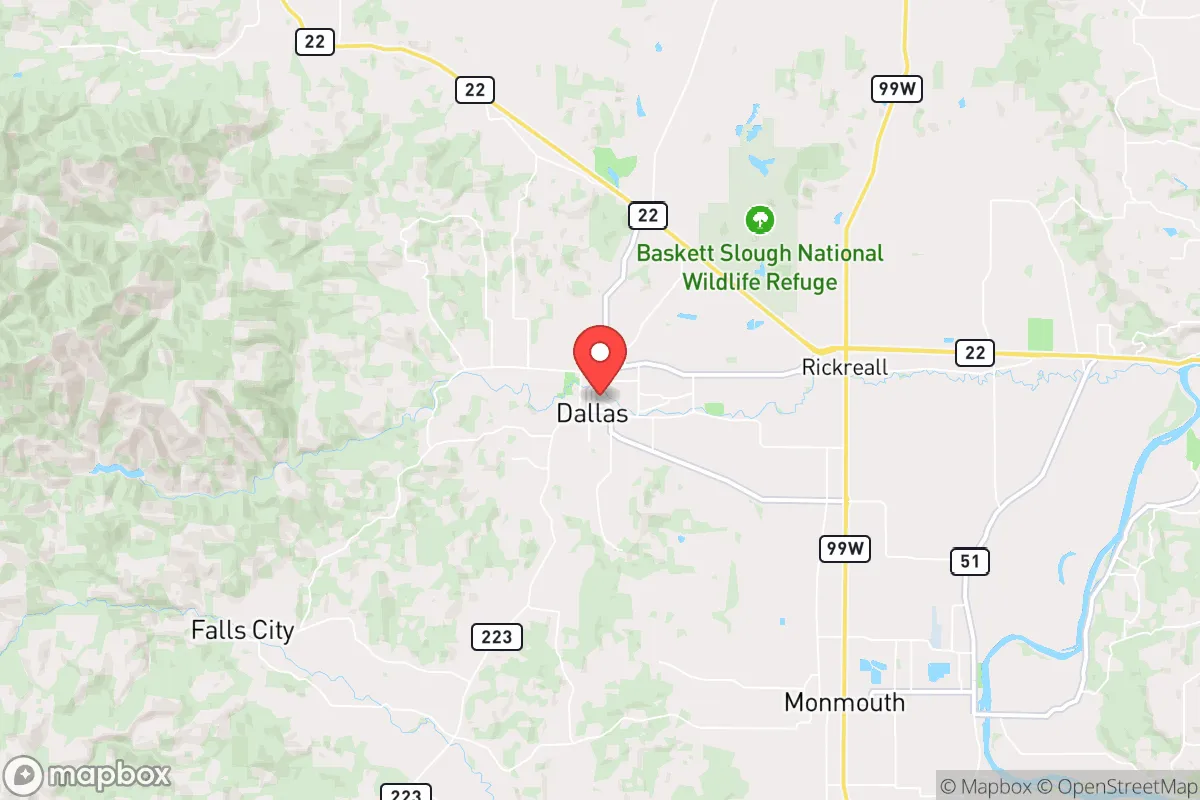
Dallas, Oregon, presents a notably affluent quality of life compared to national averages, with a cost of living index of 112 (where 100 equals the U.S. average) that reflects its desirability as a bedroom community for the Willamette Valley. The population skews toward families and professionals who commute to Salem (roughly 15 miles north) or Portland (about 65 miles north), drawn by the town’s small-town character, access to outdoor recreation, and relative affordability versus the Portland metro. Median household incomes in Dallas comfortably exceed the state average, supporting a lifestyle centered on local schools, parks, and a tight-knit civic culture.
Cost of living, housing affordability, and how Dallas compares to nearby towns
Dallas’s cost of living index of 112 is driven primarily by housing, which is significantly cheaper than Portland (index ~140) but pricier than more rural Polk County towns like Monmouth or Independence. The median home value sits at $355,700, roughly 15% below the Oregon statewide median of about $420,000, making Dallas a relative bargain for buyers seeking space and yard without a six-figure mortgage. Renters face a median rent of $1,184, which is notably lower than Salem’s median of $1,350 and Portland’s $1,600, though it has risen 8% since 2022 as demand increases. The average commute of 27.5 minutes is slightly longer than the national average (26 minutes), reflecting the many residents who drive to Salem or work in the industrial parks along Highway 99W. Utility costs are on par with the state average, while grocery and healthcare prices run about 5% higher than the U.S. norm, a typical trade-off for Oregon’s quality-of-life amenities.
Amenities, schools, and what daily life is like for families
Daily life in Dallas revolves around a compact downtown core with locally owned shops, a historic movie theater (the Pix), and several parks including the 40-acre Dallas City Park with sports fields and a skate park. The Dallas School District serves roughly 3,500 students and earns above-average ratings from the Oregon Department of Education, with Dallas High School offering a 4:1 student-to-technology ratio and a graduation rate of 88% (above the state average of 81%). For outdoor recreation, residents access the Luckiamute River for fishing and kayaking, the nearby Baskett Slough National Wildlife Refuge for hiking and birding, and the Oregon Coast (about 90 minutes west) for weekend trips. Healthcare is served by the Dallas Family Medicine clinic and Salem Health’s West Valley Hospital, though specialists require a 20-minute drive to Salem. The town lacks a major grocery chain within its limits—most residents shop in Salem or Monmouth—which is a common complaint among newcomers.
Who thrives in Dallas, Oregon, and who might look elsewhere
Dallas is best suited for families and remote workers who prioritize a slower pace, good schools, and proximity to nature over urban nightlife or career density. The town’s low crime rate (violent crime is 60% below the Oregon average) and strong sense of community make it ideal for raising children or retiring in a quiet setting. Singles and young professionals without cars may find the limited public transit and 27-minute commute burdensome, while those seeking walkable urban amenities or a vibrant dining scene will prefer Salem or Portland. For buyers and renters priced out of the I-5 corridor, Dallas offers a tangible trade-off: lower housing costs in exchange for a longer drive and fewer on-site conveniences.

Crime in Dallas, OR
Lower crime rates than 78% of comparable U.S. locations.
Violent CrimeViolent Crime Analysis
Property CrimeProperty Crime Analysis
Crime Analysis
Dallas, Oregon, reports a violent crime rate of 231.4 incidents per 100,000 residents and a property crime rate of 1,245.4 per 100,000, placing it in a moderate risk category for a small city within the Portland metro orbit. While these figures are not the highest in the region, the city’s proximity to a large metropolitan area with progressive prosecutorial policies introduces a specific dynamic that residents should weigh carefully. The overall safety picture is one of manageable but persistent property crime, with violent incidents occurring at a rate that warrants attention, particularly given the broader justice system context in the Willamette Valley.
Crime in context
Dallas’s violent crime rate of 231.4 per 100,000 is roughly 40% below the national average of about 380 per 100,000, but its property crime rate of 1,245.4 per 100,000 sits near the national median. Compared to the state of Oregon, which has a violent crime rate around 290 per 100,000 and a property crime rate near 2,500 per 100,000, Dallas is safer than the statewide average for property offenses but slightly elevated for violent crime relative to other small towns. However, these raw numbers do not capture the effect of the region’s liberal judicial philosophy. In nearby Polk County and the broader Portland metro area, progressive district attorneys and judges have implemented policies such as reduced bail, deferred prosecution for repeat property offenders, and sentencing guidelines that prioritize rehabilitation over incarceration. This approach, while sympathetic to offenders, has been linked to higher recidivism and a perception that property crimes carry minimal consequences, directly impacting communities like Dallas by keeping more criminals on the street.
What residents experience
Residents of Dallas most frequently encounter property crime—theft from vehicles, burglary, and shoplifting—as the dominant safety concern. The city’s downtown core and retail corridors along Main Street and Highway 22 see the highest concentration of these incidents. Violent crime, while less common, includes aggravated assault and occasional robbery, often tied to domestic disputes or drug-related activity. The progressive justice environment in the region means that even when arrests are made, offenders may face lenient sentences or diversion programs, reducing the deterrent effect and frustrating victims who seek accountability. For daily life, this translates to a need for proactive security measures: locking vehicles, securing bicycles, and avoiding leaving valuables visible. The police department maintains a visible presence, but its resources are stretched by the broader county’s approach to crime management.
Neighborhood-level variation in Dallas is modest but noticeable. Newer subdivisions on the city’s east side, such as those near La Creole Middle School, report lower crime rates, while older areas closer to the downtown core and the industrial zones along the railroad tracks see more frequent police calls. The absence of a strong, conservative prosecutorial stance in the surrounding county means that even quieter neighborhoods are not immune to spillover from regional property crime trends. Prospective residents should research specific blocks and consider that the city’s safety profile is shaped as much by policies in Salem and Portland as by local enforcement efforts.
* Values derived from national, state, county, city and local statistics and may differ in a specific area. Last updated: 2026-05-01T04:41:56.000Z
Narrative content on this page is AI-generated and may contain mistakes. Verify any details that matter before acting on them.
ReloMaps may earn a commission from affiliate links at no extra cost to you.

