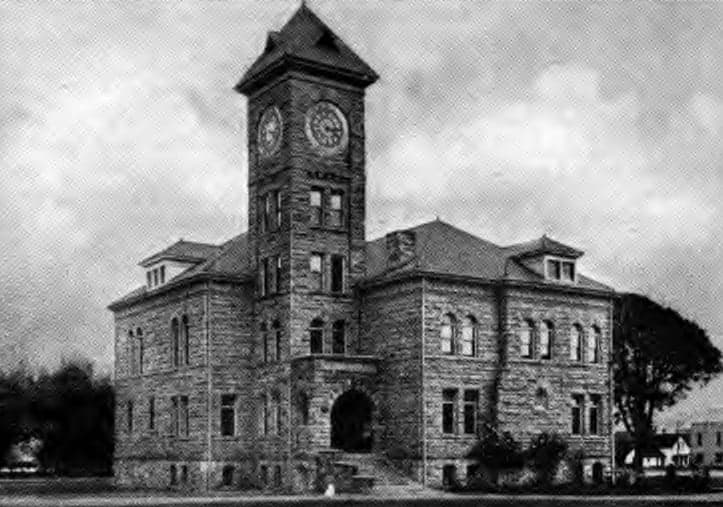
Photo: Wikipedia
Strategic Assessment of Dallas, OR
Meaningful friction. Expect exposure to either population pressure, blast zones, or natural disaster risk. Consider buying a retreat property.
What does the Strategic Assessment tell us?
Our Strategic Assessment grades tactical survivability of an area. Major population centers, military targets, fallout zones, natural disasters, and border exposure all drive risk — lower exposure means a more defensible position in a crisis.
This is heavily inspired by Joel Skousen's Strategic Relocation book. Highly recommended you checkout the book ($)What does this tell us?
Our Strategic Assessment grades tactical survivability of an area. Major population centers, military targets, fallout zones, natural disasters, and border exposure all drive risk — lower exposure means a more defensible position in a crisis.
This is heavily inspired by Joel Skousen's Strategic Relocation book. Highly recommended you checkout the book ($)Strategic Pillars

Key Distances
Regional Safe Places
Below is our recommended "safe zones" in Oregon and the surrounding area based on our strategic heuristics. For most people, it's unrealistic to live in a “safe zone” full-time due to work, family or other personal reasons. They tend to be more rural. However, many of these areas are perfect for second homes and retreat properties that double as a vacation home or even a short-term rental.


Important Note: For informational purposes only. This does not mean nothing bad ever happens in the green zones. Please use common sense. This is based on public data and modeled with AI. We tried to take a conservative approach but mistakes happen. We update this regularly as new information becomes available.
Solar Generator Recommendations
Backup power matters more here than in safer locations. We've picked three solar generators across budgets and capacity tiers — start with the budget unit if you only need a few essentials, or step up if you want to run a fridge and HVAC for days at a time.

Jackery Portable Power Station Explorer 300
Budget OptionPower on the Go: Weighing only 11 lbs, it's convenient to set up and store with book-sized foldable solar panels

BLUETTI Portable Power Station AC180
Designed for both indoor and outdoor scenarios, AC180 is highly capable as it has a robost capacity and continuous output power.

EF ECOFLOW DELTA Pro Ultra Power Station
Upgraded PickEcoFlow DELTA Pro Ultra is a whole-home energy system designed to grow with your family. Integrated with the Smart Home Panel 2, it scales to meet your evolving energy needs — keeping your home powered, intelligent, and secure through every stage of life.
We earn a commission, at no additional cost to you.
Strategic Assessment Analysis
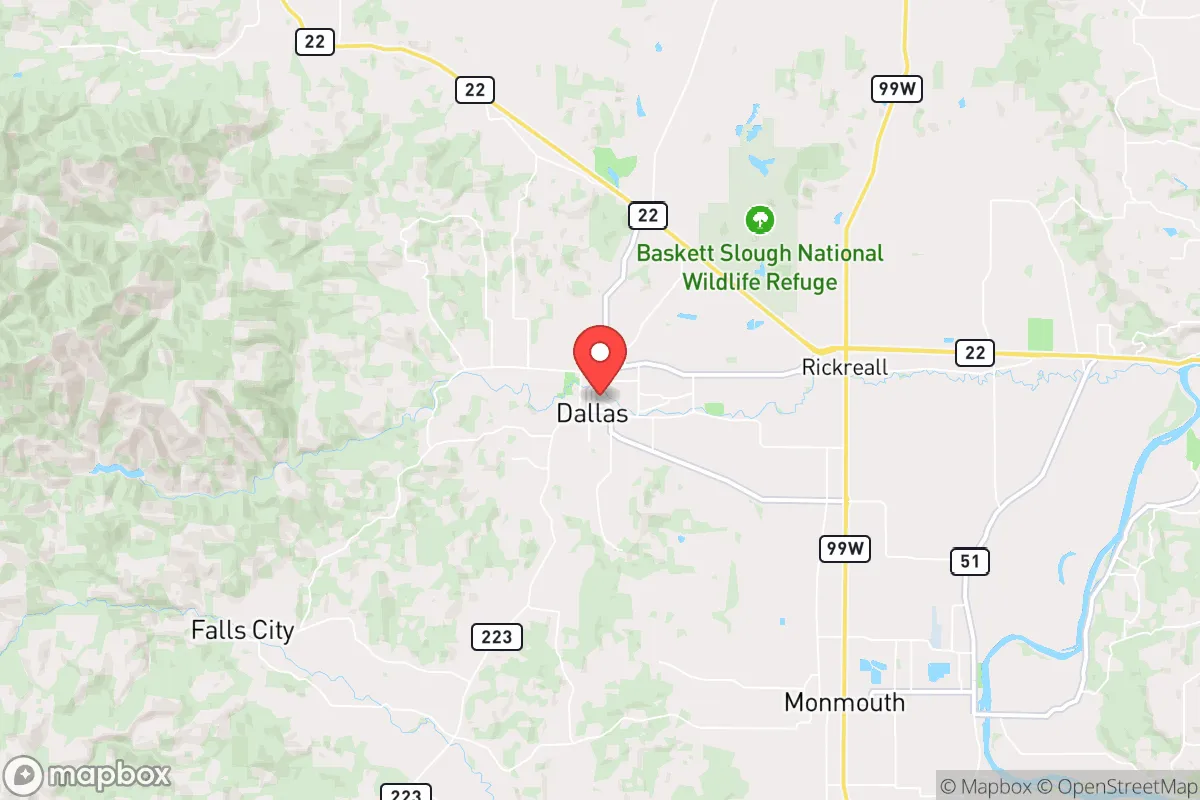
Dallas, Oregon, offers a compelling strategic position for those prioritizing resilience and self-sufficiency, but it is not without significant trade-offs. Located in the Willamette Valley roughly 15 miles west of Salem and 60 miles southwest of Portland, the town sits at a critical juncture between fertile agricultural land and the forested foothills of the Coast Range. For a conservative-leaning relocator concerned with civic unrest, supply chain disruptions, or mass casualty events, Dallas provides a buffer from the most volatile urban centers while still maintaining access to essential infrastructure. However, its proximity to major population corridors and key infrastructure targets means that any strategic assessment must weigh the area’s natural advantages against its exposure to cascading risks from regional instability.
Geographic position and natural advantages for long-term security
Dallas benefits from a location that balances isolation with accessibility. The town sits at the edge of the Willamette Valley’s richest agricultural zone, with the Coast Range to the west offering a natural barrier against coastal threats—whether tsunami, sea-level rise, or naval conflict. The surrounding Polk County is dominated by farmland, timber, and small communities, which reduces the density of potential targets compared to the I-5 corridor. The area’s temperate climate, with roughly 40 inches of annual rainfall, supports reliable water availability and year-round growing seasons, a critical advantage for food security. The nearby Luckiamute River and numerous creeks provide surface water sources, while the Oregon Coast Range’s aquifers offer groundwater potential. For a prepper, this means the land can sustain small-scale agriculture, livestock, and timber harvesting without reliance on distant supply chains. The town’s elevation—around 300 feet—keeps it above most floodplains, and the surrounding hills provide natural observation points and defensible terrain. Dallas is also within a reasonable drive of the Oregon Coast (about 50 miles to Lincoln City), offering an alternative escape route or resource access point, though coastal areas themselves carry their own risks.
Risks, exposures, and proximity to fallout-relevant landmarks
The most significant strategic liability for Dallas is its proximity to Salem, the state capital, and Portland, the region’s economic and population hub. Salem lies just 15 miles east, and Portland is roughly an hour’s drive. In the event of civil unrest, mass casualty events, or a major disaster, these cities would likely become epicenters of chaos, with displaced populations, resource shortages, and potential violence spilling outward. Dallas sits directly along Highway 99W, a primary evacuation route from the Willamette Valley, which could become a chokepoint or a vector for fleeing crowds. Additionally, the town is within 30 miles of the I-5 corridor, a critical transportation artery that would be a target for disruption—whether from sabotage, earthquake damage, or civil conflict. The Cascadia Subduction Zone earthquake, a known risk for the Pacific Northwest, would devastate the I-5 corridor and coastal areas, but Dallas’s inland position offers some protection from the worst shaking and tsunami inundation. However, the town is still within the zone of moderate to strong shaking, and older infrastructure—particularly bridges and water systems—could fail. More concerning for a prepper is the proximity to potential fallout targets: the Portland metropolitan area contains industrial facilities, fuel depots, and a major port that could be targeted in a conflict. The nearby McNary Dam on the Columbia River (about 40 miles northeast) and the Bonneville Dam (60 miles east) are critical infrastructure that could be attacked or fail, causing cascading power and water disruptions. Dallas itself has no major military or industrial targets, but its location within the Willamette Valley’s population corridor means it would not be a safe haven in a widespread event.
Practical resilience for a relocator: food, water, energy, and defensibility
For a relocator focused on practical self-sufficiency, Dallas offers a mixed picture. The surrounding farmland is among the most productive in Oregon, with local farms producing berries, hazelnuts, grains, and livestock. The Polk County Farmers Market and nearby agricultural co-ops provide direct access to local food, and the climate supports home gardening for much of the year. Water is generally abundant, with municipal supply from the Willamette River and local wells. However, reliance on municipal water is a vulnerability—the system could be compromised by earthquake damage or contamination. A private well with a hand pump or solar-powered backup is a wise investment. Energy infrastructure is dominated by the regional grid, which is vulnerable to earthquake, wildfire, and cyberattack. Solar potential is moderate—the Willamette Valley has significant winter cloud cover—but with battery storage and a backup generator, a household can achieve reasonable energy independence. Wood heating is practical, given the surrounding timber resources, and the Coast Range provides ample firewood. Defensibility is moderate: Dallas is a small town (population roughly 17,000) with a low crime rate, but it is not remote. The town has a police force and a county sheriff’s office, but in a prolonged crisis, law enforcement resources would be stretched thin. The surrounding rural areas offer better defensibility—properties with acreage in the hills west of town provide natural barriers, limited road access, and visibility. The local community is predominantly conservative and rural-minded, which can be an asset for mutual aid and neighborhood watch networks. However, the town’s proximity to Salem means that in a crisis, it could see an influx of refugees from the city, straining resources and security. A relocator should prioritize a property with good water, defensible terrain, and a buffer from main roads.
The overall strategic picture for Dallas, Oregon, is one of cautious viability for a conservative prepper. It offers genuine advantages: fertile land, reliable water, a moderate climate, and a community that values self-reliance and local governance. The town’s position between the Coast Range and the Willamette Valley provides a balance of resources and isolation that is rare in the Pacific Northwest. However, the risks are real and cannot be ignored. The proximity to Salem and Portland means that Dallas would be on the front lines of any regional crisis, whether from civil unrest, earthquake, or supply chain collapse. The I-5 corridor and critical dams are within a short distance, making the area a secondary target zone. For a relocator willing to invest in off-grid infrastructure, build strong local ties, and maintain a low profile, Dallas can work as a base for long-term resilience. But it is not a remote bunker—it is a community that will face the same pressures as the rest of the Willamette Valley in a crisis. The smart move is to treat Dallas as a strategic outpost, not a final redoubt, and to have a secondary plan for deeper retreat into the Coast Range or eastern Oregon if conditions deteriorate. For those who understand that preparedness is about layers, not absolutes, Dallas offers a solid middle layer—but only if you go in with eyes wide open.

* Values derived from national, state, county, city and local statistics and may differ in a specific area. Last updated: 2026-05-01T04:41:56.000Z
Narrative content on this page is AI-generated and may contain mistakes. Verify any details that matter before acting on them.
ReloMaps may earn a commission from affiliate links at no extra cost to you.

