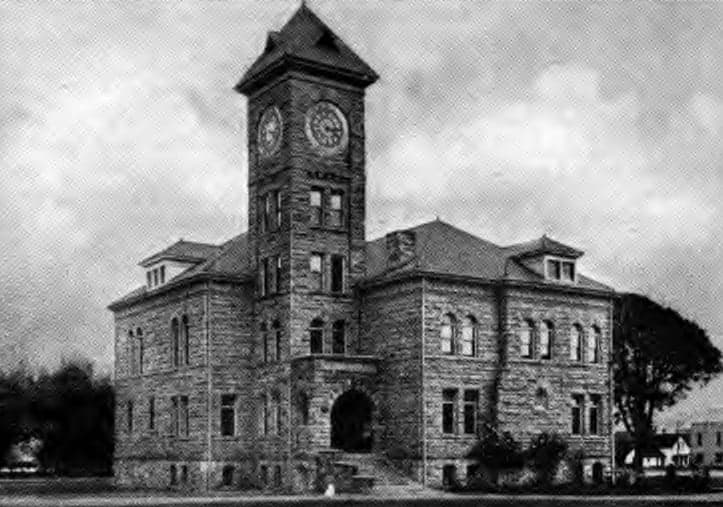
Photo: Wikipedia
Political ClimatePolitical Climate in Dallas, OR
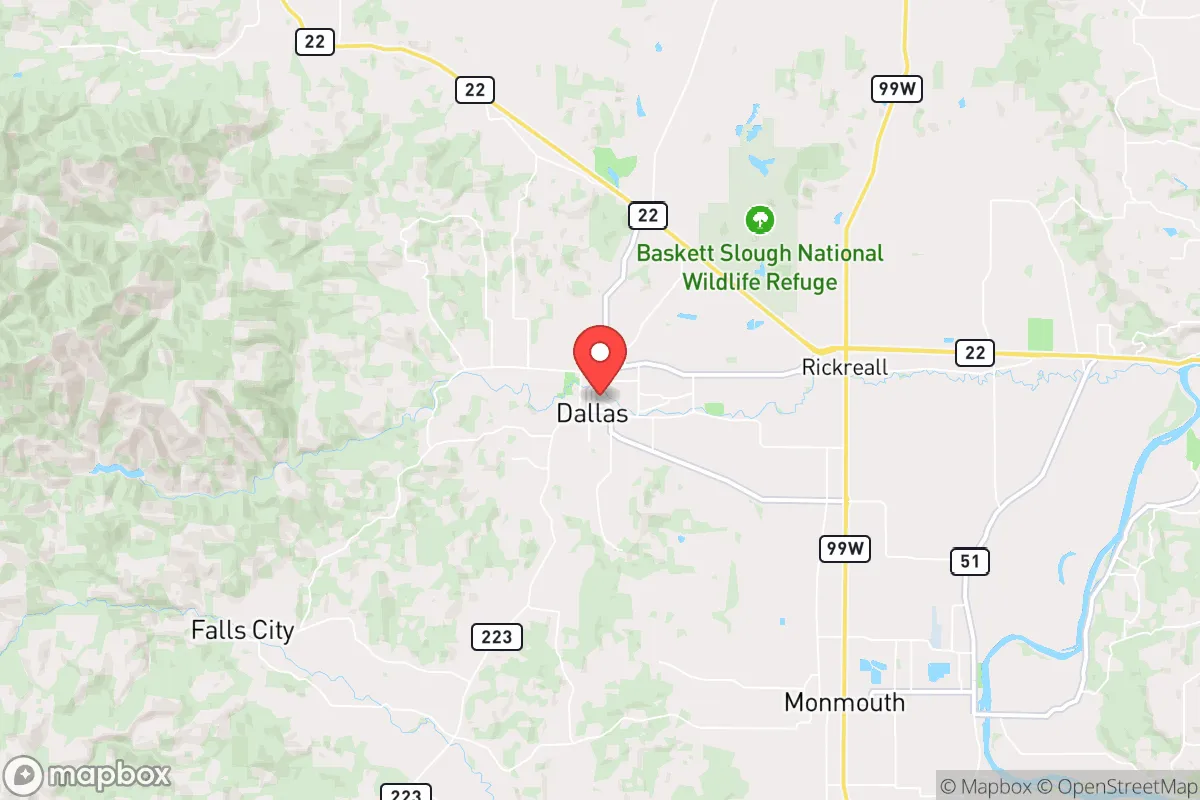
District shown is the primary district for this city’s centroid. Cities may span multiple districts.
Local Political AnalysisPolitical Analysis of Dallas, OR
Dallas, Oregon, has historically been a quiet, conservative-leaning community where folks valued their privacy and personal freedoms above all else. But if you look at the numbers, the political winds have shifted noticeably. The area now carries a Cook PVI of D+6, meaning it leans six points more Democratic than the national average—a stark change from the independent, live-and-let-live vibe that defined this town for decades. You can feel it in local elections and even in casual conversations at the hardware store; the old guard of limited government and personal responsibility is increasingly being challenged by a more progressive, activist-minded crowd.
How it compares
To understand Dallas’s shift, you have to look at the surrounding towns. Just a few miles north, Monmouth is home to Western Oregon University and has long been a blue dot in a red region, with a younger, more transient population pushing progressive policies. Head east toward Salem, and you’re in the state capital—a reliably Democratic stronghold where government expansion is seen as a virtue. In contrast, towns like Falls City to the west or Sheridan to the south still hold onto that old-school Oregon independence, voting more conservatively and resisting the kind of top-down mandates that are becoming common in Dallas. The difference is night and day: where those smaller towns still trust local control, Dallas is increasingly mirroring the urban priorities of Salem and Portland, which is a real concern for anyone who values keeping government out of their personal affairs.
What this means for residents
For the average family in Dallas, this political shift translates directly into daily life. You’re seeing more local ordinances that regulate property use, stricter land-use rules that make it harder to build a workshop or park an RV on your own land, and a growing push for higher taxes to fund programs that many residents never asked for. The school board and city council races have become battlegrounds, with candidates who champion parental rights and fiscal restraint often losing ground to those who favor centralized planning and progressive social policies. If you value the freedom to raise your kids without government interference or to run a small business without a mountain of red tape, these trends are worth watching closely. The long-term trajectory, if unchecked, points toward more regulation, higher costs, and a loss of the personal autonomy that drew many families here in the first place.
Cultural and policy distinctions
One of the biggest cultural shifts you’ll notice is in how the community talks about rights. The old Dallas was a place where the Second Amendment was a given, and no one thought twice about a neighbor keeping a firearm for protection or hunting. Now, you hear more voices calling for restrictions, and local law enforcement sometimes faces pressure to enforce state-level gun laws that many residents see as an overreach. Similarly, the push for diversity, equity, and inclusion initiatives in local schools has raised eyebrows among parents who feel their kids are being taught ideology instead of academics. The bottom line is that Dallas is at a crossroads: it can either hold onto its heritage of personal liberty and local control, or it can continue down the path of becoming a smaller version of Salem. For those of us who remember when this town was a refuge from that kind of thinking, the choice is clear—but it’s going to take active, engaged residents to keep the pendulum from swinging too far.

State Political ClimatePolitical Climate in Oregon
State Political AnalysisPolitical Environment in the State
Oregon has shifted from a purple swing state to a solidly blue stronghold over the past two decades, with Democrats controlling every lever of state government since 2018. The state’s partisan lean is driven overwhelmingly by the Portland metro area, which casts roughly 40% of the vote and delivers margins of +30 to +40 points for Democrats. While the 2024 presidential race saw Oregon go +14 for the Democratic candidate, down-ballot races in rural counties tell a different story—places like Lakeview and Burns are voting +50 to +60 Republican, but their populations are too small to offset the urban machine. The 10-20 year trajectory is unmistakable: Oregon is becoming more progressive, more centralized, and less tolerant of conservative voices, with ballot measures and legislative supermajorities steadily eroding local control.
Urban vs. rural divide
The political map of Oregon is a tale of two states. The Willamette Valley corridor—Portland, Salem, Eugene, and Corvallis—is a deep blue archipelago where progressive activism defines daily life. Portland alone accounts for nearly a quarter of the state’s population and votes like a college town on steroids, with city council races often decided by who is furthest left on housing and policing. Meanwhile, eastern Oregon—places like Pendleton, Baker City, and Ontario—votes overwhelmingly Republican, with some counties giving Trump 70-75% of the vote in 2024. The divide is starkest in the suburbs: Washington County, home to Hillsboro and Beaverton, flipped from purple to solid blue after 2016, while Clackamas County, once a swing area, now leans Democratic by 8-10 points. The rural-urban split isn’t just political—it’s cultural, with Portland’s density and transit-oriented planning clashing directly with the ranching and timber economies east of the Cascades.
Policy environment
Oregon’s policy environment is a cautionary tale for anyone valuing personal freedom. The state has no sales tax, which sounds great, but it’s replaced by some of the highest income and property taxes in the nation—the top marginal income tax rate hits 9.9%, and property taxes are capped but still climb with assessed values. The regulatory posture is aggressively green: the 2021 Clean Energy Act mandates 100% renewable electricity by 2040, which has driven up utility costs and made new housing development a bureaucratic nightmare. Education policy is dominated by teachers’ unions, with Portland Public Schools spending over $20,000 per student yet posting mediocre outcomes—only 40% of students meet state reading standards. Healthcare is heavily regulated, with a state-run insurance exchange and Medicaid expansion covering nearly 30% of residents. Election laws are among the most liberal in the country: universal mail-in voting, same-day registration, and no voter ID requirement. For a conservative, the message is clear: the state government trusts itself more than it trusts you.
Trajectory & freedom
Oregon is becoming less free by nearly any measure. The 2023 legislative session saw a flurry of bills that expanded government control: HB 2002 codified abortion access and gender-affirming care as a “fundamental right,” overriding parental notification requirements for minors. On gun rights, Measure 114—passed in 2022 but tied up in court—would require a permit to purchase any firearm, a mandatory waiting period, and a ban on magazines over 10 rounds. The state also passed a strict rent control law in 2019, capping annual increases at 7% plus inflation, which has discouraged new construction and driven up prices for everyone. Property rights took a hit with the 2023 “middle housing” law, which preempts local zoning to force duplexes and triplexes in single-family neighborhoods statewide. Medical autonomy is under siege: Oregon’s assisted suicide law remains on the books, but COVID-era mandates showed the state is willing to revoke licenses for noncompliance. The trajectory is toward more regulation, less local control, and a government that sees personal choice as a problem to be managed.
Civil unrest & political movements
Oregon has been a flashpoint for civil unrest since the 2020 protests, when Portland became the national symbol of left-wing activism. The city saw over 100 consecutive nights of demonstrations, with the federal government deploying DHS agents to protect the courthouse. The “Wall of Moms” and “Antifa” became household names, and the city’s response—or lack thereof—led to a 2021 ballot measure that defunded the police by $15 million, though it was partially restored later. On the right, the “Oregon Standoff” at the Malheur National Wildlife Refuge in 2016 remains a touchstone, and rural counties have repeatedly floated secession proposals—the “Greater Idaho” movement, which would move 13 eastern Oregon counties into Idaho, has gained traction, with 8 counties voting in favor since 2020. Immigration politics are tense: Portland is a sanctuary city, and the state’s 1987 sanctuary law prohibits local law enforcement from cooperating with ICE. Election integrity is a live issue—Oregon’s mail-in system has been challenged by conservatives, though no widespread fraud has been proven. A new resident would notice the political graffiti, the constant protests in downtown Portland, and the palpable tension between the urban core and the rural hinterlands.
Projection
Over the next 5-10 years, Oregon will likely become even more progressive, driven by in-migration from California and other blue states. The 2020 census showed Oregon growing by 10%, with most new residents settling in the Portland metro and Bend. This demographic shift will reinforce Democratic supermajorities in the legislature, making it harder for rural conservatives to block new taxes or regulations. The “Greater Idaho” movement may gain symbolic victories but faces a constitutional hurdle—it would require approval from both Oregon and Idaho legislatures, which is unlikely. Expect more preemption of local control, tighter gun laws, and continued expansion of government healthcare. The housing crisis will worsen as rent control and zoning mandates discourage building, pushing prices higher and driving out middle-class families. For a conservative moving in now, the next decade will feel like a slow-motion squeeze: more taxes, less freedom, and a political culture that views traditional values as a threat.
The bottom line for a new resident: Oregon offers stunning natural beauty and a laid-back lifestyle, but the political climate is hostile to conservative values. If you’re a single professional or a parent, you’ll face high taxes, restrictive gun laws, and a school system that prioritizes ideology over academics. The urban-rural divide means you can find like-minded communities in places like Redmond or Grants Pass, but you’ll still be subject to state-level policies that feel like they’re designed in Portland. Come for the mountains and coast, but be ready to fight for your freedoms—or consider whether the trade-offs are worth it.
* Values derived from national, state, county, city and local statistics and may differ in a specific area. Last updated: 2026-05-01T04:41:56.000Z
Narrative content on this page is AI-generated and may contain mistakes. Verify any details that matter before acting on them.
ReloMaps may earn a commission from affiliate links at no extra cost to you.

