 Popular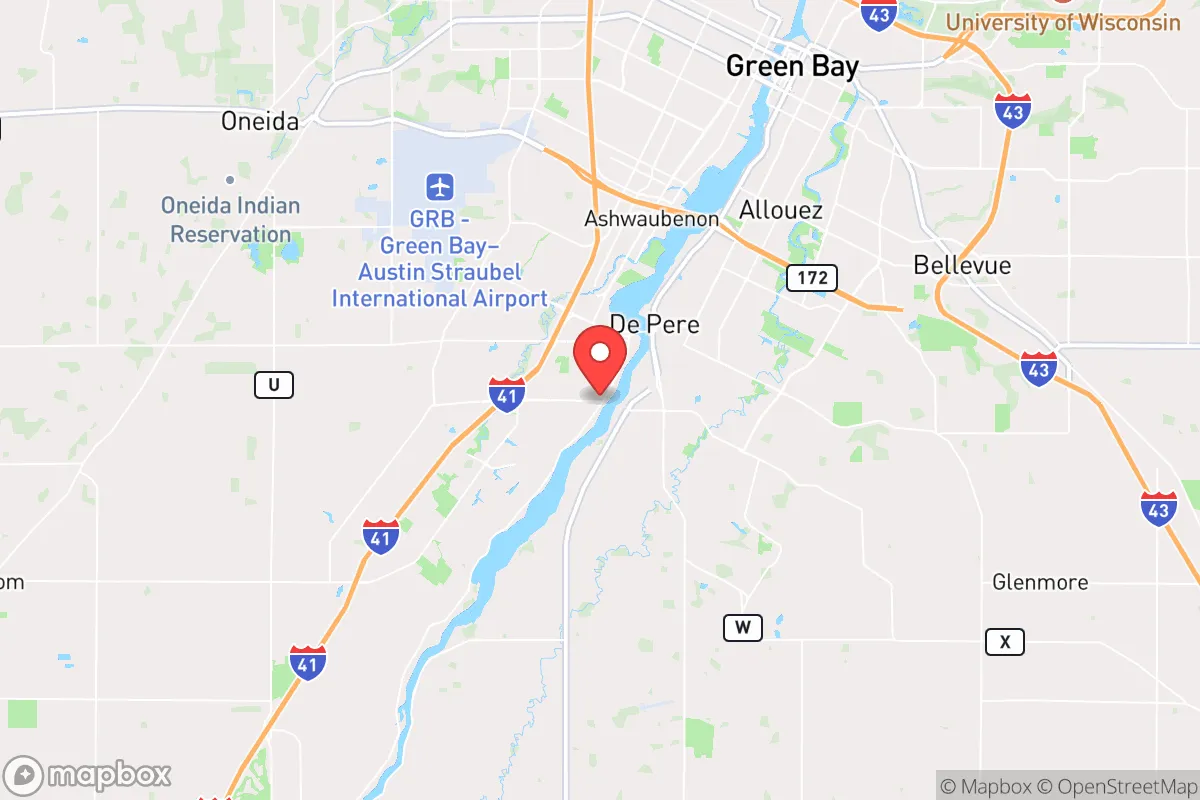
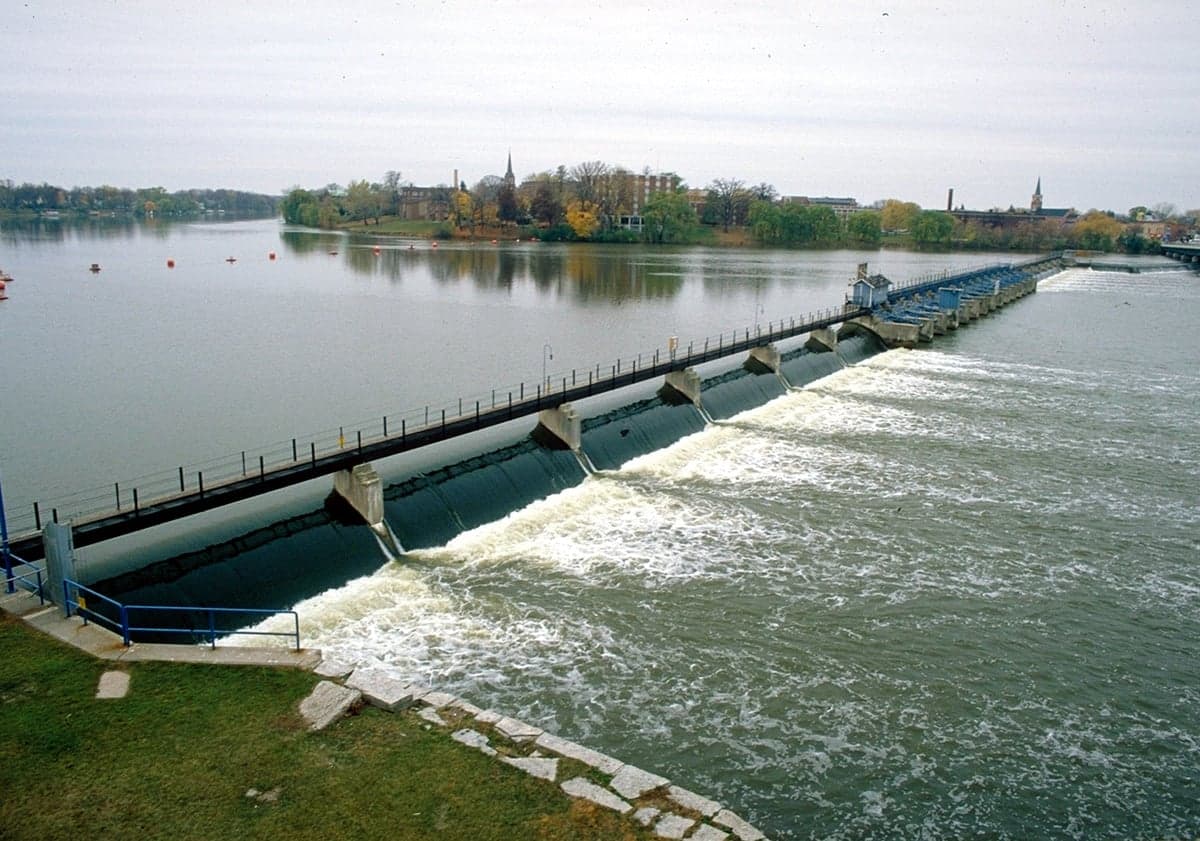
Photo: Wikipedia
Political ClimatePolitical Climate in De Pere, WI
District shown is the primary district for this city’s centroid. Cities may span multiple districts.
Local Political AnalysisPolitical Analysis of De Pere, WI
De Pere has long been a reliably conservative community, and the numbers back that up with a Cook PVI of R+8, meaning the area votes about eight points more Republican than the national average. That’s not just a statistic—it reflects a deep-rooted preference for limited government, personal responsibility, and local control. But if you’ve lived here as long as I have, you’ve noticed the political winds shifting, especially in the last decade. The city itself is still solidly red, but the surrounding Brown County has been trending purple, and you can feel the tension between the old-school values and the newer, more progressive influences creeping in from Green Bay just across the river.
How it compares
To really understand De Pere’s political climate, you have to look at its neighbors. Across the Fox River, Green Bay leans more moderate-to-liberal, especially in its core neighborhoods, and that influence spills over into De Pere’s younger demographics. Meanwhile, head south to towns like Wrightstown or Denmark, and you’ll find even deeper red—places where the R+8 feels almost moderate by comparison. The contrast is stark: De Pere is the buffer zone. It’s conservative enough to feel safe and familiar, but progressive enough that you’ll see yard signs for both parties during election season. That wasn’t the case twenty years ago, when it was almost entirely Republican. The shift is subtle but real, and it’s driven largely by new residents moving in from more liberal areas and younger families who don’t remember the old De Pere.
What this means for residents
For those of us who value personal freedoms and want government to stay out of our lives, the trend is concerning. The city council has seen more debates over zoning, mask mandates, and even diversity initiatives that feel like they’re imported from bigger cities. Property taxes have crept up, and there’s a growing push for “sustainability” programs that sound good on paper but often mean more regulations on small businesses and homeowners. If you’re the type who wants to run a home-based business, keep a few chickens in your backyard, or just be left alone to live your life, you’ll still find De Pere more accommodating than Green Bay or Appleton. But the days of total hands-off governance are fading. The local school board has also become a battleground, with debates over curriculum transparency and parental rights heating up—something that would have been unthinkable a generation ago.
One cultural distinction that still holds strong is De Pere’s sense of community identity. The city has a proud history tied to St. Norbert College and the Norbertine order, which gives it a unique blend of Catholic tradition and Midwestern pragmatism. That foundation has kept things grounded, even as outside pressures mount. You won’t see the same level of activism or protest culture here that you do in Madison or Milwaukee. But if the current trajectory continues—more state-level mandates, more federal overreach, and a steady influx of people who don’t share the local values—I worry that De Pere’s conservative character will become more of a memory than a reality. For now, it’s still a good place to raise a family if you want to keep government at arm’s length, but keep an eye on those city council meetings. The fight for local control is real, and it’s not over yet.

State Political ClimatePolitical Climate in Wisconsin
State Political AnalysisPolitical Environment in the State
Wisconsin has long been a classic swing state, but over the past decade it has hardened into a deeply polarized battleground where the rural-urban divide defines everything. The state’s overall partisan lean is essentially a 50-50 coin flip in statewide elections, but the trajectory since 2010 has been a slow, grinding shift leftward in the Madison-Milwaukee corridor, while the rest of the state has dug in hard on conservative values. For a conservative considering relocation, the key takeaway is that Wisconsin offers a mixed bag: strong pockets of freedom in the countryside and suburbs, but a growing progressive stronghold in the capital and the state’s largest city that increasingly drives policy from the top down.
Urban vs. rural divide
The political map of Wisconsin is a tale of two worlds. Milwaukee County and Dane County (home to Madison) together cast about a third of the state’s votes and lean heavily Democratic — Milwaukee County went +40 for Biden in 2020, while Dane County was +75. These two metros are the engine of the state’s blue vote, powered by union strongholds, university faculty, and a growing population of out-of-state transplants drawn to Madison’s tech and biotech sectors. Meanwhile, the rest of the state — from the Northwoods counties like Vilas and Oneida to the Driftless Region around La Crosse and Eau Claire, and the conservative WOW counties (Waukesha, Ozaukee, Washington) surrounding Milwaukee — votes reliably red. Waukesha County alone gave Trump a +30 margin in 2024, and it’s the fastest-growing part of the Milwaukee metro for families fleeing the city’s crime and taxes. The rural-urban split is so stark that a 2022 redistricting fight ended up in the state Supreme Court, with the current maps (drawn by the conservative-leaning court in 2024) still favoring Republicans in the legislature, though Democrats have chipped away at that advantage.
Policy environment
Wisconsin’s policy environment is a study in contrasts. On taxes, the state is relatively friendly: the flat income tax rate was cut to 4.4% in 2023, and property taxes are moderate compared to Illinois or Minnesota. But the regulatory posture is mixed — the state has right-to-work laws (passed in 2015) and is a “shall issue” state for concealed carry, but local governments in Madison and Milwaukee have imposed their own gun ordinances that create a patchwork. Education policy is a flashpoint: the state has a robust school choice program (the Milwaukee Parental Choice Program, started in 1990, is the oldest in the nation), but Madison and Milwaukee public schools are among the lowest-performing in the country, with chronic absenteeism rates above 30%. Healthcare is dominated by two large systems (UW Health and Advocate Aurora), and the state expanded Medicaid under Obamacare in 2014, which conservatives view as a permanent entitlement. Election laws are a bright spot: Wisconsin requires voter ID, has no same-day registration (though it does have early voting), and the 2020 election integrity controversies led to a 2023 law that tightened absentee ballot drop box rules. Still, the state’s election administration is decentralized, with 1,800+ local clerks, which creates inconsistency.
Trajectory & freedom
On the freedom front, Wisconsin is a state that has moved in both directions recently, but the net trend is concerning for conservatives. The 2023 law tightening absentee ballot rules was a win for election integrity, but the state Supreme Court flipped to a 4-3 liberal majority in 2023 after a heavily funded race, and that court has already struck down the state’s 1849 abortion ban (effectively legalizing abortion up to 20 weeks) and is considering challenges to the 2024 legislative maps. On gun rights, the state remains a “shall issue” carry state, but Madison and Milwaukee have passed local ordinances banning firearms in city parks and government buildings — a clear infringement on the Second Amendment that the state legislature has so far failed to preempt. Parental rights took a hit in 2024 when the state Department of Public Instruction issued guidance allowing schools to withhold a child’s gender identity from parents without consent, a policy that has sparked outrage in conservative suburbs like Waukesha and Brookfield. Medical freedom is a mixed bag: the state had no COVID-19 vaccine mandate for state employees, but Madison and Milwaukee imposed their own mandates. Property rights are generally strong outside of the cities, but the state’s Department of Natural Resources has broad authority over land use, particularly in the Northwoods, which frustrates rural landowners.
Civil unrest & political movements
Wisconsin has a history of political flashpoints that a new resident would notice. The 2011 Act 10 protests in Madison, which drew 100,000 people to the Capitol to oppose collective bargaining reforms, set the tone for a decade of labor activism. More recently, the 2020 Kenosha unrest — where Jacob Blake’s shooting sparked riots and the Kyle Rittenhouse trial — remains a raw nerve. The state has a visible “People’s Flag” movement (a left-wing alternative to the state flag) and active Antifa-aligned groups in Madison, while conservative grassroots are organized around the Wisconsin Family Action and the Wisconsin Gun Owners lobby. Immigration politics are less heated than in border states, but the state’s small but growing Hispanic population (now 7% of the state) has led to sanctuary city debates in Madison and Milwaukee, which have declared themselves “welcoming cities” and limit cooperation with ICE. Election integrity remains a live issue: the 2020 election saw Milwaukee’s “Democracy in the Park” events (where absentee ballots were collected in city parks) and a controversial $8.9 million grant from the Center for Tech and Civic Life that was used to boost turnout in Democratic-leaning areas. The 2024 election saw record turnout and no major fraud allegations, but the distrust lingers.
Projection
Over the next 5-10 years, Wisconsin is likely to become more purple, but with a leftward tilt driven by demographic shifts. The Madison metro is growing fast — Dane County added 40,000 people between 2020 and 2025 — and those newcomers are overwhelmingly young, college-educated, and progressive. Meanwhile, rural counties are losing population, with the Northwoods seeing a net outflow of working-age families. The WOW counties are growing, but not fast enough to offset the blue wave in the cities. The state Supreme Court will remain a battleground, with the next election in 2025 likely determining whether the court stays liberal or flips back. On policy, expect continued fights over school choice (which is popular with suburban conservatives but under attack from teachers unions), abortion (the 1849 ban is dead, but a 20-week limit could be reinstated if the legislature gets a veto-proof majority), and election laws (the liberal court may strike down the voter ID law). For a conservative moving in now, the realistic expectation is that the state will remain competitive but that the cultural and policy center of gravity will continue to shift left, especially if the legislature fails to preempt local progressive ordinances.
Bottom line: Wisconsin is a state where you can find a good life if you pick your location carefully. The rural and suburban areas — places like Waukesha, Appleton, Green Bay, and the Fox Cities — offer strong schools, low crime, and a community that values freedom. But you’ll be fighting a constant rear-guard action against the Madison-Milwaukee axis that controls the governor’s mansion and the state Supreme Court. If you’re willing to engage in local politics and vote in every election, you can make a difference. If you’re looking for a state where conservative values are baked into the culture and policy, you’d be better off in Tennessee or Florida. But if you want a place where your vote actually matters and you can be part of a real political fight, Wisconsin delivers that in spades. Just know what you’re signing up for.
* Values derived from national, state, county, city and local statistics and may differ in a specific area. Last updated: 2026-04-21T10:18:26.000Z
Narrative content on this page is AI-generated and may contain mistakes. Verify any details that matter before acting on them.
ReloMaps may earn a commission from affiliate links at no extra cost to you.

