Demographics of DeBordieu Colony, SC
Historical data isn't available for DeBordieu Colony, SC. Trends shown are for Georgetown County, SC.
Affluence Level in DeBordieu Colony, SC
A wealthy area with high-earning, well-educated households. Incomes, home values, and educational attainment meaningfully outpace national averages.
People of DeBordieu Colony, SC
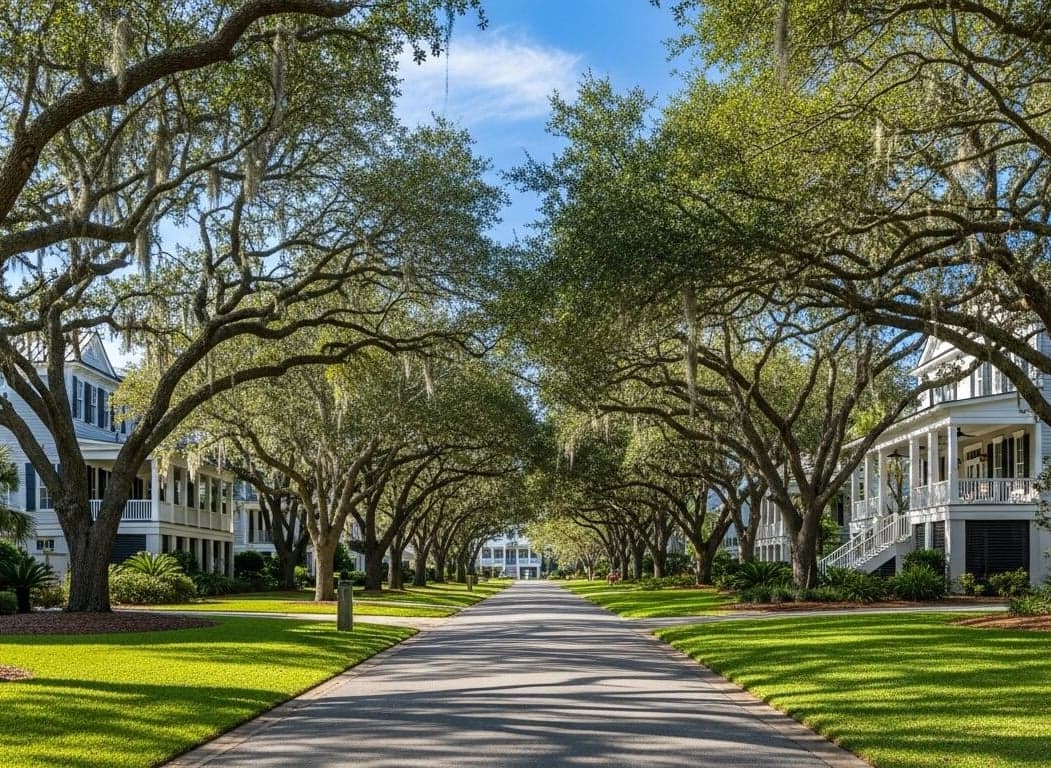
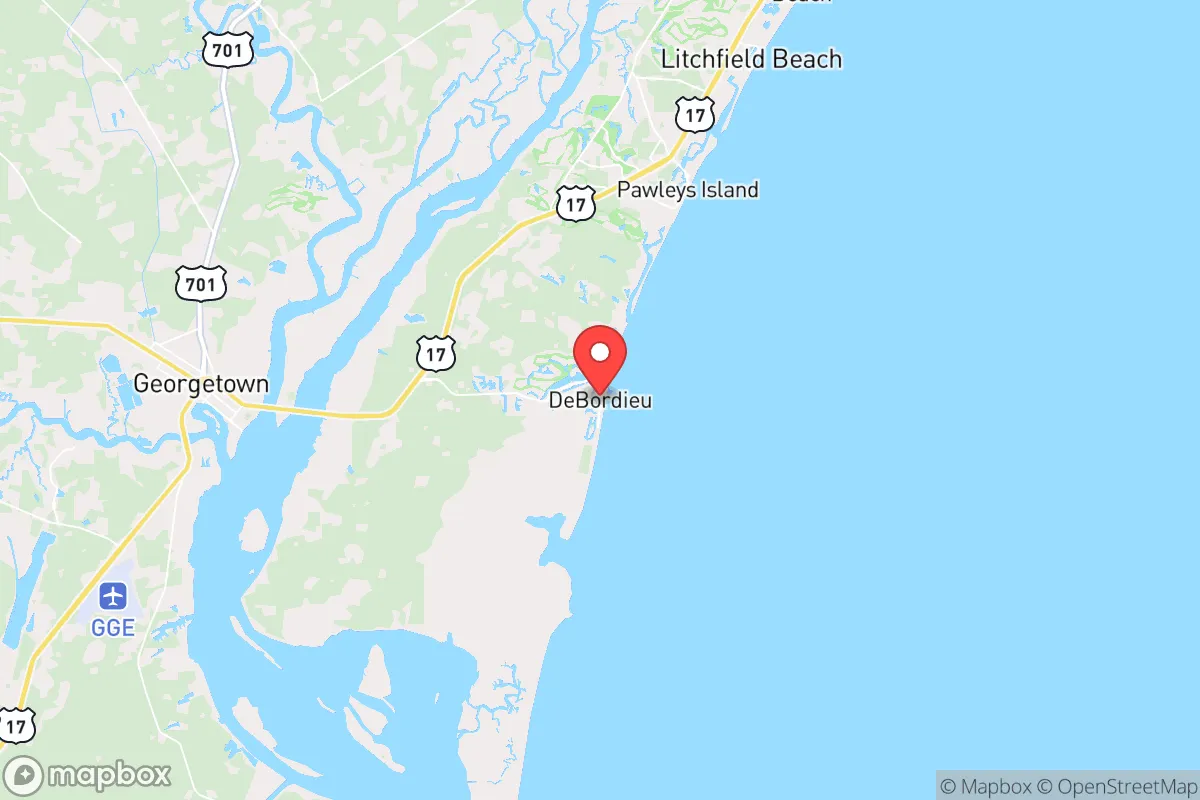
DeBordieu Colony is a private, gated coastal community in Georgetown County, South Carolina, with a population of 748 residents as of the most recent estimates. The population is entirely White (100.0%), with zero foreign-born residents, and an exceptionally high college education rate of 80.9%. This is a community defined by its exclusivity, high property values, and seasonal turnover, functioning more as a second-home and retirement enclave than a traditional year-round town.
How the city was settled and grew
DeBordieu Colony is not a historic settlement but a planned, private residential community developed from the late 20th century onward. The land itself, a barrier island and marshfront tract between Pawleys Island and Georgetown, was historically part of the larger plantation economy of Georgetown County, which grew rice and indigo using enslaved labor through the 18th and 19th centuries. No permanent town existed on the site before the 1970s. The modern community was conceived in the early 1970s by a group of investors who envisioned an exclusive, low-density residential retreat for affluent families. The first homes were built in the mid-1970s, with the DeBordieu Colony Club—the community's private golf and beach club—opening in 1978. The original wave of buyers were primarily upper-income professionals from the Mid-Atlantic and Northeast, particularly from New York, New Jersey, and Washington, D.C., seeking a private coastal escape. The earliest homes clustered along the oceanfront and the marsh-facing lots in what is now known as the Oceanfront District and the Marshview District, where large custom houses sit on deep lots with direct water access.
Modern era (post-1965)
DeBordieu Colony's growth accelerated in the 1990s and 2000s as the broader Grand Strand region boomed. The community expanded inland from the ocean, adding neighborhoods such as Wachesaw Plantation (a separate but adjacent gated community) and the DeBordieu North section, which features homes along the tidal creeks and the Waccamaw River. The post-1965 era saw no significant shift in the racial or ethnic composition of the population. The community remained overwhelmingly White and affluent, with no measurable foreign-born population. The 2000s brought a second wave of buyers from the Southeast, particularly from Charlotte, Atlanta, and Charleston, as well as retirees from the Midwest. The River District, with its deep-water docks and larger lots, became a preferred area for families seeking boating access. The Club District, surrounding the golf course and clubhouse, attracted those prioritizing golf and social amenities. By 2010, DeBordieu Colony had essentially reached build-out, with most lots developed and resales dominating the market. The community's demographic profile has remained static: entirely White, entirely native-born, and highly educated, with a median household income well above the national average.
The future
DeBordieu Colony's population is likely to remain stable or decline slightly in the coming decade, as the community is built out and resales become the primary housing source. There is no mechanism for significant demographic change: the community's high price point (median home values exceed $1 million), private governance, and lack of rental housing effectively filter for affluent, primarily White buyers. The foreign-born population will likely remain near zero, as the community does not attract immigrant populations. The age profile is skewing older, with a growing share of retirees and seasonal residents. The Oceanfront District and Marshview District continue to see turnover as original owners age out, but new buyers are demographically similar—wealthy, White, and from the Eastern Seaboard. The community is not tribalizing into distinct enclaves; rather, it is homogenizing into a single, high-end retirement and second-home market. The next 10-20 years will likely see a gradual increase in full-time residents as more retirees choose to stay year-round, but the overall character—private, exclusive, and demographically uniform—will persist.
For someone moving in now, DeBordieu Colony offers a stable, predictable, and insular environment. It is a place where demographic change is minimal, property values are high, and the community is defined by shared affluence and a private coastal lifestyle rather than ethnic or cultural diversity. New residents should expect a quiet, low-density setting with strong homeowners' association governance and limited interaction with the broader Georgetown County population.

* Values derived from national, state, county, city and local statistics and may differ in a specific area. Last updated: 2026-04-23T03:06:30.000Z
Narrative content on this page is AI-generated and may contain mistakes. Verify any details that matter before acting on them.
ReloMaps may earn a commission from affiliate links at no extra cost to you.

