
Political ClimatePolitical Climate in DeBordieu Colony, SC
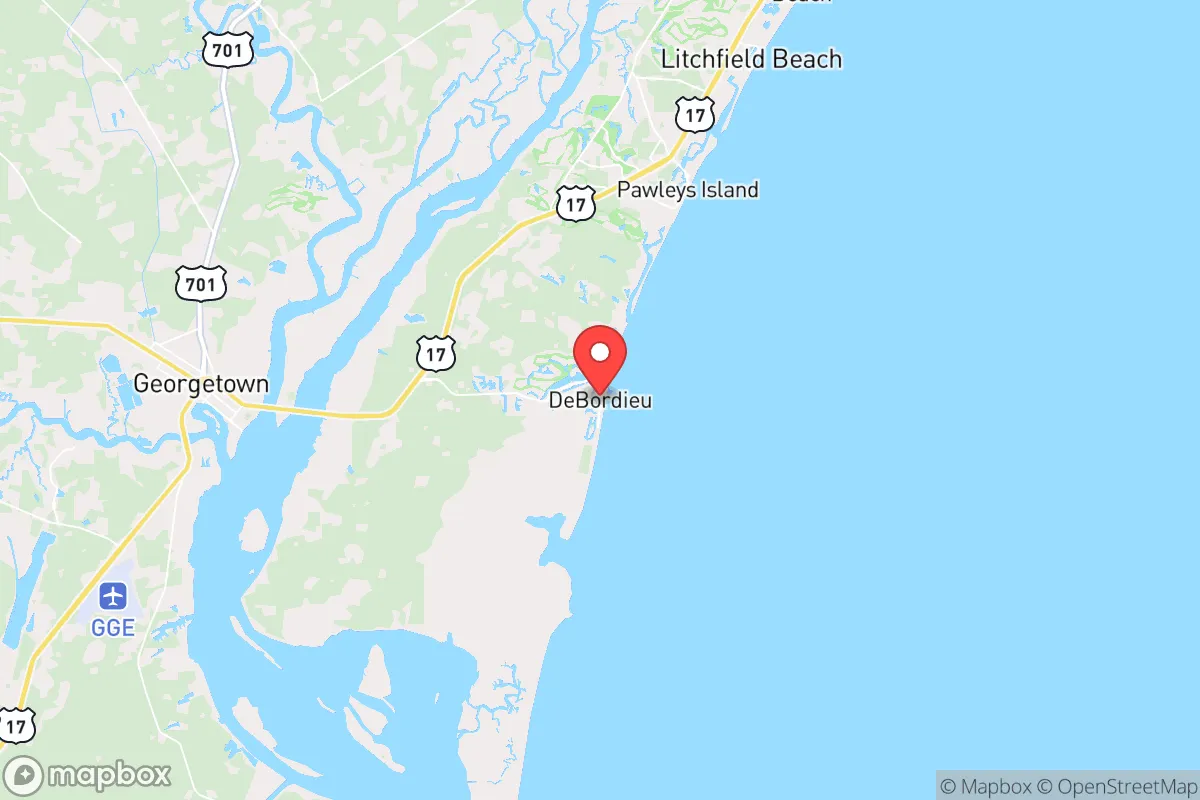
District shown is the primary district for this city’s centroid. Cities may span multiple districts.
Local Political AnalysisPolitical Analysis of DeBordieu Colony, SC
DeBordieu Colony is about as solidly conservative as it gets in South Carolina, and that’s not changing anytime soon. The area sits in Georgetown County, which has a Cook PVI of R+12, meaning it votes a full 12 points more Republican than the national average. In practical terms, that translates to a community where folks take personal responsibility seriously and view government as a necessary evil at best. The local vibe is one of quiet, determined independence—people here moved to DeBordieu precisely because they wanted space from the kind of overreach you see in bigger cities or more progressive coastal towns.
How it compares
Drive 20 miles south to Pawleys Island or 30 miles north to Myrtle Beach, and you’ll find a similar conservative bent, though Myrtle Beach has a bit more tourist-driven moderation. The real contrast is with Charleston, about 90 minutes south, which has shifted noticeably left in recent years—especially in its city limits. DeBordieu residents look at Charleston’s rising taxes, zoning fights, and progressive social policies as a cautionary tale. Even within Georgetown County, the unincorporated areas and smaller towns like Andrews lean more conservative than the county seat of Georgetown itself, which has a slightly more mixed political makeup. But DeBordieu Colony is its own world—a gated community where property rights and low taxes are practically sacred.
What this means for residents
For someone living here, the political climate translates into a very hands-off local government. You won’t see the kind of zoning overreach or business regulation that plagues more progressive areas. Property taxes stay reasonable, and there’s little appetite for new ordinances that tell people what they can do on their own land. The downside? If you’re hoping for big public investments in infrastructure or social programs, you’ll be disappointed—the prevailing attitude is that less government is better government. That said, the community is tight-knit and self-reliant; neighbors handle problems themselves rather than calling for a new law or task force. It’s the kind of place where you can still have a bonfire on the beach without worrying about a dozen permits.
There’s been some concern in recent years about coastal management regulations creeping in from the state level—things like stricter building setbacks and environmental restrictions that some see as federal overreach by proxy. So far, local officials have pushed back hard, but it’s worth keeping an eye on. The long-term worry is that as more retirees and remote workers move in from blue states, they might bring their voting habits with them. That hasn’t happened yet in any meaningful way, but it’s a quiet topic of conversation among longtime residents. For now, DeBordieu remains a place where personal freedom and conservative values aren’t just tolerated—they’re expected. If that changes, it’ll be a slow shift, and the community will fight it every step of the way.

State Political ClimatePolitical Climate in South Carolina
State Political AnalysisPolitical Environment in the State
South Carolina has long been a reliably red state, but the flavor of that red has shifted noticeably over the past 15-20 years. The old-school, establishment-friendly Republicanism that dominated Columbia for decades is giving way to a more populist, liberty-minded conservative coalition, driven largely by explosive growth in the coastal Lowcountry and the Upstate. While the state hasn’t flipped blue in a presidential race since 1976, the margins have tightened in places like Charleston and Beaufort, even as rural and suburban areas have hardened their conservative stance. The overall trajectory is still solidly Republican, but the internal battle is now between traditional chamber-of-commerce conservatism and a newer, more assertive strain focused on school choice, gun rights, and pushing back against federal overreach.
Urban vs. rural divide
The political map of South Carolina is a study in contrasts. The state’s two major population centers—Charleston and Greenville—are both growing fast, but they vote very differently. Charleston County has become a purple-to-light-blue battleground, with the city itself trending left as young professionals and remote workers flood in. The surrounding suburbs like Mount Pleasant and Summerville remain reliably red, but the county-level margins have shrunk. Meanwhile, Greenville County is a conservative powerhouse, though the city of Greenville itself has a growing progressive enclave around the downtown core. The real action is in the exurbs and rural areas: Lexington and York counties (outside Columbia and Charlotte) are among the fastest-growing and most reliably Republican in the state. The rural black belt counties in the Lowcountry—like Allendale and Bamberg—vote overwhelmingly Democratic, but their populations are shrinking. The net effect is that the state’s political center of gravity is shifting north and west, toward the Upstate and the I-85 corridor, which is driving the legislature further right.
Policy environment
South Carolina’s policy environment is broadly conservative, with a few notable wrinkles. The state has a flat income tax rate of 6.4%, which is being phased down to 6.0% by 2027 under a 2022 law—a win for taxpayers, though still higher than neighboring Georgia’s 5.49% flat rate. Property taxes are among the lowest in the nation, thanks to a 2006 law that capped assessment increases and exempted owner-occupied homes from school operating taxes. On education, the state passed a universal school choice program in 2023 (the Education Scholarship Trust Fund), allowing any family to use state funds for private school or homeschooling expenses—a major victory for parental rights. Healthcare is a mixed bag: the state did not expand Medicaid under the ACA, and there’s a strong free-market medical culture, but certificate-of-need laws still restrict the opening of new hospitals and clinics, which many conservatives see as government overreach. Election laws are strict: voter ID is required, early voting was expanded to two weeks in 2022, but absentee voting still requires an excuse. The state also passed a 6-week abortion ban in 2023, with no exceptions for rape or incest, which remains a flashpoint.
Trajectory & freedom
On the freedom front, South Carolina has been moving in a decidedly positive direction for conservatives over the past five years. The 2021 Open Carry with Training Act allowed permitless open carry of handguns, and in 2024 the state passed constitutional carry, eliminating the permit requirement entirely for concealed carry—a major win for Second Amendment advocates. The 2023 school choice law was a landmark, and the state has also passed a Parents’ Bill of Rights (2023) that requires schools to notify parents about curriculum changes and medical services. On the other hand, the state’s certificate-of-need laws remain a sore spot for medical freedom advocates, and the state’s strict occupational licensing requirements can make it hard for newcomers to work in trades like barbering or contracting without jumping through hoops. The state also has a broad sodomy law on the books (though unenforceable after Lawrence v. Texas), which some see as a relic of government overreach into private lives. Overall, the trend is toward more personal liberty, but the pace is slower than many would like.
Civil unrest & political movements
South Carolina has seen its share of political flashpoints, but they tend to be more localized than in other states. The Confederate flag removal from the Statehouse grounds in 2015 after the Charleston church shooting was a watershed moment that split the conservative coalition—some saw it as necessary healing, others as a capitulation to mob pressure. More recently, the Moms for Liberty movement has been highly active in school board races in Lexington and Greenville counties, pushing back against critical race theory and LGBTQ curriculum. There have been scattered protests over the abortion ban, but nothing on the scale of what you’d see in Atlanta or Charlotte. Immigration politics are relatively quiet—the state has no sanctuary cities, and a 2011 law (SB 20) requires police to check immigration status during traffic stops, though it’s been partially blocked in court. Election integrity remains a live issue: the 2020 election saw no major scandals, but the state legislature has since passed stricter chain-of-custody rules for absentee ballots. New residents should expect a generally orderly political environment, but with occasional flare-ups around school board meetings and local ordinances.
Projection
Looking ahead 5-10 years, South Carolina is likely to become more conservative, not less, despite the coastal blueing. The in-migration is overwhelmingly from red states like Florida, Texas, and Ohio, and the newcomers are often fleeing high taxes and lockdown policies elsewhere—they’re not coming to change the politics, they’re coming to reinforce them. The growth corridors around Greenville, Spartanburg, and Rock Hill are filling up with families who want school choice, low taxes, and gun rights. The biggest wild card is the Charleston area, where the influx of remote workers from New York and California could eventually flip the county blue, but even there, the surrounding suburbs are growing faster than the city proper. The legislature will likely continue to push for further tax cuts, expanded school choice, and deregulation of healthcare. The main risk for conservatives is that the state’s rapid growth could strain infrastructure and lead to local zoning battles that invite government overreach—something to watch in places like Mount Pleasant and Fort Mill.
For a conservative moving to South Carolina, the bottom line is this: you’re getting a state that respects your gun rights, your parental authority, and your wallet, but you’ll need to stay engaged locally to keep it that way. The school board races in Lexington and the county council meetings in Greenville are where the real battles are fought. If you want a place where your vote counts and your voice matters, South Carolina is still one of the best bets in the country—just don’t expect it to stay exactly the same as it is today. The growth is real, and with it comes both opportunity and the need for vigilance.
* Values derived from national, state, county, city and local statistics and may differ in a specific area. Last updated: 2026-04-23T03:06:30.000Z
Narrative content on this page is AI-generated and may contain mistakes. Verify any details that matter before acting on them.
ReloMaps may earn a commission from affiliate links at no extra cost to you.

