Quality of Life in DeBordieu Colony, SC
Above-average quality of iife. The area offers a reasonable cost of living, decent mobility, and a mix of neighborhood amenities.
What does Quality of Life tell us?
Quality of Life blends cost of living, nearby amenities, socioeconomic signals, and neighborhood character. City-level scores represent the whole municipality; individual neighborhoods can differ.
What does this tell us?
Quality of Life blends cost of living, nearby amenities, socioeconomic signals, and neighborhood character. City-level scores represent the whole municipality; individual neighborhoods can differ.
Cost of Living
334% above national average
The Real Cost of Living in DeBordieu Colony, SC for 2026
| Tier | Individual | Family (4) |
|---|---|---|
| Survival | $51k | $97k |
| Comfortable | $238k | $349k |
| Luxury | $349k+ | $541k+ |
55%
The Area Signal
A metric tracking the socioeconomic signals of the area.
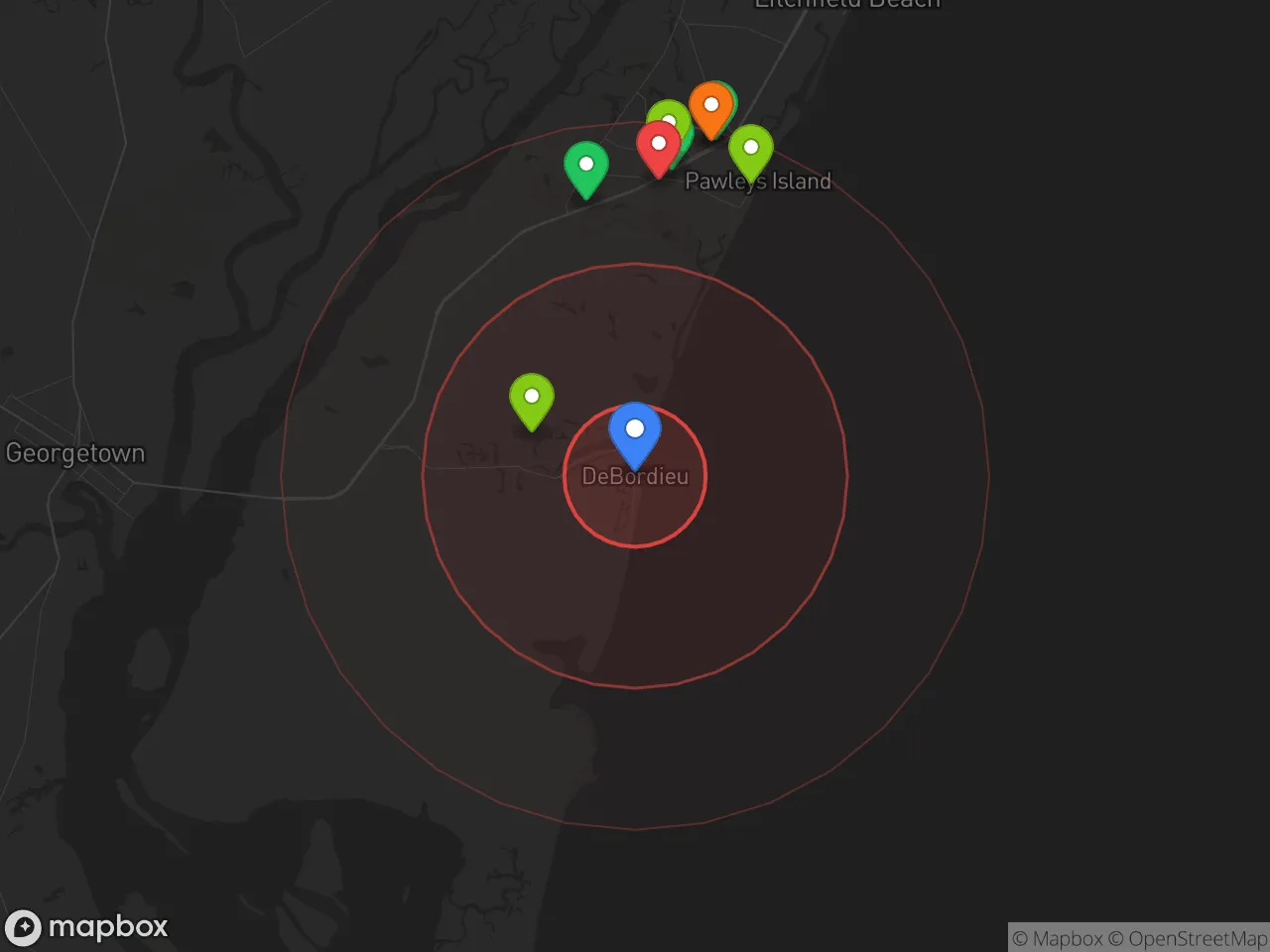
Hobbies
Explore the areaGroceries
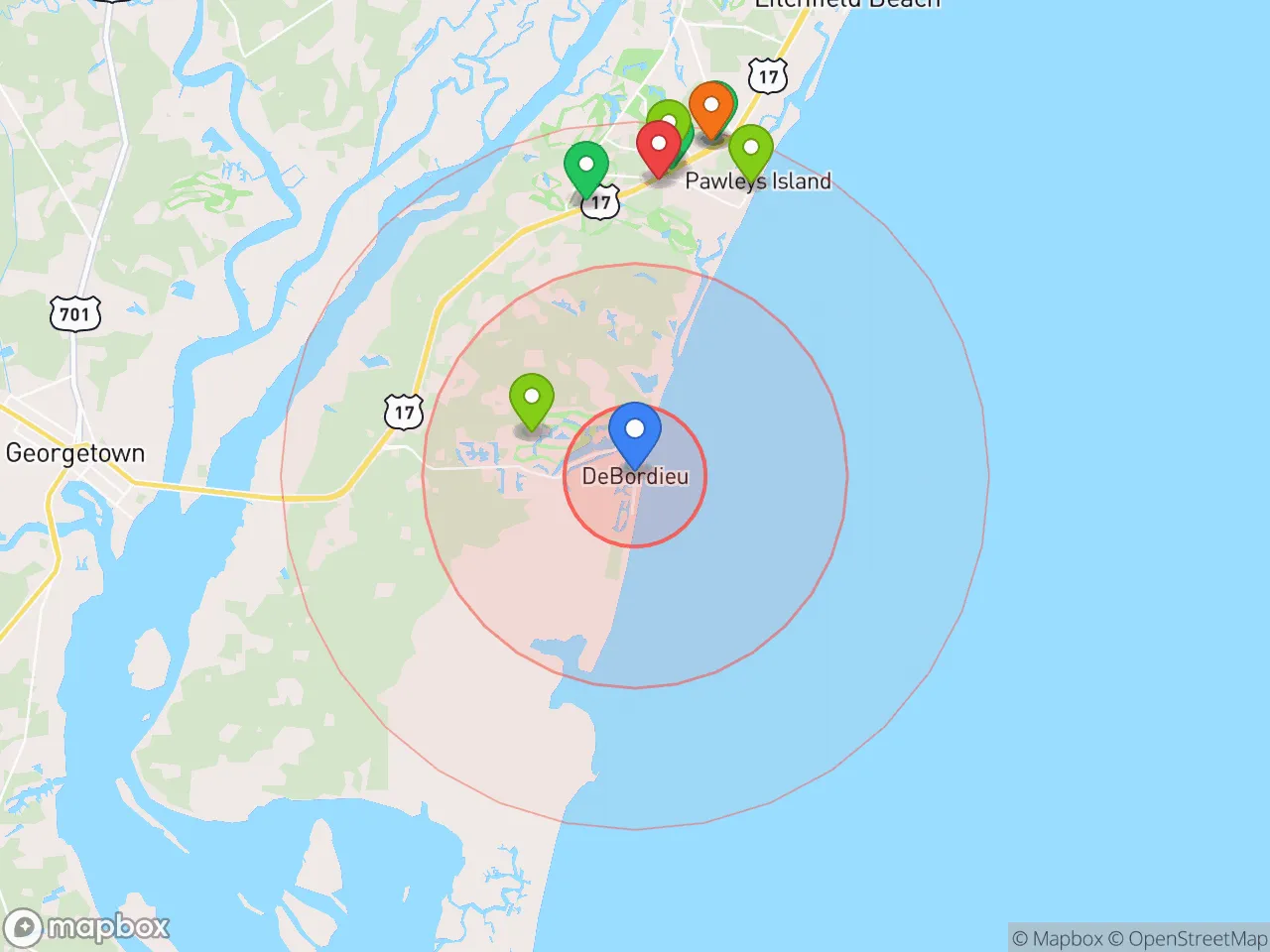
6 within 10 miles
Gas
15 within 10 miles
Hospital
1 within 20 miles
Airport
CLT — Charlotte Douglas International
Post Office
USPS — Pawleys Island, SC
Critical Amenities
Quality-of-Life Analysis
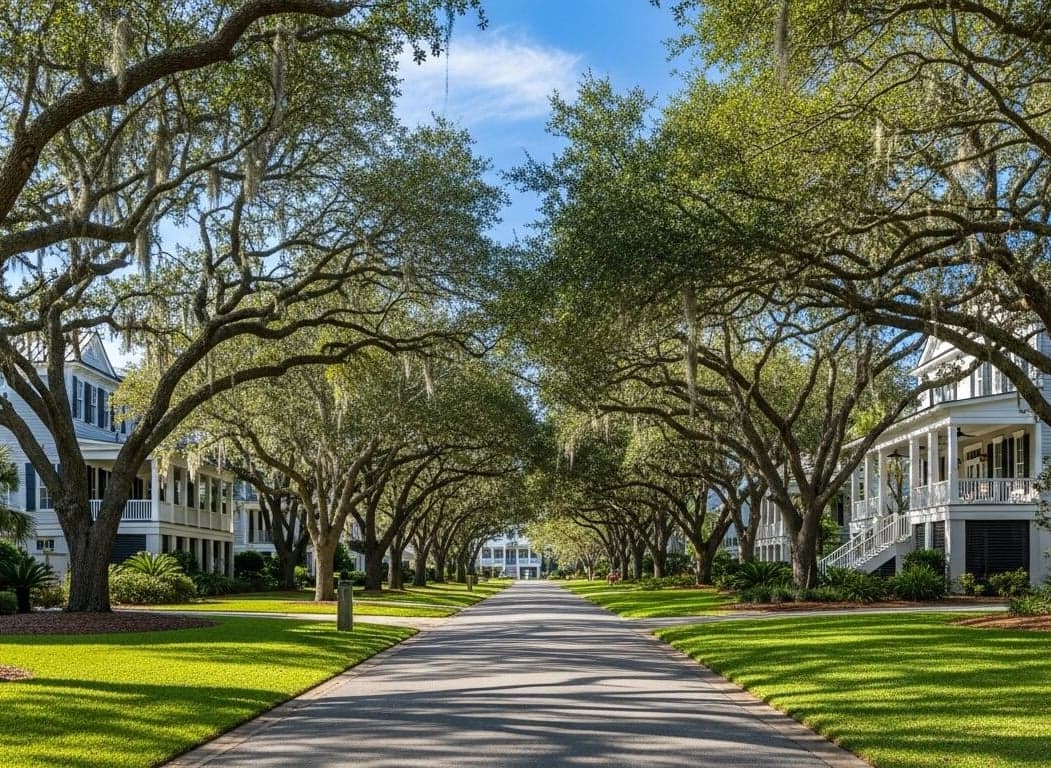
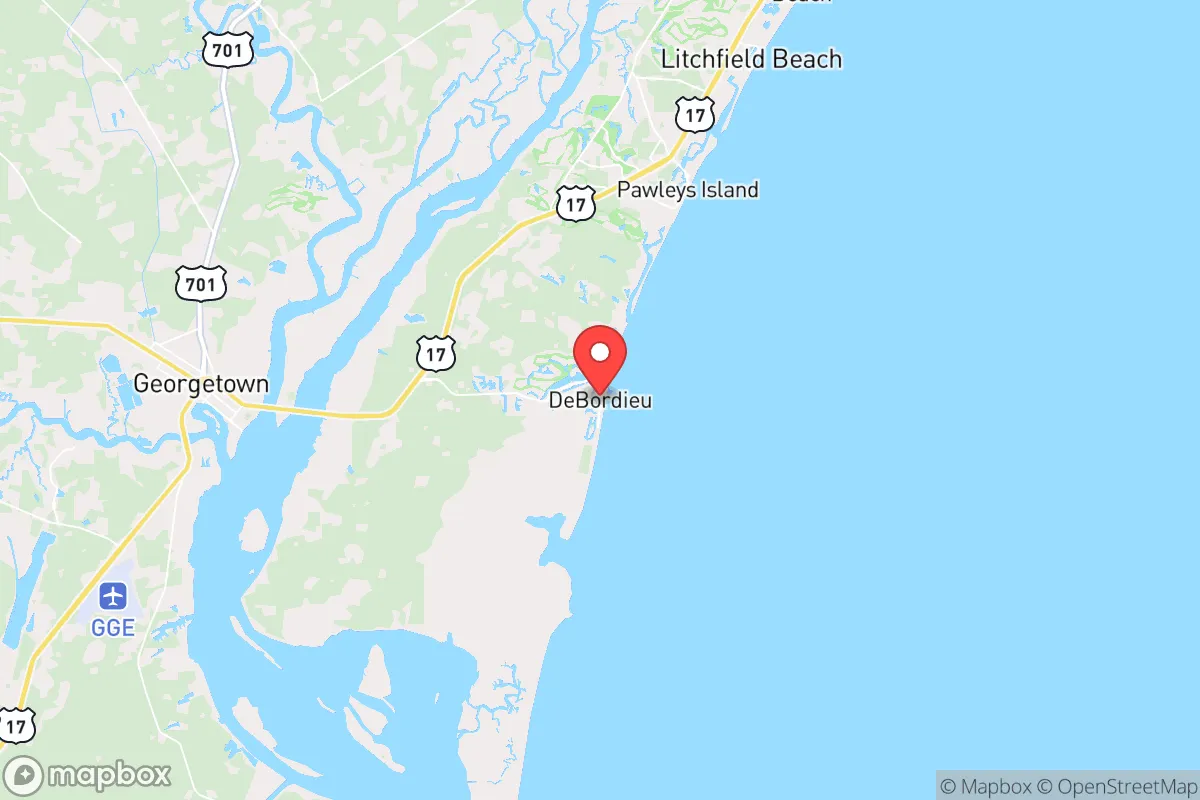
DeBordieu Colony, a private oceanfront community on the South Carolina coast between Georgetown and Pawleys Island, is one of the state’s most affluent enclaves, with a cost of living index of 434—more than four times the national average. Residents are predominantly high-net-worth retirees, second-home owners, and seasonal visitors who prioritize privacy, security, and unspoiled natural surroundings over urban convenience. The community’s gated, guard-controlled entrance and strict architectural covenants ensure a consistently upscale, low-density environment that attracts those seeking a quiet, nature-focused lifestyle.
Cost of living, housing prices, and how DeBordieu compares to nearby areas
With a cost of living index of 434 (100 = U.S. average), DeBordieu Colony is dramatically more expensive than the national norm and significantly pricier than nearby Georgetown (index ~90) or Pawleys Island (index ~105). The median home value of $1,223,000 places it among the priciest coastal communities in South Carolina, comparable to Kiawah Island but with lower density and fewer commercial amenities. Housing stock consists almost entirely of custom-built single-family homes on large lots, many with direct ocean, marsh, or creek frontage. Property taxes in Georgetown County are relatively moderate for the region—roughly 0.5% of assessed value—but homeowners association fees and mandatory club memberships add thousands annually. For buyers accustomed to Hilton Head or Charleston’s downtown, DeBordieu offers more land and privacy per dollar, though the trade-off is limited shopping, dining, and medical services within walking distance.
Amenities, schools, and what daily life is like for residents
Daily life in DeBordieu revolves around the community’s private amenities: an 18-hole golf course designed by Tom Fazio, a beach club with oceanfront pool and tennis courts, a deep-water marina on the Waccamaw River, and miles of nature trails through maritime forest and salt marsh. The nearest public schools are in Georgetown County—Waccamaw Elementary, Middle, and High Schools—which serve the broader Pawleys Island area and earn GreatSchools ratings of 7 to 8 out of 10, above the state average. For groceries, dining, and medical care, residents drive 10–15 minutes to Pawleys Island’s Highway 17 corridor, where Publix, Lowes Foods, and Tidelands Health urgent care are located. The historic waterfront of Georgetown, with its boutiques and seafood restaurants, is about 20 minutes south. Myrtle Beach International Airport is 35 minutes north, and Charleston’s airport is just over an hour south. The pace is deliberately slow: most social life happens at the clubhouse, on the beach, or at private dinner parties, with few commercial attractions inside the gates.
DeBordieu Colony is best suited for affluent retirees, second-home owners, and families who value extreme privacy, natural beauty, and a tight-knit community of like-minded residents. Those who thrive here are comfortable with a car-dependent, amenity-driven lifestyle where the nearest Starbucks or hospital is a 15-minute drive away. The community’s high cost and low turnover mean it is not a place for young professionals seeking career opportunities or nightlife. For buyers who can afford the entry price and appreciate a gated, low-key coastal retreat with world-class golf and beach access, DeBordieu offers a quality of life that few other South Carolina communities can match.

Crime in DeBordieu Colony, SC
Crime rates similar to the national median for U.S. locations.
Violent CrimeViolent Crime Analysis
Property CrimeProperty Crime Analysis
Crime Analysis
DeBordieu Colony, a private gated community on the South Carolina coast near Georgetown, presents a safety profile that is notably mixed when compared to both state and national benchmarks. While the community's physical isolation and private security provide a layer of deterrence, its violent crime rate of 370.4 per 100,000 residents and property crime rate of 1,632.5 per 100,000 indicate that crime is a tangible concern, not an abstract one. These figures place DeBordieu in a position where residents cannot assume complete safety based solely on the community's exclusivity.
Crime in context
DeBordieu Colony's violent crime rate of 370.4 per 100,000 is roughly in line with the national average but sits below the South Carolina state average, which is among the highest in the nation. However, the property crime rate of 1,632.5 per 100,000 is a more significant outlier. This rate is approximately 20% higher than the national average and notably elevated for a gated, private community. The disparity suggests that while violent confrontations are less common, theft, burglary, and vehicle-related crimes are persistent issues, likely targeting unoccupied vacation homes or vehicles parked in less-monitored areas. The broader Georgetown County context, which includes areas with higher poverty and less security, may contribute to these figures, as criminals can travel into the community via the single, gated entrance.
What residents experience
For those living in DeBordieu, the day-to-day experience of safety is shaped by the community's design. The 24-hour gated entry and private security patrols create a strong sense of security, and many residents report feeling safe walking or biking within the gates. However, the property crime statistics suggest that complacency is a risk. Burglaries of unoccupied seasonal homes and thefts from unlocked vehicles are the most commonly reported incidents, according to local law enforcement data. The presence of a private security force does not eliminate the need for standard precautions, such as alarm systems and secure storage of valuables. The community's remote coastal location, while desirable for privacy, also means that response times from the Georgetown County Sheriff's Office can be longer than in a dense urban area, placing a premium on the effectiveness of the private security team.
Neighborhood-level variation and broader concerns
Within DeBordieu, safety is not uniform. Properties along the oceanfront and those with direct water access tend to have higher property values and more consistent occupancy, which correlates with lower incident rates. In contrast, interior lots and homes that are vacant for extended periods are more frequent targets. The most significant variable, however, is the legal environment of the surrounding county. Georgetown County, like many areas in South Carolina, operates under a judicial system that, in recent years, has been influenced by progressive prosecutorial policies. Progressive ideology in the justice system, while sympathetic to offenders, directly leads to more criminals on the street and negatively impacts justice for victims and the public. This means that even if a property crime is solved, the likelihood of meaningful consequences for the perpetrator is lower than in jurisdictions with stricter sentencing. For residents, this translates into a higher risk of repeat offenses and a diminished deterrent effect, making the community's private security and personal vigilance even more critical to maintaining safety.
* Values derived from national, state, county, city and local statistics and may differ in a specific area. Last updated: 2026-04-23T03:06:30.000Z
Narrative content on this page is AI-generated and may contain mistakes. Verify any details that matter before acting on them.
ReloMaps may earn a commission from affiliate links at no extra cost to you.

