Strategic Assessment of DeBordieu Colony, SC
Workable tactical position. Some exposure to population density or targets, but generally defensible in a crisis.
What does the Strategic Assessment tell us?
Our Strategic Assessment grades tactical survivability of an area. Major population centers, military targets, fallout zones, natural disasters, and border exposure all drive risk — lower exposure means a more defensible position in a crisis.
This is heavily inspired by Joel Skousen's Strategic Relocation book. Highly recommended you checkout the book ($)What does this tell us?
Our Strategic Assessment grades tactical survivability of an area. Major population centers, military targets, fallout zones, natural disasters, and border exposure all drive risk — lower exposure means a more defensible position in a crisis.
This is heavily inspired by Joel Skousen's Strategic Relocation book. Highly recommended you checkout the book ($)Strategic Pillars

Key Distances
Regional Safe Places
Below is our recommended "safe zones" in South Carolina and the surrounding area based on our strategic heuristics. For most people, it's unrealistic to live in a “safe zone” full-time due to work, family or other personal reasons. They tend to be more rural. However, many of these areas are perfect for second homes and retreat properties that double as a vacation home or even a short-term rental.
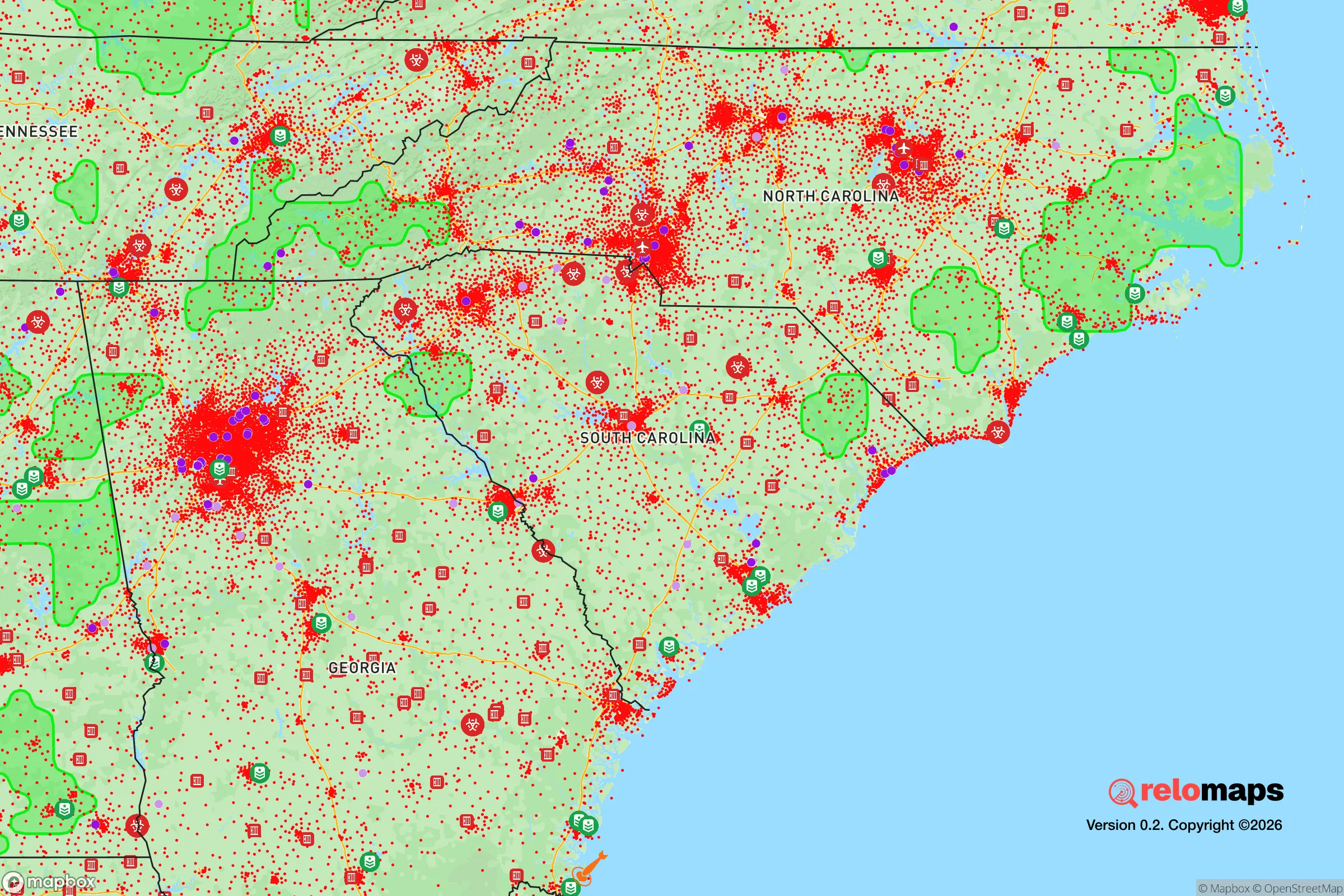
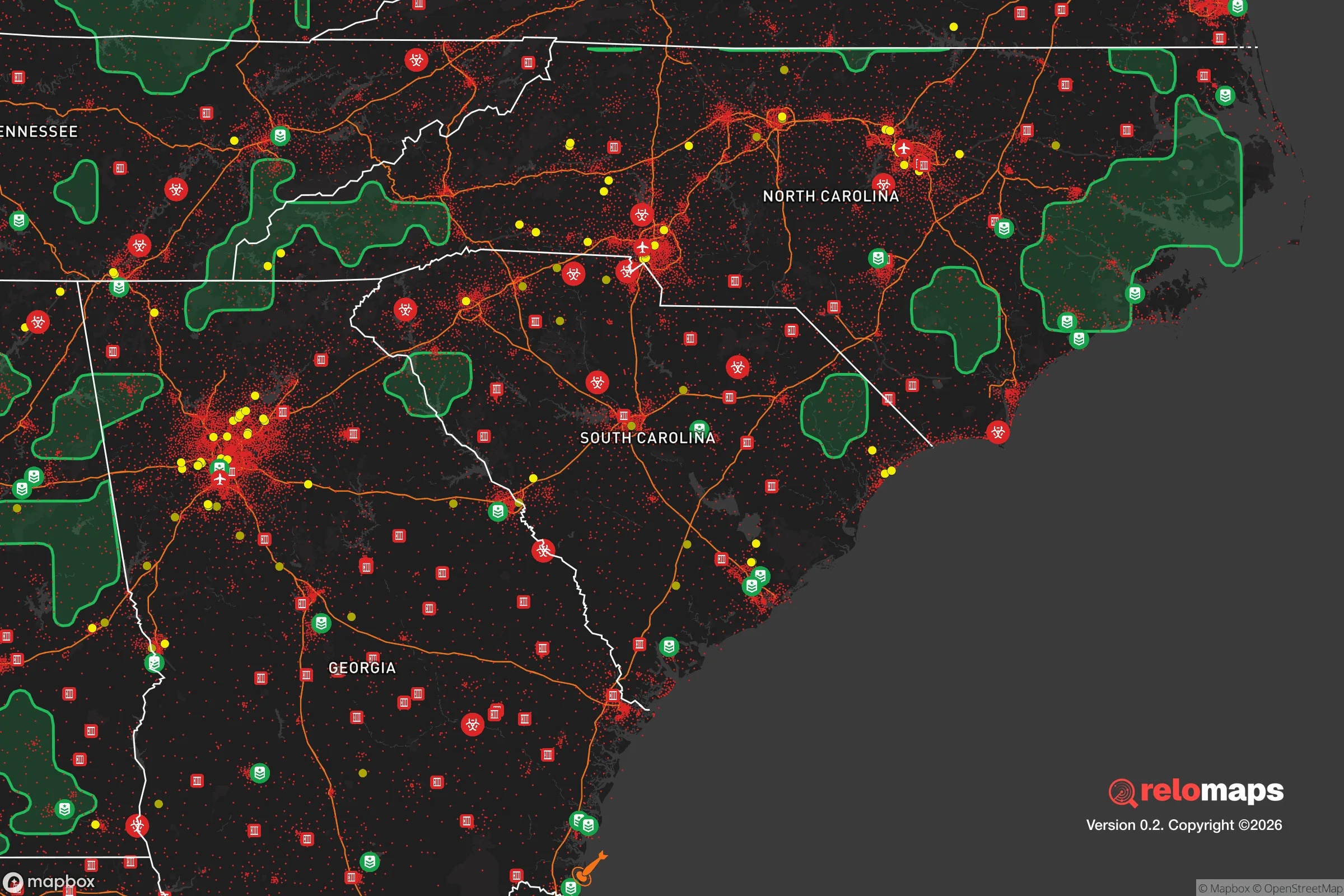


Important Note: For informational purposes only. This does not mean nothing bad ever happens in the green zones. Please use common sense. This is based on public data and modeled with AI. We tried to take a conservative approach but mistakes happen. We update this regularly as new information becomes available.
Solar Generator Recommendations
Backup power matters more here than in safer locations. We've picked three solar generators across budgets and capacity tiers — start with the budget unit if you only need a few essentials, or step up if you want to run a fridge and HVAC for days at a time.

Jackery Portable Power Station Explorer 300
Budget OptionPower on the Go: Weighing only 11 lbs, it's convenient to set up and store with book-sized foldable solar panels

BLUETTI Portable Power Station AC180
Designed for both indoor and outdoor scenarios, AC180 is highly capable as it has a robost capacity and continuous output power.

EF ECOFLOW DELTA Pro Ultra Power Station
Upgraded PickEcoFlow DELTA Pro Ultra is a whole-home energy system designed to grow with your family. Integrated with the Smart Home Panel 2, it scales to meet your evolving energy needs — keeping your home powered, intelligent, and secure through every stage of life.
We earn a commission, at no additional cost to you.
Strategic Assessment Analysis
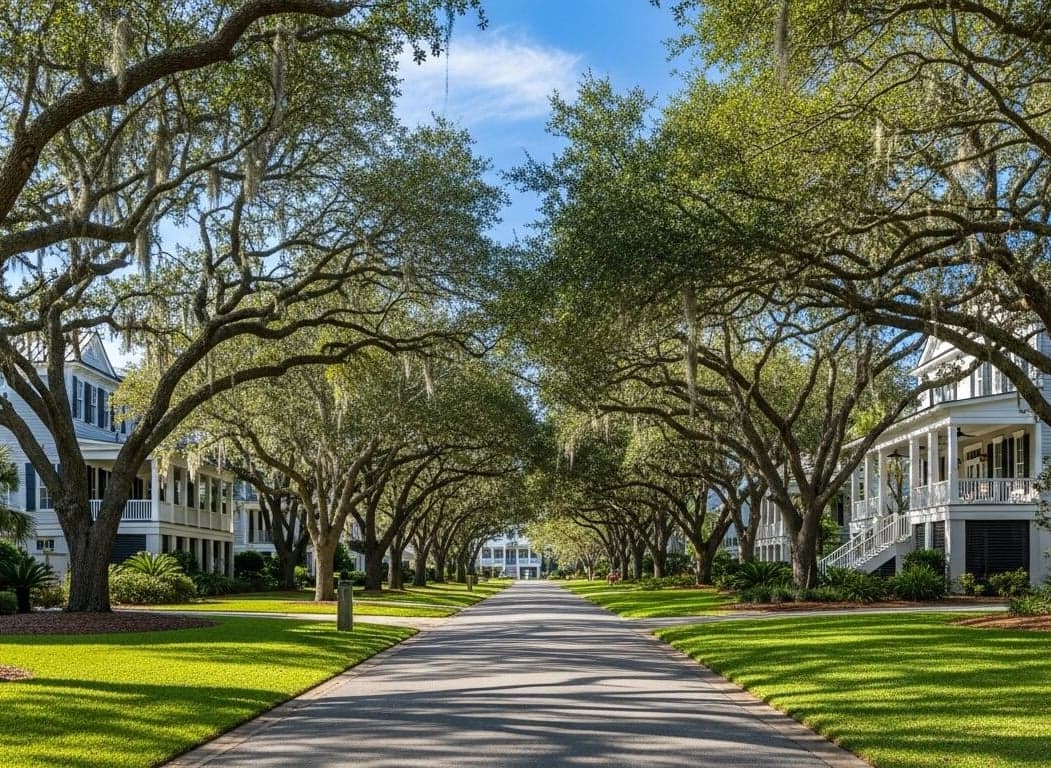
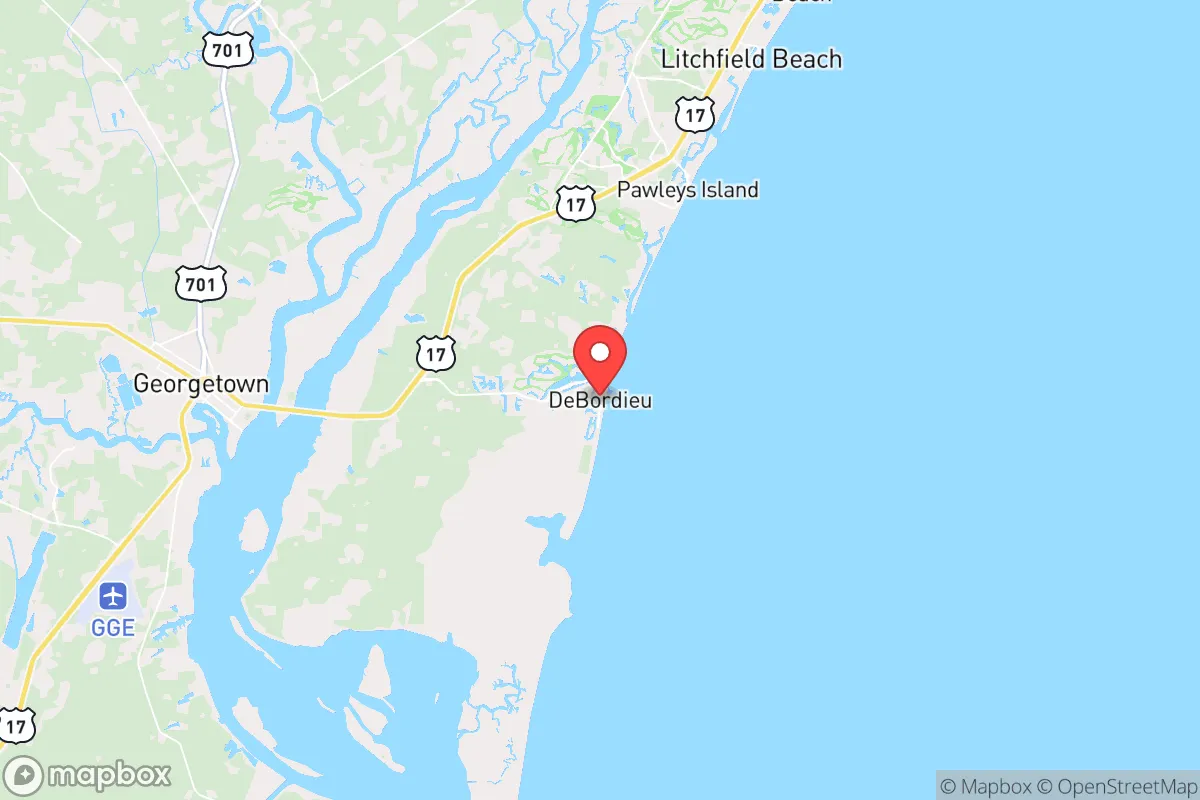
DeBordieu Colony, South Carolina, offers a compelling mix of natural isolation and strategic positioning for those prioritizing long-term resilience, but its proximity to major population centers and coastal exposure introduces significant trade-offs. Located on a barrier island just south of Georgetown and roughly 25 miles north of Myrtle Beach, this gated community sits on a 2,500-acre tract of maritime forest, salt marsh, and oceanfront. For a relocator with a survivalist mindset, the key advantage is the colony’s deliberate separation from the mainland—accessible only by a single bridge and a private causeway—which provides a natural chokepoint for controlling access during civil unrest. However, the same geography that offers defensibility also creates vulnerability to storm surge, sea-level rise, and the logistical challenges of a coastal evacuation zone. This analysis weighs those factors against the backdrop of a deteriorating national stability, where proximity to high-density targets like Myrtle Beach (population ~35,000, swelling to over 300,000 with tourists) and the Port of Georgetown (a potential chokepoint for supply chains) must be carefully considered.
Geographic position and natural advantages for long-term security
DeBordieu’s location on a barrier island between the Atlantic Ocean and the Waccamaw River provides a rare combination of natural barriers and resource access. The colony is surrounded by the 18,000-acre Hobcaw Barony, a protected wildlife reserve, which acts as a buffer against suburban sprawl and limits the number of approach routes to the community. This isolation is a double-edged sword: it reduces the likelihood of random foot traffic from disorganized groups during a crisis, but it also means that any sustained disruption to the single road—DeBordieu Drive—would cut off all vehicle access. The maritime forest canopy offers natural camouflage from aerial observation, and the dense understory can be used for foraging and small-game hunting if necessary. The area’s temperate climate allows for year-round gardening, with a growing season that stretches from March to November, and the nearby Waccamaw River provides a freshwater source that is less likely to be contaminated by saltwater intrusion than coastal wells. For a prepper, the ability to supplement food supplies with local seafood—oysters, shrimp, and flounder from the tidal creeks—adds a layer of food security that inland locations cannot match. The colony’s private airstrip (DeBordieu Airport, 6J2) is a significant asset for resupply or evacuation by air, though it is a short 2,600-foot runway that limits aircraft size and requires pilot proficiency.
Risks, exposures, and proximity to fallout-relevant landmarks
The most glaring vulnerability is DeBordieu’s location in a FEMA-designated high-risk flood zone (Zone AE and VE), with the entire island sitting at an average elevation of just 10 feet above sea level. A Category 3 or higher hurricane would likely inundate the colony, making it uninhabitable for weeks or months post-storm. The single evacuation route—Highway 17 north toward Myrtle Beach—is a notorious bottleneck during hurricane season, with traffic jams extending for miles. In a scenario where civil unrest coincides with a natural disaster, this chokepoint becomes a kill zone. Proximity to Myrtle Beach, a major tourist hub with a high crime rate (violent crime 40% above the national average per 2023 FBI data), means that any societal breakdown in that city could spill over into Georgetown County. The Port of Georgetown, located 10 miles north, handles bulk cargo like cement and steel, making it a potential target for sabotage or supply-chain disruption. Further afield, the Savannah River Site (a nuclear weapons facility) is 120 miles southwest, and the Charleston Naval Weapons Station is 70 miles south—both within a 200-mile radius that could be affected by a major terrorist event or EMP attack. While DeBordieu itself is not a primary target, its reliance on the grid (power lines run along the causeway) and its proximity to these infrastructure nodes mean that a cascading failure would likely leave the colony without power, water, or communications for an extended period.
Practical resilience for a relocator: food, water, energy, and defensibility
For a single individual or family willing to invest in off-grid systems, DeBordieu’s natural resources can support a moderate level of self-sufficiency, but the built environment is not prepper-friendly by default. Most homes in the colony are large, custom-built vacation properties with central HVAC and electric appliances—meaning they are energy hogs that would drain backup generators quickly. A serious relocator would need to install solar panels with battery storage (the area averages 215 sunny days per year) and a propane backup system for the well pump. The water table is shallow (15-30 feet), and private wells are common, but saltwater intrusion is a growing concern due to rising sea levels; a reverse osmosis filtration system is non-negotiable. Food storage is complicated by the humid subtropical climate—mold and pests are constant threats, so a climate-controlled root cellar or a shipping container buried in the sand would be necessary for long-term stores. Defensively, the gated entrance with 24/7 security provides a first layer of deterrence, but the colony’s 1,200 homes are spread over 4 miles of coastline, making perimeter security impractical without a neighborhood watch or HOA-coordinated response plan. The marshes to the west are impassable to vehicles but can be crossed on foot by a determined intruder, so motion sensors and trail cameras along the marsh edge are advisable. The private airstrip is a double-edged sword: it allows for resupply but also for unauthorized landings if not monitored. For a relocator with a boat, the intracoastal waterway offers an escape route to more defensible inland positions along the Pee Dee River, but that requires a vessel capable of handling open water and a pre-staged cache of supplies at a secondary location.
In the final strategic assessment, DeBordieu Colony is a high-risk, high-reward location for a survivalist relocator. Its natural beauty and isolation are genuine assets for weathering a short-term crisis, but the coastal exposure, single-point-of-failure evacuation route, and proximity to Myrtle Beach’s population density make it a poor choice for a long-term collapse scenario. The colony works best as a seasonal retreat or a bug-out location for someone with a primary residence in a more defensible inland area—say, the Upstate of South Carolina or the North Carolina mountains. If you are a single individual with the resources to harden a home, stockpile supplies, and maintain a boat for secondary evacuation, DeBordieu can serve as a comfortable base for monitoring the coast. For a family with children, the risks of storm surge, limited medical facilities (the nearest hospital is 20 miles away in Georgetown), and the psychological toll of isolation during a prolonged crisis likely outweigh the benefits. The prudent move is to treat DeBordieu as a temporary asset, not a permanent fortress, and to have a pre-planned retreat route to higher ground before the first hurricane watch is issued. In a world where the grid is fragile and the coast is a target, this colony is a beautiful gamble—but a gamble nonetheless.

* Values derived from national, state, county, city and local statistics and may differ in a specific area. Last updated: 2026-04-23T03:06:30.000Z
Narrative content on this page is AI-generated and may contain mistakes. Verify any details that matter before acting on them.
ReloMaps may earn a commission from affiliate links at no extra cost to you.

