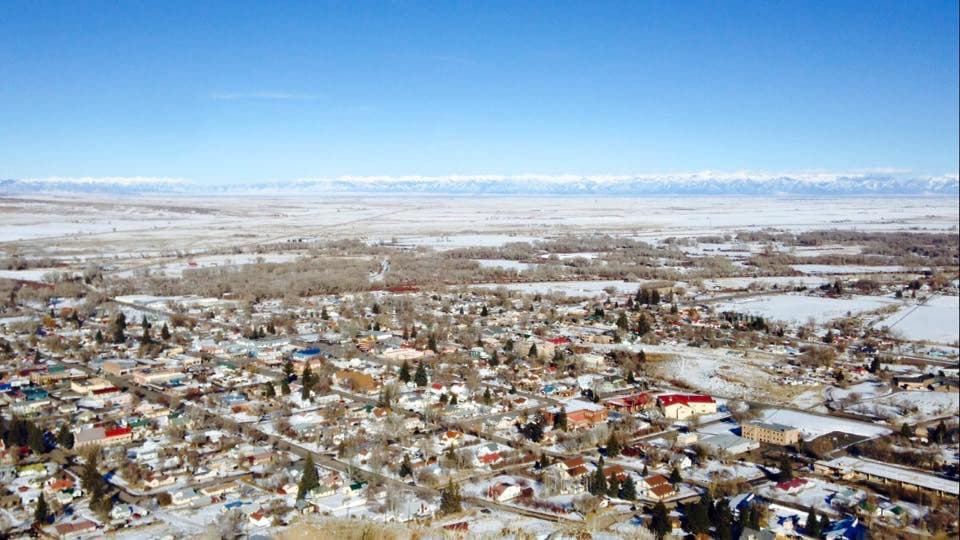
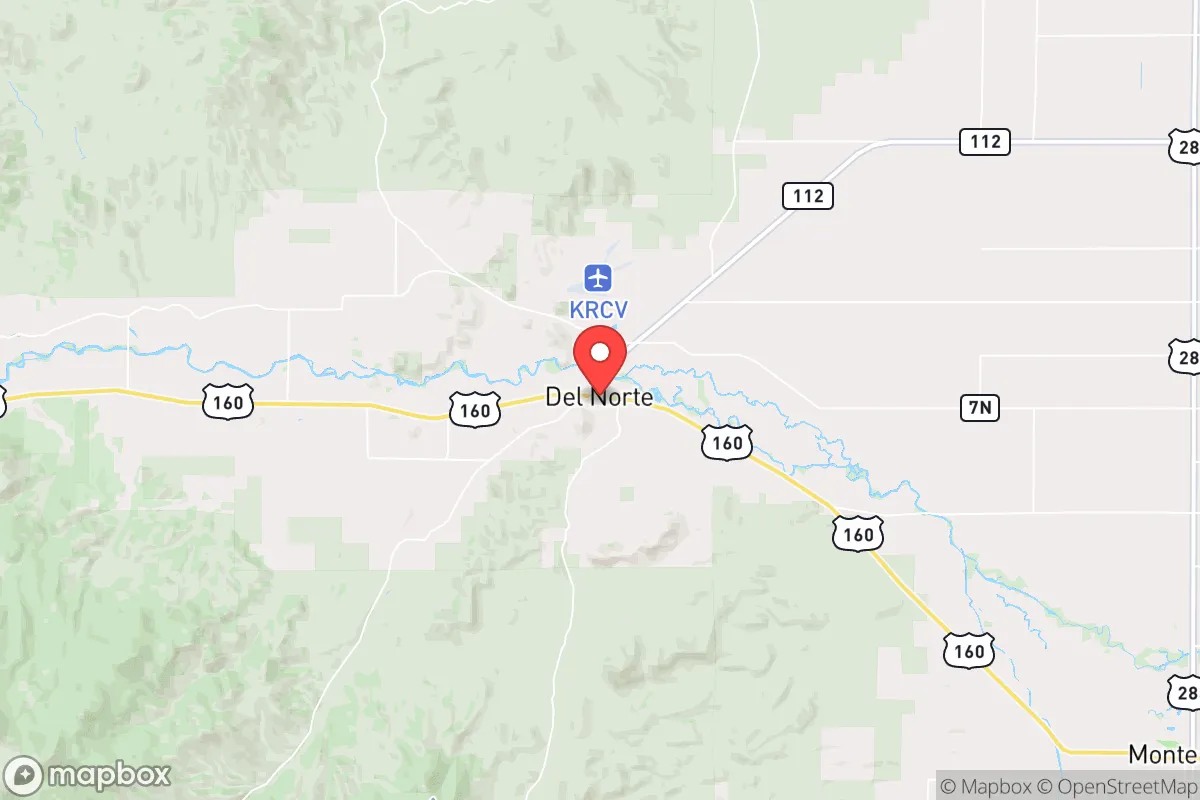
Photo: Wikipedia
Demographics of Del Norte, CO
Affluence Level in Del Norte, CO
A low-income area with significant economic hardship. Household wealth and educational attainment are well below national averages.
People of Del Norte, CO
Del Norte, Colorado, is a small, tight-knit community of 1,576 residents where a near-even split between White (54.9%) and Hispanic (38.6%) populations defines its character. The city retains a strong agricultural and small-town identity, with a notably low foreign-born rate of 1.4% and a college-educated share of 23.0%. Its people are predominantly multi-generational families, with a growing Hispanic presence that reflects deep historical roots rather than recent immigration.
How the city was settled and grew
Del Norte was founded in the 1860s as a supply hub for miners heading to the San Juan Mountains, with the original population drawn by the promise of gold and silver. The earliest settlers were Anglo-American prospectors and merchants, who established the town along the Rio Grande. By the 1870s, the Denver & Rio Grande Railroad arrived, cementing Del Norte as a regional agricultural center for cattle and hay. The original Anglo settlers built homes in the Historic Downtown District, centered around Main Street, where many Victorian-era buildings still stand. Simultaneously, Hispanic families—many tracing their lineage to Spanish land grants in New Mexico—began settling in the South Side neighborhood, working as laborers on ranches and in the railroad yards. This early Hispanic community was not immigrant but native-born, with roots in the region predating Colorado statehood. A small wave of Japanese and Filipino farmworkers arrived briefly in the early 1900s, but they did not form lasting enclaves, and today East/Southeast Asian residents account for 0.0% of the population.
Modern era (post-1965)
After the 1965 Immigration Act, Del Norte saw no significant new foreign-born influx; the foreign-born share remains just 1.4%. Instead, the major demographic shift has been internal: the Hispanic population grew from roughly 25% in 1970 to 38.6% today, driven by natural increase and migration from southern Colorado and northern New Mexico. These families concentrated in the West End neighborhood, near the old railroad corridor, and in the River Road area along the Rio Grande, where newer subdivisions were built. The White population, while still a majority at 54.9%, has aged and slightly declined as younger adults leave for larger cities. The Black population remains minimal at 1.3%, with no distinct neighborhood concentration. The Indian subcontinent and Arab populations are both 0.0%. The college-educated share of 23.0% is modest, reflecting the town's working-class agricultural and service economy, with many residents employed at the local school district, the county government, or in farming.
The future
Del Norte's population is slowly homogenizing into a bicultural community of White and Hispanic residents, with little ethnic diversity beyond these two groups. The Hispanic share is projected to continue rising gradually, potentially reaching 45-50% by 2040, driven by higher birth rates and continued in-migration from the broader San Luis Valley. The White population will likely continue a slow decline, though the town is not experiencing rapid gentrification or displacement. The North Del Norte area, near the high school, is seeing modest new construction of single-family homes, attracting younger families of both backgrounds. The immigrant community is not growing; the foreign-born rate will likely remain below 2%. The town is not tribalizing into hostile enclaves—neighborhoods are mixed—but social networks often follow family and church ties, with Catholic and Protestant congregations reflecting the Hispanic and Anglo divides respectively.
For someone moving in now, Del Norte offers a stable, affordable, and safe environment where community ties run deep and demographic change is gradual. The population is becoming more Hispanic but remains overwhelmingly native-born and rooted in the region's history. New residents will find a place where the past is still present, and where the future looks much like the present—small, slow, and family-oriented.

* Values derived from national, state, county, city and local statistics and may differ in a specific area. Last updated: 2026-05-16T21:14:41.000Z
Narrative content on this page is AI-generated and may contain mistakes. Verify any details that matter before acting on them.
ReloMaps may earn a commission from affiliate links at no extra cost to you.

