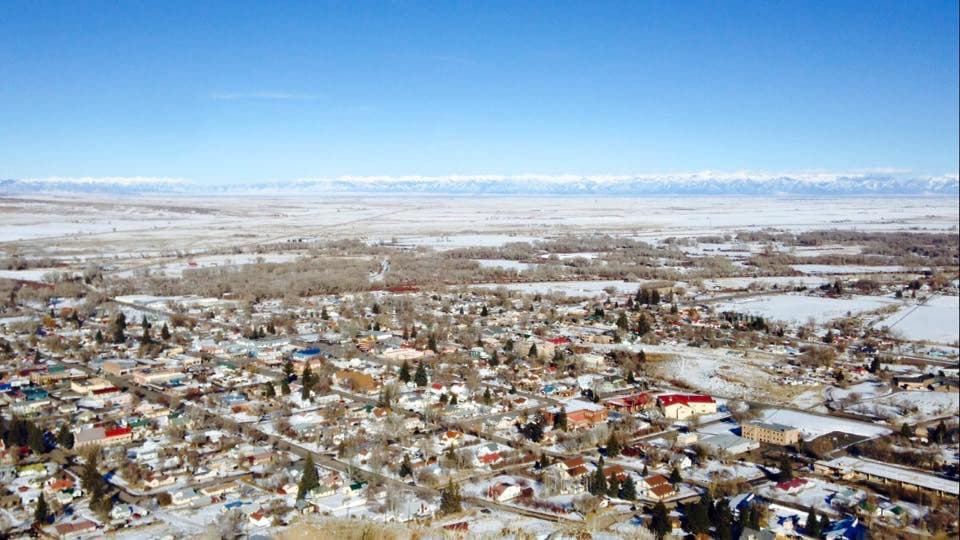
Photo: Wikipedia
Strategic Assessment of Del Norte, CO
Workable tactical position. Some exposure to population density or targets, but generally defensible in a crisis.
What does the Strategic Assessment tell us?
Our Strategic Assessment grades tactical survivability of an area. Major population centers, military targets, fallout zones, natural disasters, and border exposure all drive risk — lower exposure means a more defensible position in a crisis.
This is heavily inspired by Joel Skousen's Strategic Relocation book. Highly recommended you checkout the book ($)What does this tell us?
Our Strategic Assessment grades tactical survivability of an area. Major population centers, military targets, fallout zones, natural disasters, and border exposure all drive risk — lower exposure means a more defensible position in a crisis.
This is heavily inspired by Joel Skousen's Strategic Relocation book. Highly recommended you checkout the book ($)Strategic Pillars

Key Distances
Regional Safe Places
Below is our recommended "safe zones" in Colorado and the surrounding area based on our strategic heuristics. For most people, it's unrealistic to live in a “safe zone” full-time due to work, family or other personal reasons. They tend to be more rural. However, many of these areas are perfect for second homes and retreat properties that double as a vacation home or even a short-term rental.
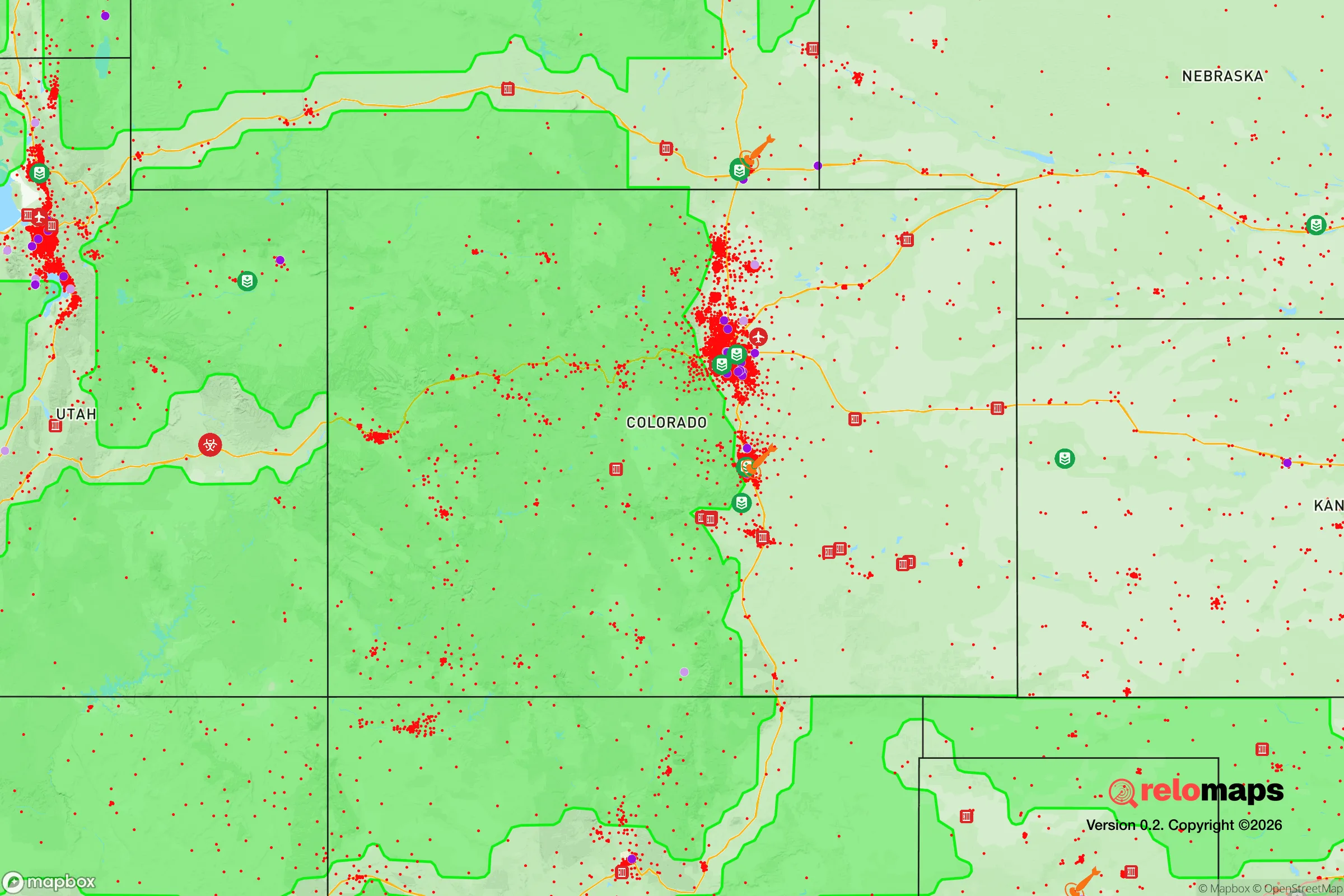
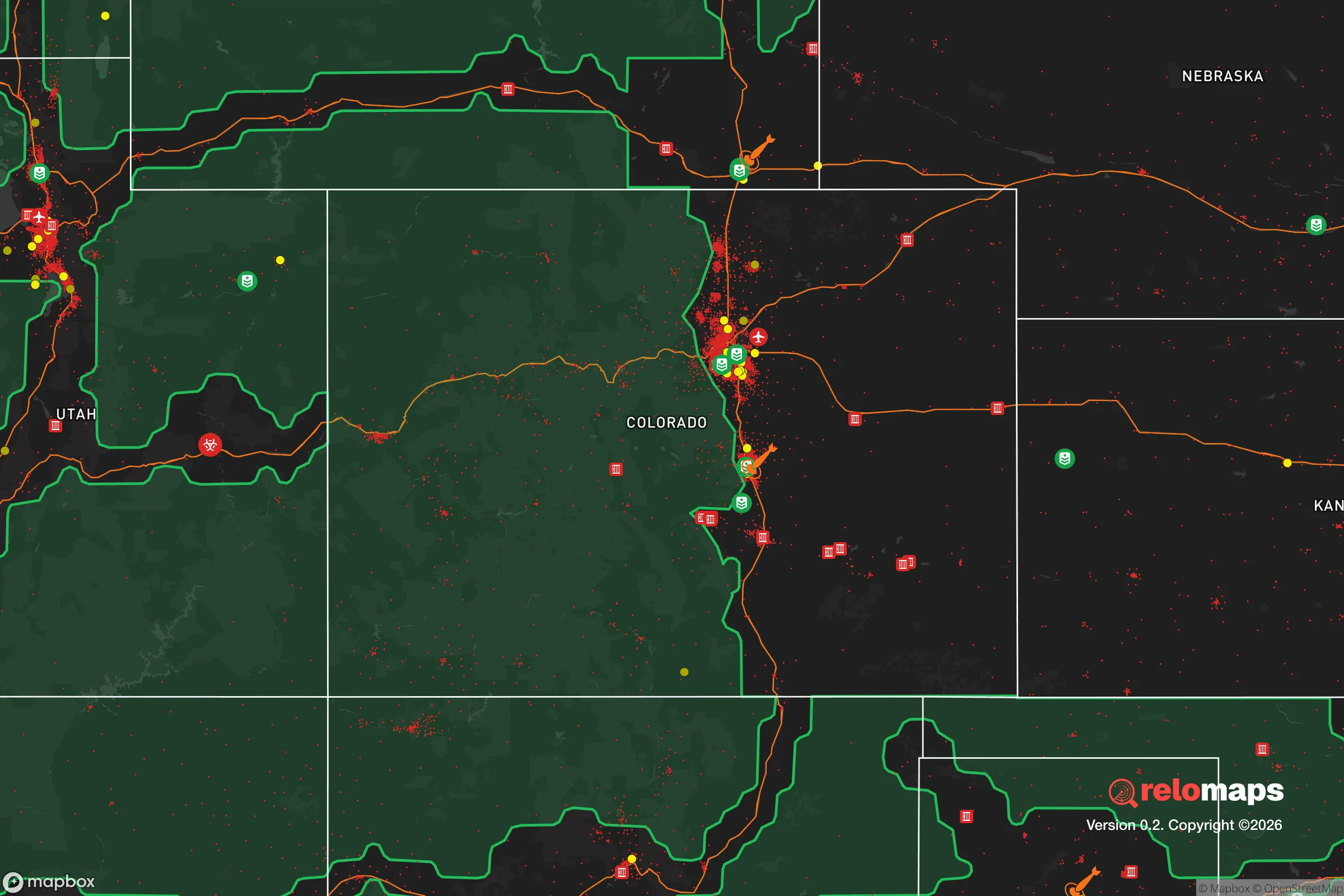


Important Note: For informational purposes only. This does not mean nothing bad ever happens in the green zones. Please use common sense. This is based on public data and modeled with AI. We tried to take a conservative approach but mistakes happen. We update this regularly as new information becomes available.
Solar Generator Recommendations
Backup power matters more here than in safer locations. We've picked three solar generators across budgets and capacity tiers — start with the budget unit if you only need a few essentials, or step up if you want to run a fridge and HVAC for days at a time.

Jackery Portable Power Station Explorer 300
Budget OptionPower on the Go: Weighing only 11 lbs, it's convenient to set up and store with book-sized foldable solar panels

BLUETTI Portable Power Station AC180
Designed for both indoor and outdoor scenarios, AC180 is highly capable as it has a robost capacity and continuous output power.

EF ECOFLOW DELTA Pro Ultra Power Station
Upgraded PickEcoFlow DELTA Pro Ultra is a whole-home energy system designed to grow with your family. Integrated with the Smart Home Panel 2, it scales to meet your evolving energy needs — keeping your home powered, intelligent, and secure through every stage of life.
We earn a commission, at no additional cost to you.
Strategic Assessment Analysis
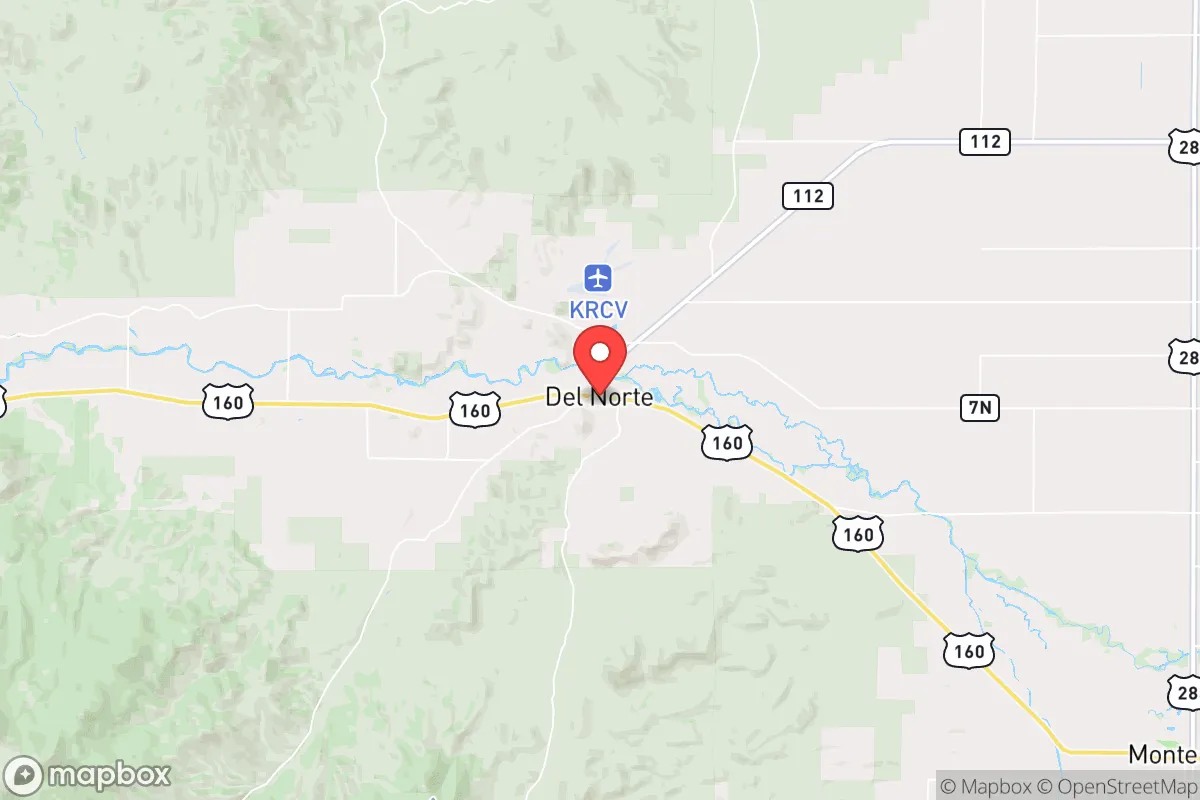
Del Norte, Colorado, sits in a strategic pocket of the San Luis Valley that offers genuine resilience advantages for those thinking long-term about self-sufficiency and security. Its location—roughly 30 miles west of the Rio Grande National Forest and 20 miles east of the Continental Divide—places it far from major population centers while still providing access to critical infrastructure like US Highway 160 and the Rio Grande itself. For a relocator with a prepper mindset, this isn't just a pretty mountain town; it's a position that trades convenience for buffer, and in today's climate, that trade is increasingly valuable.
Geographic position and natural advantages for long-term security
Del Norte's geography is its strongest card. The town sits at roughly 7,900 feet in elevation, nestled in the northern end of the San Luis Valley, which is one of the largest alpine valleys in North America. This means you're surrounded by the Sangre de Cristo Mountains to the east and the San Juan Mountains to the west—natural barriers that slow movement and limit approach vectors. The valley floor itself is flat and open, offering long sightlines that make surveillance and perimeter awareness practical. For someone concerned about civil unrest or mass casualty events, this terrain is defensible without being claustrophobic. The nearest city of any real size is Alamosa, about 30 miles south, with a population under 10,000. The nearest major metro is Colorado Springs, over 150 miles northeast—a full two-and-a-half-hour drive in good weather. That distance is a feature, not a bug. It means that if a cascading failure hits the Front Range, Del Norte is likely to feel the ripple effects last, not first. The valley's agricultural base—potatoes, barley, alfalfa, and grazing land—also means local food production is a reality, not a fantasy. You're not dependent on trucked-in supplies from distant warehouses; the land around you can feed people.
Risks, exposures, and proximity to fallout-relevant landmarks
No location is immune, and Del Norte has its own set of exposures that a serious relocator must weigh. The most obvious is the San Luis Valley's position relative to the Rio Grande Rift, a geological zone that produces small earthquakes—typically under magnitude 4.0—but the risk of a larger event is non-zero. More pressing for the prepper mindset is the valley's proximity to the San Juan Basin, which holds significant natural gas reserves and associated infrastructure. There are pipelines and processing facilities within 50–60 miles, particularly around the Four Corners area. A major industrial accident or targeted disruption there could affect air quality or create a temporary hazard plume, though prevailing winds generally push east or south, away from Del Norte. The town itself is not near any nuclear power plant—the closest is the San Onofre plant in California, over 700 miles away—but it sits within 200 miles of the Los Alamos National Laboratory in New Mexico. That's a strategic research facility with nuclear materials on site. A worst-case scenario there would put Del Norte outside the primary blast and fire zones but potentially within a fallout pattern depending on wind direction. The valley's high altitude and dry climate mean fallout particles could travel farther before settling, so a robust sheltering plan—with sealed rooms and stored air filtration—is prudent. On the plus side, Del Norte is far from any major military target like NORAD, Peterson AFB, or the nuclear command infrastructure near Cheyenne. It's not on any likely first-strike list.
Practical resilience for a relocator: food, water, energy, and defensibility
For the individual or family looking to build a sustainable setup, Del Norte offers a foundation that's hard to beat in Colorado. Water is the critical resource, and the Rio Grande runs right through town. Surface water rights are senior and well-established in the valley, but they're also expensive and tied to historical use. A savvy relocator should look into groundwater—the valley's aquifer is deep but productive, and private wells are common. Drilling a well to 200–400 feet can yield 10–30 gallons per minute, enough for a household and a garden. The growing season is short—about 90 days between last and first frost—but the valley's intense solar radiation and fertile volcanic soil make high-yield vegetable production possible with season extenders like hoop houses. Energy is another strong point. The San Luis Valley has some of the best solar insolation in the country, and off-grid solar setups are straightforward. Winter days are short but clear, and snow cover is moderate compared to the mountains to the west. A small wind turbine can supplement during cloudy stretches. For defensibility, Del Norte's layout is a mixed bag. The town itself is a grid of streets with open fields on the edges, which means you can choose a property with clear sightlines and limited approach routes. The surrounding national forest and BLM land offer buffer zones that are hard to traverse quickly. The local population is small—around 1,600—and leans heavily toward agriculture and outdoor work. That's a demographic that tends to be self-reliant and community-oriented, which matters when things go sideways. The downside is that law enforcement presence is thin; the Rio Grande County Sheriff's Office covers a huge area with limited deputies. You are largely responsible for your own security, and that's a fact you should plan for.
The overall strategic picture for Del Norte is one of calculated trade-offs. You gain genuine geographic isolation, abundant water, strong solar potential, and a local food base—all critical for weathering prolonged disruptions. You lose easy access to specialized medical care, major supply chains, and the kind of social infrastructure that makes modern life convenient. For the conservative-leaning relocator who values self-sufficiency and is willing to invest in off-grid systems, deep pantry storage, and community building, Del Norte offers a solid foundation. It's not a fortress, and it's not immune to the risks that come with living in a high-altitude, seismically active, resource-rich region. But in a world where the Front Range is increasingly crowded, expensive, and vulnerable to cascading failures, this small valley town looks less like a compromise and more like a deliberate choice. If you're serious about resilience, Del Norte deserves a hard look—just come with your own water rights, a good well driller, and a plan for winter.

* Values derived from national, state, county, city and local statistics and may differ in a specific area. Last updated: 2026-05-16T21:14:41.000Z
Narrative content on this page is AI-generated and may contain mistakes. Verify any details that matter before acting on them.
ReloMaps may earn a commission from affiliate links at no extra cost to you.

