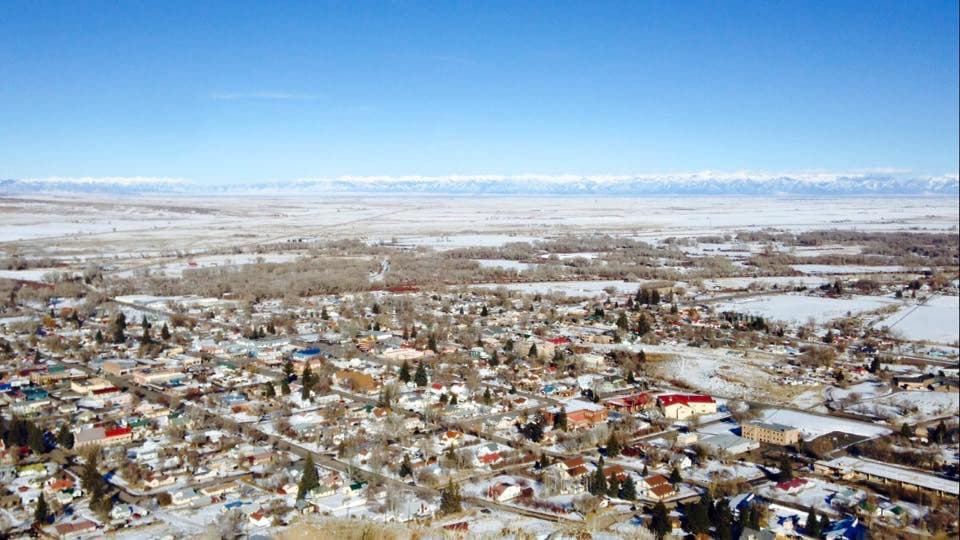
Photo: Wikipedia
Political ClimatePolitical Climate in Del Norte, CO
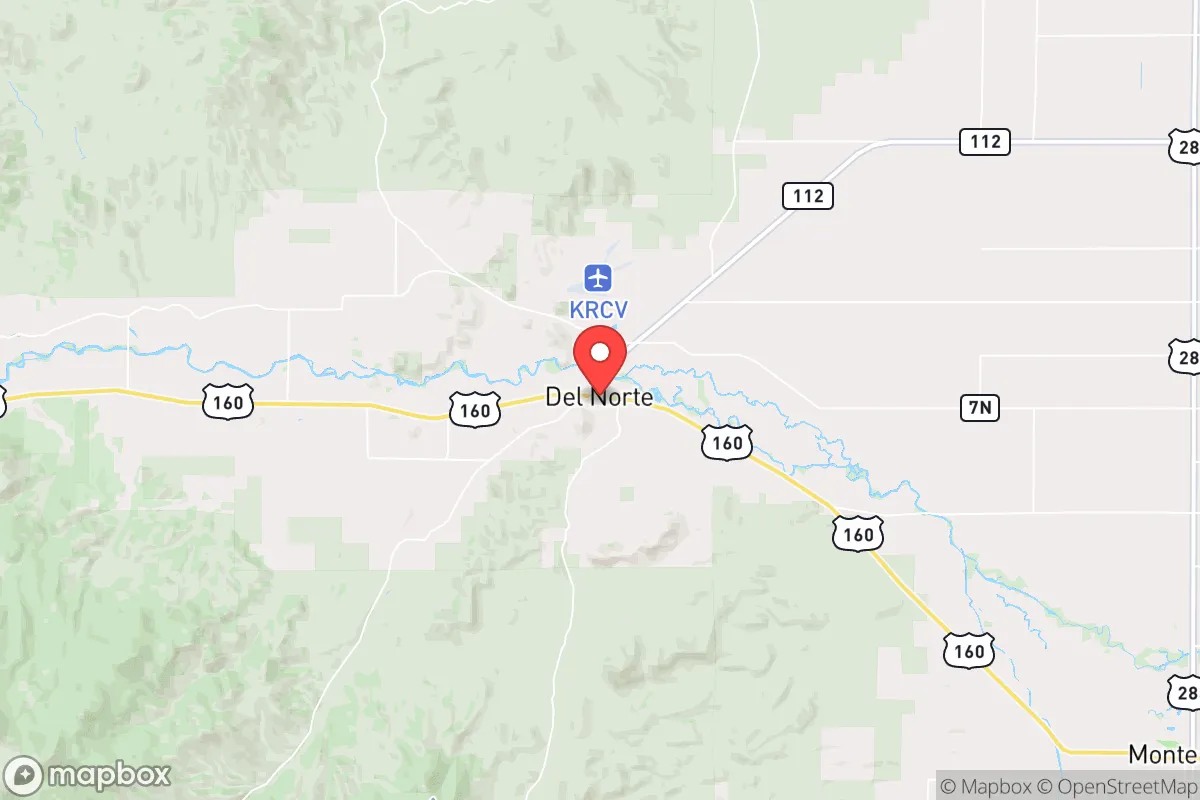
District shown is the primary district for this city’s centroid. Cities may span multiple districts.
Local Political AnalysisPolitical Analysis of Del Norte, CO
Del Norte sits in a reliably conservative pocket of Colorado, with a Cook PVI of R+5 that reflects the area’s long-standing preference for limited government and traditional values. This isn’t a purple town; it’s a place where folks have voted Republican in every presidential election since 2000, often by double digits. The shift you see in the rest of the state—Colorado as a whole now leans D+6—hasn’t really touched Del Norte, and that’s by design. People here moved here or stayed here because they value personal freedom, low taxes, and a government that stays out of their business. The trajectory is steady: Del Norte is getting redder as surrounding areas like Alamosa and Monte Vista trend leftward, but the core conservative identity remains strong.
How it compares
The contrast between Del Norte and the rest of Colorado is stark. While the state’s Cook PVI of D+6 means Denver, Boulder, and even Colorado Springs have shifted toward progressive policies—think stricter gun laws, higher energy costs, and more mandates—Del Norte operates like a different country. In the 2024 election, Rio Grande County voted +18 R, while the state overall went +6 D. That’s a 24-point gap. Neighboring towns like Alamosa (Adams State University’s home) and Monte Vista lean more moderate, but Del Norte holds firm. The difference shows up in everyday life: fewer regulations on small businesses, no city-level rent control, and a sheriff’s office that doesn’t enforce state overreach on things like Second Amendment rights. If you’re coming from a blue area, you’ll notice the air feels freer here.
What this means for residents
For someone living in Del Norte, the political climate means you’re largely left alone to live your life. Property taxes are among the lowest in the state, and there’s no county-level income tax. The local government focuses on roads, water, and schools—not social engineering. You won’t see mask mandates or vaccine passports here; the county commissioners made that clear during the pandemic. The downside? State-level policies still creep in. Denver’s push for renewable energy mandates and electric vehicle quotas raises utility costs even in Del Norte, and the state’s red flag law is a constant concern for gun owners. But the community pushes back. Local leaders regularly challenge state overreach, and there’s a strong network of grassroots groups that keep an eye on legislation coming out of the capitol.
The cultural distinction is real, too. Del Norte is a place where neighbors help neighbors without a government program. The annual Fiesta de la Familia and the Fourth of July parade are community-run, not city-funded. You won’t find a diversity, equity, and inclusion office in the county courthouse—instead, you’ll find a focus on merit and personal responsibility. The long-term outlook? As Colorado’s blue wave continues, Del Norte will likely become an even stronger red island. That’s a good thing if you value local control and individual rights. But it also means staying vigilant. The state legislature in Denver keeps trying to impose one-size-fits-all solutions, and it’s up to folks here to push back. If you’re considering a move, know that Del Norte offers a political environment where your voice matters more than your zip code. Just be ready to get involved—because staying free takes work.

State Political ClimatePolitical Climate in Colorado
State Political AnalysisPolitical Environment in the State
Colorado has shifted from a classic purple swing state to a solidly blue D+6 on the Cook Partisan Voting Index over the past two decades, driven largely by explosive growth in the Denver metro and Front Range corridor. The state’s political center of gravity has moved decisively left since the early 2000s, when it voted for George W. Bush twice, but the transformation is far from uniform — the Eastern Plains, Western Slope, and southern mountain counties remain deeply conservative, creating one of the sharpest urban-rural divides in the nation.
Urban vs. rural divide
The political map of Colorado is essentially a story of two states. The Denver-Boulder-Aurora metroplex, home to nearly 60% of the state’s population, is the engine of Democratic dominance — Boulder County routinely votes 75-80% Democratic, while Denver County itself is even bluer. The I-25 corridor from Fort Collins down through Denver to Colorado Springs tells the tale: Larimer County (Fort Collins) has trended blue, while El Paso County (Colorado Springs) remains a conservative stronghold, though even there the margins have shrunk. The real Republican redoubts are the rural counties: Weld County (Greeley) still votes +20-25 Republican, but its rapid growth from oil and gas and commuters is slowly eroding that edge. The Western Slope counties like Mesa (Grand Junction), Montrose, and Delta are reliably red, while the mountain resort counties — Pitkin (Aspen), Eagle (Vail), Summit — have become liberal enclaves of wealthy second-home owners and service workers. The Eastern Plains, places like Yuma, Kit Carson, and Prowers counties, vote 70-80% Republican but have tiny populations. The key takeaway: if you live in a city of more than 50,000 people in Colorado, you are almost certainly in a blue district.
Policy environment
Colorado’s state-level policy has moved aggressively left since Democrats took full control of the governorship and legislature in 2018. The state income tax is a flat 4.4%, which is moderate, but property taxes have been rising fast — especially in Denver and Boulder counties — due to a 2020 law that removed the Gallagher Amendment’s residential assessment rate cap. Sales tax varies wildly by locality, with Denver at 8.81% and some rural towns under 3%. The regulatory posture is heavy: Colorado has some of the strictest environmental and energy regulations in the West, including a 2024 law (SB24-229) that effectively bans new oil and gas drilling permits within 2,000 feet of homes and schools, which has throttled the industry in Weld County. Education policy is a flashpoint: the state has a school choice system with charter schools and open enrollment, but the Denver Public Schools board has become increasingly progressive, pushing critical race theory-aligned curriculum and gender identity policies that have sparked parental rights battles. Healthcare is dominated by the state-run Connect for Health Colorado exchange, and the state expanded Medicaid under the Affordable Care Act. Election laws are among the most liberal in the nation: universal mail-in voting since 2013, same-day voter registration, and no voter ID requirement at the polls (though ID is needed for mail ballots). This has made election integrity a persistent concern among conservatives, especially after the 2020 election saw a heavily Democratic mail-in surge.
Trajectory & freedom
Colorado is becoming less free by any conservative measure of personal liberty. The most glaring example is gun rights: after the 2012 Aurora theater shooting and 2021 Boulder King Soopers shooting, the legislature passed a series of restrictions — universal background checks (2013), a ban on magazines over 15 rounds (2013, later upheld by courts), a red flag law (2019), and a 2024 law raising the purchase age for all firearms to 21. Concealed carry is still shall-issue, but open carry is effectively banned in Denver and Boulder. On parental rights, the 2023 passage of the "Protect Our Kids" law (HB23-1069) allows minors as young as 12 to consent to gender-affirming care without parental notification, which has triggered a wave of families moving to neighboring Wyoming and Utah. Medical autonomy took a hit with the 2024 passage of a law requiring COVID-19 vaccine mandates for all healthcare workers, overriding religious exemptions. Property rights are under pressure from the state’s 2023 "land use" reform (SB23-213), which preempts local zoning to force higher-density housing near transit — a move supporters call affordable housing policy and opponents call a state takeover of local control. On the tax front, voters passed Proposition HH in 2023, which temporarily reduces property tax growth but also funnels surplus revenue to education and transportation, effectively locking in higher state spending. The overall trajectory is one of expanding state power at the expense of local and individual decision-making.
Civil unrest & political movements
Colorado has been a battleground for visible political conflict. The 2020 George Floyd protests in Denver turned violent, with property damage and clashes between police and Antifa-affiliated groups, and the city’s defund-the-police movement led to a 2021 ballot measure (initiative 305) that cut the police budget by $8 million before being partially reversed. On the right, the Colorado Republican Party has fractured between establishment and populist factions, with the 2022 state convention devolving into a credentialing fight. The "Colorado Project" — a coordinated effort by left-wing dark money groups to flip the state legislature — has been documented by conservative watchdogs. Immigration politics are heated: Denver has been a sanctuary city since 2017, and in 2023-2024, the city saw a surge of over 40,000 migrants from the southern border, straining shelters and schools. The state’s "sanctuary" law (HB19-1124) limits local law enforcement cooperation with ICE, which has led to high-profile incidents of criminal illegal immigrants being released. Election integrity remains a sore point: the 2020 election saw Denver’s clerk and recorder, Paul López, accused of allowing unmonitored ballot drop boxes, and a 2022 audit of Mesa County’s election equipment by a Republican clerk led to her prosecution. Secession talk is mostly rhetorical — the "State of Jefferson" movement has little traction in Colorado — but the rural-urban divide has spawned a "Colorado 51st state" proposal from the Eastern Plains, which is more a protest than a serious effort.
Projection
Over the next 5-10 years, Colorado will likely become more Democratic and more progressive. The demographic trends are clear: the state is growing fastest in the Denver metro, Boulder, and the mountain resort counties — all blue areas. The Hispanic population, which leans Democratic, is the fastest-growing demographic, especially in the San Luis Valley and Pueblo. In-migration from California, Texas, and the East Coast is bringing more liberal voters to the Front Range. The Republican Party’s base in rural Colorado is shrinking as a percentage of the population, and the party has struggled to recruit candidates who can win in suburban swing districts like Jefferson County and Arapahoe County. The 2026 gubernatorial race will be a bellwether: if a Republican can’t win in a midterm environment, the state may be effectively one-party for a generation. Expect more gun control, more environmental regulation, more state preemption of local land use, and continued expansion of the welfare state. The one wild card is the cost of living — if housing prices continue to skyrocket, it could slow in-migration and give rural conservatives more relative weight, but that’s a long shot.
Bottom line for a new resident: If you are a conservative moving to Colorado, you need to be strategic. The state is not friendly to your values at the policy level, but you can find like-minded communities in Colorado Springs, Grand Junction, Weld County, and the Eastern Plains. You will pay higher taxes, deal with more regulation, and watch your gun rights erode. The trade-off is world-class outdoor recreation, a strong economy, and decent schools in the right districts. Just know that the political winds are blowing against you, and the state you move to today will be more progressive in five years.
* Values derived from national, state, county, city and local statistics and may differ in a specific area. Last updated: 2026-05-16T21:14:41.000Z
Narrative content on this page is AI-generated and may contain mistakes. Verify any details that matter before acting on them.
ReloMaps may earn a commission from affiliate links at no extra cost to you.

