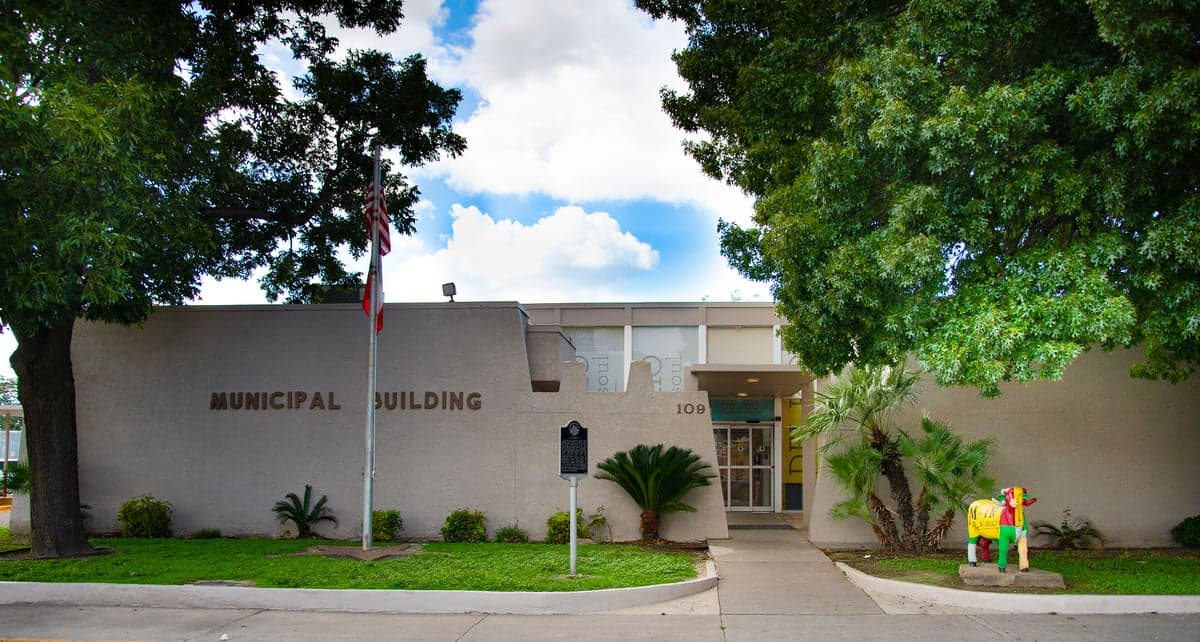
Photo: Wikipedia
Strategic Assessment of Del Rio, TX
Meaningful friction. Expect exposure to either population pressure, blast zones, or natural disaster risk. Consider buying a retreat property.
What does the Strategic Assessment tell us?
Our Strategic Assessment grades tactical survivability of an area. Major population centers, military targets, fallout zones, natural disasters, and border exposure all drive risk — lower exposure means a more defensible position in a crisis.
This is heavily inspired by Joel Skousen's Strategic Relocation book. Highly recommended you checkout the book ($)What does this tell us?
Our Strategic Assessment grades tactical survivability of an area. Major population centers, military targets, fallout zones, natural disasters, and border exposure all drive risk — lower exposure means a more defensible position in a crisis.
This is heavily inspired by Joel Skousen's Strategic Relocation book. Highly recommended you checkout the book ($)Strategic Pillars

Key Distances
Regional Safe Places
Below is our recommended "safe zones" in Texas and the surrounding area based on our strategic heuristics. For most people, it's unrealistic to live in a “safe zone” full-time due to work, family or other personal reasons. They tend to be more rural. However, many of these areas are perfect for second homes and retreat properties that double as a vacation home or even a short-term rental.

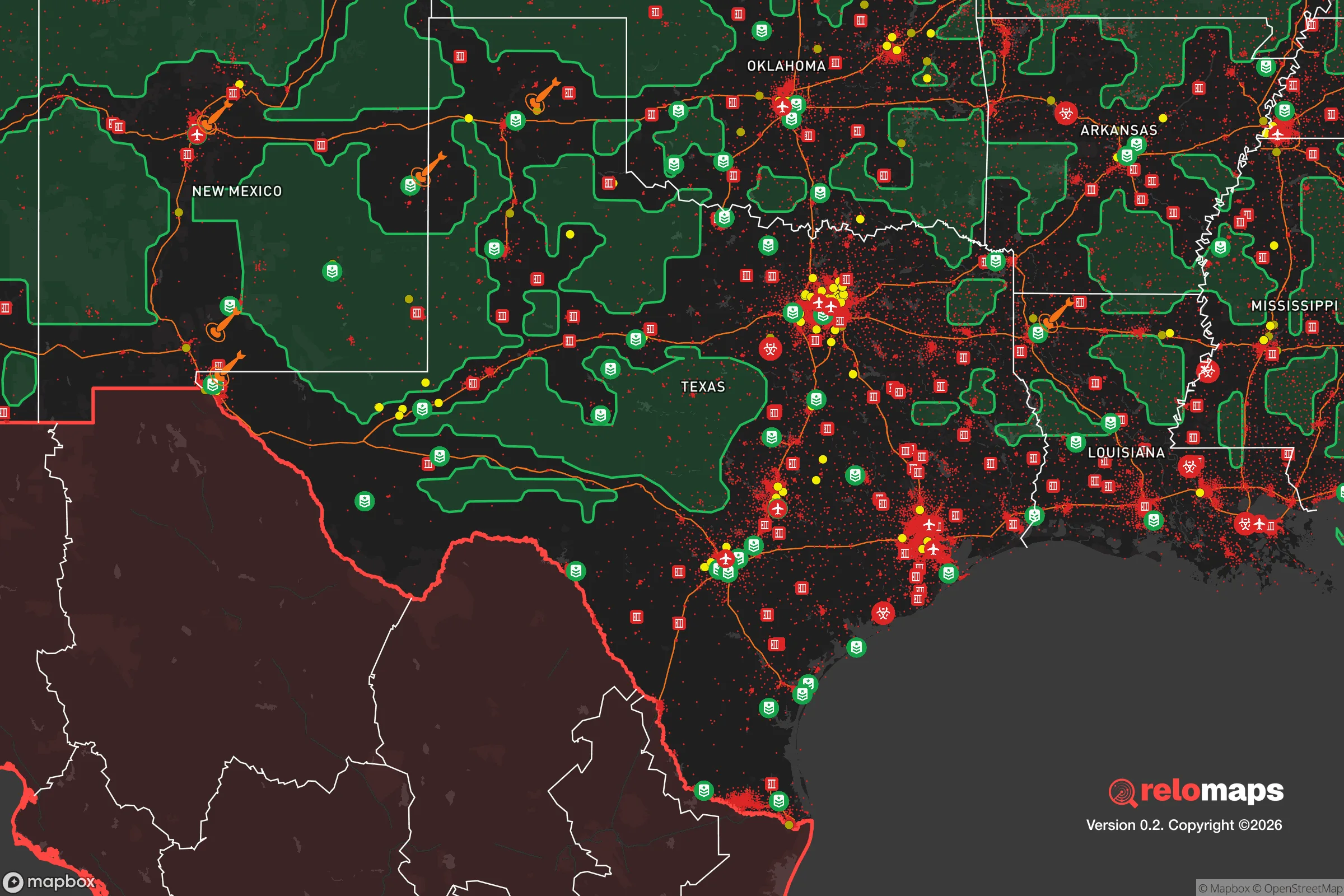


Important Note: For informational purposes only. This does not mean nothing bad ever happens in the green zones. Please use common sense. This is based on public data and modeled with AI. We tried to take a conservative approach but mistakes happen. We update this regularly as new information becomes available.
Solar Generator Recommendations
Backup power matters more here than in safer locations. We've picked three solar generators across budgets and capacity tiers — start with the budget unit if you only need a few essentials, or step up if you want to run a fridge and HVAC for days at a time.

Jackery Portable Power Station Explorer 300
Budget OptionPower on the Go: Weighing only 11 lbs, it's convenient to set up and store with book-sized foldable solar panels

BLUETTI Portable Power Station AC180
Designed for both indoor and outdoor scenarios, AC180 is highly capable as it has a robost capacity and continuous output power.

EF ECOFLOW DELTA Pro Ultra Power Station
Upgraded PickEcoFlow DELTA Pro Ultra is a whole-home energy system designed to grow with your family. Integrated with the Smart Home Panel 2, it scales to meet your evolving energy needs — keeping your home powered, intelligent, and secure through every stage of life.
We earn a commission, at no additional cost to you.
Strategic Assessment Analysis
Del Rio, Texas, presents a mixed strategic picture for the relocation-minded reader focused on resilience and self-sufficiency. Its primary advantages are its remote location along the Rio Grande and its distance from major metropolitan centers, but these are counterbalanced by significant exposure to border-related security concerns, a limited local economic base, and proximity to several high-value military and infrastructure targets. For a conservative-leaning individual or family prioritizing disaster readiness, Del Rio offers genuine geographic buffer but demands a clear-eyed assessment of its unique risks and practical limitations.
Geographic position and natural advantages for a strategic relocation
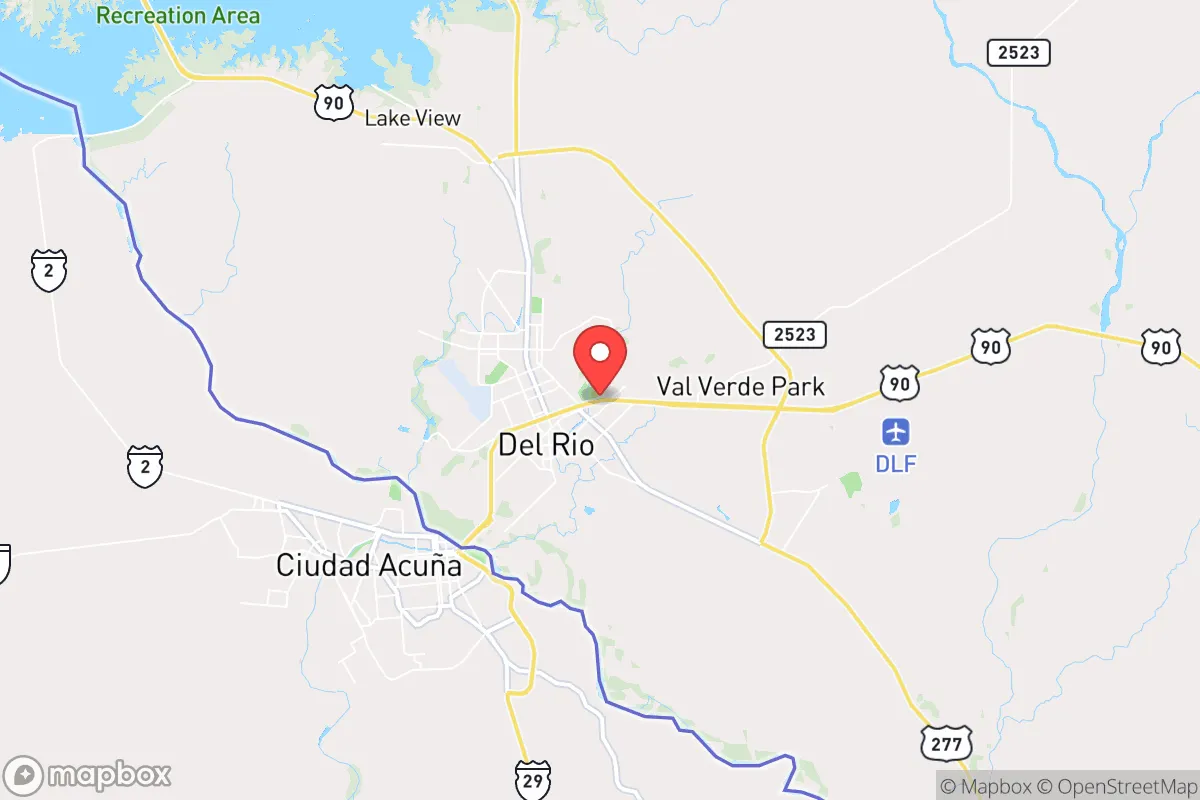
Del Rio sits in Val Verde County, roughly 150 miles west of San Antonio and 50 miles east of the Texas-Mexico border at Ciudad Acuña. This location provides a meaningful buffer from the sprawling urban corridors of San Antonio, Austin, and Houston, which are primary targets for both natural disaster cascades and man-made disruptions. The surrounding terrain is semi-arid hill country, characterized by limestone ridges, brush-covered draws, and the deep canyon of the Rio Grande. This topography offers natural defensibility and limits the risk of large-scale wildfire spread compared to heavily forested regions. The climate is hot and dry, with average annual rainfall under 20 inches, which reduces the likelihood of flooding in most areas outside the immediate floodplain of the Rio Grande and its tributaries. The area also sits far from the Gulf Coast hurricane zone, eliminating storm surge and major wind damage as primary concerns. For a relocator seeking to avoid the fallout zones of large cities, Del Rio’s isolation is a genuine asset: the nearest population center of significant size is San Antonio, and the area is not situated near any major nuclear power plants, strategic missile fields, or high-density military command centers that would be primary targets in a conflict scenario.
Risks, exposures, and proximity to fallout-relevant landmarks
The most significant risk for Del Rio is its location on the U.S.-Mexico border. Laughlin Air Force Base, located just east of the city, is a major training base for the U.S. Air Force and a key strategic asset. While this provides some economic stability, it also makes Del Rio a potential target for any adversary seeking to disrupt U.S. military operations. The base’s presence increases the likelihood of the area being affected by a kinetic or cyber attack, and in a broader conflict scenario, the base could become a staging area for military activity, drawing unwanted attention. Additionally, the border itself presents persistent security challenges. Cartel activity, human trafficking, and drug smuggling are ongoing realities in the region, and while Del Rio itself is not a high-crime city by national standards, the surrounding rural areas experience periodic violence and law enforcement activity. For a family seeking a safe, low-profile retreat, the border proximity introduces a layer of unpredictability that must be factored into any preparedness plan. The city also lies within the 100-mile border zone, meaning routine checkpoints and federal law enforcement presence are common, which can be a nuisance or a concern depending on one’s perspective on government surveillance. Natural hazards are less dramatic but still present: the area is prone to drought, extreme heat, and occasional flash flooding in low-lying areas. The risk of a major earthquake is negligible, and tornado activity is lower than in the Texas Panhandle or the Dallas-Fort Worth metroplex.
Practical resilience for a relocator: food, water, energy, and defensibility
For a relocator serious about self-sufficiency, Del Rio offers both opportunities and constraints. Water is the most critical concern. The Rio Grande is the primary surface water source, but it is heavily managed, subject to international treaties, and increasingly stressed by drought and upstream diversions. The local aquifer, the Edwards-Trinity Plateau, provides groundwater, but well yields vary significantly across the county. A relocator should plan on drilling a well and installing a rainwater catchment system as a primary water strategy; relying solely on municipal water from the city of Del Rio is not advisable in a long-term disruption scenario. Food production is feasible but requires adaptation. The growing season is long, but the arid climate demands irrigation and careful soil management. Raising livestock, particularly goats, sheep, or cattle, is common in the area, and the open rangeland provides grazing opportunities. However, the carrying capacity of the land is low, and overgrazing is a real risk. For a family, a small homestead with a garden, fruit trees, and a few goats or chickens is realistic, but large-scale food self-sufficiency would require significant acreage and water. Energy resilience is relatively straightforward. The area receives abundant solar radiation, making photovoltaic panels a reliable choice. Wind resources are moderate, but small-scale wind turbines can supplement solar. Natural gas is available in some rural areas, but propane is more common for off-grid heating and cooking. Defensibility is a mixed bag. The remote location and low population density (Val Verde County has roughly 48,000 people) mean that a well-prepared homestead can be quite secure. However, the border proximity means that law enforcement response times can be slow in remote areas, and the presence of transient populations along the border can create security concerns. A relocator should prioritize perimeter security, good lighting, and a reliable means of communication, as cell service is spotty in many parts of the county. The local economy is small and centered on Laughlin AFB, government services, and agriculture, so a relocator should not expect to find a robust job market or a wide range of goods and services. For a family that is financially independent or able to work remotely, this is less of an issue, but it is a factor to consider.
The overall strategic picture for Del Rio is one of trade-offs. The area offers genuine geographic isolation, a low population density, and a climate that is relatively forgiving in terms of natural disasters. For a relocator who values distance from major cities and is willing to invest in water infrastructure and security, Del Rio can be a viable long-term retreat. However, the border location and the presence of Laughlin AFB introduce risks that are not present in more inland, less strategic locations. The area is not a hidden gem for the unprepared; it is a frontier community that demands self-reliance and a realistic understanding of its vulnerabilities. For a conservative-leaning family that is prepared to handle the challenges of arid land, border security, and limited local resources, Del Rio can be a defensible and resilient choice. For those seeking a low-maintenance, low-risk relocation, the trade-offs may be too steep.

* Values derived from national, state, county, city and local statistics and may differ in a specific area. Last updated: 2026-08-04T15:33:28.000Z
Narrative content on this page is AI-generated and may contain mistakes. Verify any details that matter before acting on them.
ReloMaps may earn a commission from affiliate links at no extra cost to you.

