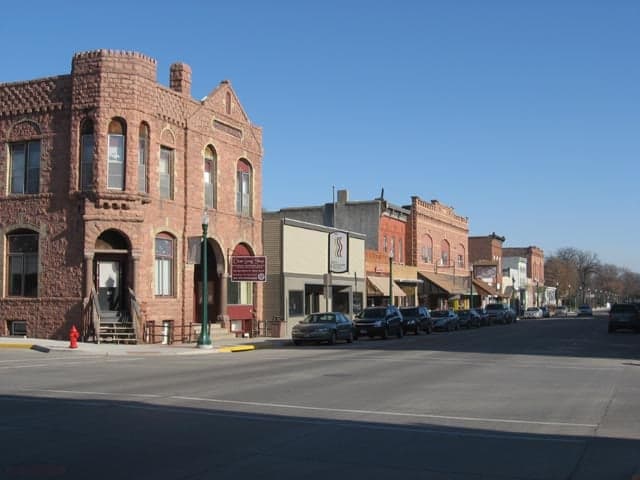
Photo: Wikipedia
Political ClimatePolitical Climate in Dell Rapids, SD
District shown is the primary district for this city’s centroid. Cities may span multiple districts.
Inherited from parent state — no local data available.
Local Political AnalysisPolitical Analysis of Dell Rapids, SD
Dell Rapids leans solidly Republican, with a Cook PVI of R+15 that places it among the more conservative small towns in eastern South Dakota. The area has held that lean for decades, but there’s a quiet shift happening—not in the voting booth, but in the cultural and policy undercurrents that long-time residents are starting to notice. If you’ve been around here since the 90s, you remember when local government was mostly about fixing roads and keeping the school budget straight. Now, you’re seeing more chatter about zoning overrides, mask mandates during flu season, and state-level pressure on local land-use decisions. The political trajectory isn’t flipping blue—it’s more like a slow creep of progressive ideas that used to bounce off the town’s common sense but now sometimes stick.
How it compares
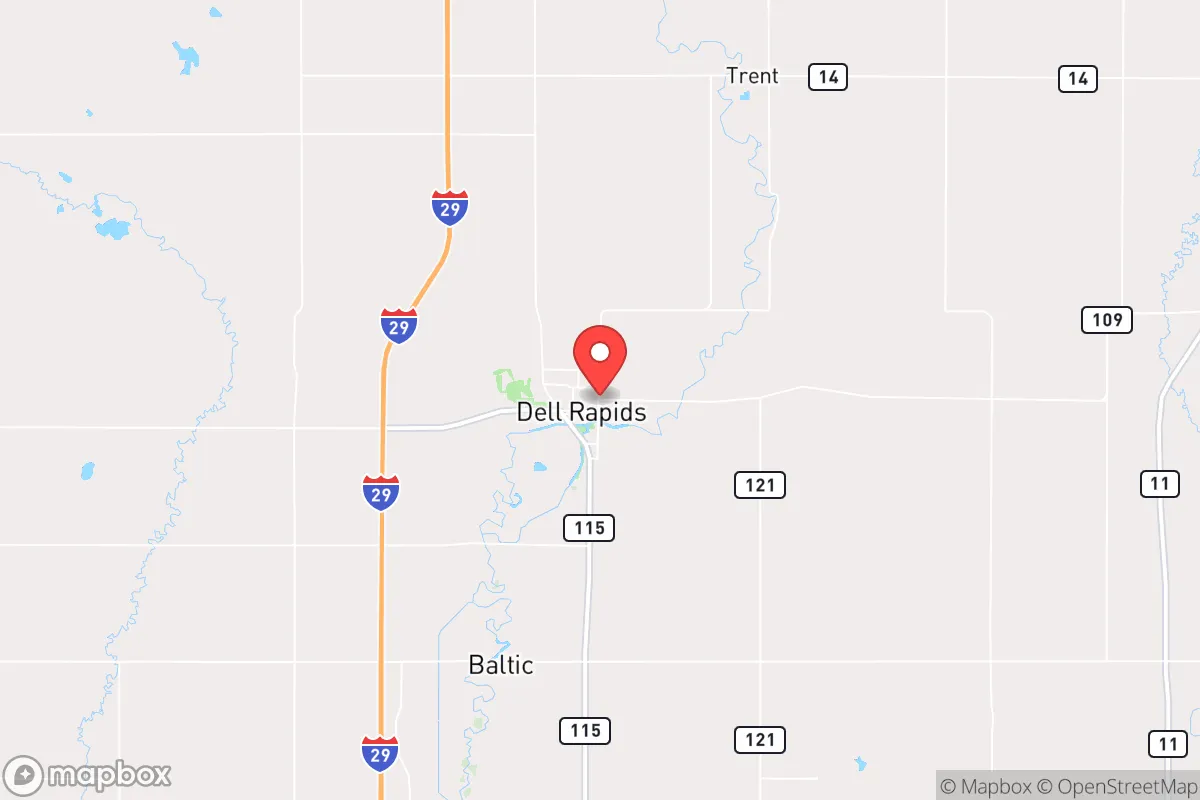
Drive 15 minutes south to Sioux Falls, and you’re in a different political universe—Minnehaha County as a whole is still red, but the city itself has swung left on social issues, with a city council that’s passed non-discrimination ordinances and debated sanctuary-city policies. Head west to Madison or north to Brookings, and you’ll find college-town liberalism that makes Dell Rapids feel like a time capsule. The real contrast, though, is with smaller towns like Baltic or Colton—they’re just as red on paper, but they haven’t seen the same influx of remote workers or retirees from blue states who bring different expectations about property rights and school curriculum. Dell Rapids sits right on the edge of that suburban spillover from Sioux Falls, and that’s where the political friction shows up. The R+15 rating still holds, but the margin in local races has tightened by about 5 points since 2016, which is a warning sign for anyone who values limited government and local control.
What this means for residents
For the average family here, the political climate means you still have a lot of freedom to live your life without government interference—but you have to stay vigilant. The school board, for instance, has resisted curriculum changes that push critical theory, but there’s been pressure from the state department of education to adopt more standardized testing that ties funding to progressive benchmarks. On property rights, the city council has floated a few zoning amendments that would restrict how you can use your land, especially if you’re on the outskirts of town. So far, those have been voted down, but they keep coming back in different forms. The tax burden remains low compared to Sioux Falls—property taxes here run about 1.2% of assessed value versus 1.5% in the city—but there’s talk of a local option sales tax to fund a new community center, which would be the first new tax in over a decade. If you value keeping government small and decisions local, you’ll find Dell Rapids still mostly delivers, but you’ll need to show up at town hall meetings to keep it that way.
Culturally, Dell Rapids still holds onto its small-town character—the annual St. Patrick’s Day parade, the Quarry Days festival, and the fact that most people know your name at the grocery store. But there’s a growing divide between the old guard who remember when the town had two hardware stores and the newcomers who commute to Sioux Falls for tech jobs and want bike lanes and craft breweries. The policy distinction that matters most right now is the town’s stance on Second Amendment rights: Dell Rapids has no local gun ordinances beyond state law, and the city council has twice voted down proposals to restrict open carry in parks. That’s the kind of thing that tells you the conservative backbone is still strong, but it’s not automatic anymore—every vote is a fight. If you’re looking for a place where the government stays out of your business and your neighbors share your values, Dell Rapids is still a solid bet, but keep an eye on those city council elections. They matter more now than they did ten years ago.

State Political ClimatePolitical Climate in South Dakota
State Political AnalysisPolitical Environment in the State
South Dakota is one of the most reliably Republican states in the nation, with a deep-rooted conservative culture that has only hardened over the past two decades. The state hasn't voted for a Democratic presidential candidate since Lyndon Johnson in 1964, and in 2024, Donald Trump carried it by nearly 30 points. The dominant coalition is a mix of rural agricultural interests, small-business owners, and a growing population of freedom-minded transplants fleeing blue states. Over the last 10-20 years, the state has shifted further right, driven by an influx of conservative migrants and a native population that resists the progressive trends seen in neighboring Minnesota and Colorado.
Urban vs. rural divide
The political map of South Dakota is starkly divided between a handful of small urban centers and the vast, deeply conservative rural expanse. The only real blue dot is Minnehaha County, home to Sioux Falls, which has trended purple in recent cycles due to an influx of younger professionals and out-of-state transplants. In 2020, Biden actually won Minnehaha County by a slim margin, though the rest of the state drowned that out. Pennington County, which includes Rapid City, leans Republican but is more moderate than the surrounding ranchlands. The real conservative strongholds are the rural counties—Harding, Perkins, and Ziebach routinely deliver 80-90% Republican margins. Brookings, home to South Dakota State University, is a slight outlier with a younger, more moderate vibe, but it still votes Republican in statewide races. The divide isn't just urban vs. rural—it's also east vs. west, with the western half of the state being more libertarian-leaning and suspicious of any government, while the eastern corridor has a more traditional, church-going conservatism.
Policy environment
South Dakota's policy environment is a dream for conservatives who value limited government. There is no state income tax, and the state has no corporate income tax either, relying instead on sales and property taxes. The regulatory posture is light—permitting for new businesses is fast, and there are no onerous zoning laws outside of Sioux Falls. Education policy is a mixed bag: the state has a robust school choice movement, with a new Education Savings Account (ESA) program signed into law in 2024, allowing parents to use public funds for private or homeschool expenses. However, the state's public schools are still largely traditional, with a focus on local control. Healthcare is a sore spot—the state expanded Medicaid under Trump-era waivers, but the system remains underfunded, and rural hospitals struggle. Election laws are among the most secure in the nation: voter ID is required, same-day registration is not allowed, and absentee ballots require a notary or witness. The state also passed a constitutional carry law in 2019, allowing permitless concealed carry, and has some of the most permissive gun laws in the country.
Trajectory & freedom
South Dakota is becoming more free in many respects, but there are warning signs. On the positive side, Governor Kristi Noem signed a parental rights bill in 2023 that prohibits schools from hiding a child's gender identity from parents, and the state has banned transgender athletes from girls' sports. The medical freedom movement is strong—the state passed a law in 2022 prohibiting COVID-19 vaccine mandates by private employers, and a 2023 law banned mask mandates in schools. Property rights are well-protected, with no statewide rent control and minimal eminent domain abuse. However, the state has seen a concerning uptick in property tax increases at the local level, driven by rapid home value appreciation in Sioux Falls and Rapid City. There's also a growing tension over land use as out-of-state investors buy up ranchland, driving up prices for locals. The state's abortion law is among the most restrictive—a trigger law banning abortion at conception took effect after Dobbs, with no exceptions for rape or incest. This has sparked some backlash, but the legislature has held firm.
Civil unrest & political movements
South Dakota is not a hotbed of civil unrest, but there are visible flashpoints. The most significant is the Standing Rock protest in 2016-2017, which drew thousands of activists from across the country to oppose the Dakota Access Pipeline. That movement was a rare moment of left-wing organizing in the state, and it left a lingering tension between tribal nations and state authorities. More recently, anti-vaccine mandate protests at the state capitol in Pierre in 2021 drew large crowds, and the state's Freedom Rally has become an annual event for libertarian and conservative activists. There is a small but vocal secessionist movement in western South Dakota, with some ranchers pushing for the state to join Wyoming or form a new "Liberty State" due to feeling ignored by the eastern-dominated legislature. Immigration politics are relatively quiet—the state has a small immigrant population, mostly in Sioux Falls, and there are no sanctuary policies. Election integrity is a hot-button issue: the state's Republican Party has pushed for hand-counting ballots in some rural counties, and there have been calls to eliminate early voting, though these have not passed.
Projection
Over the next 5-10 years, South Dakota will likely become even more conservative, but with growing internal tensions. The influx of conservative migrants from California, Illinois, and Minnesota is accelerating—Sioux Falls is projected to grow by 20% by 2030, and many of these newcomers are fleeing progressive policies and bringing their politics with them. This will likely push the state further right on cultural issues, but it could also create a suburban vs. rural split within the Republican coalition. The eastern corridor, especially around Harrisburg and Tea, is becoming a bedroom community for Sioux Falls professionals who want lower taxes but still want good schools and infrastructure. This could lead to more moderate Republican governance on fiscal issues, even as social conservatism hardens. The biggest wildcard is property taxes—if they continue to rise, you could see a populist revolt against local government, similar to what happened in Colorado with the Taxpayer Bill of Rights. The state's Native American population, concentrated in the nine reservations, will remain politically marginalized but could become a more active voting bloc if turnout efforts increase.
For a new resident, the bottom line is this: South Dakota offers a high degree of personal freedom, low taxes, and a culture that respects individual responsibility. You won't find the chaos of a blue state, but you also won't find the amenities of a big city. If you're moving here, expect a place where your vote actually counts, your rights are protected, and your neighbors will leave you alone—as long as you do the same. Just keep an eye on property taxes and the growing influence of out-of-state money in local politics. It's still one of the best states in the union for a conservative family, but no place is perfect.
* Values derived from national, state, county, city and local statistics and may differ in a specific area. Last updated: 2026-04-19T04:54:00.000Z
Narrative content on this page is AI-generated and may contain mistakes. Verify any details that matter before acting on them.
ReloMaps may earn a commission from affiliate links at no extra cost to you.

