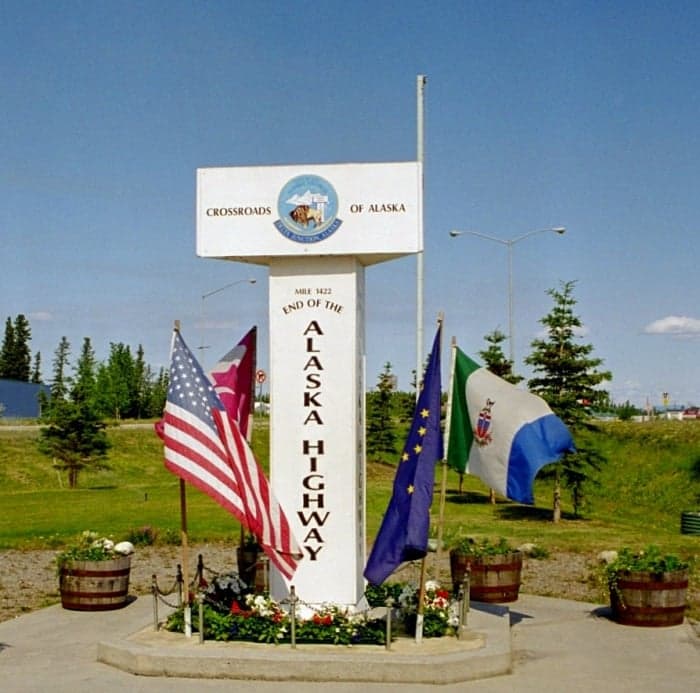
Photo: Wikipedia
Political ClimatePolitical Climate in Delta Junction, AK
District shown is the primary district for this city’s centroid. Cities may span multiple districts.
Inherited from parent state — no local data available.
Local Political AnalysisPolitical Analysis of Delta Junction, AK
Delta Junction is about as solidly conservative as it gets in Alaska, and that’s not changing anytime soon. The Cook PVI of R+6 actually understates how red this area feels on the ground—most folks here vote straight-ticket Republican, and the last few presidential cycles saw margins closer to +20 or more for the GOP candidate. The real story, though, is that this conservative streak runs deeper than just voting patterns; it’s baked into the local culture of self-reliance, distrust of big government, and a fierce independence that’s been here since the homesteading days. You don’t see the kind of progressive drift that’s creeping into Fairbanks or Anchorage, and that’s a relief to most of us who’ve watched those places get tangled up in regulations and woke policies that don’t fit life in the Interior.
How it compares
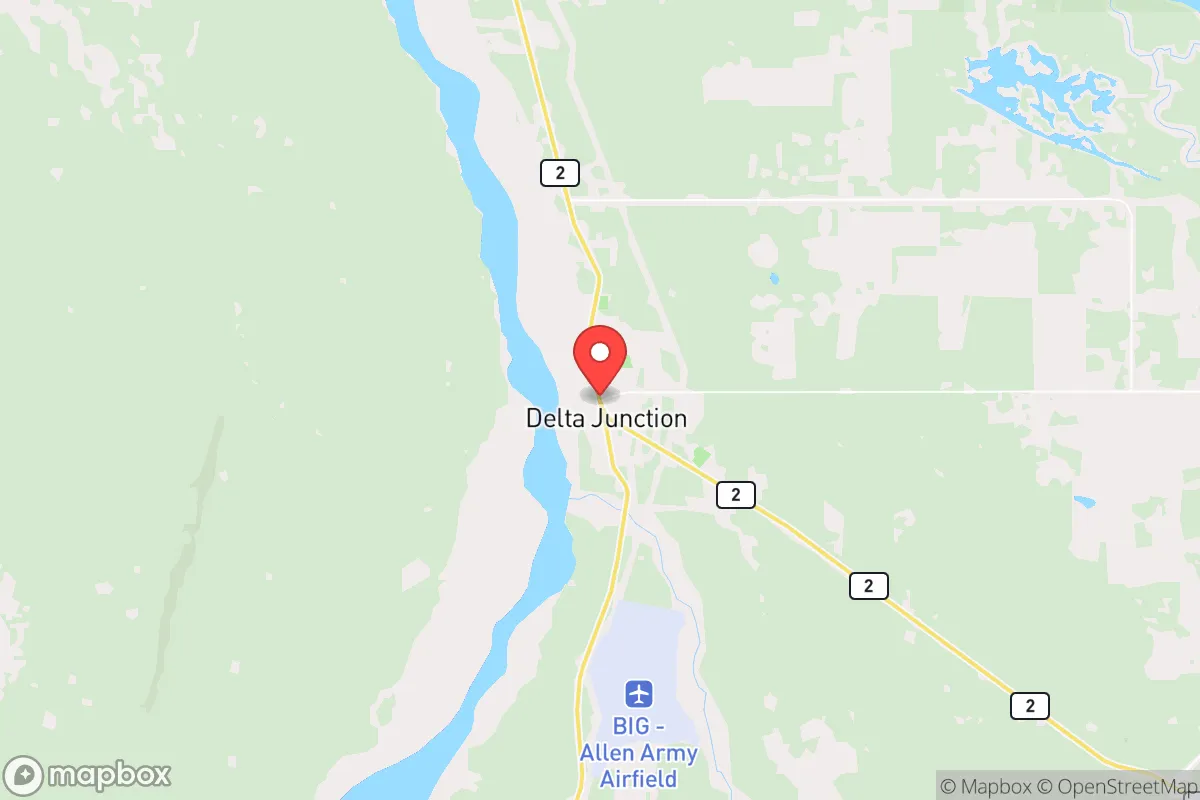
Drive 90 miles northwest to Fairbanks, and you’ll feel the difference immediately. Fairbanks has a noticeable progressive tilt, especially in the university crowd and city government, where you’ll find more support for carbon taxes, gun control, and social engineering. Delta Junction, by contrast, is a place where the Second Amendment isn’t debated—it’s exercised. The surrounding Southeast Fairbanks Census Area leans even more conservative than Delta itself, with tiny communities like Dot Lake and Healy Lake voting red by huge margins. Even Tok, about 90 miles east, is more libertarian-leaning than progressive. The only real contrast is Glennallen, about 120 miles south, which is similarly conservative but has a stronger religious influence that sometimes pushes for more government moralizing—something Delta folks tend to eye with suspicion. Bottom line: if you’re looking for a place where government stays out of your business, Delta Junction is one of the last strongholds in Alaska.
What this means for residents
For daily life, this political climate means you’re not dealing with the kind of overreach that’s become common in blue areas. No mask mandates that last for years, no heavy-handed business closures, no property tax hikes to fund pet projects. The local borough assembly and city council are dominated by folks who believe in limited government, low taxes, and personal responsibility. That translates to fewer regulations on everything from building a cabin on your land to running a small engine repair shop out of your garage. The downside? If you’re hoping for big government handouts or extensive social services, you won’t find them here. But for most of us, that’s a feature, not a bug. The real concern is the long-term trajectory: if the state government in Juneau keeps pushing carbon reduction schemes and land-use restrictions, it could eventually trickle down and threaten the rural lifestyle that makes Delta Junction worth living in. For now, though, the local resistance is strong, and the community is vigilant about keeping outside interference at bay.
Culturally, Delta Junction stands apart from much of Alaska because it’s a working-class, blue-collar town with a strong military presence from Fort Greely. That mix of homesteaders, veterans, and pipeline workers creates a no-nonsense atmosphere where people judge you by your work ethic, not your politics. You’ll see more pickup trucks than Priuses, more hunting rifles than yoga studios. The biggest policy distinction is the near-total absence of the kind of progressive zoning or environmental restrictions that choke development in places like Anchorage or Juneau. Land is still affordable, permits are straightforward, and the local government generally assumes you know what’s best for your own property. That’s getting rarer every year in America, and it’s worth protecting. If you value freedom over convenience and don’t mind a little cold, Delta Junction is one of the last places where you can still live like an American used to.

State Political ClimatePolitical Climate in Alaska
State Political AnalysisPolitical Environment in the State
Alaska has long been a unique political beast—a state where libertarian-leaning independence, resource-driven conservatism, and a stubborn streak of self-reliance dominate the landscape. For decades, the state has leaned reliably Republican in presidential elections, with the GOP winning Alaska in every contest since 1968 except for 1964 (LBJ) and 2020 (when Trump still carried it by 10 points). But the real story is the undercurrent: a growing tension between the old-school, live-and-let-live frontier ethos and an influx of progressive influence concentrated in a few key areas. Over the last 10-20 years, the state has seen a slow but steady shift—rural and conservative strongholds like the Mat-Su Valley and Kenai Peninsula have hardened their Republican lean, while Anchorage and Juneau have drifted left, creating a sharper urban-rural divide than ever before.
Urban vs. rural divide
The political map of Alaska is a study in contrasts. The Anchorage metro area, home to roughly 40% of the state’s population, is the epicenter of the state’s progressive drift. In 2020, Anchorage’s Assembly flipped to a left-leaning majority, and the city has since passed measures like a mask mandate extension and a controversial "sanctuary city" ordinance limiting cooperation with federal immigration enforcement. Meanwhile, the Mat-Su Borough (Wasilla, Palmer) is the state’s conservative heartland—a place where Trump won 65% of the vote in 2020 and where the local government has actively resisted state-level mandates. The Kenai Peninsula (Soldotna, Homer) is more mixed: Homer leans left with its artist and fishing community, while Soldotna and Kenai remain solidly red. Fairbanks, the interior’s hub, is a bellwether—military and university influence create a split, but the surrounding rural areas (North Pole, Delta Junction) are deeply conservative. Juneau, the capital, is the state’s most reliably blue city, driven by government employment and a strong environmentalist presence. The real wildcard is the rural Bush—villages like Bethel, Nome, and Barrow—where Alaska Native voters often break for Democrats in state races but are culturally conservative on issues like subsistence hunting and resource development.
Policy environment
Alaska’s policy environment is a mixed bag for a conservative mover. On the plus side: no state income tax and no statewide sales tax—a huge draw. The state’s Permanent Fund Dividend (PFD) pays residents an annual check from oil revenues, which has been a sacred cow for decades. But the regulatory posture is shifting. The Alaska Department of Education has seen increased centralization under Governor Mike Dunleavy (R), who has pushed for school choice and parental rights, but the state’s teacher union remains powerful. Healthcare is a sore spot: Alaska has the highest per-capita healthcare costs in the nation, and the state’s Medicaid expansion under the ACA (accepted in 2015) has strained budgets. Election laws are relatively free—no voter ID requirement at the polls (though you must register with a state ID), and the state uses a ranked-choice voting system passed by ballot initiative in 2020, which conservatives widely view as a power grab that dilutes majority rule. The Alaska Supreme Court has been a flashpoint, ruling in favor of abortion access and same-sex marriage before federal law required it, which rankles traditionalists.
Trajectory & freedom
On the freedom front, Alaska is a tale of two trends. On one hand, the state remains a bastion of gun rights: no permit required for concealed carry, no magazine limits, and a "stand your ground" law. In 2023, the legislature passed a bill prohibiting state enforcement of federal gun laws that violate the Second Amendment—a direct challenge to federal overreach. On the other hand, parental rights have seen erosion. In 2021, the Anchorage School District adopted a policy allowing students to use preferred names and pronouns without parental notification, sparking a backlash that led to a 2023 state law requiring schools to notify parents of any changes to a student’s health or well-being records. Medical autonomy took a hit during COVID: while Alaska never had a statewide mask mandate, Anchorage and Juneau imposed their own, and the state’s vaccine passport system (voluntary but promoted by the health department) raised eyebrows. Property rights are generally strong—no statewide zoning—but the Alaska National Interest Lands Conservation Act (ANILCA) continues to restrict development on federal lands, which cover 60% of the state. The biggest freedom concern is taxation: while there’s no income tax, the state’s reliance on oil revenue is volatile, and there’s growing talk of a state sales tax or income tax to close budget gaps—a red flag for anyone valuing fiscal liberty.
Civil unrest & political movements
Alaska isn’t known for mass protests, but there have been flashpoints. The 2020 Black Lives Matter protests in Anchorage and Juneau were relatively small but led to the removal of a statue of a Russian explorer in Sitka. The PFD fight is a perennial political battleground—when Governor Dunleavy proposed cutting the dividend to balance the budget in 2019, it sparked a recall effort and massive public outcry. The secessionist movement is alive in a fringe way: the Alaska Independence Party, which once elected Governor Wally Hickel, still advocates for a vote on secession, though it’s largely symbolic. Immigration politics are muted—Alaska has a small foreign-born population—but the sanctuary city ordinance in Anchorage has been a hot-button issue, with conservatives arguing it undermines public safety. Election integrity is a growing concern: the 2020 ranked-choice voting system was narrowly upheld in a 2024 ballot measure, but many conservatives view it as a tool to weaken Republican majorities. The Mat-Su Borough has become a hub for "constitutional sheriff" movements, with local law enforcement openly refusing to enforce certain state mandates.
Projection
Looking ahead 5-10 years, Alaska is likely to become more polarized. The in-migration pattern is telling: people moving to Alaska from the Lower 48 tend to be either retirees seeking low taxes (often conservative) or remote workers and environmentalists drawn to the outdoors (often progressive). The Anchorage metro will continue to drift left, driven by younger transplants and a growing government sector. The Mat-Su Valley will remain a conservative stronghold, but its rapid growth (fastest-growing region in the state) could bring new tensions as infrastructure struggles to keep up. The rural Bush is a wildcard—climate change and resource development could shift Native voting patterns. The biggest threat to freedom is fiscal: if oil revenues continue to decline, the state will face pressure to implement an income tax or sales tax, which would fundamentally alter Alaska’s appeal. The ranked-choice voting system is likely here to stay, which could lead to more moderate candidates winning in a state that’s naturally conservative. For a conservative mover, the bottom line is that Alaska still offers more personal liberty than most states, but the window is narrowing—especially in the cities.
Bottom line for a new resident: If you’re looking for a place where your rights are respected and government stays out of your life, Alaska is still a strong bet—but choose your location carefully. The Mat-Su Valley or Kenai Peninsula will give you a community that shares your values, while Anchorage and Juneau will feel increasingly like the Lower 48’s progressive enclaves. Keep an eye on the state budget and the ranked-choice voting system—these are the two biggest levers that could shift Alaska’s political climate in the coming decade. If you value low taxes, gun rights, and a live-and-let-live culture, Alaska is still one of the best bets in the nation—just don’t expect it to stay that way forever without vigilance.
* Values derived from national, state, county, city and local statistics and may differ in a specific area. Last updated: 2026-04-19T19:17:54.000Z
Narrative content on this page is AI-generated and may contain mistakes. Verify any details that matter before acting on them.
ReloMaps may earn a commission from affiliate links at no extra cost to you.

