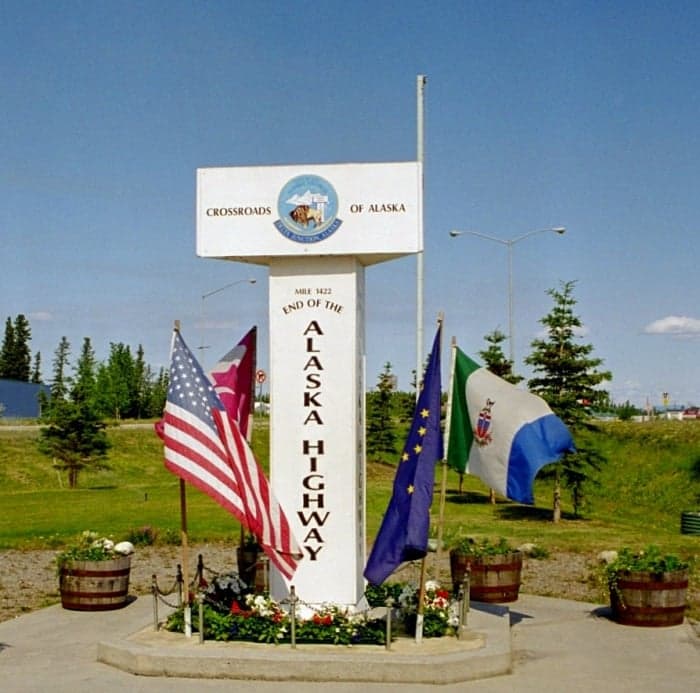
Photo: Wikipedia
Quality of Life in Delta Junction, AK
A high quality of life with strong walkability, manageable living costs, healthy neighborhood signals, and solid amenity access.
What does Quality of Life tell us?
Quality of Life blends cost of living, nearby amenities, socioeconomic signals, and neighborhood character. City-level scores represent the whole municipality; individual neighborhoods can differ.
What does this tell us?
Quality of Life blends cost of living, nearby amenities, socioeconomic signals, and neighborhood character. City-level scores represent the whole municipality; individual neighborhoods can differ.
Cost of Living
2% below national average
The Real Cost of Living in Delta Junction, AK for 2026
| Tier | Individual | Family (4) |
|---|---|---|
| Survival | $18k | $35k |
| Comfortable | $52k | $77k |
| Luxury | $132k+ | $205k+ |
| Elite (Top 5%) | $155k+ | $241k+ |
112%
The Area Signal
A metric tracking the socioeconomic signals of the area.


Hobbies
Explore the areaGroceries
2 within 10 miles
Gas
0 within 10 miles
Hospital
1 within 20 miles
Airport
Delta Junction Airport
Post Office
USPS — Delta Junction, AK
Critical Amenities
Quality-of-Life Analysis
Delta Junction offers a notably affordable quality of life in Alaska’s interior, with a cost-of-living index of 98 (2% below the U.S. average) that stands in sharp contrast to the state’s famously high expenses. The area attracts a mix of self-sufficient homesteaders, state and federal employees, and military-affiliated families tied to nearby Fort Greely, creating a community that values practicality, outdoor access, and fiscal stability over urban amenities. With a median home value of $268,700 and median rent of $1,155, Delta Junction provides a rare pocket of housing affordability within Alaska, drawing residents who might otherwise be priced out of Fairbanks or Anchorage.
Cost of living, housing affordability, and how Delta Junction compares to Fairbanks and Anchorage
Delta Junction’s cost-of-living index of 98 is significantly lower than Fairbanks (index ~130) and Anchorage (index ~125), making it one of the most budget-friendly communities in the state. The median home value of $268,700 is roughly 40% less than Fairbanks’ median of ~$350,000 and about half of Anchorage’s typical home price. Renters also benefit: the median rent of $1,155 is well below Fairbanks’ average of $1,400 and Anchorage’s $1,500. The average commute of 19.5 minutes is short by any standard—and a fraction of the 30+ minute commutes common in larger Alaskan cities—reflecting the town’s compact layout and limited traffic. However, this affordability comes with trade-offs: grocery and fuel costs are elevated due to remote supply chains, and home heating expenses (often propane or fuel oil) can be substantial in winter. Property taxes remain low, with no state income tax, but residents should budget for higher utility and transportation costs than the national average.
Local amenities, schools, and what daily life is like for families and outdoor enthusiasts
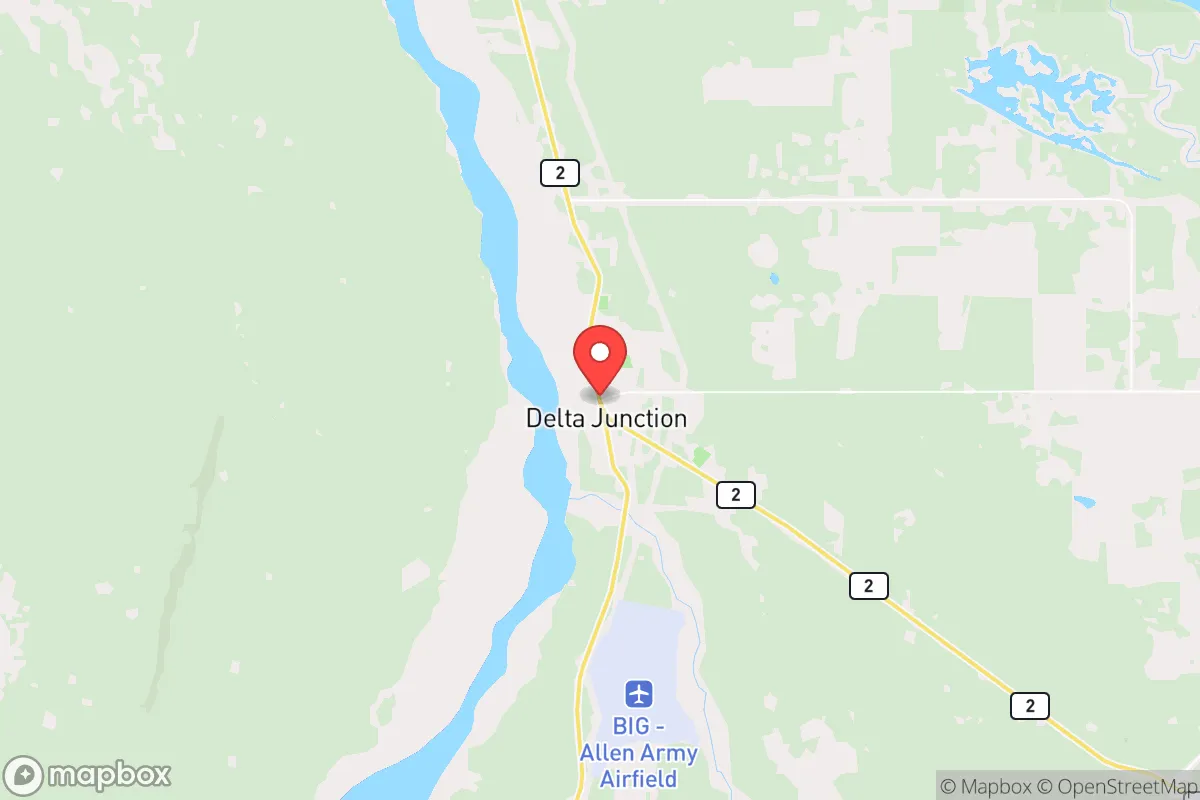
Daily life in Delta Junction revolves around self-reliance and the surrounding wilderness. The Delta-Greely School District serves roughly 400 students across two schools (Delta Junction Elementary and Delta Junction High School), with class sizes averaging 15–20 students—small enough for personalized attention but limited in advanced placement or elective offerings. For errands and services, residents rely on a handful of local grocery stores, hardware outlets, and the Delta Junction Visitor Center; major shopping and healthcare require a 95-mile drive to Fairbanks. The town’s rhythm is shaped by the Alaska Highway and the Richardson Highway junction, with the Alaska Pipeline corridor visible nearby. Outdoor life dominates: the Delta River, Donnelly Creek, and the Granite Tors Trail system provide year-round hiking, fishing, and snowmobiling. The community hosts the annual Buffalo Wallow Chili Cook-Off and the Delta Daze festival, but nightlife and cultural venues are minimal. For families, the trade-off is clear: lower housing costs and outdoor access versus limited retail, dining, and specialized medical care.
Delta Junction is best suited for individuals and families who prioritize affordability, space, and outdoor recreation over urban convenience. It works well for remote workers, military personnel at Fort Greely, and those in trades or state/federal jobs who can tolerate a 95-mile drive to Fairbanks for major needs. Retirees on fixed incomes also find the low housing costs appealing, though the long, dark winters and limited healthcare access require careful planning. Those who thrive here are typically self-sufficient, comfortable with isolation, and eager to trade city amenities for a lower cost of living and immediate access to Alaska’s interior wilderness.

Crime in Delta Junction, AK
Higher crime rates than 66% of comparable U.S. locations.
Violent CrimeViolent Crime Analysis
Property CrimeProperty Crime Analysis
Crime Analysis
Delta Junction, Alaska, presents a complex safety picture with crime rates that significantly exceed both state and national averages, making it a location where residents and newcomers should exercise heightened awareness. The town's violent crime rate stands at 726.6 incidents per 100,000 people, while property crime occurs at a rate of 1,909.5 per 100,000. These figures place Delta Junction in a higher-risk category compared to most Alaskan communities of similar size, though the nature of crime here differs markedly from urban centers in the Lower 48.
Crime in context
Delta Junction's violent crime rate is roughly double the national average and significantly above Alaska's already elevated statewide rate of approximately 800 per 100,000. Property crime, while lower than Anchorage's rate, still exceeds the national median by about 15%. The town's location along the Alaska Highway and its role as a regional service hub for the Tanana Valley contribute to transient populations and associated property offenses. It is important to note that Alaska's justice system, particularly in more populated areas like Fairbanks (100 miles west), has faced criticism for progressive prosecutorial policies that some argue prioritize offender rehabilitation over public safety. This ideological approach, while well-intentioned, can result in reduced sentences and early releases, potentially increasing recidivism and leaving victims with diminished recourse. The Southeast Alaska Public Defender Agency's influence on case outcomes in the region is a factor residents consider when evaluating overall safety.
What residents experience
Daily life in Delta Junction involves a practical awareness of crime rather than constant fear. Most violent incidents are domestic in nature or alcohol-related, occurring between individuals who know each other, rather than random attacks on strangers. Property crime, particularly theft from vehicles and unoccupied cabins, is the more common concern for residents. The town's small population (under 1,000) means that community vigilance is high, and many residents rely on informal networks and personal firearms for protection. The local police department, while understaffed relative to call volume, maintains a visible presence. However, response times to outlying areas can be lengthy, and the Alaska State Troopers handle most serious investigations.
Neighborhood-level variation in Delta Junction is limited due to the town's compact size. The core residential area near the highway and school tends to see more foot traffic and property crime, while outlying homesteads and subdivisions experience lower incident rates but greater vulnerability due to isolation. The Fort Greely military installation, located 5 miles south, maintains its own security and has a lower crime rate than the civilian town. Overall, Delta Junction demands a self-reliant approach to safety, where locking doors, securing property, and knowing neighbors are essential practices rather than optional precautions.
* Values derived from national, state, county, city and local statistics and may differ in a specific area. Last updated: 2026-04-19T19:17:54.000Z
Narrative content on this page is AI-generated and may contain mistakes. Verify any details that matter before acting on them.
ReloMaps may earn a commission from affiliate links at no extra cost to you.

