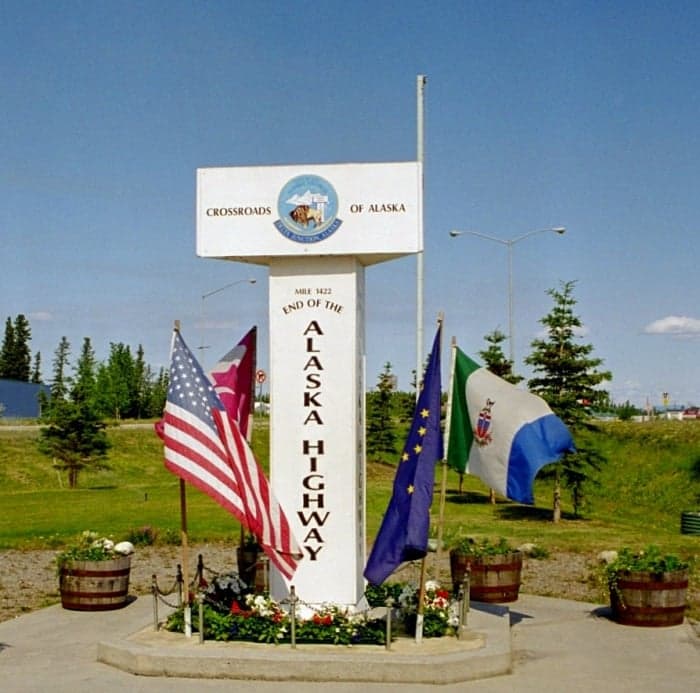
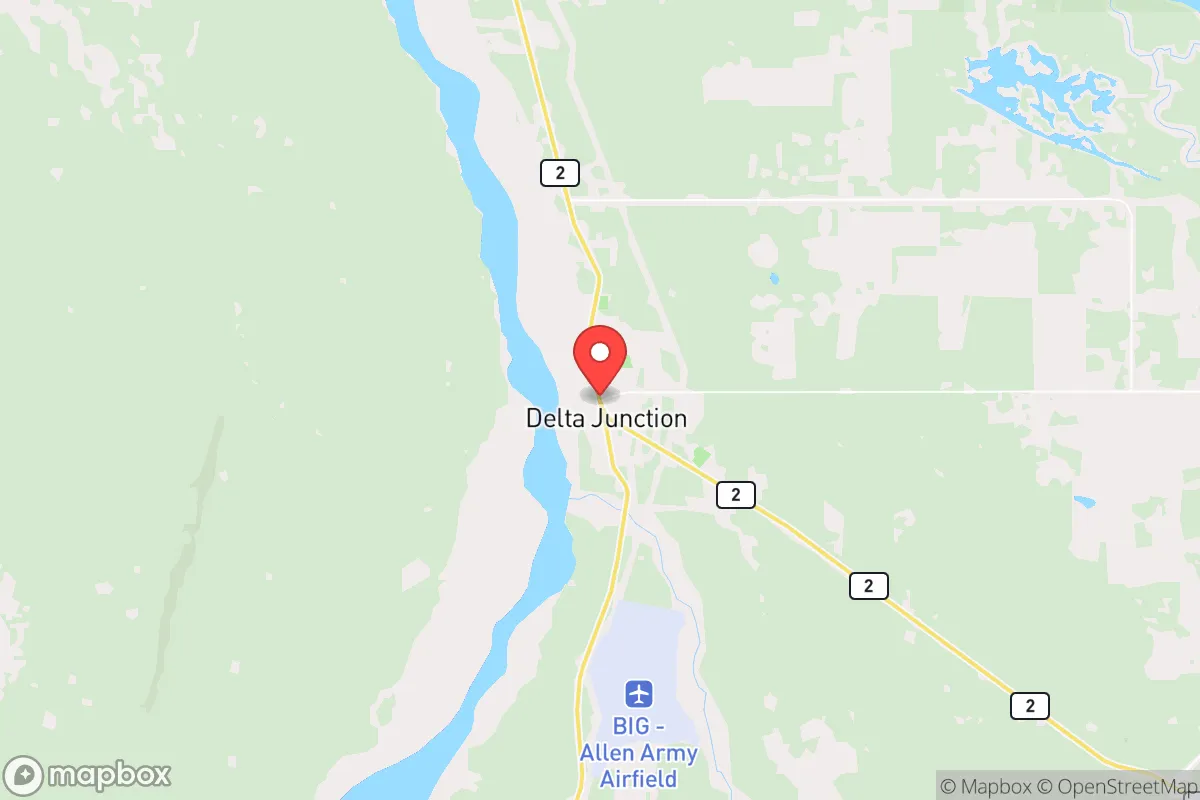
Photo: Wikipedia
Strategic Assessment of Delta Junction, AK
Strong survivability profile. Good buffer from population centers, with manageable environmental and tactical risks.
What does the Strategic Assessment tell us?
Our Strategic Assessment grades tactical survivability of an area. Major population centers, military targets, fallout zones, natural disasters, and border exposure all drive risk — lower exposure means a more defensible position in a crisis.
This is heavily inspired by Joel Skousen's Strategic Relocation book. Highly recommended you checkout the book ($)What does this tell us?
Our Strategic Assessment grades tactical survivability of an area. Major population centers, military targets, fallout zones, natural disasters, and border exposure all drive risk — lower exposure means a more defensible position in a crisis.
This is heavily inspired by Joel Skousen's Strategic Relocation book. Highly recommended you checkout the book ($)Strategic Pillars

Key Distances
Regional Safe Places
Below is our recommended "safe zones" in Alaska and the surrounding area based on our strategic heuristics. For most people, it's unrealistic to live in a “safe zone” full-time due to work, family or other personal reasons. They tend to be more rural. However, many of these areas are perfect for second homes and retreat properties that double as a vacation home or even a short-term rental.
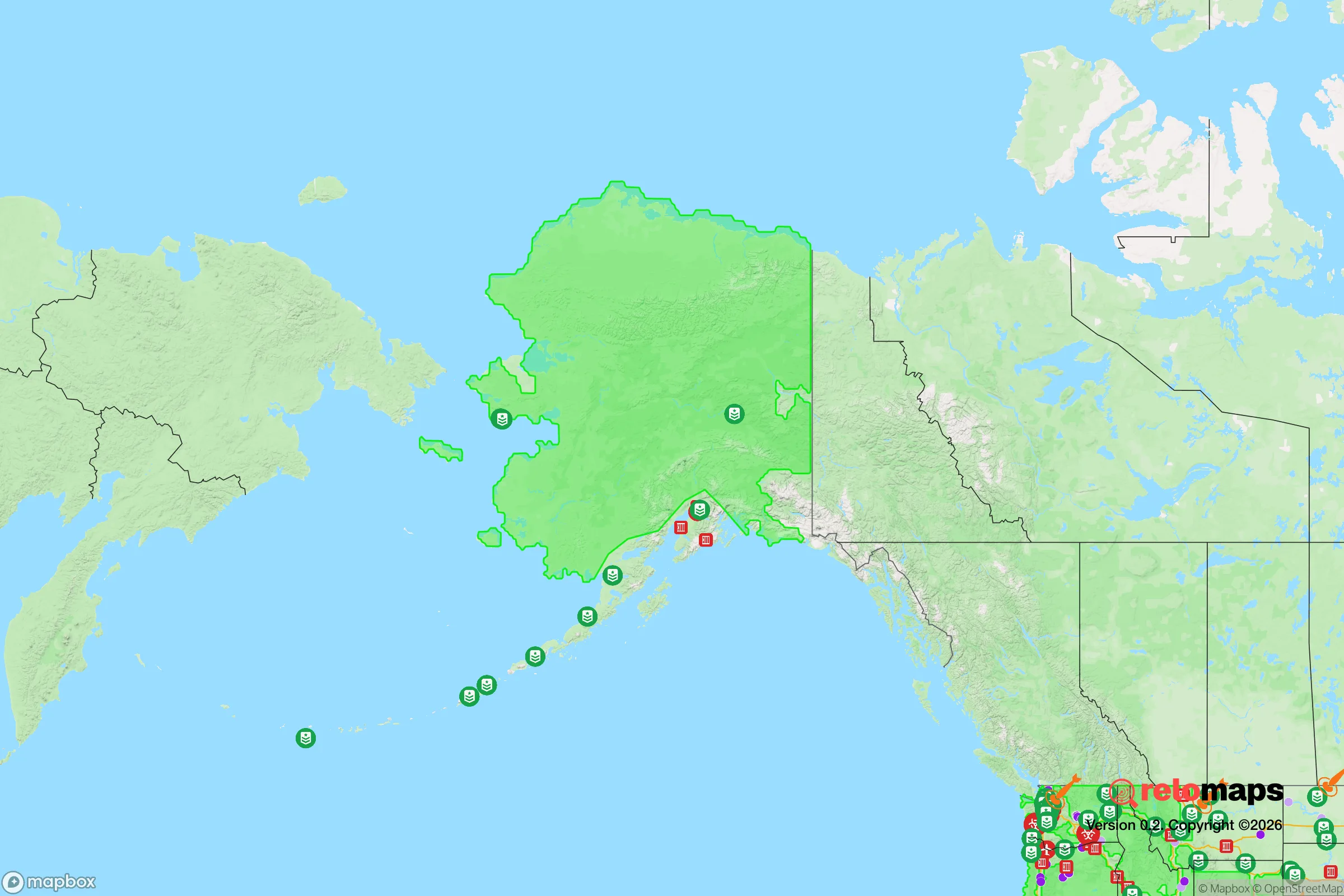
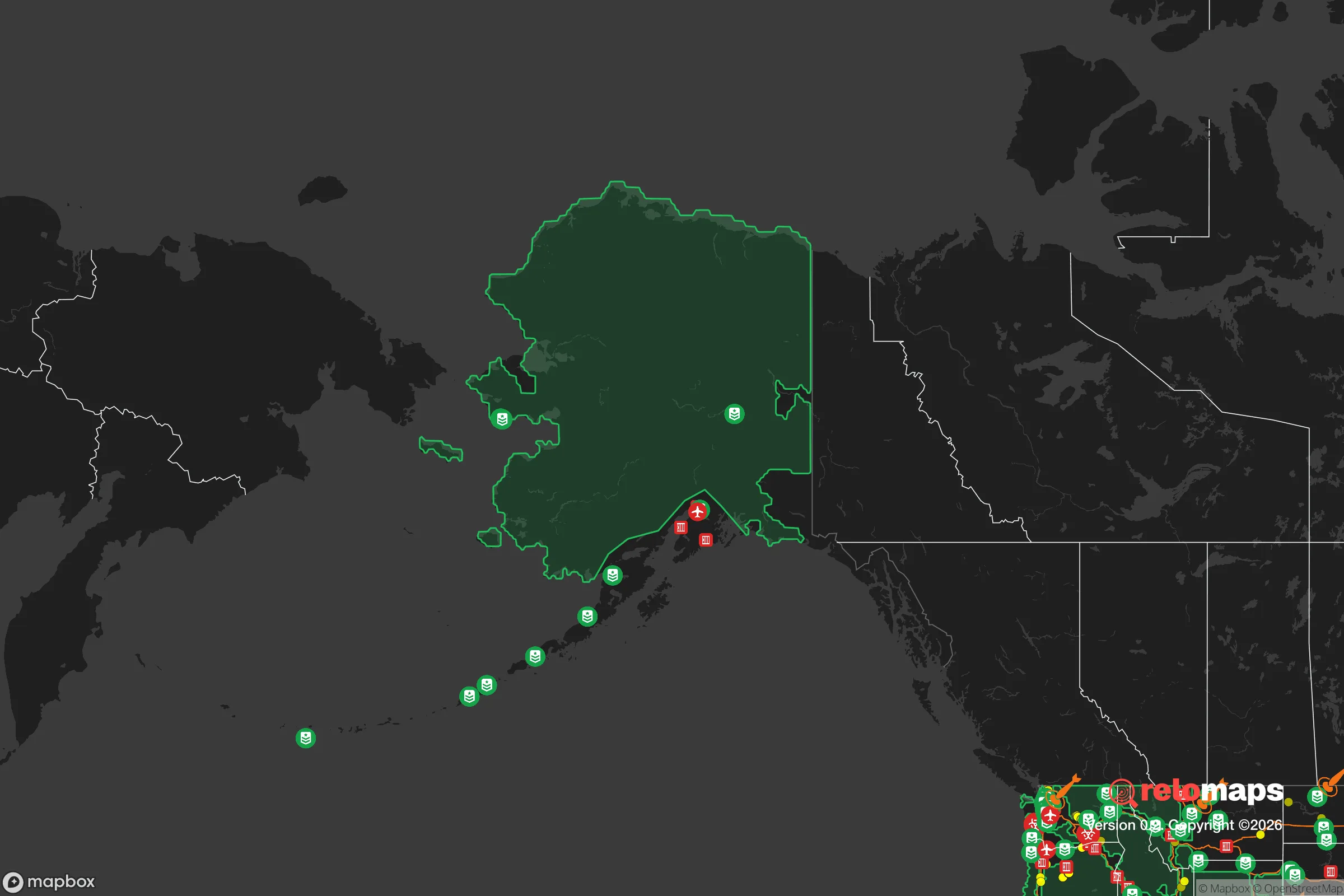


Important Note: For informational purposes only. This does not mean nothing bad ever happens in the green zones. Please use common sense. This is based on public data and modeled with AI. We tried to take a conservative approach but mistakes happen. We update this regularly as new information becomes available.
Solar Generator Recommendations
Backup power matters more here than in safer locations. We've picked three solar generators across budgets and capacity tiers — start with the budget unit if you only need a few essentials, or step up if you want to run a fridge and HVAC for days at a time.

Jackery Portable Power Station Explorer 300
Budget OptionPower on the Go: Weighing only 11 lbs, it's convenient to set up and store with book-sized foldable solar panels

BLUETTI Portable Power Station AC180
Designed for both indoor and outdoor scenarios, AC180 is highly capable as it has a robost capacity and continuous output power.

EF ECOFLOW DELTA Pro Ultra Power Station
Upgraded PickEcoFlow DELTA Pro Ultra is a whole-home energy system designed to grow with your family. Integrated with the Smart Home Panel 2, it scales to meet your evolving energy needs — keeping your home powered, intelligent, and secure through every stage of life.
We earn a commission, at no additional cost to you.
Strategic Assessment Analysis
Delta Junction, Alaska, sits at a strategic crossroads that makes it one of the most defensible and resilient relocation options in the United States for those prioritizing long-term preparedness. Located at the junction of the Richardson and Alaska Highways, roughly 100 miles southeast of Fairbanks, this community of roughly 1,000 residents offers a unique blend of isolation, resource access, and logistical advantage that appeals to preppers and survivalists. Its position away from major population centers, combined with Alaska’s constitutional protections for firearms and property rights, creates a baseline of security that is increasingly rare in the Lower 48.
Geographic position and natural advantages for long-term survival
Delta Junction’s location is its primary strategic asset. It sits in the Tanana River Valley, flanked by the Alaska Range to the south and the White Mountains to the north, providing natural barriers that slow movement and create defensible terrain. The area is far from any major metropolitan area—Fairbanks is the nearest city of note, and Anchorage is over 300 miles away. This distance from large population centers is a critical advantage in a collapse scenario, as it reduces exposure to civil unrest, resource competition, and fallout from infrastructure failures. The region’s low population density means that even in a worst-case scenario, the carrying capacity of the land is not overwhelmed by refugees or looters. The Alaska Highway, while a potential route for movement, is also a chokepoint that can be monitored and controlled by those familiar with the terrain. The nearby Delta River and Tanana River provide water access, and the surrounding boreal forest offers timber, game, and forage. The area’s subarctic climate—with long, cold winters and short summers—is a natural filter: only those truly committed to self-reliance will endure, which weeds out unprepared transients.
Risks, exposures, and proximity to fallout-relevant landmarks
No location is without vulnerabilities, and Delta Junction has specific exposures that a strategic relocator must weigh. The most significant is its proximity to Fort Greely, a U.S. Army installation that houses the Ground-Based Midcourse Defense (GMD) missile field. While this provides a potential military presence that could deter some threats, it also makes the area a target in a major conflict involving nuclear or strategic weapons. The missile field is roughly 10 miles south of town, and any escalation involving U.S. missile defense systems could draw attention from adversaries. Additionally, the Trans-Alaska Pipeline runs through the region, and while it is a critical infrastructure asset, its disruption could trigger economic collapse or environmental hazards. The area is also subject to natural risks: earthquakes are common in Alaska, and the Denali Fault runs nearby. A major seismic event could damage roads, pipelines, and power lines, isolating the community for weeks. Wildfire risk is moderate but real, especially during dry summers, and the boreal forest can burn intensely. Finally, the long, dark winters present a psychological and logistical challenge—seasonal affective disorder, fuel shortages, and the need for robust heating systems are non-negotiable realities. For those unprepared for extreme cold, Delta Junction can become a death trap rather than a sanctuary.
Practical resilience for a relocator: food, water, energy, and defensibility
Delta Junction offers strong potential for self-sufficiency, but it requires upfront investment and knowledge. The growing season is short—roughly 90 days—but the long summer daylight hours (up to 20 hours in June) allow for productive gardening of cold-hardy crops like potatoes, carrots, cabbage, and kale. The area is known for its agricultural potential, with the Delta Junction Agricultural Project having demonstrated that barley, hay, and livestock can thrive. Hunting and fishing are reliable: moose, caribou, and bear are common, and the Tanana River offers salmon and grayling. Trapping for fur and small game is also viable. Water is abundant from rivers and lakes, but must be treated or boiled due to potential contamination from wildlife and mining runoff. Off-grid energy is feasible: solar panels work in summer, but winter requires wind turbines or a reliable generator with stored fuel. Wood heating is the most practical primary heat source, and the surrounding forest provides ample fuel if managed sustainably. Defensibility is high due to the area’s isolation and natural barriers. The community is small and tight-knit, meaning that mutual aid networks are possible, but outsiders are easily identified. Property can be purchased with acreage, allowing for standoff distance and the establishment of perimeter security. However, the cost of land and supplies is higher than in the Lower 48, and shipping delays are common. A relocator should arrive with at least a year’s worth of food, medical supplies, and ammunition, as local stores are limited and restocking is unreliable.
The overall strategic picture for Delta Junction is one of high reward paired with high commitment. It is not a location for those seeking a soft landing or easy access to modern conveniences. For the conservative-minded prepper who values self-reliance, property rights, and distance from the chaos of urban centers, it offers a rare combination of natural barriers, resource abundance, and a like-minded community. The risks—military targeting, seismic activity, extreme climate—are real but manageable with proper planning. Delta Junction is a fortress in the making, but only for those willing to put in the work to build it. If you are serious about long-term survival and can handle the isolation and cold, this is one of the best options in North America. If you are looking for a quick escape with minimal effort, look elsewhere.

* Values derived from national, state, county, city and local statistics and may differ in a specific area. Last updated: 2026-04-19T19:17:54.000Z
Narrative content on this page is AI-generated and may contain mistakes. Verify any details that matter before acting on them.
ReloMaps may earn a commission from affiliate links at no extra cost to you.

