Photo: Wikipedia
Strategic Assessment of Dickson, TN
Meaningful friction. Expect exposure to either population pressure, blast zones, or natural disaster risk. Consider buying a retreat property.
What does the Strategic Assessment tell us?
Our Strategic Assessment grades tactical survivability of an area. Major population centers, military targets, fallout zones, natural disasters, and border exposure all drive risk — lower exposure means a more defensible position in a crisis.
This is heavily inspired by Joel Skousen's Strategic Relocation book. Highly recommended you checkout the book ($)What does this tell us?
Our Strategic Assessment grades tactical survivability of an area. Major population centers, military targets, fallout zones, natural disasters, and border exposure all drive risk — lower exposure means a more defensible position in a crisis.
This is heavily inspired by Joel Skousen's Strategic Relocation book. Highly recommended you checkout the book ($)Strategic Pillars

Key Distances
Regional Safe Places
Below is our recommended "safe zones" in Tennessee and the surrounding area based on our strategic heuristics. For most people, it's unrealistic to live in a “safe zone” full-time due to work, family or other personal reasons. They tend to be more rural. However, many of these areas are perfect for second homes and retreat properties that double as a vacation home or even a short-term rental.
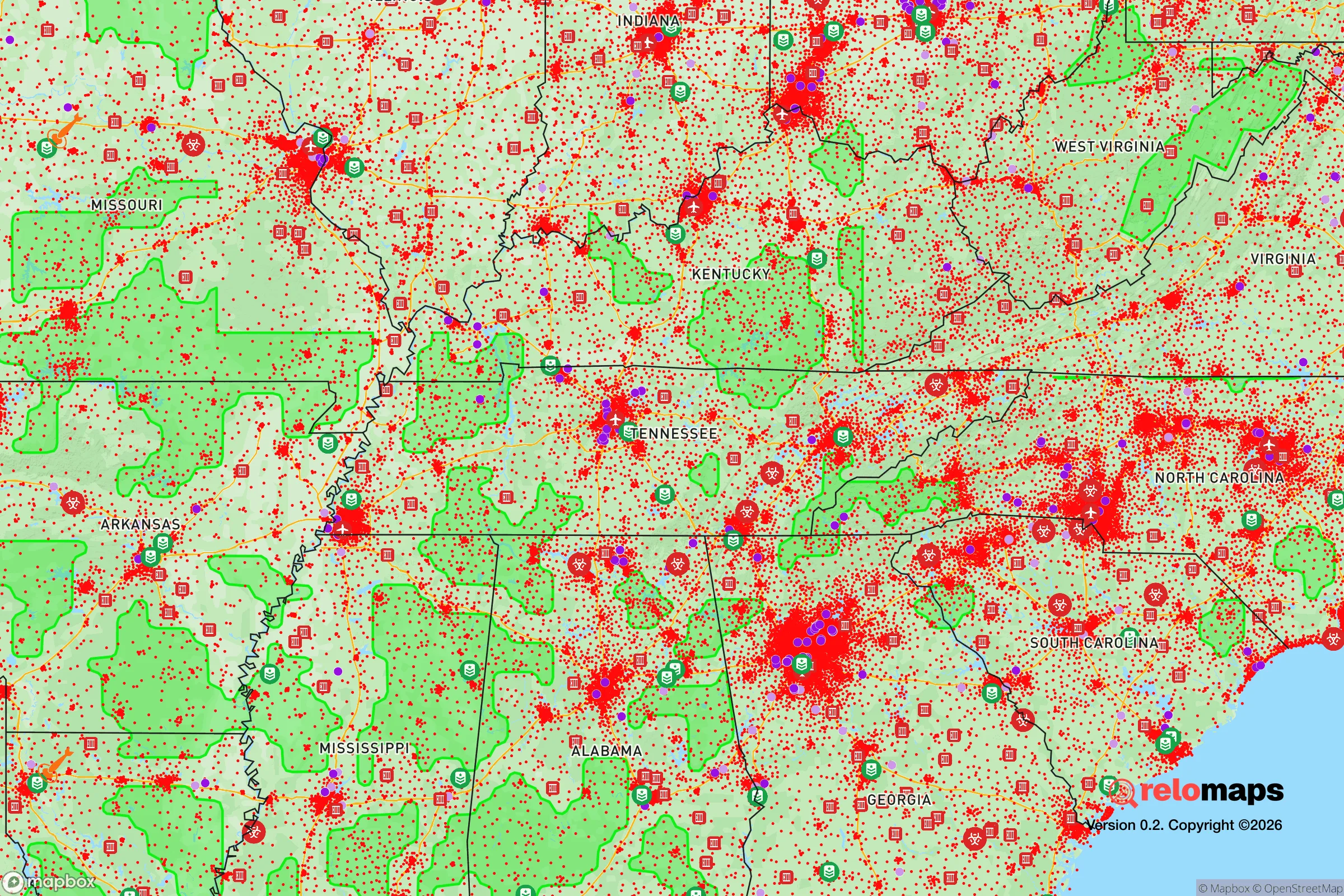
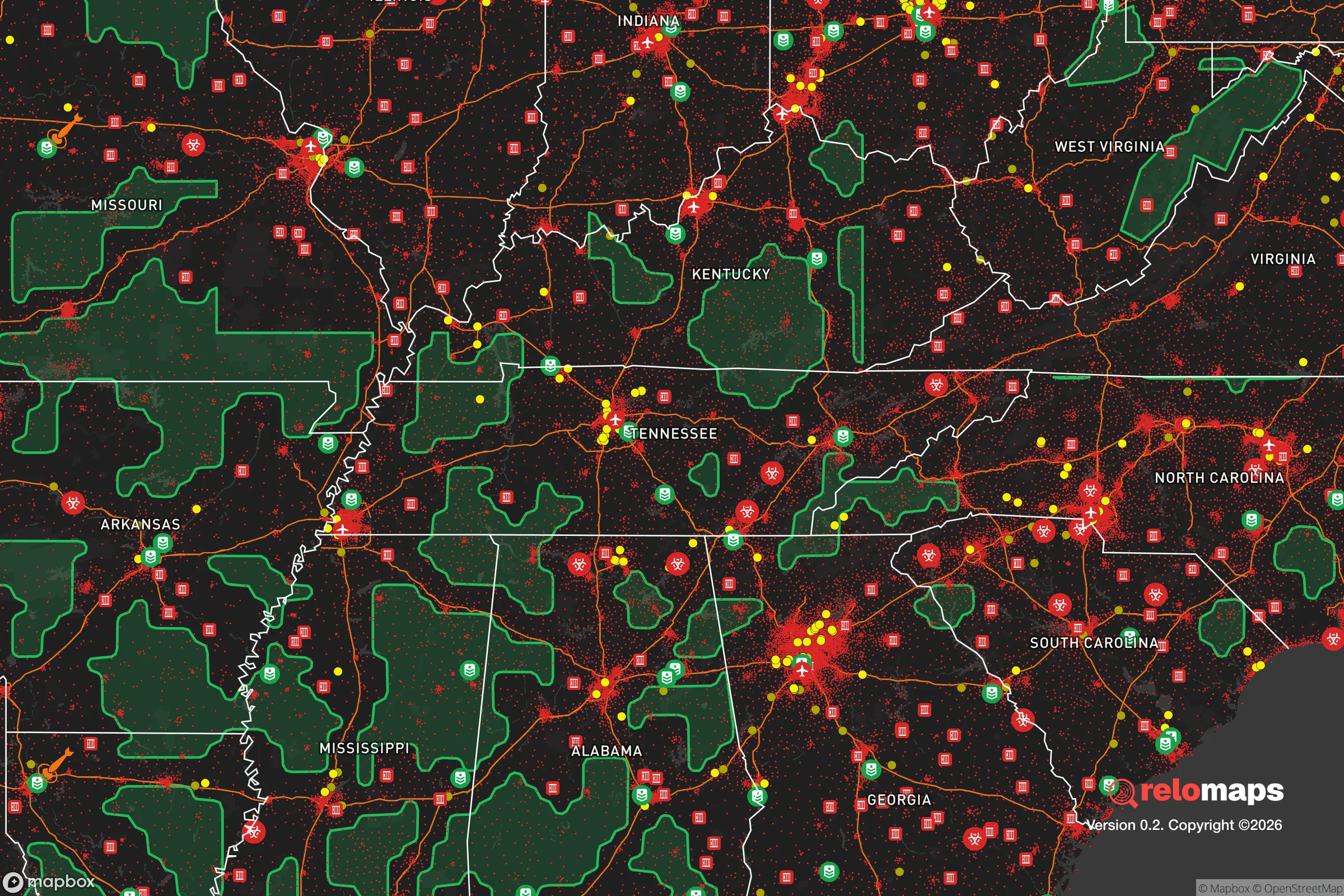


Important Note: For informational purposes only. This does not mean nothing bad ever happens in the green zones. Please use common sense. This is based on public data and modeled with AI. We tried to take a conservative approach but mistakes happen. We update this regularly as new information becomes available.
Solar Generator Recommendations
Backup power matters more here than in safer locations. We've picked three solar generators across budgets and capacity tiers — start with the budget unit if you only need a few essentials, or step up if you want to run a fridge and HVAC for days at a time.

Jackery Portable Power Station Explorer 300
Budget OptionPower on the Go: Weighing only 11 lbs, it's convenient to set up and store with book-sized foldable solar panels

BLUETTI Portable Power Station AC180
Designed for both indoor and outdoor scenarios, AC180 is highly capable as it has a robost capacity and continuous output power.

EF ECOFLOW DELTA Pro Ultra Power Station
Upgraded PickEcoFlow DELTA Pro Ultra is a whole-home energy system designed to grow with your family. Integrated with the Smart Home Panel 2, it scales to meet your evolving energy needs — keeping your home powered, intelligent, and secure through every stage of life.
We earn a commission, at no additional cost to you.
Strategic Assessment Analysis
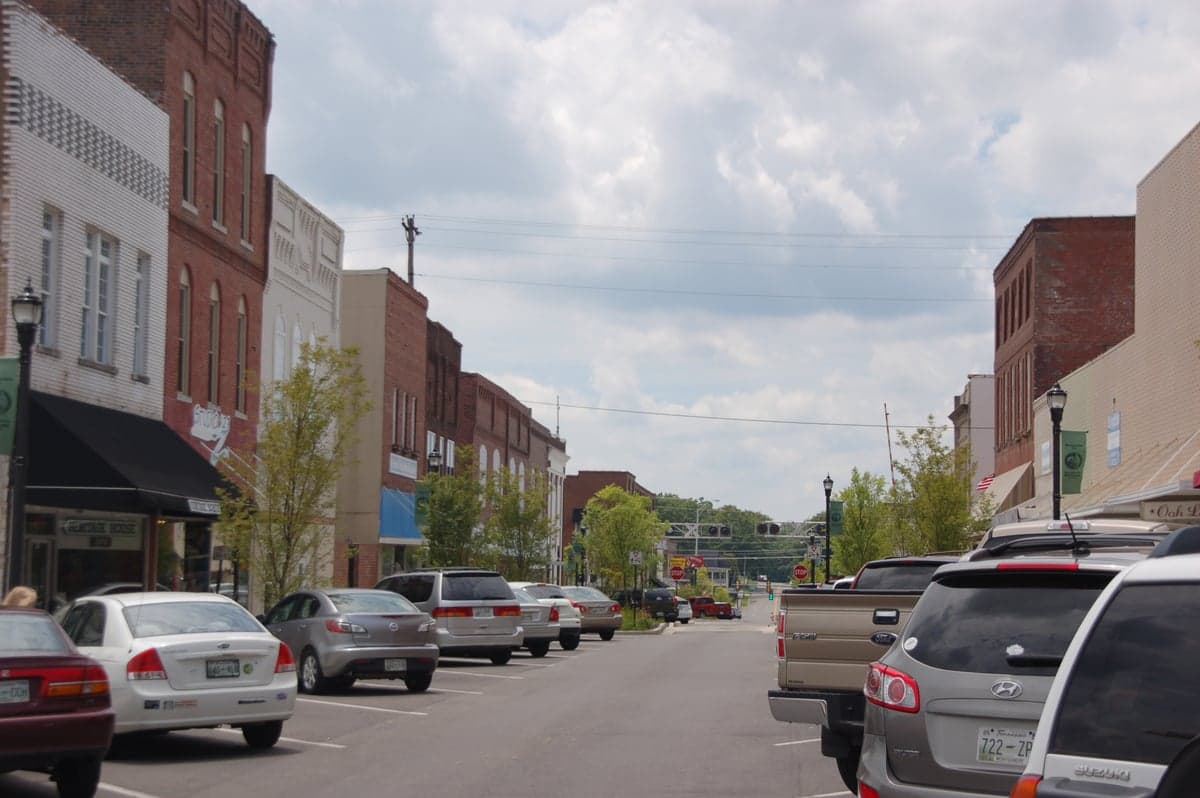
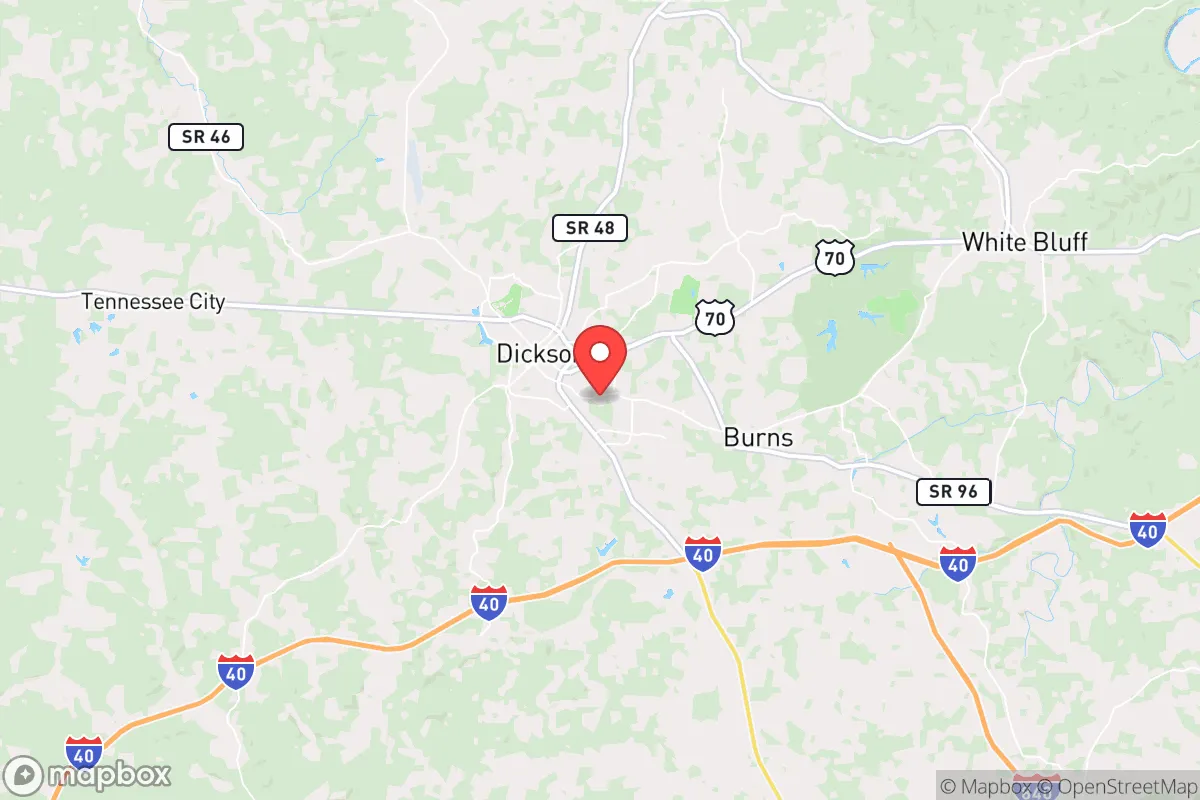
Dickson, Tennessee, sits in a sweet spot that resilience-minded relocators should take seriously: close enough to Nashville for supply runs and medical access, but far enough—roughly 40 miles west—that the chaos of a major urban collapse wouldn't wash over your front porch. The city's position along Interstate 40 gives it a logistical backbone for evacuation or resupply, while the surrounding rural landscape offers natural buffers against the kind of cascading failures that plague dense metro areas. For a conservative audience thinking in terms of long-term preparedness, Dickson represents a rare blend of accessibility and separation—a place where you can keep one foot in the modern world and the other in a more self-reliant posture.
Geographic position and natural advantages for long-term security
Dickson County sits on the Western Highland Rim, a plateau that rises gently above the Nashville Basin. That elevation isn't dramatic—think rolling hills rather than mountains—but it provides natural drainage and reduces flood risk compared to bottomland areas. The county is laced with creeks and small rivers, including the Piney River and Turnbull Creek, which feed into the Tennessee River system. For a prepper, that means surface water is available for filtration and irrigation, even if municipal supplies get disrupted. The terrain is a mix of hardwood forest and open farmland, offering both cover and potential for food production. The climate is temperate, with hot summers and mild winters, so a well-insulated home with a wood stove can handle the cold snaps without relying on the grid. Critically, Dickson is outside the 50-mile blast radius of any major military or nuclear target—Nashville's airport and industrial corridors are the nearest high-value assets, and they're far enough that fallout patterns would likely disperse before reaching Dickson's western edge. The area's position also puts it within a day's drive of the Appalachian Mountains for a deeper retreat if things really go sideways, but the local geography is defensible enough for most scenarios.
Risks, exposures, and proximity to fallout-relevant landmarks
No location is a fortress, and Dickson has its vulnerabilities. The most obvious is Interstate 40, which runs right through the city. In a mass evacuation event—say, a Nashville-area disaster or a major earthquake along the New Madrid fault—that highway could become a parking lot or a chokepoint for desperate people moving west. Dickson's position as a waypoint between Nashville and Memphis means it could see a surge of transient traffic, and that brings risks of looting, resource competition, and disease spread. The city itself has a population around 16,000, with the county pushing 55,000—small enough to maintain social cohesion, but large enough that a localized outbreak or supply chain break could strain local resources. There are no nuclear power plants within 100 miles, but the Tennessee Valley Authority's coal and gas plants are scattered across the region, and a major grid failure could knock out power for weeks. The nearest military installation is Fort Campbell, about 60 miles northwest, which is a strategic asset but also a potential target in a conflict scenario. Fallout from a Nashville strike would depend on wind patterns, but Dickson's distance and the prevailing westerlies mean the risk is moderate, not acute. The real exposure is economic: Dickson's economy is tied to Nashville's growth, and a collapse of the metro area would ripple through local jobs, real estate, and services. For a relocator, the key is to have a buffer—six months of supplies, a well, and a plan to go ground-level if the highway turns into a refugee corridor.
Practical resilience for a relocator: food, water, energy, and defensibility
Water is the first concern, and Dickson County has decent groundwater potential. Most rural properties rely on private wells, and the water table is generally reliable at depths of 100-300 feet. For those on city water, the Dickson Utility Authority draws from the Cumberland River via a treatment plant, but that system is vulnerable to power loss or contamination. A backup well or a rainwater catchment system with first-flush diverters is a smart investment. Food production is viable: the county has fertile loam soils, and the growing season runs from April to October. A half-acre garden can feed a family of four with staples like corn, beans, squash, and potatoes, and the local extension office offers soil testing and heirloom seed resources. Livestock—chickens, goats, or a milk cow—are legal on agricultural-zoned land, and the county's right-to-farm ordinances protect against nuisance complaints. Energy resilience is where Dickson shines: the area gets good sun exposure for solar panels (about 4.5 peak sun hours per day), and wood is abundant for heating. A grid-tied solar system with battery backup can cover basic loads, and a wood stove or masonry heater can handle winter heating without natural gas. Defensibility is situational. The terrain is rolling, not mountainous, so a property with a long driveway, a creek or pond as a natural barrier, and a clear line of sight to the road offers tactical advantages. The local sheriff's office is well-funded and responsive, but in a prolonged crisis, community networks matter more than law enforcement. Dickson has a strong church and civic culture, which translates into mutual aid potential—neighbors who know each other and will share resources. That social fabric is a resilience asset that no amount of gear can replace.
The overall strategic picture for Dickson is one of calculated risk. It's not a remote bunker in the Rockies, and it's not a self-sufficient homestead in the middle of nowhere. What it offers is a realistic middle ground for the conservative relocator who wants to stay connected to infrastructure and community while maintaining a serious preparedness posture. The proximity to Nashville is a double-edged sword: it provides access to hospitals, hardware stores, and job markets, but it also ties your fate to a metro area that could become a liability in a crisis. The key is to treat Dickson as a base of operations, not a final redoubt. Stockpile supplies, build a resilient home system, and cultivate relationships with like-minded neighbors. If the worst happens, you can hunker down here and ride it out. If things get truly apocalyptic, you have a route east to the mountains. For a strategic relocation in 2026, Dickson is a solid B+—not perfect, but far better than most options within striking distance of the American heartland.

* Values derived from national, state, county, city and local statistics and may differ in a specific area. Last updated: 2026-04-21T09:13:57.000Z
Narrative content on this page is AI-generated and may contain mistakes. Verify any details that matter before acting on them.
ReloMaps may earn a commission from affiliate links at no extra cost to you.

