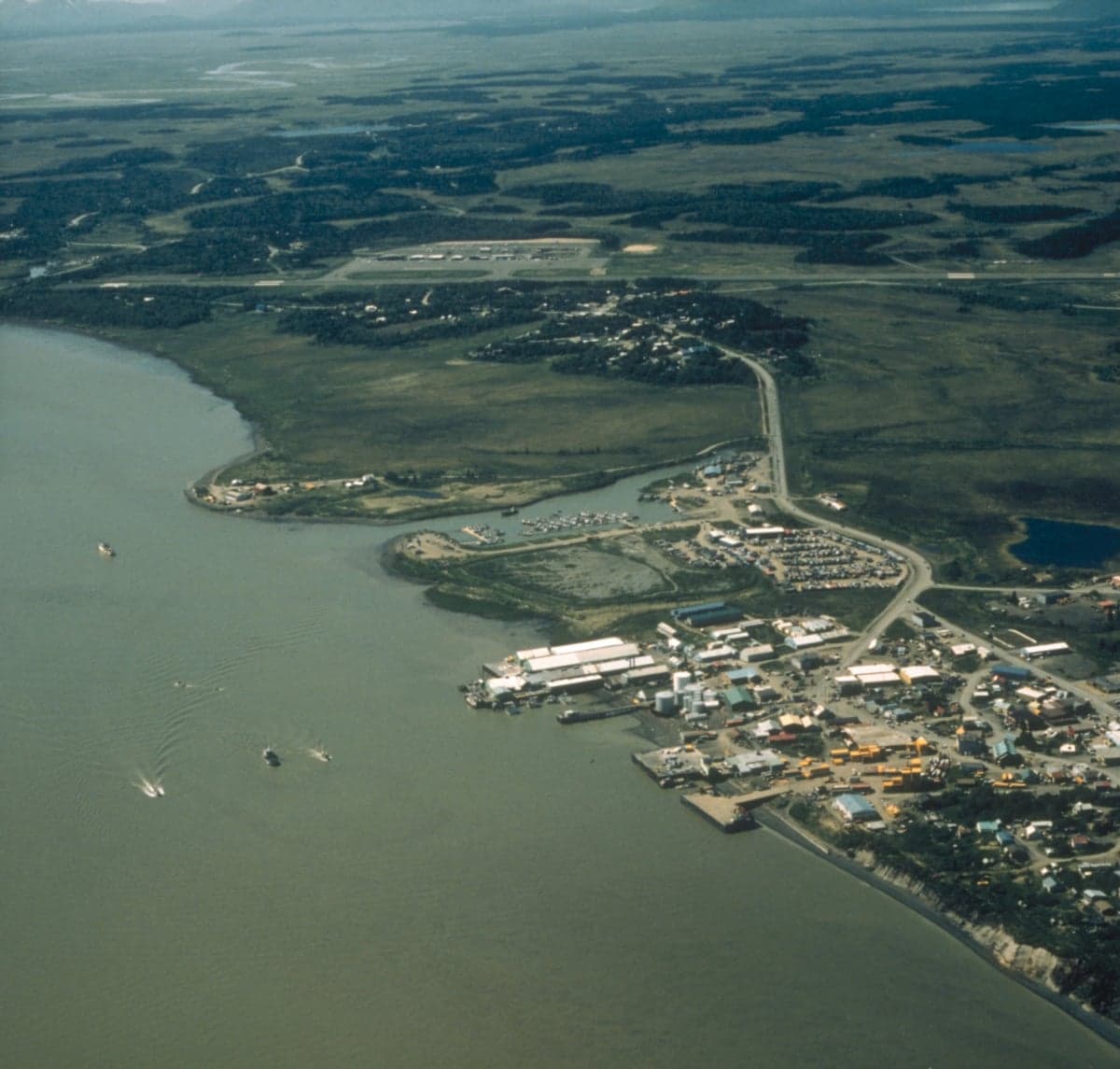
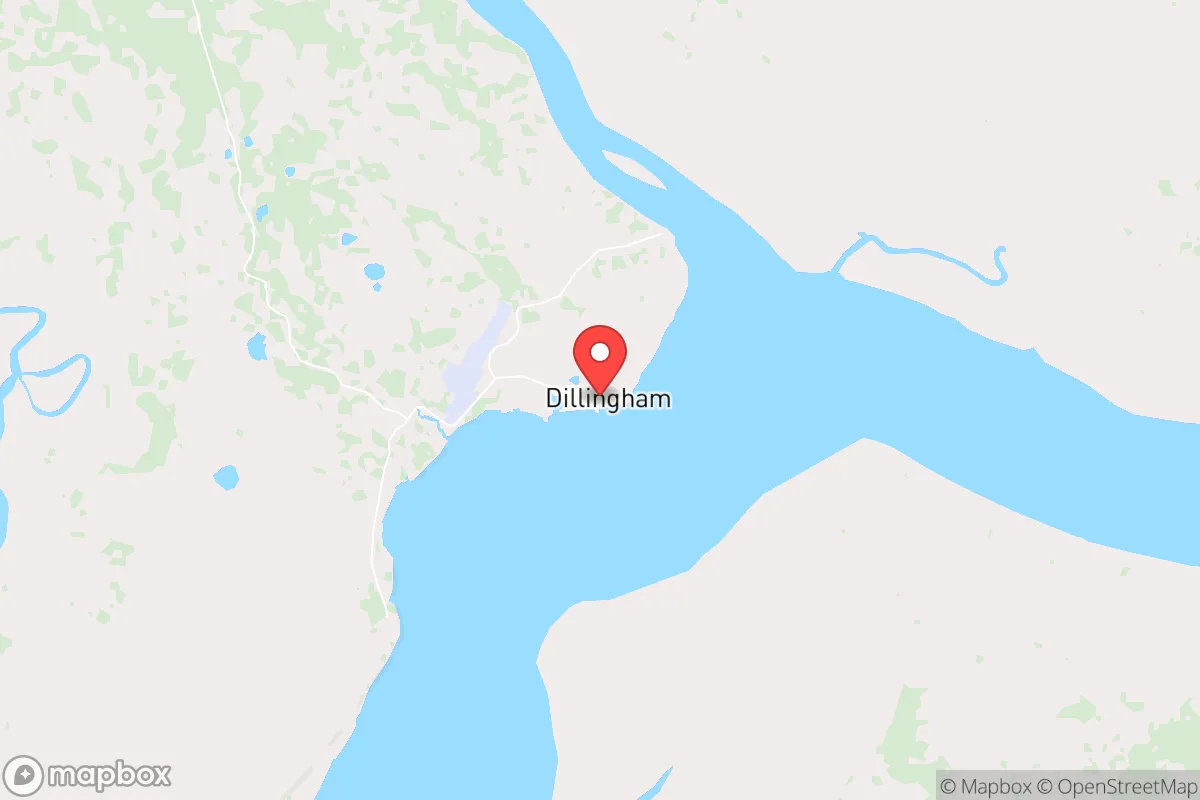
Photo: Wikipedia
Demographics of Dillingham, AK
Affluence Level in Dillingham, AK
A middle-class area roughly in line with national averages across income, home values, education, and employment.
People of Dillingham, AK
The people of Dillingham, Alaska, today number 2,084, a community defined by its deep Indigenous Yup’ik roots and a small but distinct non-Native presence. The city is 23.0% White, 5.3% Hispanic, 1.8% East/Southeast Asian, and 1.6% Indian (subcontinent), with a foreign-born population of just 2.4%. What sets Dillingham apart is its character as a predominantly Alaska Native hub—roughly 70% of residents are Indigenous—where subsistence fishing and commercial salmon harvesting remain central to daily life, creating a density of cultural tradition rare in the United States.
How the city was settled and grew
Dillingham’s human history begins not with European settlement but with the Yup’ik people, who have occupied the Nushagak River region for thousands of years. The area was a seasonal fish camp and trading site long before contact. The first permanent non-Native settlement came in the 1880s with the establishment of a Russian Orthodox mission and a U.S. commercial salmon cannery at Kanakanak, a district just south of today’s downtown. The cannery drew Scandinavian, Irish, and Italian laborers, who built small homes along the waterfront in what is now Old Town Dillingham, a historic neighborhood of aging cannery buildings and modest frame houses. A second wave arrived during the 1900s gold rush in the nearby Wood River area, bringing prospectors and merchants who settled along the Nushagak River in the Wood River Flats district, though most left after the gold played out by 1910. The city was officially incorporated in 1963, but its population remained overwhelmingly Yup’ik, with a small White minority of cannery workers, teachers, and missionaries concentrated in Kanakanak and Old Town.
Modern era (post-1965)
After the Alaska Native Claims Settlement Act (ANCSA) of 1971, Dillingham’s population shifted as the city became the regional hub for the Bristol Bay Borough. The Yup’ik population consolidated in the Aleknagik Road Corridor, a residential area stretching northeast from downtown, where many families built homes on Native allotment lands. The White population, never large, remained concentrated in Downtown Dillingham and the Airport Area, where the school district, hospital, and state offices provided stable employment. The Hispanic share (5.3%) arrived primarily in the 1990s and 2000s, drawn by seasonal work in the seafood processing plants; these workers, largely from Mexico and Central America, settled in rental housing near the cannery in Kanakanak and in the Bristol Bay Borough Housing complex off Main Street. The East/Southeast Asian community (1.8%) and Indian subcontinent community (1.6%) are very small, mostly professionals—teachers, nurses, and engineers—who live in the Lake Avenue and Hillside neighborhoods near the hospital and school campus. The foreign-born share (2.4%) is among the lowest in Alaska, reflecting the city’s isolation and the dominance of subsistence culture.
The future
Dillingham’s population is slowly declining—down from 2,300 in 2010—driven by out-migration of young Yup’ik adults seeking education and jobs in Anchorage and Fairbanks. The White population is aging and shrinking, as many retire to the Lower 48. The Hispanic community is plateauing, with seasonal workers increasingly commuting from Anchorage rather than settling permanently. The East/Southeast Asian and Indian communities are too small to form distinct enclaves and are likely to remain transient professional populations. The city is not homogenizing or tribalizing into new enclaves; rather, it is becoming more uniformly Yup’ik, with the Native share rising as non-Native residents leave. The next 10-20 years will likely see a continued slow decline in total population, with the Yup’ik majority growing as a percentage, and the small non-Native communities shrinking or rotating through temporary workers.
For someone moving in now, Dillingham is a place where Indigenous culture and subsistence economy dominate, and the non-Native population is a thin overlay of professionals and seasonal laborers. The city offers a tight-knit, traditional community but limited economic diversity and a shrinking tax base. New arrivals should expect to integrate into a Yup’ik-centered social fabric, with few ethnic enclaves and little racial diversity outside the Native majority.

* Values derived from national, state, county, city and local statistics and may differ in a specific area. Last updated: 2026-04-19T19:18:34.000Z
Narrative content on this page is AI-generated and may contain mistakes. Verify any details that matter before acting on them.
ReloMaps may earn a commission from affiliate links at no extra cost to you.

