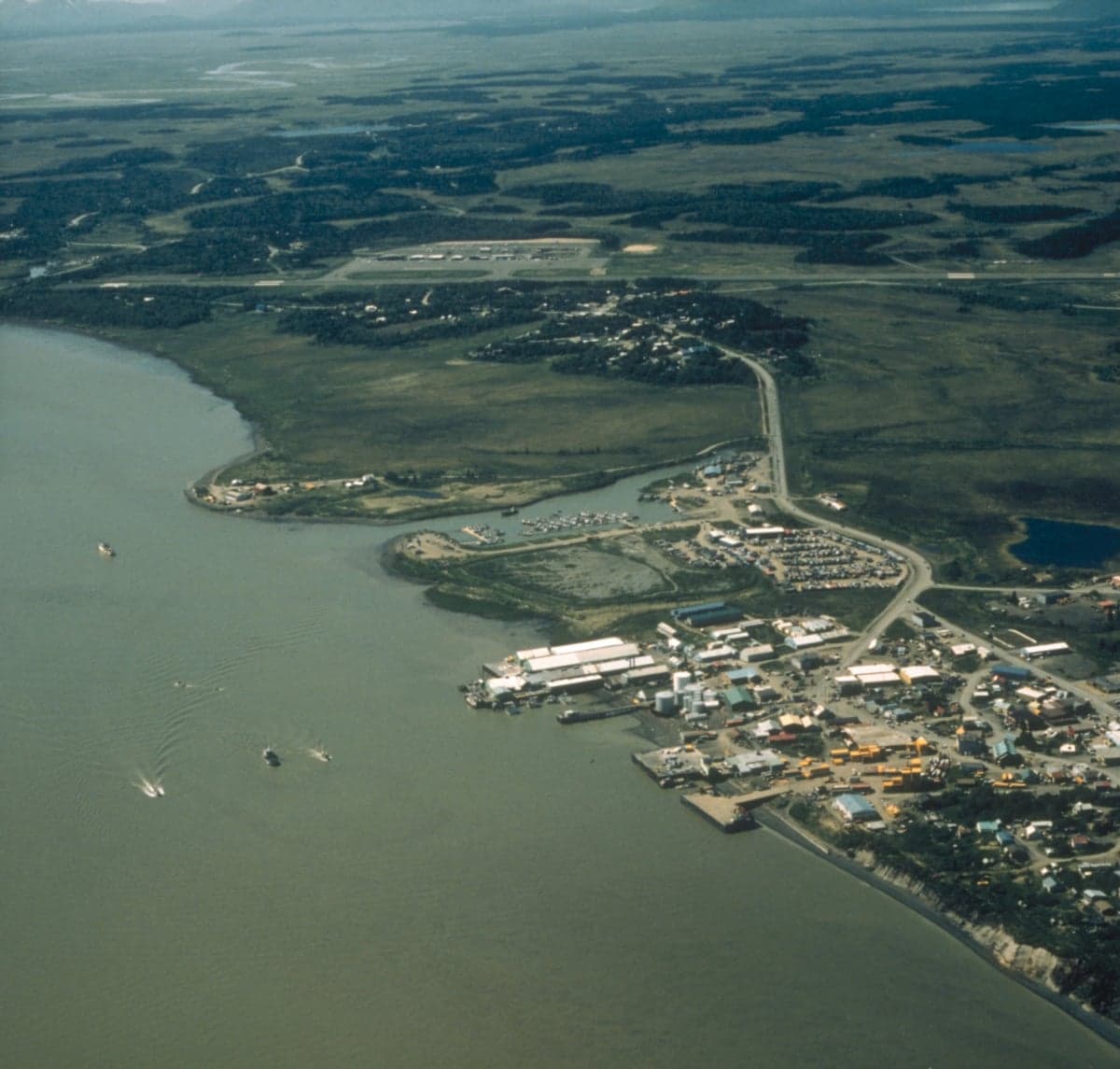
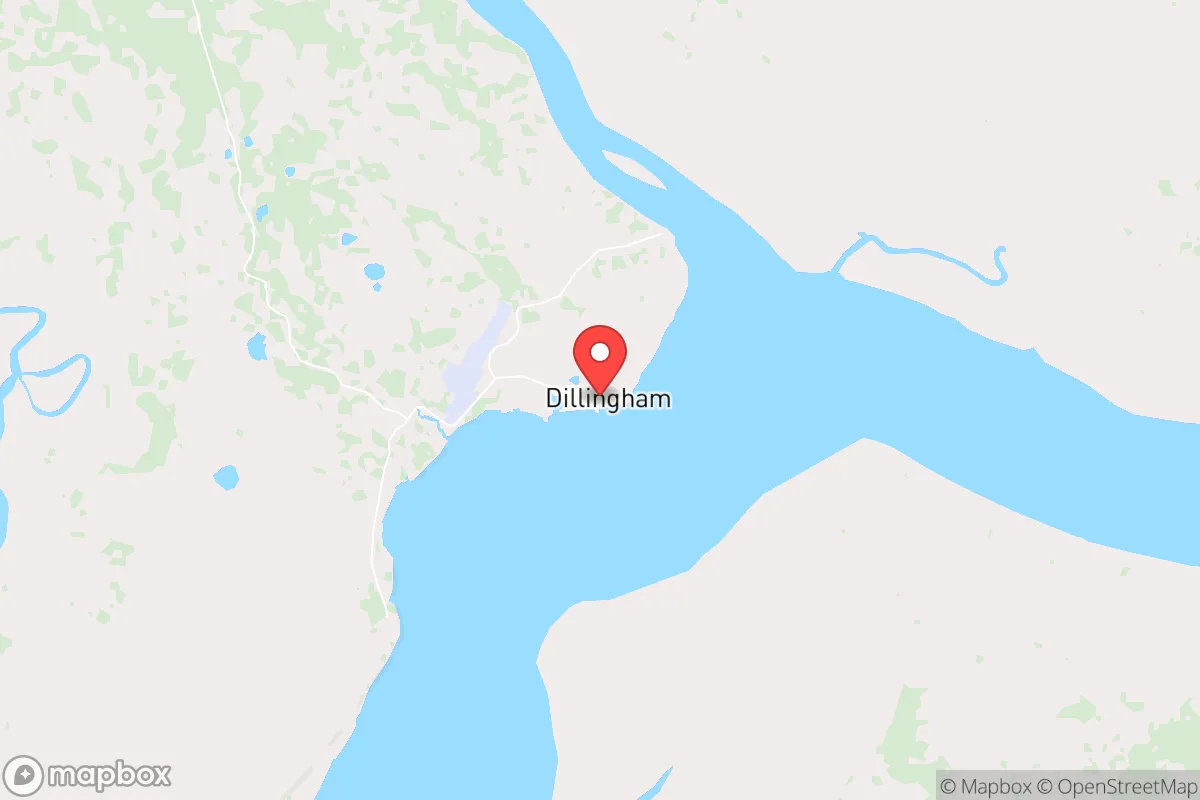
Photo: Wikipedia
Political ClimatePolitical Climate in Dillingham, AK
District shown is the primary district for this city’s centroid. Cities may span multiple districts.
Inherited from parent state — no local data available.
Local Political AnalysisPolitical Analysis of Dillingham, AK
Dillingham, Alaska, has long been a place where folks value their independence and don't take kindly to outsiders telling them how to live, and that's reflected in its political lean. The area carries a Cook PVI of R+6, meaning it's reliably Republican by a solid margin, but it's not a rubber-stamp kind of red—it's a practical, live-and-let-live conservatism that's rooted in subsistence living and a deep distrust of government overreach. Over the past decade, I've watched the local sentiment shift a bit, with more folks getting uneasy about state and federal mandates creeping into everything from fishing regulations to school policies, but the core belief in personal freedom and local control remains strong.
How it compares
If you look at the political map around here, Dillingham stands out as a conservative anchor in a region that's not all on the same page. Head south to King Salmon or Naknek, and you'll find a similar independent streak, but they're more tied to the commercial fishing industry and tend to vote a little more pragmatically, sometimes splitting tickets on resource management issues. Up in Bethel, about 200 miles north, the politics are noticeably different—there's a stronger push for progressive social programs and a bigger government presence, which rubs a lot of Dillingham folks the wrong way. Compared to Anchorage, which swings between moderate and liberal depending on the district, Dillingham is a breath of fresh air for anyone tired of the urban political machine. The contrast is sharpest when you look at how our local leaders fight tooth and nail to keep federal land-use policies from strangling our way of life, while those other towns seem more willing to accept the trade-offs.
What this means for residents
For the people who live here, the R+6 lean isn't just a statistic—it shapes daily life in real ways. You don't see the same kind of government overreach in Dillingham that you hear about in bigger cities; our local council and borough assembly are still run by folks who understand that a fishing permit or a hunting season shouldn't be a bureaucratic nightmare. That said, there's a growing concern among long-time residents about the slow creep of progressive ideology into our schools and local ordinances. I've seen it myself—proposals for diversity training that sound harmless but feel like a foot in the door for more top-down control. The good news is that most folks here are still willing to stand up and say "no" when it comes to protecting their rights, whether it's about vaccine mandates or land-use restrictions. It means you can still live your life without a bunch of red tape, but you've got to stay vigilant because the pressure from outside is real.
One thing that sets Dillingham apart culturally is how our politics are tied to the land and the seasons. There's no room for abstract ideology when you're hauling in a salmon setnet or cutting firewood for the winter—it's about what works, not what sounds good on paper. That practical conservatism has kept us from falling into the traps of coastal Alaska cities like Juneau or Sitka, where progressive policies on everything from carbon taxes to tribal sovereignty have created a lot of friction. Here, we still value the Second Amendment without apology, and there's a strong sense that the government should stay out of our business unless we ask for help. The trajectory I see is cautious: we're holding the line, but the fight is getting harder every year as outside money and influence try to reshape our community. If you're looking for a place where your voice still matters and your freedoms aren't just talking points, Dillingham is it—but don't expect it to stay that way without a fight.

State Political ClimatePolitical Climate in Alaska
State Political AnalysisPolitical Environment in the State
Alaska has long been a politically unique state, leaning Republican in federal elections but with a fiercely independent, libertarian streak that defies easy categorization. Over the past 20 years, the state has shifted from a solidly red stronghold—voting for every GOP presidential candidate since 1964 except for 1964—to a more competitive battleground, with the 2020 election seeing Joe Biden lose by just 10 points and the 2022 at-large House race being decided by ranked-choice voting. The dominant coalition is a mix of rural conservatives, resource-industry workers, and fiscal conservatives in the Anchorage bowl, but a growing progressive presence in the urban core and Southeast has made the state’s politics more volatile than many outsiders realize.
Urban vs. rural divide
The political map of Alaska is starkly divided between the Anchorage metropolitan area and the rest of the state. Anchorage itself, home to about 40% of the population, is a purple city with a strong Democratic lean in its core neighborhoods like Spenard and Mountain View, while the surrounding Mat-Su Borough—including towns like Wasilla and Palmer—is one of the most conservative regions in the nation, regularly delivering 70%+ margins for Republicans. Fairbanks, the second-largest city, is a mixed bag: the University of Alaska campus and downtown tilt left, but the surrounding North Pole and Eielson Air Force Base areas are deeply red. Juneau, the capital, is a progressive stronghold, with its government-heavy economy and Southeast Alaska’s environmentalist lean driving consistent Democratic wins. Rural Alaska, including the Bush villages like Barrow (Utqiaġvik) and Bethel, is a wild card—these areas vote heavily Democratic due to tribal and subsistence issues, but they also hold conservative social values and are skeptical of federal overreach. The divide is not just urban vs. rural; it’s a three-way split between the Anchorage bowl, the resource-dependent interior, and the coastal Southeast.
Policy environment
Alaska’s policy environment is a mixed bag for conservatives. On the plus side, there is no state income tax or sales tax, making it a low-tax haven—the state relies heavily on oil revenue and the Permanent Fund Dividend (PFD), which pays residents an annual check from oil wealth. The regulatory posture is generally business-friendly, especially for oil, gas, and mining, though the Biden administration’s restrictions on ANWR and the Arctic National Wildlife Refuge have been a major flashpoint. Education policy is decentralized, with local control over schools, but the state has seen a push for parental rights, including a 2023 law requiring schools to notify parents of any changes to a student’s health or well-being. Healthcare is a mixed bag: the state expanded Medicaid under the Affordable Care Act in 2015, which rankles fiscal conservatives, but the cost of living and limited provider networks in rural areas remain challenges. Election laws are a hot topic—Alaska adopted ranked-choice voting in 2020 via ballot initiative, which has been a source of deep frustration for conservatives who see it as diluting the vote and empowering moderates. The state also has no voter ID law, which is a concern for election integrity advocates.
Trajectory & freedom
Alaska’s trajectory on personal freedom is a tale of two trends. On the positive side, the state remains a stronghold for gun rights—constitutional carry is legal, there is no permit requirement for concealed carry, and the state has preempted local gun ordinances. In 2024, the legislature passed a bill protecting the right to carry firearms in public buildings, including schools, with limited exceptions. On the negative side, the state has seen a steady erosion of fiscal freedom: the PFD has been cut multiple times by the legislature to balance budgets, and the state’s reliance on volatile oil revenue means that when prices drop, the government looks for new revenue sources. A 2023 proposal for a state income tax was defeated, but it’s a recurring threat. Medical autonomy is a bright spot—Alaska has no vaccine mandates for adults, and the state banned COVID-19 vaccine passports in 2021. However, the state’s health department has been criticized for overreach in child welfare cases, particularly in rural villages. Property rights are generally strong, but the federal government owns about 60% of Alaska’s land, creating constant tension over land use, especially in the Tongass National Forest and the Arctic Refuge. The biggest freedom concern is the ranked-choice voting system, which many conservatives see as a government-imposed manipulation of elections that undermines the principle of one person, one vote.
Civil unrest & political movements
Alaska has a history of low-key but persistent political activism. The most visible flashpoint in recent years has been the debate over the PFD, which has sparked protests in Juneau and Anchorage when the legislature has cut the dividend. The 2020 election integrity controversy was muted compared to the Lower 48, but the ranked-choice voting system has energized a grassroots movement to repeal it, with a 2024 ballot initiative to do so failing by a narrow margin. The state has seen organized activism on both sides: the Alaska Republican Party is split between a mainstream faction and a more populist, Trump-aligned wing, while progressive groups like the Alaska Democratic Party and the Alaska Environmental Lobby have pushed for stricter oil regulations and expanded tribal sovereignty. Immigration politics are less prominent than in border states, but there have been tensions over the influx of seasonal workers in the fishing industry, particularly in Dutch Harbor and Kodiak. There is no sanctuary city policy, but Anchorage has a “welcoming city” ordinance that limits cooperation with federal immigration enforcement, which has drawn criticism from conservatives. Secession rhetoric is rare, but there is a strong strain of nullification sentiment, particularly around federal land management—the state has sued the federal government multiple times over land use, including a 2023 lawsuit over the Biden administration’s restrictions on oil drilling in the National Petroleum Reserve-Alaska.
Projection
Over the next 5-10 years, Alaska’s political trajectory is likely to be shaped by demographic shifts and economic pressures. The state is experiencing a slow population decline, with young people leaving for the Lower 48 and an aging population staying. In-migration is primarily from conservative-leaning states like Texas and Florida, drawn by the lack of income tax and the outdoor lifestyle, which should reinforce the red lean in the Mat-Su and Fairbanks areas. However, the urban core of Anchorage is becoming more diverse and younger, with a growing progressive base that could flip the city’s at-large House seat to a Democrat in a close race. The biggest wildcard is the oil industry: if the state opens up ANWR and the Arctic Refuge to drilling, it could bring a wave of high-paying jobs and reinforce the resource-driven conservative coalition. If environmental restrictions tighten, the state’s fiscal crisis will deepen, leading to more pressure for new taxes and cuts to the PFD, which could fuel populist backlash. The ranked-choice voting system is likely to remain a source of conflict, with ongoing efforts to repeal it or modify it. A new resident moving in now should expect a state that is still broadly conservative but increasingly polarized, with the urban-rural divide widening and the state’s unique political institutions—like the PFD and ranked-choice voting—becoming flashpoints for the next decade.
For a conservative relocating to Alaska, the bottom line is this: you’ll find a state that respects gun rights, has no income tax, and offers a rugged, independent lifestyle that aligns with traditional values. But you’ll also need to navigate a political landscape where the urban centers are drifting left, the election system is rigged against straightforward majority rule, and the state’s fiscal future is uncertain. The best bet is to settle in the Mat-Su Borough or the Fairbanks area, where the political climate is most aligned with conservative principles, and to get involved in local efforts to repeal ranked-choice voting and protect the PFD. Alaska is still a land of freedom, but it’s a freedom that requires constant vigilance to preserve.
* Values derived from national, state, county, city and local statistics and may differ in a specific area. Last updated: 2026-04-19T19:18:34.000Z
Narrative content on this page is AI-generated and may contain mistakes. Verify any details that matter before acting on them.
ReloMaps may earn a commission from affiliate links at no extra cost to you.

