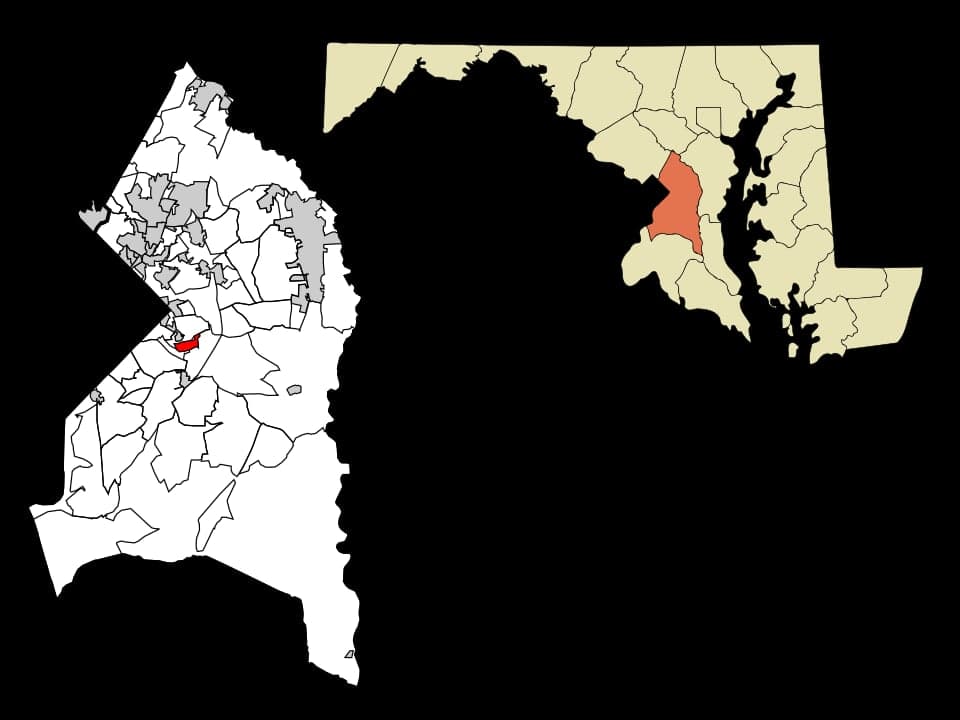
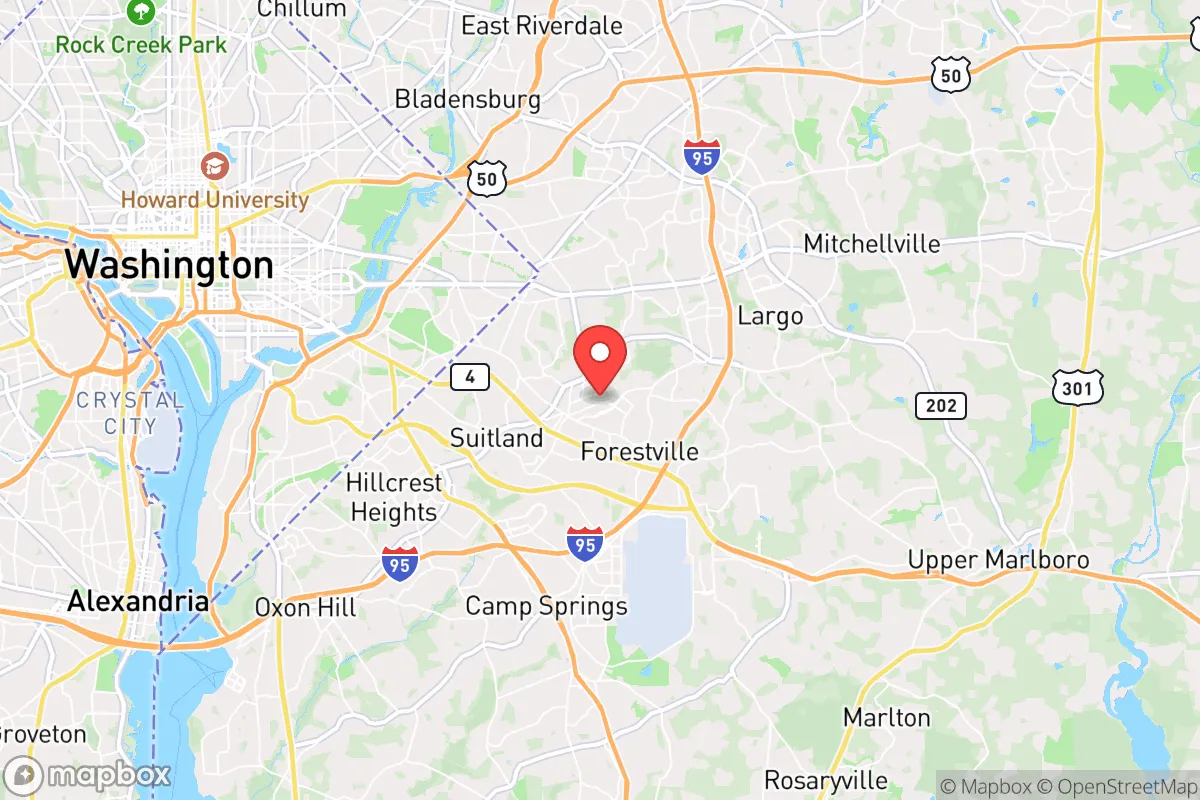
Photo: Wikipedia
Personal Sovereignty in District Heights, MD
Viable for self-reliance. Generally workable, though some barriers may limit total independence.
What does Personal Sovereignty tell us?
Personal Sovereignty measures your capacity for self-reliance and independence with minimal government friction. Higher scores mean fewer barriers between you and the way you want to live... but it assumes you have the space you need and good neighbors.
What does this tell us?
Personal Sovereignty measures your capacity for self-reliance and independence with minimal government friction. Higher scores mean fewer barriers between you and the way you want to live... but it assumes you have the space you need and good neighbors.
State Policy
Energy independence: Importer (8% of energy produced in-state)
Personal Liberty
Homesteading

Personal Liberty Analysis
District Heights, Maryland, presents a challenging environment for those prioritizing personal sovereignty, particularly for conservative-leaning individuals and families who value self-reliance and minimal government interference. Located just outside Washington, D.C., this Prince George’s County suburb is subject to some of the most restrictive state-level policies in the nation regarding taxation, self-defense, and personal liberties. For a survivalist or prepper mindset, the area’s proximity to federal power centers and its dense regulatory framework create significant friction for anyone seeking to live with maximum autonomy. While the cost of living is moderate compared to D.C. proper, the trade-offs in personal freedom are substantial, making it a location that requires careful strategic evaluation before committing to a relocation.
Tax burden and regulatory posture: How state and local policies impact your wallet and autonomy
Maryland’s tax posture is among the most aggressive in the country, and District Heights residents feel this acutely. The state imposes a progressive income tax with rates climbing to 5.75%, and Prince George’s County adds a local income tax of 3.2%, bringing the combined top marginal rate to nearly 9%. Property taxes are also high, with an effective rate around 1.1% of assessed value, and the state’s estate tax kicks in at $5 million, far lower than the federal exemption. For a prepper or conservative household, this means a significant portion of income is diverted to government programs you may not support, reducing your ability to stockpile supplies, invest in land, or build independent infrastructure. The regulatory environment is equally dense: Maryland has stringent environmental regulations, building codes, and licensing requirements that can complicate even minor home improvements or small-scale agricultural projects. Zoning in District Heights is primarily residential, with most lots under 0.25 acres, limiting the ability to raise livestock or install large-scale off-grid systems without costly permits. The state’s overall regulatory burden ranks among the top ten in the nation, according to the Mercatus Center, which translates to more red tape for anyone trying to operate a home business, install solar panels, or drill a well.
Self-defense and gun law specifics: What you need to know about carrying and storing firearms
Maryland’s gun laws are among the most restrictive in the United States, and District Heights offers no local relief. The state requires a permit to purchase a handgun, a seven-day waiting period, and a license to carry a concealed firearm—a process that includes fingerprinting, a background check, and a training course. In 2023, Maryland passed the Gun Safety Act, which further restricted where firearms can be carried, including bars, hospitals, and government buildings. The state also bans so-called “assault weapons” and limits magazine capacity to 10 rounds. For a survivalist, this is a major red flag: the legal framework is designed to make self-defense cumbersome and expensive. Stand-your-ground laws do not exist in Maryland; instead, the state imposes a duty to retreat in public spaces, which can complicate defensive scenarios. Prince George’s County has its own additional restrictions, including a requirement to register all firearms with local law enforcement. The practical takeaway: if you value the right to keep and bear arms without bureaucratic hurdles, District Heights is a poor choice. Neighboring Virginia, just across the Potomac, offers far more permissive laws, including constitutional carry for residents, but crossing state lines with firearms remains federally regulated.
Self-reliance and homesteading viability: Lot sizes, zoning, and off-grid feasibility
District Heights is a densely developed suburban area, and the prospects for serious homesteading or off-grid living are extremely limited. The typical residential lot is between 5,000 and 10,000 square feet—enough for a small garden, but not for raising chickens, goats, or larger livestock without a special permit. Zoning codes in Prince George’s County are strict: backyard chickens are allowed only in certain zones and require a permit, and beekeeping has similar restrictions. Rainwater harvesting is legal but regulated, and installing solar panels requires approval from the homeowners’ association if you’re in a planned community. For a prepper seeking true self-reliance, the lack of acreage and the density of neighbors create vulnerabilities—noise, visibility, and limited space for food production or water storage. The county’s building codes also make it difficult to construct a bunker or underground shelter without extensive permitting. If you’re looking to live off the grid, you’ll need to look farther out, perhaps in rural Charles or St. Mary’s County, where lot sizes are larger and zoning is more permissive. District Heights is better suited for those who prioritize proximity to D.C. jobs over self-sufficiency.
Personal liberties: Parental rights, medical autonomy, speech, and property protections
Maryland’s stance on personal liberties is a mixed bag, but leans heavily toward government oversight. Parental rights are under pressure: the state has passed laws that allow minors to consent to certain medical treatments without parental notification, including mental health care and substance abuse treatment. In 2024, Maryland expanded gender-affirming care protections, which some conservative parents view as an erosion of their authority. Medical autonomy is similarly constrained—Maryland has strict vaccine mandates for school attendance, and during the COVID-19 pandemic, the state imposed some of the longest-lasting emergency orders in the region. For those who prioritize medical freedom, this is a significant concern. Free speech is generally protected, but Maryland has laws against “hate speech” that can be interpreted broadly, and the state’s proximity to D.C. means federal law enforcement presence is heavy. Property rights are also limited: the state has strong eminent domain powers, and Prince George’s County has used them for redevelopment projects. The Maryland Environmental Service can impose restrictions on land use for conservation purposes, which can frustrate plans for clearing land or building structures. Overall, the state’s legal framework prioritizes collective well-being over individual autonomy, which may clash with a conservative or libertarian worldview.
In summary, District Heights offers a strategic location for those who need to be near the D.C. metro area for work or family, but it is a poor fit for anyone prioritizing personal sovereignty. The combination of high taxes, restrictive gun laws, limited homesteading potential, and government overreach into medical and parental decisions makes it one of the least free areas in the Mid-Atlantic. For a survivalist or prepper, the trade-offs are steep: you gain access to urban infrastructure and job markets, but you lose the ability to live on your own terms. If you’re considering relocation, look to rural Maryland counties like Garrett or Allegany, or cross into Virginia or West Virginia, where property taxes are lower, gun laws are more permissive, and zoning is far less intrusive. District Heights is a place to work, not a place to build a sovereign life.

* Values derived from national, state, county, city and local statistics and may differ in a specific area. Last updated: 2026-04-22T01:14:30.000Z
Narrative content on this page is AI-generated and may contain mistakes. Verify any details that matter before acting on them.
ReloMaps may earn a commission from affiliate links at no extra cost to you.

