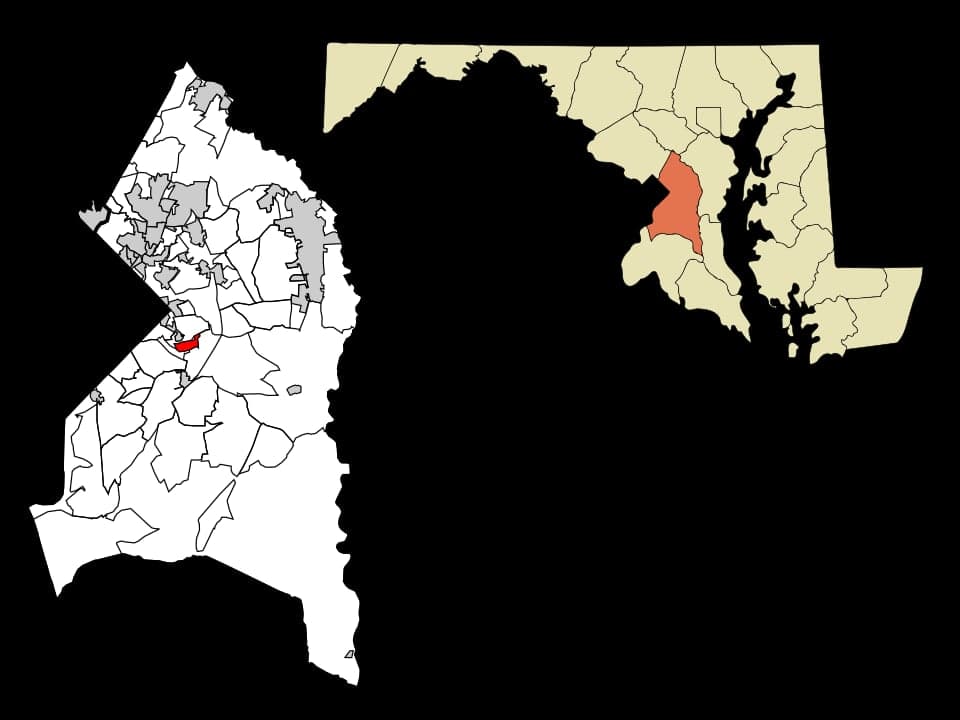
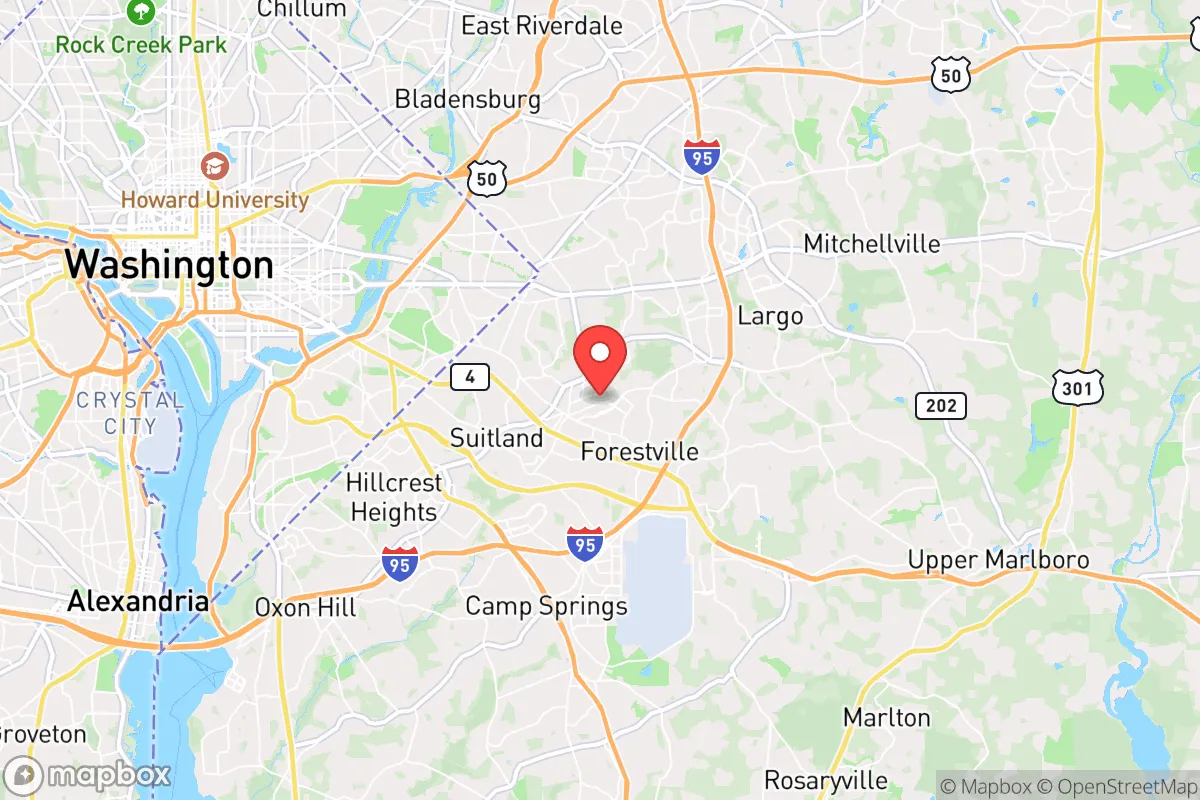
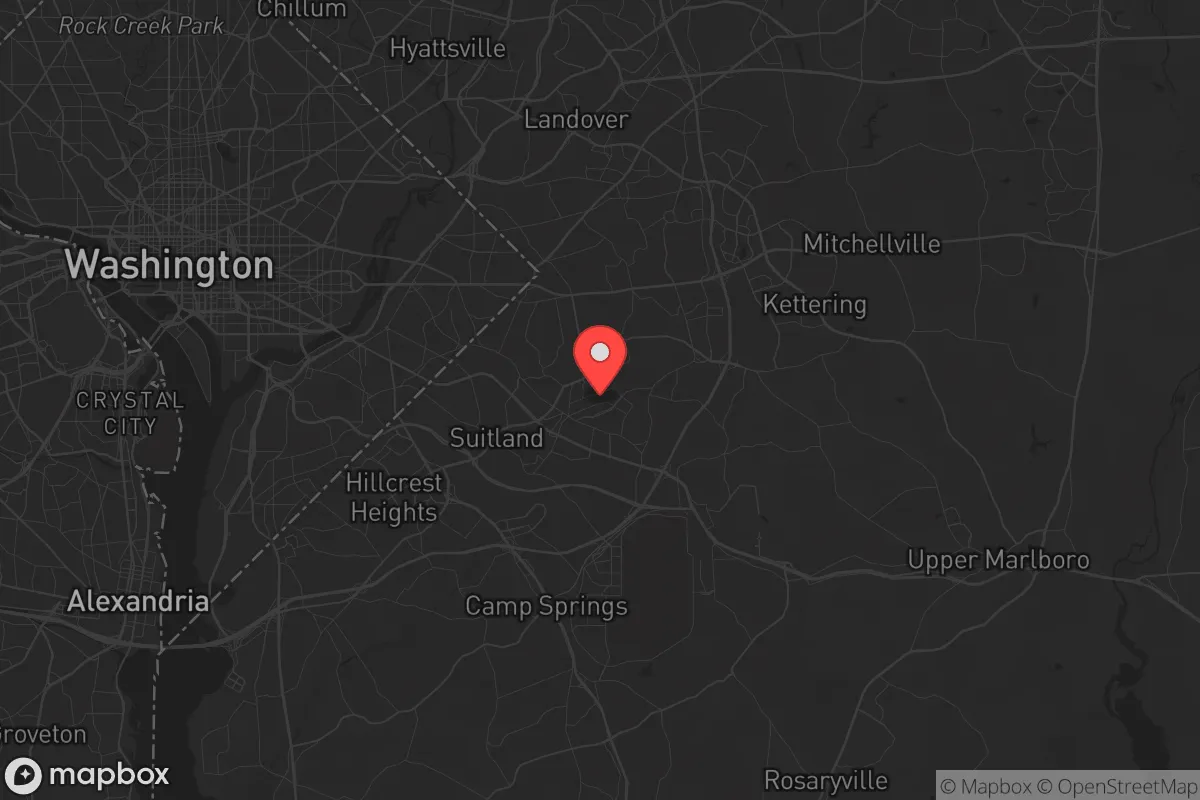
Photo: Wikipedia
Quality of Life in District Heights, MD
Above-average quality of iife. The area offers a reasonable cost of living, decent mobility, and a mix of neighborhood amenities.
What does Quality of Life tell us?
Quality of Life blends cost of living, nearby amenities, socioeconomic signals, and neighborhood character. City-level scores represent the whole municipality; individual neighborhoods can differ.
What does this tell us?
Quality of Life blends cost of living, nearby amenities, socioeconomic signals, and neighborhood character. City-level scores represent the whole municipality; individual neighborhoods can differ.
Cost of Living
17% above national average
The Real Cost of Living in District Heights, MD for 2026
| Tier | Individual | Family (4) |
|---|---|---|
| Survival | $22k | $41k |
| Comfortable | $62k | $92k |
| Luxury | $116k+ | $180k+ |
| Elite (Top 5%) | $136k+ | $212k+ |
89%
The Area Signal
A metric tracking the socioeconomic signals of the area.
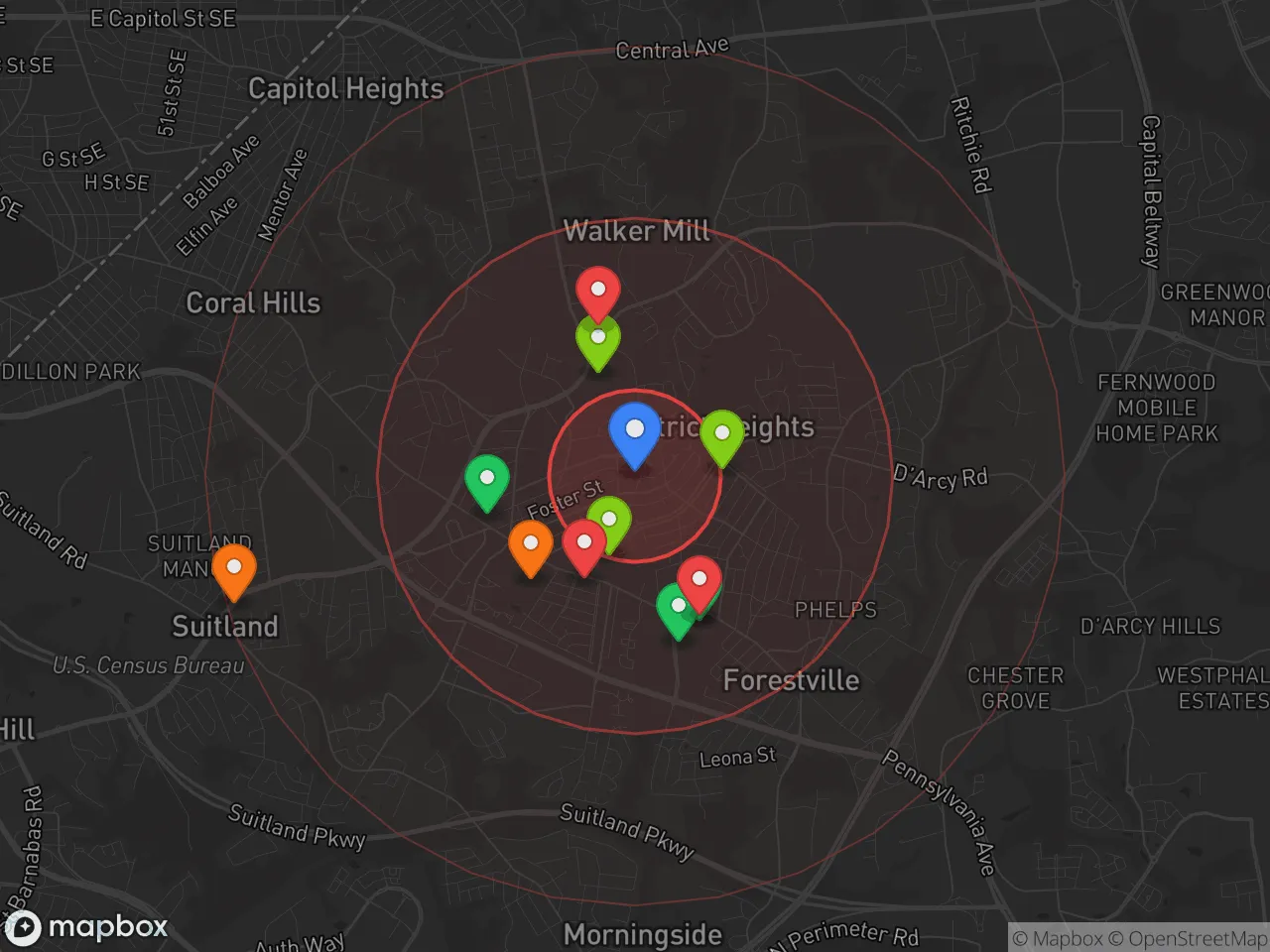
Hobbies
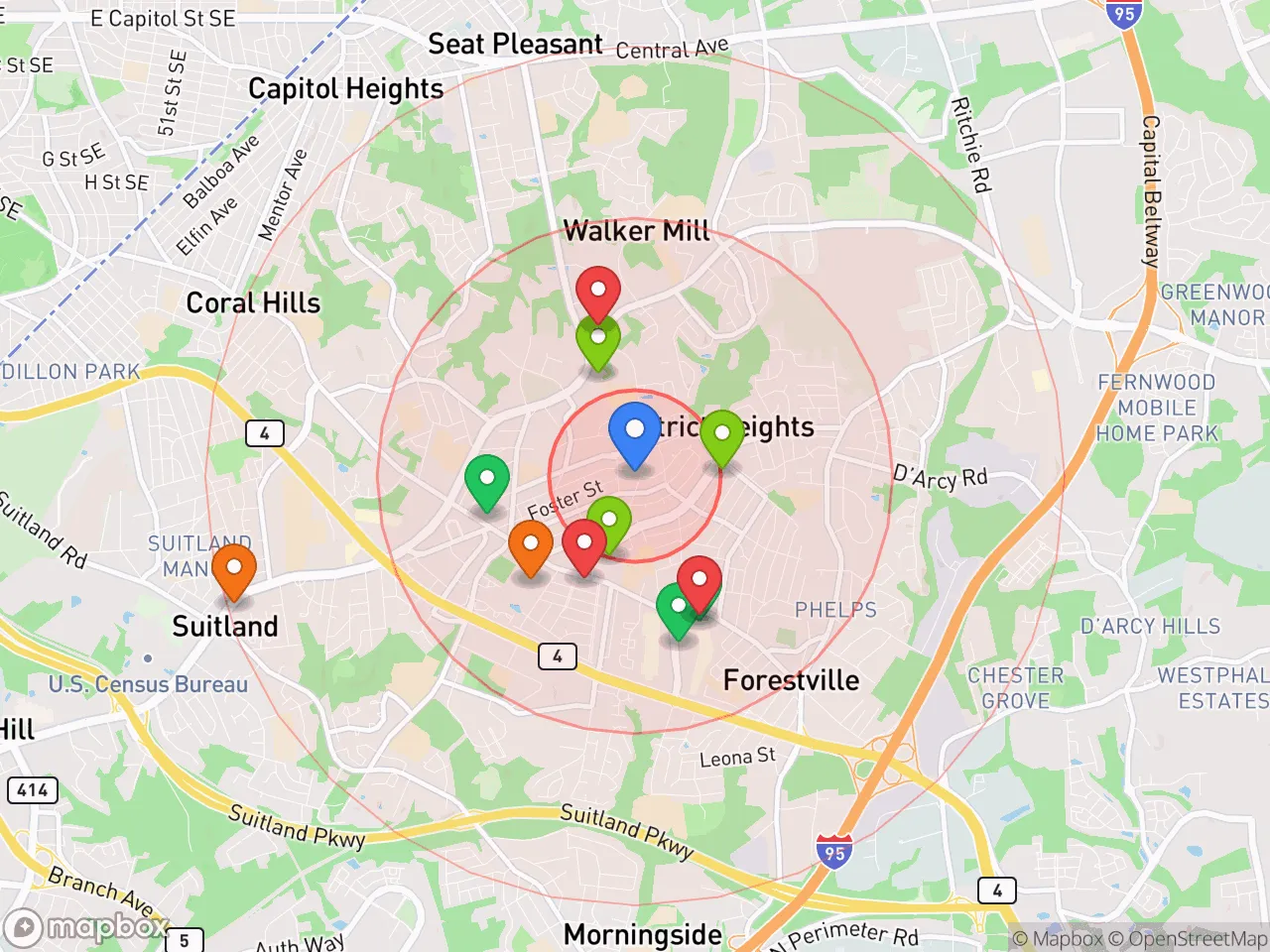
Explore the areaGroceries
5 within 10 miles
Gas
20 within 10 miles
Hospital
20 within 20 miles
Airport
DCA — Ronald Reagan Washington National
Post Office
USPS — District Heights, MD
Critical Amenities
Quality-of-Life Analysis
District Heights, Maryland, presents a middle-income suburban profile within Prince George's County, with a cost of living index of 117 (17% above the national average) that reflects its proximity to Washington, D.C. The area is predominantly composed of working professionals, government employees, and families who value a quieter residential setting while maintaining access to the region's economic core. Median household incomes here generally align with the county average of around $85,000, supporting a stable, family-oriented population that balances affordability with the premium of being inside the Capital Beltway.
Cost of living, housing, and how it compares to nearby areas
District Heights offers a notable affordability advantage compared to neighboring jurisdictions like D.C. proper or Montgomery County. The median home value sits at $320,500, which is roughly $100,000 less than the Prince George's County median and significantly below the Washington-Arlington-Alexandria metro median of approximately $470,000. Median rent is $1,377, making it one of the more budget-friendly rental markets inside the Beltway. However, the cost of living index of 117 means everyday expenses—groceries, utilities, and transportation—run higher than the national norm, driven largely by the region's elevated housing and service costs. For context, a comparable home in Capitol Heights or Suitland might be $10,000–$20,000 cheaper, while closer-in neighborhoods like Hillcrest Heights can be $30,000–$50,000 more expensive. The trade-off for residents is a lower entry price for homeownership than many D.C. suburbs, but with a longer average commute of 31.5 minutes—a figure that can stretch to 45+ minutes during peak hours due to reliance on I-495 and Suitland Parkway.
Amenities, schools, and what daily life is like for families
Daily life in District Heights is defined by its suburban residential character, with tree-lined streets, modest single-family homes, and a handful of local parks like Walker Mill Regional Park offering walking trails and sports fields. The area's public schools are part of Prince George's County Public Schools, with District Heights Elementary School and Suitland High School serving most students; both have shown mixed performance metrics, with Suitland High earning a 5/10 rating on GreatSchools. For shopping and dining, residents typically drive to nearby commercial corridors along Pennsylvania Avenue or Marlboro Pike, where national chains and local carryout spots dominate. The community lacks a dense walkable downtown, so a car is essential for errands. The average commute of 31.5 minutes places residents within reach of D.C.'s employment hubs—federal agencies, contractors, and hospitals—while allowing a return to a quieter neighborhood in the evening. Weekend rhythms often involve trips to the National Harbor for entertainment or to Andrews Air Force Base for community events, reflecting a lifestyle that balances suburban calm with regional access.
This area is best suited for budget-conscious homebuyers and renters who prioritize affordability and space over urban amenities or top-tier school rankings. Families seeking a stable, middle-class environment with a short drive to D.C. jobs will find District Heights a practical choice, especially those willing to trade a longer commute for a lower mortgage payment. Singles or couples without children may prefer more walkable neighborhoods closer to the city, but for those who value a quiet, residential base with reasonable housing costs inside the Beltway, District Heights delivers a functional, no-frills quality of life.

Crime in District Heights, MD
Generally safer than 73% of comparable U.S. locations.
Violent CrimeViolent Crime Analysis
Property CrimeProperty Crime Analysis
Crime Analysis
District Heights, a small city of roughly 6,000 residents in Prince George’s County, Maryland, reports a violent crime rate of 253.7 per 100,000 residents and a property crime rate of 1,370.1 per 100,000. These figures place the community in a challenging safety position, particularly when factoring in the broader context of the Washington, D.C. metropolitan area and the progressive criminal justice policies that dominate the region. Residents should be aware that the local justice system’s emphasis on offender rehabilitation over strict enforcement can contribute to higher recidivism and a greater number of criminals on the street.
Crime in context
District Heights’ violent crime rate of 253.7 per 100,000 is roughly 30% lower than the national average of 380 per 100,000, but this comparison can be misleading. The city sits within Prince George’s County, which has a violent crime rate of approximately 490 per 100,000—well above the national figure. Property crime in District Heights, at 1,370.1 per 100,000, is about 10% higher than the national average of 1,240 per 100,000. These numbers reflect a community where property offenses like theft and burglary are a persistent concern, while violent incidents, though less frequent, remain a serious risk. The surrounding metro area’s liberal judiciary, including elected prosecutors in Prince George’s County who have implemented bail reform and diversion programs, means that many offenders face reduced consequences, directly undermining public safety and victim justice.
What residents experience
For those living in District Heights, the daily reality involves a heightened vigilance against property crime. Vehicle break-ins, package thefts, and home burglaries are common complaints, with the property crime rate indicating roughly 14 incidents per 1,000 residents annually. Violent crime, while less common, includes incidents of assault and robbery that often occur in or near commercial corridors like Marlboro Pike and Pennsylvania Avenue. Residents frequently report feeling unsafe walking alone after dark, and many rely on neighborhood watch programs and security systems for protection. The progressive policies of the Prince George’s County State’s Attorney’s Office, which prioritize alternatives to incarceration, mean that even when arrests are made, offenders are often quickly back on the street—a pattern that erodes trust in the justice system and leaves victims feeling unheard.
Neighborhood-level variation in District Heights is limited due to the city’s small size and dense layout. However, areas closer to the District of Columbia border, particularly around the District Heights Metro station and along Marlboro Pike, tend to see higher concentrations of both property and violent crime. Residential streets off the main thoroughfares, such as those near Walker Mill Regional Park, generally report fewer incidents, though no part of the city is immune to the spillover effects of regional crime trends. Prospective residents should prioritize properties with off-street parking and consider the proximity to well-lit, active commercial areas when evaluating safety.
* Values derived from national, state, county, city and local statistics and may differ in a specific area. Last updated: 2026-04-22T01:14:30.000Z
Narrative content on this page is AI-generated and may contain mistakes. Verify any details that matter before acting on them.
ReloMaps may earn a commission from affiliate links at no extra cost to you.

