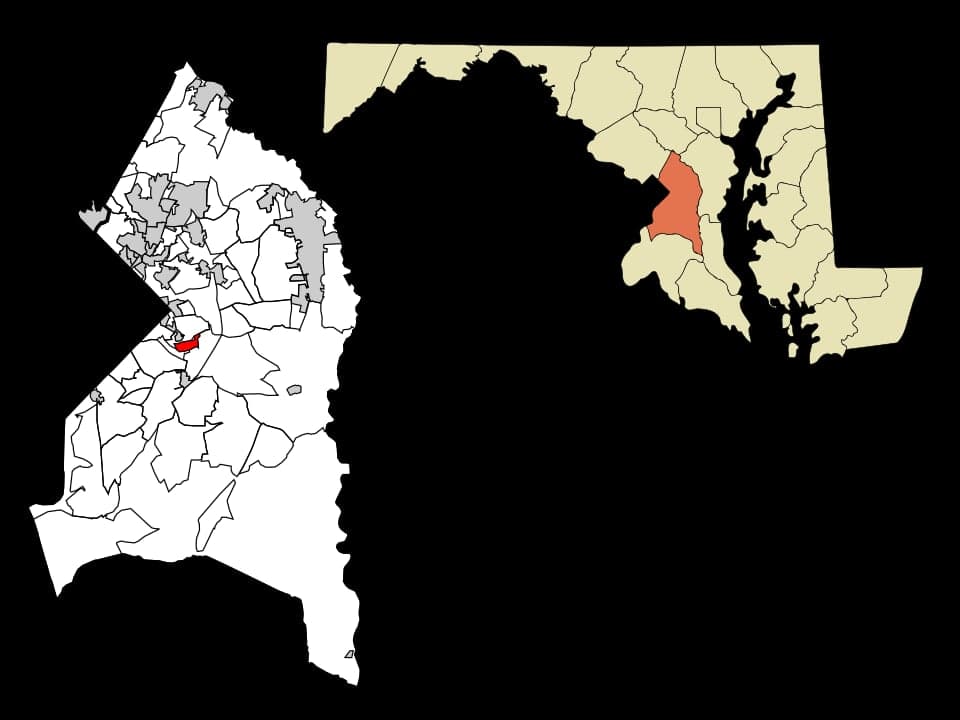
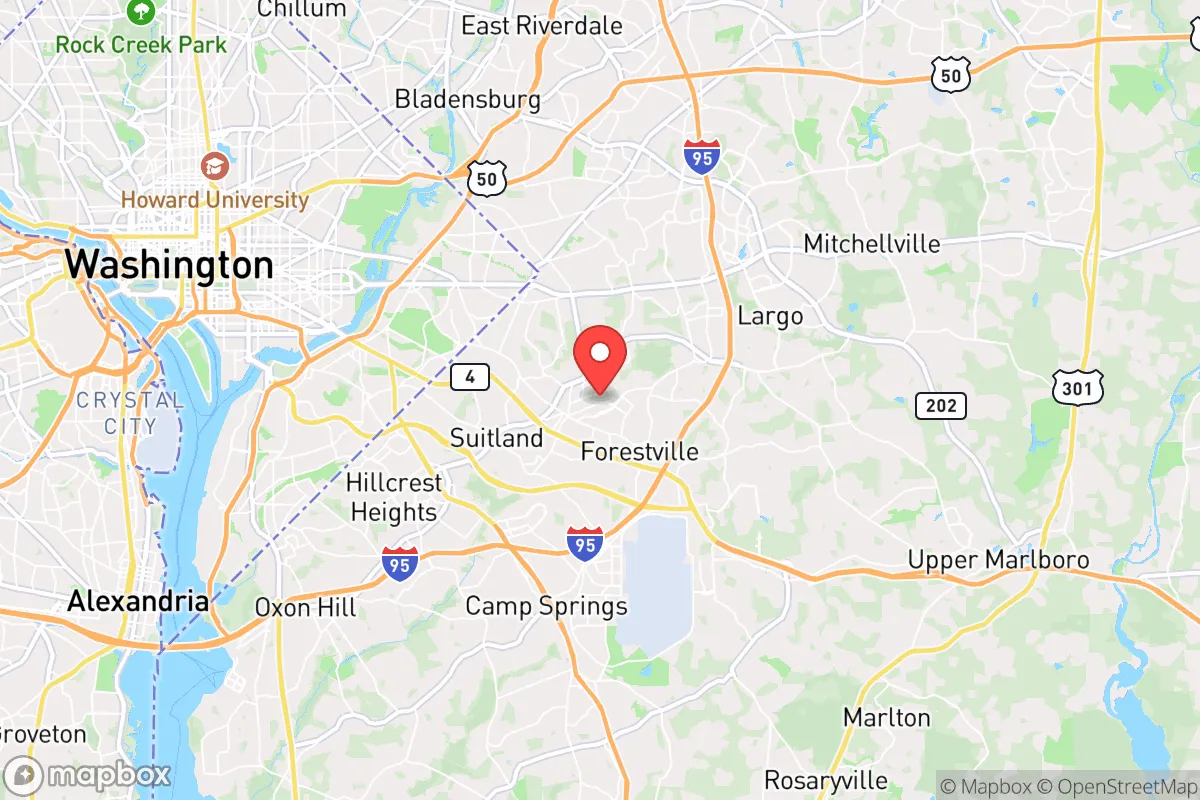
Photo: Wikipedia
Political ClimatePolitical Climate in District Heights, MD
District shown is the primary district for this city’s centroid. Cities may span multiple districts.
Local Political AnalysisPolitical Analysis of District Heights, MD
District Heights is about as deep blue as it gets in Maryland, with a Cook PVI of D+39, meaning Democrats hold a massive 39-point advantage over Republicans in federal elections. This isn't a recent shift; the area has been reliably Democratic for decades, but the character of that politics has changed. Where it was once a more moderate, working-class Democratic stronghold focused on local jobs and public safety, the last ten years have seen a hard push toward progressive policies that many long-time residents find out of step with their values. You're looking at a community where the local government often prioritizes state-level mandates over the concerns of the people who actually live here.
How it compares
Drive ten minutes west to Clinton or Fort Washington, and you'll find a more politically mixed landscape—still blue, but with a noticeable conservative minority that can actually influence local school board and county council races. Head north toward Hyattsville or College Park, and you're in the heart of the progressive machine, where rent control, sanctuary city policies, and aggressive zoning changes are the norm. District Heights sits in the middle of that spectrum, but it's leaning hard toward the Hyattsville model. The contrast with Bowie, just a few miles east, is stark: Bowie still has a strong sense of fiscal conservatism and community policing, while District Heights has embraced more top-down, government-heavy solutions to problems that used to be handled by neighbors and churches.
What this means for residents
For a resident, this political climate translates directly into your wallet and your daily life. Property taxes have crept up faster than inflation, driven by county-level spending on programs that many here feel are mismanaged. You'll see more regulations on small businesses—things like strict sign ordinances, licensing fees, and health department rules that make it harder for a mom-and-pop shop to survive. The local police department has faced pressure to adopt "defund" adjacent reforms, even though crime in the area has been a persistent concern. If you value personal freedom—the right to run your own business, keep your own property, or send your kids to a school that reflects your values—you'll find yourself butting heads with a local government that sees its job as managing your life rather than protecting your rights.
One cultural distinction that stands out is the area's relationship with gun rights. Maryland is already one of the toughest states in the country for gun owners, and District Heights' local leadership has pushed for even stricter measures, like "safe storage" ordinances that effectively criminalize how you keep a firearm in your own home. There's also a growing push for environmental regulations that sound good on paper but hit homeowners hard—think mandatory composting, bans on gas-powered lawn equipment, and fees for stormwater runoff. These aren't hypotheticals; they're on the agenda. Looking ahead, the trend is clear: more government, less local control. If you're considering a move here, understand that you're buying into a system where your voice is one of many, and the loudest voices are often the ones pushing for more oversight, not less.

State Political ClimatePolitical Climate in Maryland
State Political AnalysisPolitical Environment in the State
Maryland has long been a deep blue state, but its political landscape is far more complex than the statewide numbers suggest. Democrats hold a supermajority in the legislature and have won every presidential election here since 1992, but this dominance is almost entirely driven by the Washington, D.C. suburbs and Baltimore City. Outside of those two population centers, much of the state votes reliably Republican, and the gap between the two Marylands has only widened over the past 20 years. For a conservative considering a move, the state offers a mix of high-tax, high-regulation policy at the state level and surprisingly red communities where local culture and values remain intact.
Urban vs. rural divide
The political map of Maryland is a textbook case of urban-rural polarization. The entire state’s Democratic majority is manufactured in Montgomery County, Prince George’s County, and Baltimore City — three jurisdictions that together cast roughly 40% of all votes. Montgomery County alone, with its affluent, highly educated, and increasingly progressive population, often votes 80% Democratic. Prince George’s, the wealthiest majority-Black county in the nation, is similarly lopsided. Baltimore City, despite shrinking population, remains a Democratic stronghold. Meanwhile, the rest of the state — from the Eastern Shore to Western Maryland — votes solidly red. Garrett County, in the far west, routinely gives Republicans 70% of the vote, and Allegany County is nearly as conservative. The suburban counties surrounding Baltimore — Harford, Carroll, and parts of Baltimore County — have shifted rightward in recent cycles, with Carroll County now reliably Republican. The key swing areas are Anne Arundel County (home to Annapolis) and Frederick County, both of which have trended blue as D.C. commuters move in, but still host competitive races. The divide isn’t just about party ID; it’s about worldview. In places like Hagerstown or Salisbury, you’ll find gun-friendly, churchgoing communities that feel a world away from Bethesda or Silver Spring.
Policy environment
State-level policy in Maryland is consistently progressive, and the tax burden is among the highest in the nation. Maryland has a progressive income tax with rates up to 5.75%, plus a local “piggyback” tax that can push the combined rate over 9% in places like Baltimore City and Montgomery County. Property taxes are also high, and the state has an estate tax that kicks in at $5 million. The regulatory environment is business-unfriendly, with strict environmental rules, a high minimum wage ($15 an hour as of 2024, indexed to inflation), and a paid family leave program set to launch in 2025. Education policy is dominated by the Blueprint for Maryland’s Future, a massive funding overhaul that pours billions into public schools but has also led to debates over school choice and parental rights. On healthcare, Maryland operates an all-payer rate-setting system for hospitals, which keeps costs relatively stable but limits competition. Election laws are among the most liberal in the country: no-excuse mail-in voting, same-day registration, and automatic voter registration are all in place. For a conservative, the policy environment at the state level is a clear red flag — high taxes, heavy regulation, and a government that actively expands its reach into daily life.
Trajectory & freedom
Maryland is moving in a direction that should concern anyone who values personal liberty. Over the past five years, the legislature has passed a series of laws that expand government control. The Firearm Safety Act of 2013 was already one of the strictest gun laws in the country, and in 2023 the legislature passed a ban on carrying firearms in “sensitive places” — including hospitals, public transportation, and any private property where the owner hasn’t explicitly allowed it. Parental rights have taken a hit: the state passed a law requiring schools to adopt policies that affirm a student’s gender identity without parental notification, effectively overriding parents’ ability to know what’s happening with their children. On medical freedom, Maryland was one of the first states to mandate COVID-19 vaccines for healthcare workers and school staff, and it has not rolled back those mandates. Property rights are under pressure from the state’s aggressive zoning and environmental regulations, particularly in the Chesapeake Bay watershed, where new development faces costly permitting hurdles. The only bright spot for conservatives is that the state has not expanded its income tax further in recent years, and there is a growing movement in rural counties to push back against state mandates — but so far, the legislature in Annapolis has shown no appetite for rolling back any of these expansions of state power.
Civil unrest & political movements
Maryland has a history of political activism that leans heavily left, but there are visible conservative movements as well. Baltimore saw significant protests and civil unrest following the death of Freddie Gray in 2015, and the city remains a flashpoint for debates over policing and public safety. The “defund the police” movement gained traction in Baltimore City Council, though it has since receded as crime rates remain high. On the right, the “We the People” movement and local Republican clubs are active in places like Harford County and the Eastern Shore, where they organize around Second Amendment rights and school board elections. Immigration politics are a growing issue: Maryland is a sanctuary state, with a 2023 law that prohibits state and local law enforcement from cooperating with federal immigration authorities in most circumstances. This has created tension in communities like Frederick and Hagerstown, where some residents feel the state is ignoring federal law. Election integrity has been a hot topic since 2020, with Republican activists raising concerns about the state’s mail-in voting system and the lack of voter ID requirements. While there haven’t been major scandals, the lack of transparency in the state’s election administration remains a point of contention. A new resident would notice that political signs are common in rural areas but rare in the D.C. suburbs, and that the culture war over schools and libraries is very much alive in places like Carroll County and Anne Arundel County.
Projection
Over the next 5-10 years, Maryland is likely to become even more Democratic at the state level, but the rural-urban divide will deepen. The D.C. suburbs are growing faster than the rest of the state, and the in-migration from the federal government and tech sectors is overwhelmingly progressive. Frederick County, once a swing area, is now reliably blue in presidential elections. Meanwhile, the rural counties are losing population, which reduces their political clout. The state legislature will almost certainly continue to pass progressive policies on taxes, gun control, and social issues. However, there is a counter-trend: a growing number of conservatives are moving to the Eastern Shore and Western Maryland, seeking lower taxes and more freedom. Places like Cecil County and Washington County are seeing an influx of people from the D.C. area who are fleeing the high cost of living and progressive policies. This could create a more organized conservative opposition at the local level, but it won’t change the state-level math. A new resident moving in now should expect that the state government will continue to expand its reach, but that there are still pockets of freedom — particularly in the rural counties — where local government is more aligned with conservative values.
For a conservative considering Maryland, the bottom line is this: you can find a community that shares your values, but you will be fighting an uphill battle at the state level. The taxes are high, the regulations are heavy, and the culture in Annapolis is hostile to traditional American freedoms. If you’re willing to live in a red county and engage in local politics, you can carve out a good life here. But if you’re looking for a state where the government respects your liberty, Maryland is not that place — and it’s not getting any better.
* Values derived from national, state, county, city and local statistics and may differ in a specific area. Last updated: 2026-04-22T01:14:30.000Z
Narrative content on this page is AI-generated and may contain mistakes. Verify any details that matter before acting on them.
ReloMaps may earn a commission from affiliate links at no extra cost to you.

