Photo: Wikipedia
Demographics of Druid Hills, GA
Affluence Level in Druid Hills, GA
An upper-middle-class area. Household wealth, education levels, and homeownership run ahead of national benchmarks.
People of Druid Hills, GA
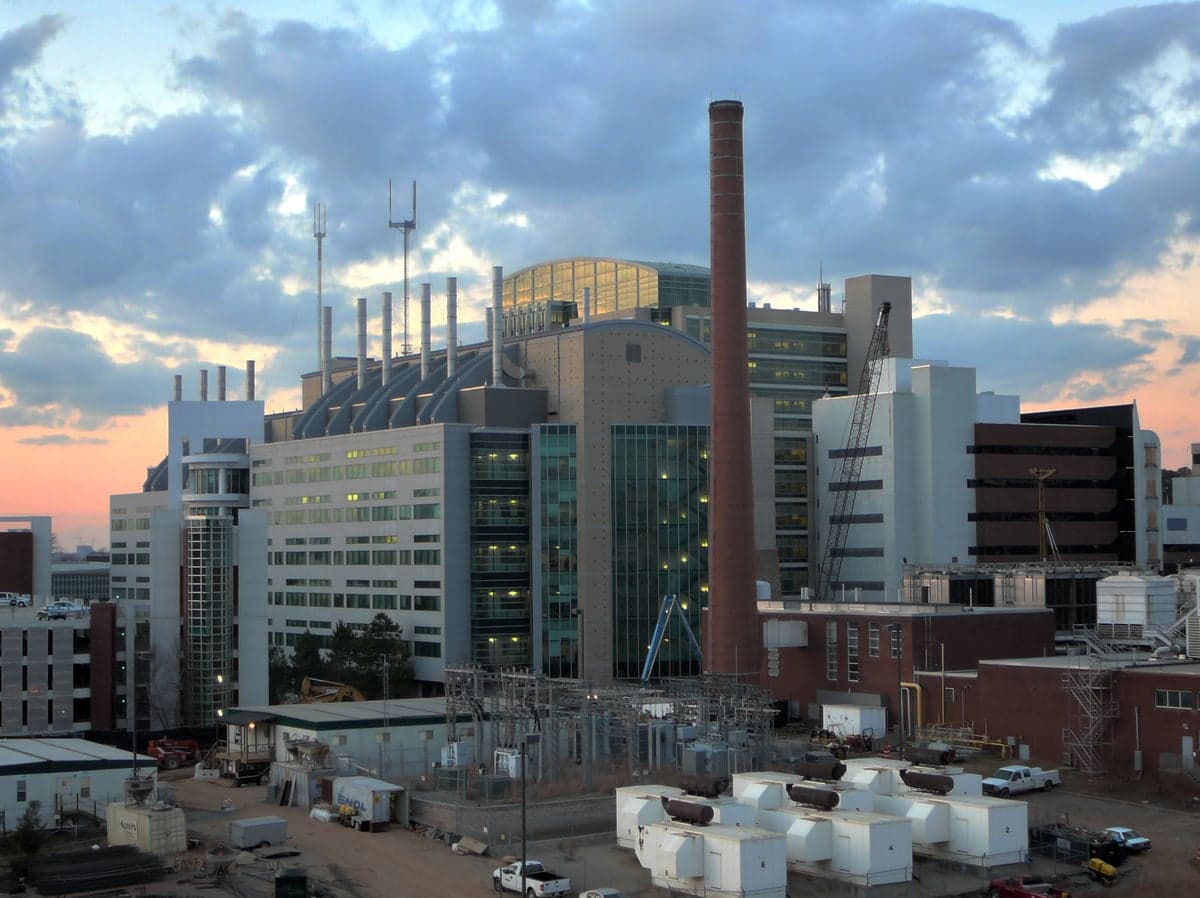
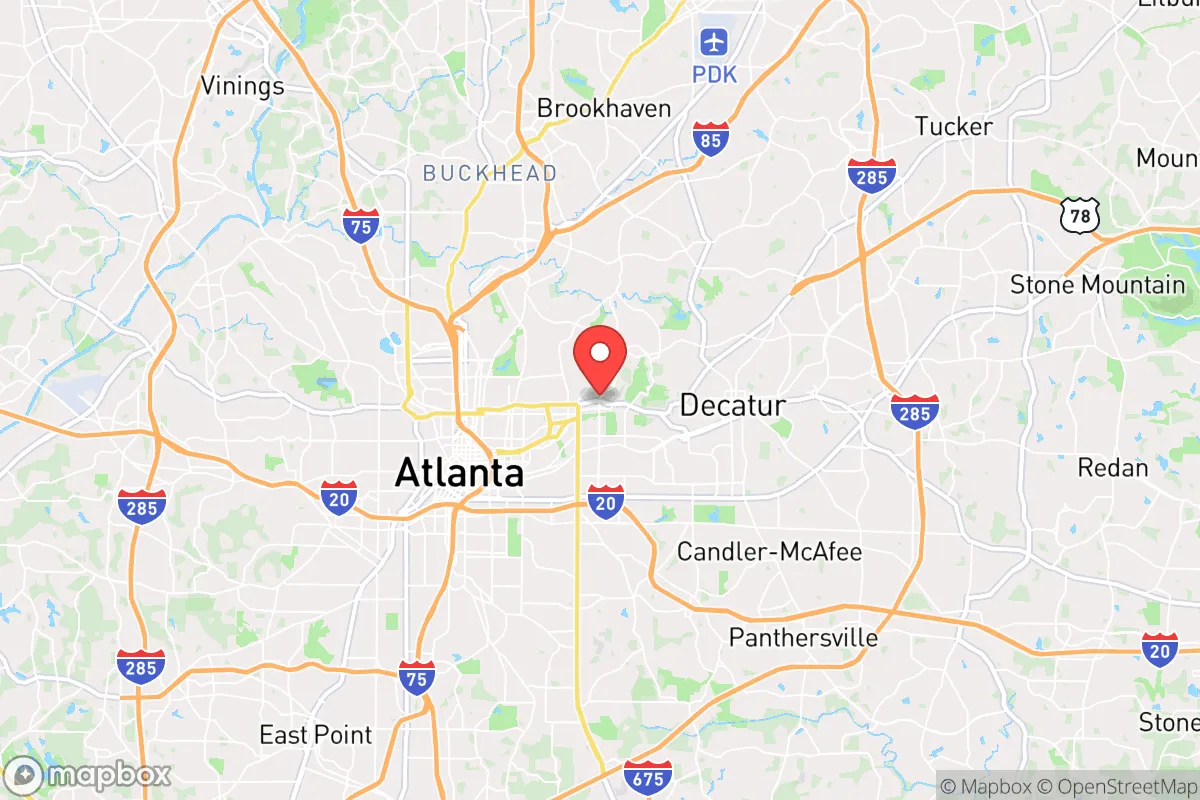
The people of Druid Hills, Georgia, today form a highly educated, predominantly white community of 8,278 residents, with a distinctive character shaped by its historic planned development and proximity to Emory University and the Centers for Disease Control and Prevention (CDC). With 84.9% of adults holding a college degree—more than triple the national average—the population is among the most credentialed in metro Atlanta, concentrated in a compact 2.5-square-mile area of DeKalb County. The city’s identity is rooted in its Olmsted-designed landscape, tree-lined boulevards, and a demographic profile that remains majority white (76.3%) while including notable East/Southeast Asian (6.2%) and Hispanic (7.3%) minorities, alongside a small Black population (3.5%) and Indian-subcontinent community (1.8%). Foreign-born residents account for just 4.7% of the population, reflecting a stable, long-established native-born core.
How the city was settled and grew
Druid Hills was not a frontier settlement or industrial boomtown but a planned suburban enclave conceived in the 1890s by Atlanta businessman Joel Hurt and designed by Frederick Law Olmsted, the landscape architect of New York’s Central Park. The original population consisted of wealthy white Atlantans seeking a pastoral escape from the city’s crowding and pollution, drawn by Hurt’s streetcar line—the Atlanta & Edgewood Street Railway—which connected the new suburb to downtown. The first wave of residents built grand homes along Ponce de Leon Avenue and North Decatur Road, establishing Druid Hills as a bastion of Atlanta’s elite. By the 1910s, the neighborhood of Springdale—a smaller, more modest section near the eastern edge—attracted middle-class professionals, including doctors and academics from the nascent Emory University, which relocated to nearby Decatur in 1919. The city’s growth remained slow and deliberate through the mid-20th century, with no major industrial or immigrant waves; instead, it solidified as a white-collar, native-born stronghold. The historic Emory Grove area, originally a streetcar suburb for Emory faculty, became a concentration of university-affiliated families, while Lullwater, named for the estate of Coca-Cola magnate Asa Candler, housed the wealthiest residents along its winding, wooded lanes.
Modern era (post-1965)
The post-1965 period brought subtle demographic shifts rather than dramatic transformation. The 1970s and 1980s saw a modest influx of East/Southeast Asian professionals—particularly Chinese and Korean academics and medical researchers—attracted by Emory University and the CDC, settling primarily in the University Park neighborhood near the Emory campus. This group grew steadily but remained a minority, reaching 6.2% of the population by the 2020s. The Hispanic population (7.3%) arrived later, largely in the 1990s and 2000s, drawn by service-sector jobs in the surrounding area, and concentrated in the Briarcliff section along the city’s northern edge, where older, smaller homes offered more affordable entry points. The Black population, at 3.5%, remained small and stable, with no significant in-migration from Atlanta’s larger Black communities; most Black residents are long-term homeowners in the Morningside-adjacent areas. The Indian-subcontinent community (1.8%) is a recent, post-2000 addition, primarily professionals in technology and medicine, scattered across the city rather than forming a distinct enclave. White residents, while still the majority, have seen their share decline slightly from over 85% in 1990, as the city’s high housing costs—median home values exceed $800,000—have limited broader diversification. The foreign-born share (4.7%) is low compared to metro Atlanta’s 14%, underscoring Druid Hills’ character as a native-born, highly educated enclave.
The future
The population of Druid Hills is likely to remain stable in size and character over the next 10–20 years, with slow, incremental diversification rather than rapid change. The city’s housing stock—largely historic homes on large lots with strict zoning—limits new construction and keeps prices high, filtering for affluent, educated buyers. The East/Southeast Asian and Indian-subcontinent communities are expected to grow modestly as Emory and the CDC continue to attract global talent, but these groups will likely assimilate into the existing white-majority fabric rather than forming separate enclaves. The Hispanic population may plateau, as service-sector opportunities in the area face competition from lower-cost suburbs. The Black population is unlikely to increase significantly, given the city’s lack of affordable housing and its historical reputation as a predominantly white enclave. The city is not homogenizing—it is already highly homogeneous—nor is it tribalizing into distinct ethnic neighborhoods; instead, it is becoming a slightly more diverse version of its historic self, with a core of white, native-born professionals and a thin layer of Asian and Hispanic professionals. For a conservative-leaning mover, Druid Hills offers a stable, high-amenity environment with low crime, top-tier schools, and a population that values education and property values—but it is not a place of rapid demographic change or cultural dynamism. The bottom line: Druid Hills is becoming a slightly more cosmopolitan version of its historic self, ideal for those seeking a quiet, affluent, and academically oriented community with minimal disruption.

* Values derived from national, state, county, city and local statistics and may differ in a specific area. Last updated: 2026-04-23T05:05:30.000Z
Narrative content on this page is AI-generated and may contain mistakes. Verify any details that matter before acting on them.
ReloMaps may earn a commission from affiliate links at no extra cost to you.

