
Photo: Wikipedia
Political ClimatePolitical Climate in Druid Hills, GA
District shown is the primary district for this city’s centroid. Cities may span multiple districts.
Local Political AnalysisPolitical Analysis of Druid Hills, GA
Druid Hills is about as deep blue as it gets in Georgia, with a Cook PVI of D+36—meaning it votes 36 points more Democratic than the national average. That’s not just a lean; it’s a lock. If you’ve lived here as long as I have, you’ve watched the area shift from a quiet, traditionally moderate suburb into a stronghold for progressive politics, especially over the last decade. The trajectory is clear: each election cycle pushes further left, and the local culture follows suit.
How it compares
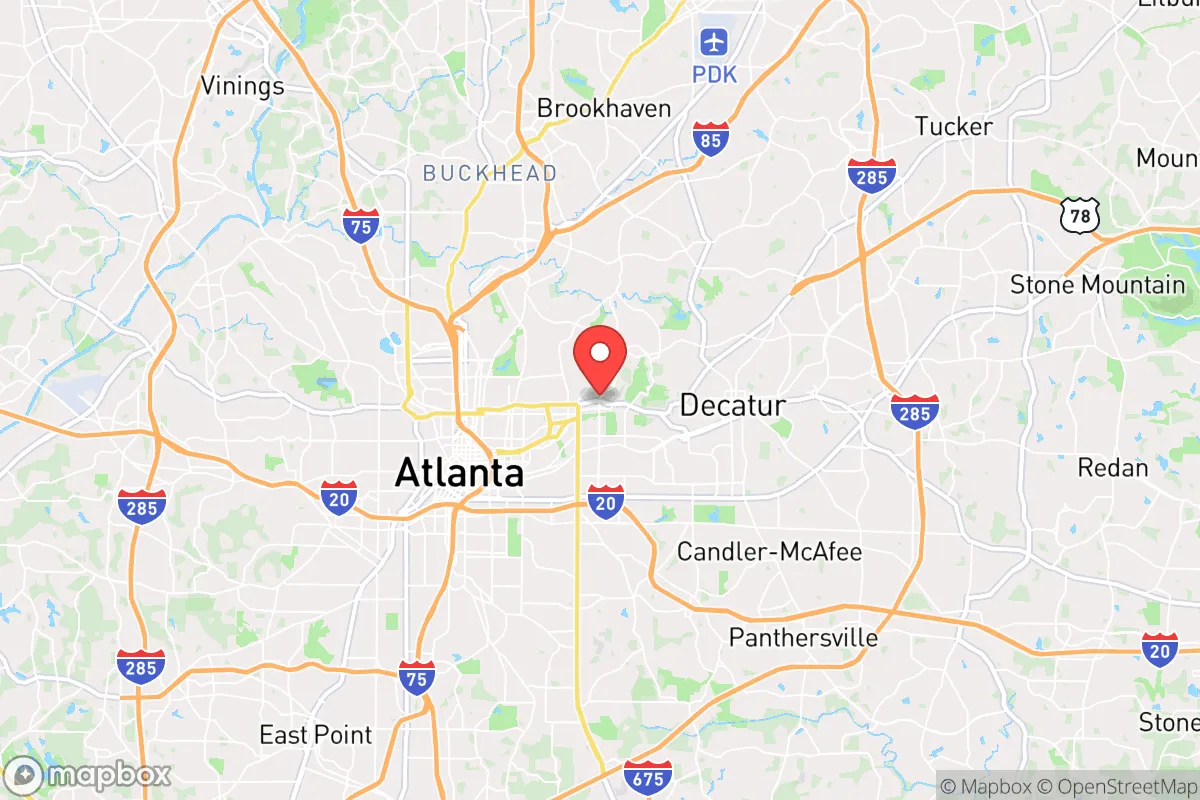
To understand Druid Hills, you have to look at what’s around it. Head just a few miles north to Brookhaven or Chamblee, and you’ll find a more mixed political scene—still blue, but with pockets of conservative and libertarian-leaning voters who keep things balanced. Drive west into Atlanta proper, and you’re in even deeper blue territory, but Druid Hills stands out for its near-total uniformity in voting patterns. In the 2024 presidential election, precincts here gave Democratic candidates over 85% of the vote, while neighboring DeKalb County as a whole was around 75% blue. The contrast is even sharper if you go east to Stone Mountain or south to Decatur’s older neighborhoods, where you’ll find more working-class and independent voters who aren’t afraid to buck the party line. Druid Hills, though? It’s become a bubble—affluent, educated, and overwhelmingly progressive.
What this means for residents
For folks who value personal freedoms and limited government, this political climate can feel suffocating. The local government has embraced a host of progressive policies that many of us see as overreach. Zoning regulations have tightened significantly, making it harder to modify your own property without jumping through bureaucratic hoops. There’s been a push for higher property taxes to fund social programs, and while the schools and parks benefit, the cost of living keeps climbing. More concerning is the shift in public safety priorities: some local leaders have pushed for defunding police initiatives, even as property crime ticks up in nearby areas. If you’re a gun owner or value Second Amendment rights, you’ll find little sympathy here—Druid Hills has consistently backed state-level restrictions. The school board has also leaned into controversial curriculum changes, emphasizing social justice topics over core academics, which has driven some families to private or charter options.
On the cultural side, you’ll see it in everyday life. Neighborhood associations are increasingly vocal about political signage, and it’s rare to see a yard sign for a Republican candidate. Public discourse tends to punish dissent; if you voice a conservative opinion at a community meeting, expect awkward silence or pushback. The long-term trend worries me: as more young, left-leaning families move in and older residents move out, the political monoculture will only deepen. That means less debate, less diversity of thought, and more policies that prioritize collective goals over individual liberty.
One distinction worth noting: Druid Hills has a strong historic preservation ethos, which is a double-edged sword. It keeps the area beautiful and protects property values, but it also gives local boards immense power over what you can do with your home. That’s government overreach dressed up as charm. If you’re looking for a place where you can live and let live, with minimal interference from the county or your neighbors, Druid Hills might not be the fit it once was. The political climate here is comfortable if you agree with it, but stifling if you don’t.

State Political ClimatePolitical Climate in Georgia
State Political AnalysisPolitical Environment in the State
Georgia has transformed from a reliably Republican stronghold into a true battleground state, with its partisan lean now a razor-thin margin after decades of GOP dominance. For most of the 2000s and 2010s, Georgia voted solidly red in presidential elections, but the 2020 election saw Joe Biden win the state by just 11,779 votes, followed by two Democratic Senate runoff wins in early 2021. This shift is driven by explosive growth in the Atlanta metro area, particularly in diverse, highly-educated suburban counties like Cobb, Gwinnett, and Henry, which have flipped from red to blue or purple. Meanwhile, the rest of the state—from the rural southwest to the mountain north—remains deeply conservative, creating a stark political chasm that defines every statewide race.
Urban vs. rural divide
The political map of Georgia is a tale of two worlds. Metro Atlanta, home to roughly 60% of the state’s population, is the engine of Democratic gains. The city of Atlanta itself is overwhelmingly liberal, but the real story is the suburbs: Cobb County voted for Biden after backing Trump in 2016, Gwinnett County flipped blue in 2016 and has stayed there, and Henry County south of Atlanta has shifted dramatically. These areas are now reliably Democratic, driven by an influx of younger, college-educated professionals and a growing minority population. Outside the I-285 perimeter, the political landscape changes fast. Rural south Georgia—places like Valdosta, Albany, and Waycross—votes overwhelmingly Republican, often by 70-80% margins. The same is true for the northern mountain counties like Fannin and Union. The only other blue pockets are the smaller cities: Athens (home to UGA), Savannah, Augusta, and Macon, each of which provides a liberal counterweight to their surrounding conservative counties. This urban-rural split means statewide elections are decided by turnout in the Atlanta suburbs, making every cycle a nail-biter.
Policy environment
Georgia’s state-level policy is still largely conservative, but the margin for error is shrinking. The state has a flat income tax rate of 5.49%, which is being phased down to 4.99% by 2029 under a law signed by Governor Brian Kemp. Property taxes are relatively low, and there is no estate tax. The regulatory environment is business-friendly, with a right-to-work law and a low corporate tax rate. On education, Georgia has a robust school choice program, including the Georgia Promise Scholarship Act (2024), which provides state funds for private school tuition or homeschooling expenses in low-performing school districts. However, the state’s healthcare landscape is a sore spot: Georgia has not expanded Medicaid, leaving roughly 300,000 low-income adults in a coverage gap. Election laws have been a flashpoint, with the 2021 Election Integrity Act (SB 202) tightening voter ID requirements for absentee ballots, limiting drop boxes, and reducing the time for runoff elections. Critics call it voter suppression; supporters say it restores confidence. For a conservative mover, the tax and education policies are clear wins, but the healthcare gap and ongoing election battles signal a state still fighting over its identity.
Trajectory & freedom
Georgia’s trajectory on personal freedom is a mixed bag, trending in both directions depending on the issue. On the positive side for conservatives, the state has expanded gun rights significantly. In 2022, Georgia became a permitless carry state (HB 218), allowing law-abiding citizens to carry a concealed firearm without a license. This was a major win for Second Amendment advocates. Parental rights were also bolstered by the 2022 “Parents’ Bill of Rights” (SB 449), which requires schools to notify parents of any medical services provided to their children and gives parents access to instructional materials. On the concerning side, the state has seen a push for more government overreach in the name of “public health.” During COVID, Governor Kemp issued a statewide shelter-in-place order and later allowed local mask mandates, which many saw as an infringement on personal choice. More recently, the state has cracked down on “medical freedom” by maintaining strict licensing requirements for healthcare practitioners and resisting any form of medical marijuana legalization beyond low-THC oil. Property rights are generally strong, but local zoning battles in Atlanta suburbs are increasingly pitting homeowners against developers and progressive city councils. The bottom line: Georgia is becoming freer on guns and parental rights, but less free on medical autonomy and local governance, with a growing risk of progressive overreach in the metro area.
Civil unrest & political movements
Georgia has been a hotbed of political activism on both sides, with visible flashpoints that any new resident will notice. The 2020 election cycle saw massive protests in Atlanta following the murder of George Floyd, with some demonstrations turning violent and leading to property damage in the city’s downtown and Buckhead areas. This sparked a “law and order” backlash that helped Governor Kemp win reelection in 2022. On the right, the “Stop the Steal” movement was strong in rural Georgia, with rallies at the state capitol and ongoing election integrity activism. The state has also been ground zero for immigration politics: Georgia passed a strict anti-sanctuary city law (HB 1105) in 2024, requiring local law enforcement to cooperate with federal immigration authorities. This has created tension in counties like Gwinnett and DeKalb, which have large immigrant populations. There is no serious secessionist movement, but nullification rhetoric surfaces occasionally in conservative circles regarding federal gun laws and environmental regulations. Election integrity remains a live issue, with ongoing lawsuits over the 2021 voting law and accusations of voter roll purges. A new resident moving to a place like Woodstock or Buford will see a community that is politically engaged but generally orderly, while those in Decatur or East Atlanta will encounter a more activist, progressive environment.
Projection
Over the next 5-10 years, Georgia is likely to become even more competitive, with a slow but steady shift toward the center or left driven by demographic change. The Atlanta suburbs will continue to diversify and attract young professionals from blue states, making counties like Forsyth and Cherokee—currently red—more purple. Rural Georgia will remain deeply conservative but will lose population share, meaning its electoral weight will diminish. The state legislature will likely stay under Republican control through at least 2030 due to gerrymandering, but the governor’s mansion and Senate seats will be toss-ups in every cycle. On policy, expect continued fights over election laws, abortion (currently banned after six weeks with limited exceptions), and education funding. The biggest wildcard is in-migration: if the influx of new residents continues to be from blue states, Georgia could become a blue state by 2032. For a conservative moving in now, the next decade will feel like a holding action—defending gun rights, school choice, and low taxes against an increasingly assertive progressive minority that is growing in power.
For a new resident, the practical takeaway is that Georgia offers a solid conservative foundation on taxes, guns, and education, but you are moving into a state that is politically contested and changing fast. If you settle in the Atlanta suburbs, you will be in the middle of the fight; if you choose a smaller city like Dalton or Warner Robins, you will find a more stable conservative environment. Either way, expect to see political signs in every yard, heated local elections, and a state that is still deciding what it wants to be. The freedom you enjoy today—permitless carry, school choice, low taxes—is not guaranteed forever, so staying engaged locally is essential.
* Values derived from national, state, county, city and local statistics and may differ in a specific area. Last updated: 2026-04-23T05:05:30.000Z
Narrative content on this page is AI-generated and may contain mistakes. Verify any details that matter before acting on them.
ReloMaps may earn a commission from affiliate links at no extra cost to you.

